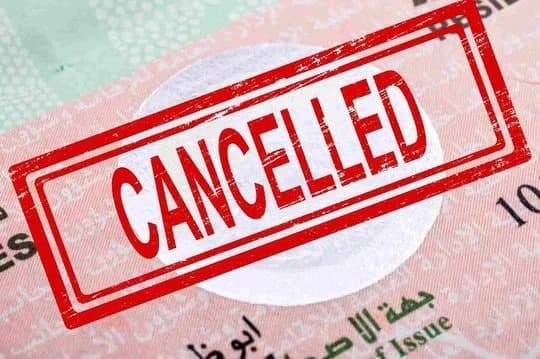
Long Grace Period After UAE Visa Cancellation: What Employees Must Know About Staying Legally in the Country
New employment rules clarify how long terminated workers can remain in the UAE and the lawful options available to extend their stay.
 Staff WriterFeb 19, 2026, 10:27 AM
Employees in the UAE who lose their jobs or resign often face immediate uncertainty about how long they can remain in the country. Recent legal provisions have clarified the procedures employers must follow when cancelling work permits and the limited grace period available for affected workers to either exit the country or regularise their status.
For mainland employees in Dubai and other emirates, the process is governed primarily by Cabinet Resolution No. 1 of 2022, which implements Federal Decree Law No. 33 of 2021 on the Regulation of Employment Relations, along with Federal Decree Law No. 29 of 2021 regarding the Entry and Residence of Aliens.
Work permit cancellation comes first
Under UAE labour procedures, an employer must first cancel the employee’s work permit once employment ends — whether due to termination or resignation — provided both parties have fulfilled their legal obligations.
The cancellation must be carried out through the channels specified by the Ministry of Human Resources and Emiratisation (Mohre). Article 7(3) of Cabinet Resolution No. 1 of 2022 sets out key requirements, including:
- Submission of the cancellation application through approved Mohre channels
- Completion of all required data and supporting documents
- Payment of any outstanding fines, if applicable
- Employer acknowledgement that the employee has received all legal entitlements
- Compliance with any additional conditions set by the ministry
Only after the work permit is properly cancelled can the residency visa cancellation proceed.
Grace period after visa cancellation
Once the UAE residency visa is cancelled, the employee does not have to leave immediately. The individual may legally remain in the country during the grace period specified in the visa cancellation document.
The exact duration of the grace period can vary depending on visa category and immigration decisions, but overstaying beyond this period carries financial penalties.
Article 11 of Federal Decree Law No. 29 of 2021 makes this explicit. It states that any foreign national whose residence permit is cancelled or expired and who fails to renew status or exit the country within the prescribed period will face an administrative fine calculated for each day of illegal stay.
Legal ways to remain in the UAE
Workers are not necessarily required to exit the UAE if they secure an alternative legal status within the grace period.
If a new job is obtained, the new employer may:
- Apply for a fresh work permit
- Initiate a change of status while the employee remains in the UAE
- Proceed with issuance of a new residency visa once the permit is approved
In many cases, employees may also convert to a visit visa or tourist visa from within the country, subject to immigration approval.
When to seek immigration guidance
Employees who do not secure new employment before the grace period expires should act promptly. Overstaying even by a few days can result in accumulating fines and possible immigration complications.
Authorities advise affected individuals to check their exact grace period on the visa cancellation document and, where necessary, consult the General Directorate of Residency and Foreigners Affairs in Dubai for the latest procedures on status change or in-country visa options.
The bottom line
UAE law now provides a structured pathway for employees whose jobs end, but the responsibility ultimately rests with the individual to act within the permitted timeframe. Workers can remain in the country legally during the grace period, but must either obtain a new residency status or exit the UAE before the deadline to avoid penalties.
For any enquiries or information, contact ask@tlr.ae or call us on +971 52 644 3004. Follow The Law Reporters on WhatsApp Channels.