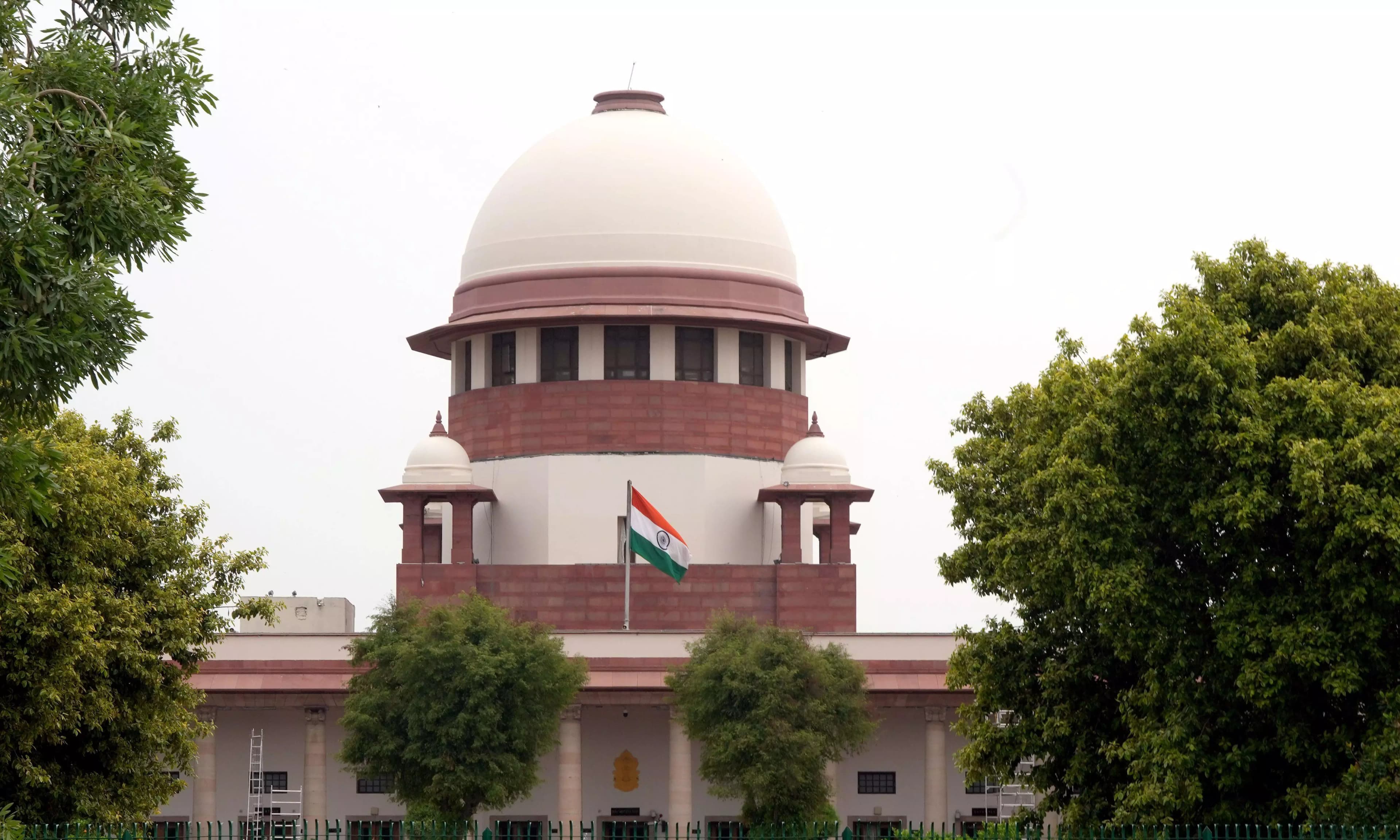
India SC Flags Misuse of POCSO, Suggests ‘Romeo–Juliet clause’
Apex court calls on Centre to protect genuine teen relationships from criminalisation while curbing revenge-driven cases under child protection laws.
 Staff WriterJan 12, 2026, 11:42 AM
The Supreme Court has highlighted the growing misuse of the Protection of Children from Sexual Offences (POCSO) Act, saying families often invoke the law to target consensual adolescent relationships. The Court suggested that the Union government consider introducing a “Romeo–Juliet clause” to protect genuine teenage couples from criminal action.
The observations were made by a bench of Justices Sanjay Karol and N.K. Singh while setting aside a series of directions issued by the Allahabad High Court in a bail case under the POCSO Act, 2012.
The High Court had directed that police must conduct a medical test at the outset of every POCSO investigation to determine the age of the victim and that bail courts could examine, and even reject, school or birth certificates if they were found to be doubtful.
The Supreme Court held that the High Court had exceeded its jurisdiction. Bail courts cannot conduct “mini trials”, decide disputed facts such as age conclusively, or override the procedure prescribed by Parliament for age determination.
Misuse of POCSO
While correcting the High Court, the apex court drew attention to a broader problem: the POCSO Act, intended to protect children from sexual abuse, is increasingly being misused to punish consensual teenage relationships.
“The POCSO Act is one of the most solemn articulations of justice aimed at protecting the children of today and the leaders of tomorrow. Yet, when an instrument of such noble intent is misapplied or used as a tool for revenge, the notion of justice itself teeters on the edge of inversion,” the Court said.
The bench noted that courts across India frequently encounter cases where the age of the girl is deliberately misrepresented to bring a boy under the POCSO Act, even when the relationship is consensual and between teenagers close in age. Families opposing such relationships often exploit the law, the Court observed.
“This misuse creates deep injustice. Children in real need of protection may be unable to access the system due to poverty, fear, or stigma, while those with privilege and social capital manipulate the law to settle personal scores,” the bench noted.
Call for a Romeo–Juliet clause
To address this, the Supreme Court directed that a copy of its judgment be sent to the Law Secretary of the Union government. One recommendation was the introduction of a “Romeo–Juliet clause” to shield genuine adolescent relationships from criminalisation.
The Court also emphasised the responsibility of lawyers, noting that advocates must not file cases when the law is being used for revenge. Lawyers act as gatekeepers of justice and must exercise discretion to prevent misuse.
“The first line of defence lies with the Bar. Advocates must examine allegations with detachment, counsel restraint when grievance masks vengeance, and refuse participation in litigation pursued under ulterior motives,” the judgment stated.
Clarifying age determination
The case before the Court was not directly about a teenage relationship. It arose from a bail order by the Allahabad High Court, which had granted bail to an accused and laid down wide-ranging directives for POCSO cases.
The Supreme Court clarified the correct legal process for age determination. Courts should first rely on documents such as school or birth certificates. Only if these are unavailable or unreliable may medical tests such as ossification or radiological examinations be conducted. Such tests cannot be mandatory in every case.
The Court set aside the High Court’s directions but did not disturb the bail granted in the specific case, which had been justified on other grounds.
Broader social concern
The bench observed that misuse of laws such as POCSO and Section 498A of the Indian Penal Code reflects a larger societal issue, not merely a legal problem.
“This divide between access and abuse is mirrored in the misuse of Section 498A IPC and the Dowry Prohibition Act. No amount of court orders alone can remedy this; honesty and responsibility from society, lawyers, and institutions are essential,” the Court noted.
For any enquiries or information, contact ask@tlr.ae or call us on +971 52 644 3004. Follow The Law Reporters on WhatsApp Channels.