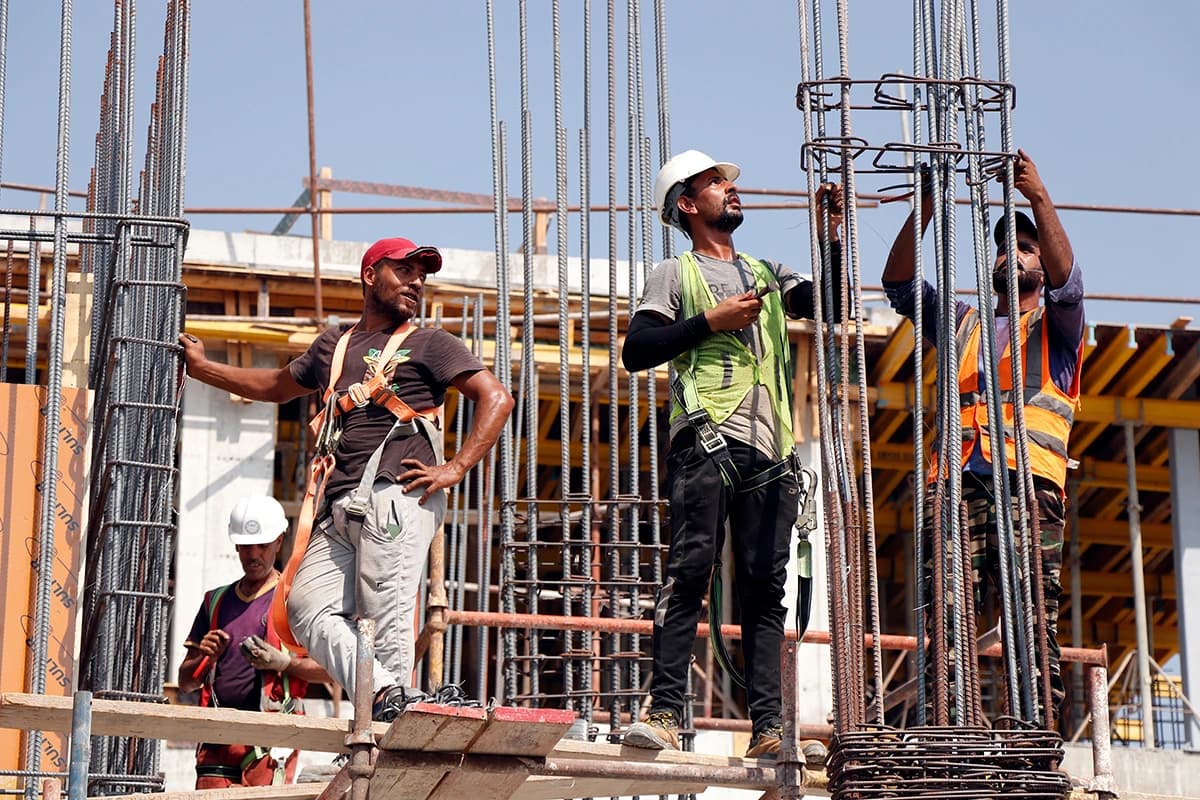
UAE Construction and Real Estate Projects Under Legal Spotlight as Delay Penalties and Termination Risks Tighten
New Civil Code reforms from 2026 and stricter procurement laws reinforce court oversight of liquidated damages and contractor liability.

In the UAE’s fast-moving construction and real estate market, “time is money” is more than a slogan — it is a legal reality. Whether a homeowner is awaiting handover of a villa or a retailer is preparing to open a shop, delay in project completion can carry serious financial and legal consequences. The legal framework governing termination, liquidated damages and compensation is now entering a transitional phase, with significant reforms due to take effect in 2026.
Termination for Delay
Where a contractor is contractually obliged to perform works but fails to make due progress or to complete the project within the agreed timeframe, the consequences are currently governed by Federal Law No. 5 of 1985, commonly known as the Old Civil Code. This law will be replaced by Federal Decree-Law No. 25 of 2025, which comes into force in June 2026.
Article 232 of the Old Civil Code provides that a valid and binding contract may not be revoked, amended or rescinded by either party except by mutual agreement, by court judgment, or by operation of law. Under Article 234, the non-defaulting party must first serve a formal notice on the defaulting party and then apply to the court for either specific performance or rescission of the contract.
However, Article 235 permits parties to agree that a contract may be deemed automatically rescinded upon failure to perform contractual obligations, without the need for a court judgment. Even in such cases, formal notice remains necessary unless expressly waived in the contract.
Liquidated Damages and Judicial Oversight
Liquidated damages are sums agreed in advance by contracting parties as compensation payable upon a specified breach — most commonly delay in completion. In construction contracts, they serve both as an incentive for timely performance and as compensation for late delivery.
Under the New Civil Code, Article 336 provides that where non-performance is attributable to the debtor and not to an external event beyond its control, the debtor is liable to pay compensation. Article 337 further states that compensation does not become due unless the debtor has been formally notified, unless otherwise provided by law or contract.
Where compensation is not predetermined, the court has the authority to assess the appropriate amount based on the actual damage suffered. Crucially, even where liquidated damages are expressly stipulated, Article 340 of the New Civil Code preserves judicial oversight. The court may reduce the agreed amount if it finds that the estimate was exaggerated or if part of the obligation has already been performed. Compensation may also be reduced or denied where the creditor’s own fault contributed to the loss.
Conversely, Article 340 also allows a party to claim more than the agreed sum if it can prove fraud or serious fault. This is particularly significant where contracts impose a damages cap — often set at 10 per cent of the project value — which may not reflect the true extent of loss.
In a landmark 1994 ruling, the Dubai Court of Cassation confirmed the judiciary’s authority to amend pre-agreed compensation in order to reflect actual loss. The burden of proof rests on the party challenging the agreed sum to demonstrate that no loss occurred or that the stipulated damages exceed the actual harm suffered.
The Federal Supreme Court has similarly held, in a dispute between a contractor and subcontractor involving a project for the Federal Ministry of Public Works, that delay penalties in construction contracts constitute financial sanctions designed to protect project owners. However, such penalties remain subject to judicial control to prevent unjust enrichment or unlawful conduct.
Subcontractor Liability
In subcontracting arrangements, a subcontractor cannot avoid delay damages merely by showing that the main contractor incurred no corresponding penalties under the main contract. The subcontractor’s obligations arise independently under the subcontract, and loss must be assessed accordingly.
That said, the main contractor may not be liable for delays caused by a nominated subcontractor appointed by the employer or its consultant. The Dubai Court of Cassation has affirmed that where delays arise from causes beyond the main contractor’s control — including employer-appointed subcontractors — responsibility may rest with the employer.
Administrative Contracts and Government Projects
Administrative contracts, particularly those involving public authorities, are governed by a distinct regime. At the federal level, they fall under Federal Decree-Law No. 11 of 2023, while in Dubai they are regulated by Dubai Law No. 12 of 2020.
In such contracts, delay damages are treated not merely as compensatory payments but as financial penalties serving the public interest. Damage is presumed to arise automatically upon delay, relieving the government entity of the burden of proving actual financial loss. This distinguishes administrative contracts from ordinary civil and commercial agreements under the Civil Code.
Government authorities are also empowered to intervene in underperforming projects. Federal entities may terminate or take over works where progress is inadequate, impose scaled fines and apply a standard 10 per cent administrative penalty. In Dubai, authorities may re-tender the project at the contractor’s expense.
Although delay fines are generally capped at 10 per cent of the project value, modern Dubai jurisprudence permits recovery of additional costs — such as extended consultancy fees — where justified. Contractors may seek relief in cases of force majeure or unforeseen circumstances, but strict procedural deadlines apply. Applications for extensions or exemptions must typically be submitted within 15 days in Abu Dhabi or 30 days in Dubai, failing which the right to relief may be forfeited.
A Balanced but Strict Framework
The evolving legal framework reflects a balance between contractual freedom and judicial supervision. While parties remain free to allocate risk and stipulate delay penalties, courts retain broad authority to ensure that compensation reflects actual loss and that penalties do not operate unfairly.
With the New Civil Code coming into force in June 2026, contractors, developers and employers alike will need to revisit their standard form agreements to ensure compliance and to reassess their exposure to termination risks and delay damages in an increasingly regulated market.
For any enquiries or information, contact ask@tlr.ae or call us on +971 52 644 3004. Follow The Law Reporters on WhatsApp Channels.