Heavy Rains and Missed Work: What UAE Employment Law Says About Salary Cuts During Extreme Weather Disruptions
UAE labour law sets clear rules on employer obligations, force majeure situations and when salary deductions are -- and are not -- legally permitted.
 Staff WriterJan 2, 2026, 4:50 AM
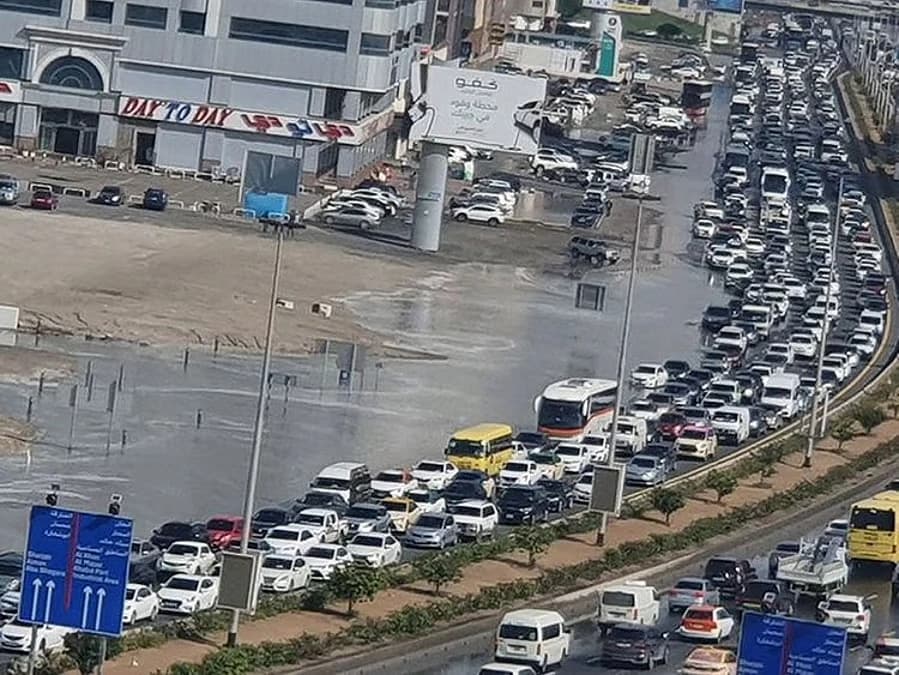
The recent heavy rains and flooding across parts of the UAE disrupted transport networks, residential areas and access to workplaces, leaving many employees unable to report to work despite their best efforts. This has raised an important legal question:
can employers lawfully deduct salaries when employees are absent due to circumstances beyond their control, such as extreme weather conditions?
Under UAE law, the answer largely depends on the nature of the disruption, the employer’s response, and compliance with federal employment legislation.
The legal framework governing employment during emergencies
Employment relationships in the UAE are regulated by Federal Decree Law No. 33 of 2021 on the Regulation of Employment Relations, together with Cabinet Resolution No. 1 of 2022, which sets out its implementing provisions. These laws apply to mainland companies, including those operating in Dubai.
During periods of unstable or extreme weather, the Ministry of Human Resources and Emiratisation (MoHRE) may issue guidance based on forecasts or warnings from the National Centre of Meteorology (NCM). Employers are expected to take such warnings into account when determining work arrangements.
Employer obligations in extraordinary or emergency situations
Article 36 of Cabinet Resolution No. 1 of 2022 specifically addresses extraordinary emergency situations. It allows employers to introduce temporary work measures that are proportionate to the circumstances, while safeguarding the interests of both parties.
These measures may include:
- Implementing remote working arrangements
- Granting paid leave
- Granting unpaid leave
- Temporarily reducing salaries, subject to legal conditions
Importantly, these measures are not automatic. They must be justified by the circumstances and applied in a lawful and transparent manner.
Travel disruptions and late or missed attendance due to bad weather
The law also recognises that severe weather may prevent employees from reaching their workplace. Article 15(1)(a) of Cabinet Resolution No. 1 of 2022 provides that delays caused by bad weather, in response to official warnings from the National Centre of Meteorology, may be taken into account when assessing working hours.
This provision reflects the principle that employees should not be penalised for delays or absences arising from officially recognised weather disruptions.
Force majeure and salary protection
Where an employee is unable to perform their duties due to circumstances beyond their control — such as flooding, road closures or emergency conditions — the employer’s obligations are further clarified under Article 17(2) of Cabinet Resolution No. 1 of 2022.
If work cannot be carried out due to reasons beyond the employer’s control, the employer must:
- Inform the employee of the situation, and
- Guarantee payment of the employee’s salary for the affected period
This provision is particularly relevant during natural events such as heavy rainfall and flooding, which may temporarily prevent normal business operations.
Can salary deductions be made in such cases?
Based on the above legal provisions, an employer should not deduct an employee’s salary where the employee is genuinely unable to attend work due to extreme weather conditions that are beyond their control.
However, employees are expected to act responsibly. They should:
- Inform their employer promptly of their inability to attend work
- Provide reasonable evidence, such as photographs or documentation, demonstrating flooding, waterlogging or transport disruption in their area of residence
Remedies available to employees
If an employer proceeds with salary deductions despite the employee being unable to attend work due to verified extreme weather conditions, the employee has the right to file a complaint with the Ministry of Human Resources and Emiratisation (MoHRE).
MoHRE is empowered to review such disputes and ensure compliance with UAE employment law, particularly where salary deductions may be unlawful or unjustified.
Key takeaway
UAE employment law provides clear protections for employees affected by extraordinary weather events. Where absence from work is caused by circumstances beyond the employee’s control, such as heavy rains and flooding, employers are expected to act reasonably, explore alternative work arrangements, and refrain from unlawful salary deductions.
Both employers and employees are encouraged to communicate transparently and adhere to the legal framework to ensure fair and lawful outcomes during emergency situations.
For any enquiries or information, contact ask@tlr.ae or call us on +971 52 644 3004. Follow The Law Reporters on WhatsApp Channels.