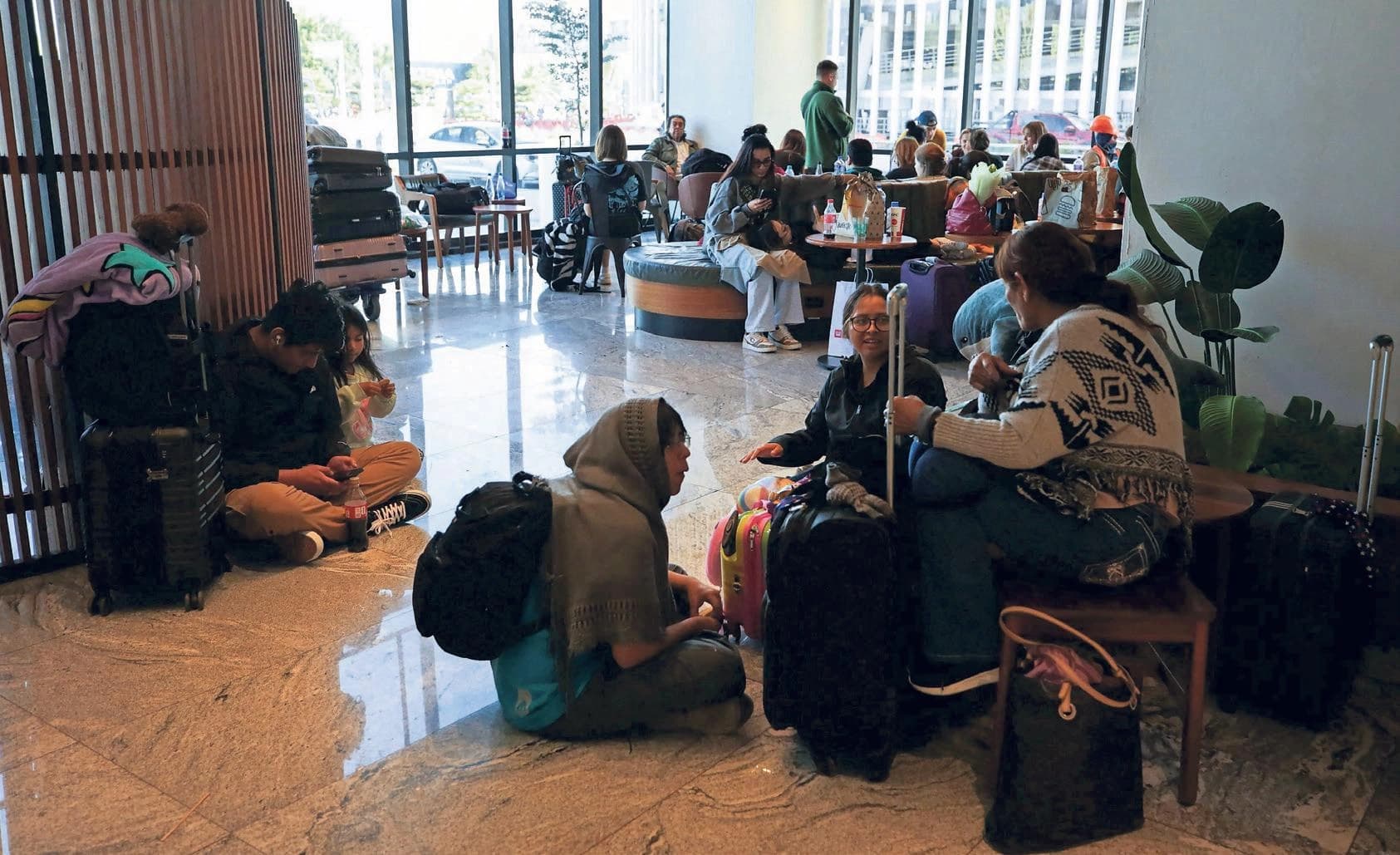
Flight Cancellations Due to Regional Conflict: What UAE Law Says About Refunds, Compensation and Airline Liability
Passengers may seek refunds when flights are grounded, but compensation depends on whether the disruption was within the airline’s control.
 Staff WriterMar 13, 2026, 10:32 AM
Air travellers in the UAE whose flights are cancelled or grounded due to regional conflicts or airspace restrictions may be entitled to certain remedies such as refunds or rebooking, although compensation is not guaranteed in all situations. The legal framework governing such disputes is mainly found in the UAE’s Commercial Transactions Law and the international rules set out in the Montreal Convention of 1999.
When purchasing an airline ticket, passengers are generally bound by the terms and conditions of the airline. These conditions usually regulate matters such as travel arrangements, baggage rules, cancellations, refunds and liabilities. Travellers are therefore expected to review these conditions carefully before confirming a booking, as they often determine the remedies available when flights are delayed or cancelled.
Under UAE law, airlines may be held responsible for damages caused by delays in air transport. Article 357 of Federal Decree Law No. 50 of 2022 issuing the Commercial Transactions Law states that an air carrier is responsible for damage resulting from the late arrival of passengers, checked luggage or cargo. This provision establishes the general principle that airlines have a duty to operate flights within the scheduled timeframe and may be liable when delays cause loss or inconvenience to passengers.
However, the law also recognises the role of international conventions governing air transport. Article 354 of the Commercial Transactions Law states that the provisions of international treaties to which the UAE is a party apply to air transport. One of the most significant of these treaties is the Montreal Convention of 1999, which sets uniform rules for international air travel, including liability for delays, cancellations and loss of baggage.
The Montreal Convention provides that airlines may be liable for damage caused by delays in the carriage of passengers, baggage or cargo. Article 19 of the convention states that a carrier is liable for damage resulting from delay unless it can prove that it and its employees took all reasonable measures to avoid the damage or that it was impossible to take such measures.
This means passengers may claim compensation if a delay was caused by operational or organisational issues that the airline could reasonably have prevented. However, the convention also recognises that airlines cannot always control the circumstances leading to disruptions.
Certain events are specifically recognised as situations where the airline may not be liable. Article 18(2)(c) of the Montreal Convention states that carriers are not responsible for damage arising from circumstances such as an act of war or armed conflict. Such events are generally treated as extraordinary circumstances beyond the airline’s control.
In recent times, aviation disruptions have occasionally occurred due to regional security developments, airspace closures, government directives or military activity. When flights are grounded because of such factors, they may fall under the category of force majeure or extraordinary circumstances. In these situations, airlines may not be legally required to pay additional compensation, provided they can show that reasonable steps were taken to minimise the disruption.
Even in such circumstances, passengers are usually entitled to approach the airline for remedies such as a full refund, alternative flight arrangements or travel credits, depending on the airline’s policies and the specific terms attached to the ticket. Airlines often provide options for rescheduling flights or issuing vouchers when cancellations occur due to circumstances beyond their control.
Where compensation is applicable, the Montreal Convention also sets limits on the airline’s financial liability. Article 22(1) of the convention caps compensation for delays involving passengers at 4,150 Special Drawing Rights per passenger, although the exact amount in local currency may vary depending on exchange rates.
Therefore, when flights are cancelled or grounded due to regional conflict or security concerns, passengers in the UAE may seek remedies from the airline, particularly refunds or rebooking. However, additional compensation will generally depend on whether the disruption resulted from circumstances within the airline’s control or from extraordinary events such as war or armed conflict.
Understanding these legal provisions can help travellers manage expectations and take appropriate action when aviation disruptions occur. Passengers are also advised to keep copies of their booking details, airline communications and receipts, as such documentation may be required if they decide to pursue claims related to delays or cancellations.
For any enquiries or information, contact ask@tlr.ae or call us on +971 52 644 3004. Follow The Law Reporters on WhatsApp Channels.