Resigning Without Notice: When Employer Breach Overrides Notice Periods and What Employees Must Prove to Avoid Liability
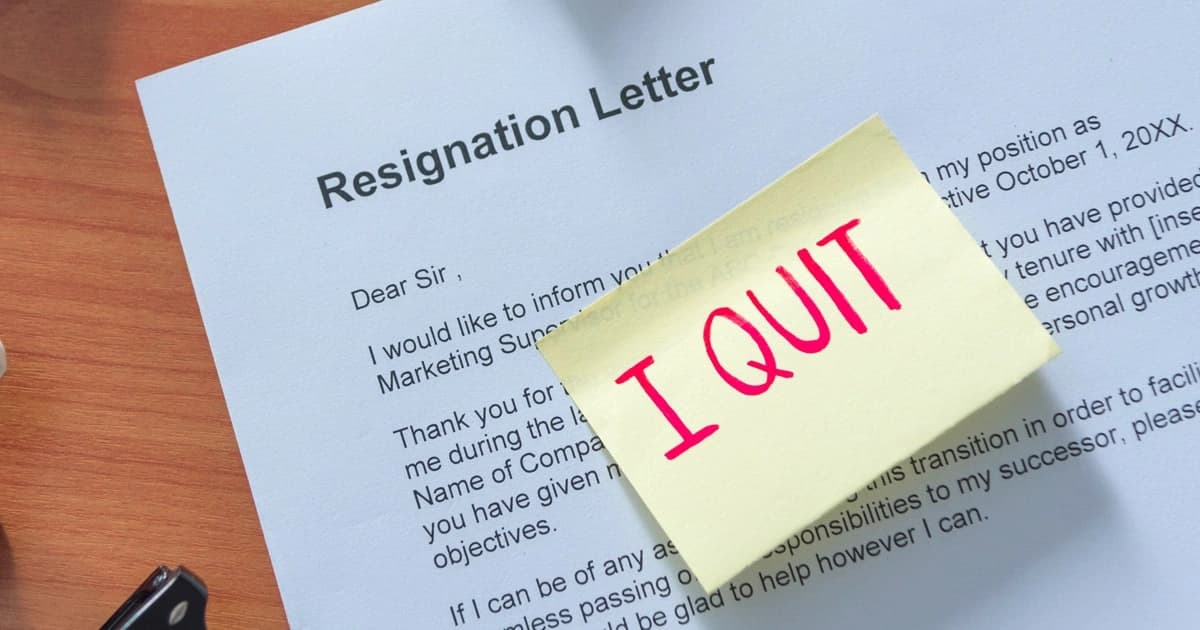
UAE law allows resignation without notice in cases of employer breach — but only after formal notification and failure to remedy.
 Staff WriterMar 23, 2026, 1:26 PM
UAE’s labour framework draws a clear line between ordinary resignation and situations where an employee is forced to leave due to an employer’s breach of legal or contractual obligations. While the general rule requires employees to serve a notice period — typically agreed as one month — there are important exceptions under Federal Decree-Law No. 33 of 2021 that can significantly alter both liability and entitlement.
One of the most critical provisions in this regard is Article 45, which permits an employee to resign without serving notice while still retaining full end-of-service benefits. However, this is not an automatic right triggered merely by dissatisfaction or delayed salary payments. The law imposes a structured process that must be followed for the exception to apply.
Under Article 45, an employee may leave employment without notice if the employer has breached their obligations under the employment contract or the law — such as failing to pay wages on time. But this right is conditional. The employee must first formally notify the Ministry of Human Resources and Emiratisation at least 14 working days before resigning. The Ministry then notifies the employer and provides an opportunity to remedy the breach. Only if the employer fails to correct the violation within this period does the employee gain the legal right to resign immediately without notice and without financial penalty.
This procedural requirement is central. If an employee resigns without completing this step—no matter how valid the underlying grievance — the resignation may be treated as a standard termination without notice. In such cases, the employer retains the right to claim compensation in lieu of the notice period, and the dispute ultimately becomes subject to judicial determination.
Another frequently contested issue in such disputes is the actual start date of employment. In many cases, employees begin working before the formal labour contract is issued or registered. While UAE courts do recognise that employment relationships may exist prior to formal documentation, the burden of proof lies entirely with the employee.
An employee may claim an earlier start date than what is recorded in the contract, but must substantiate this with credible evidence. This can include bank records showing salary transfers, payslips, internal emails, attendance logs, or any documentation demonstrating that work was performed during the claimed period. In the absence of such proof, courts will rely on the official start date stated in the registered labour contract.
This distinction can have significant financial implications. The recognised start date affects calculations relating to end-of-service benefits, length of employment, and even the assessment of damages or compensation in labour disputes.
The legal position, therefore, is both protective and conditional. The UAE Labour Law offers employees a clear remedy against employer misconduct, including the ability to walk away without notice. At the same time, it safeguards employers from arbitrary resignations by requiring employees to follow a defined complaint and notification process.
In practical terms, employees facing issues such as delayed salaries or contractual violations should first document the breach and formally escalate the matter through the Ministry before taking the step of resignation. Skipping this stage can weaken their legal position and expose them to claims for notice period compensation.
Ultimately, the law seeks to balance fairness with procedural discipline — ensuring that genuine cases of employer breach are addressed, while preventing misuse of the provision allowing resignation without notice.
For any enquiries or information, contact ask@tlr.ae or call us on +971 52 644 3004. Follow The Law Reporters on WhatsApp Channels.