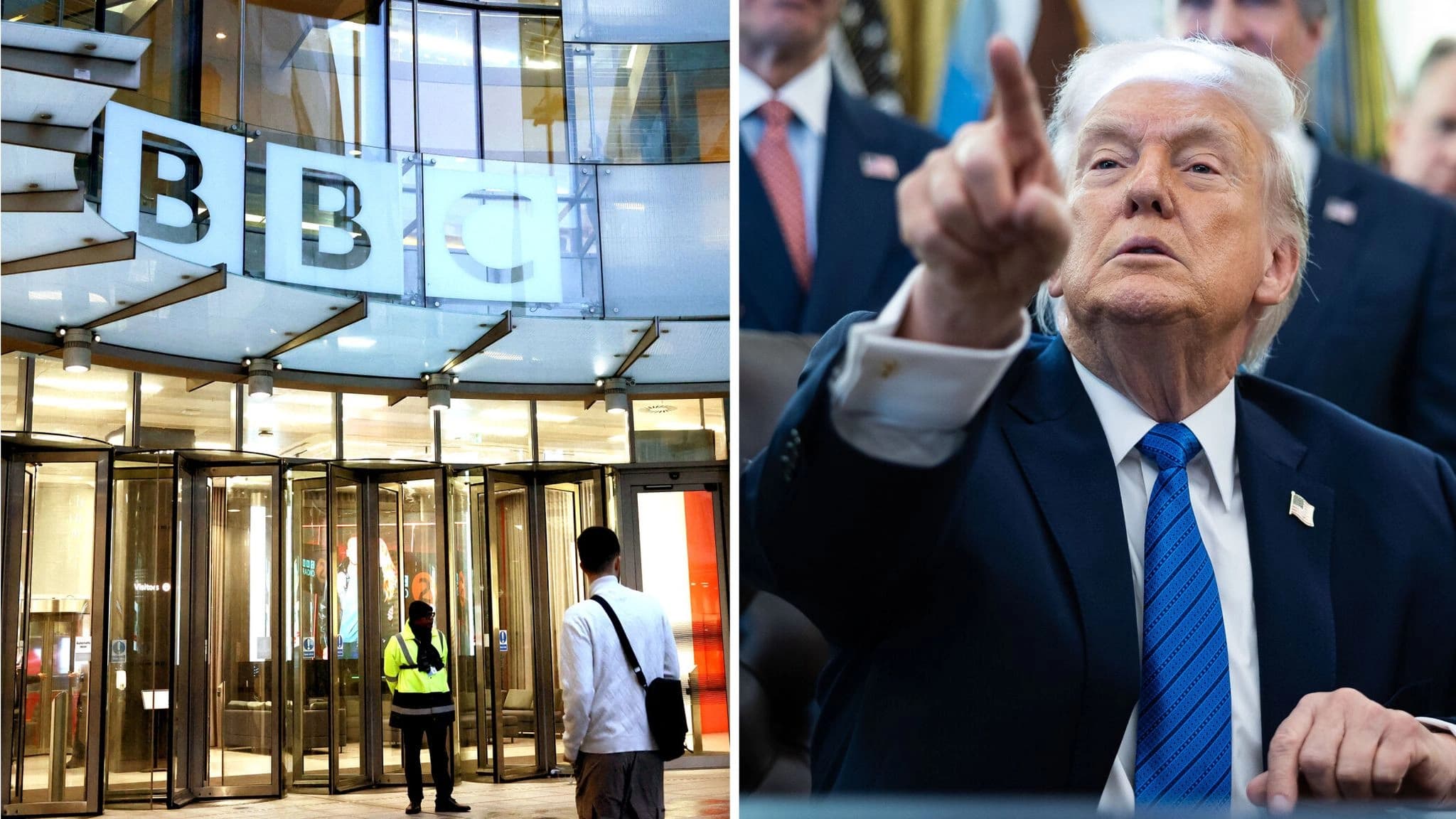
Trump Defamation Case: US Judge Denies BBC Bid to Delay Discovery
Court rules broadcaster’s stay request was premature as legal battle over edited January 6 speech moves forward.
 Staff WriterFeb 16, 2026, 11:56 AM
A US judge has rejected the BBC’s application to stay discovery in the $10 billion lawsuit brought by US President Donald Trump over its editing of a speech that allegedly made it appear he directed supporters to storm the US Capitol, court documents showed on Thursday.
Trump has accused Britain’s publicly owned broadcaster of defaming him by splicing together parts of a January 6, 2021, speech, including one section in which he told supporters to march on the Capitol and another where he said “fight like hell”.
The broadcaster allegedly omitted a lengthy section in which he called for a peaceful protest.
Trump’s lawsuit alleges the BBC defamed him and violated a Florida law that bars deceptive and unfair trade practices. He is seeking at least $5 billion in damages for each of the lawsuit’s two counts.
US District Judge Roy Altman on Wednesday denied the British broadcaster’s application to stay the merits-based discovery phase, during which both sides can obtain evidence from other parties in the lawsuit, the documents showed.
The judge said the BBC’s application was premature and that it had not shown it would be prejudiced if the stay was not granted. In a separate order, the judge set a two-week trial date for February 2027.
The broadcaster has previously said it would defend the case and would seek to have it dismissed, arguing that the court lacked jurisdiction because it did not broadcast the programme in Florida and that the president could not prove damages because he was re-elected after it aired.
Legal experts say the ruling clears the way for the case to move into the discovery stage, a critical phase in US civil litigation that could uncover internal communications and editorial decision-making at the BBC regarding the controversial broadcast.
The defamation suit has attracted international attention due to its unprecedented scale and the high-profile nature of the parties involved. It also raises questions about the intersection of US defamation law and the jurisdictional reach of foreign media organisations.
Trump’s legal team has argued that the edited broadcast intentionally misrepresented his remarks to portray him as inciting violence, while the BBC maintains that its coverage was fair and in the public interest.
Observers say the trial, now scheduled for 2027, could set important precedents for future defamation cases involving cross-border media and public figures.
For any enquiries or information, contact ask@tlr.ae or call us on +971 52 644 3004. Follow The Law Reporters on WhatsApp Channels.