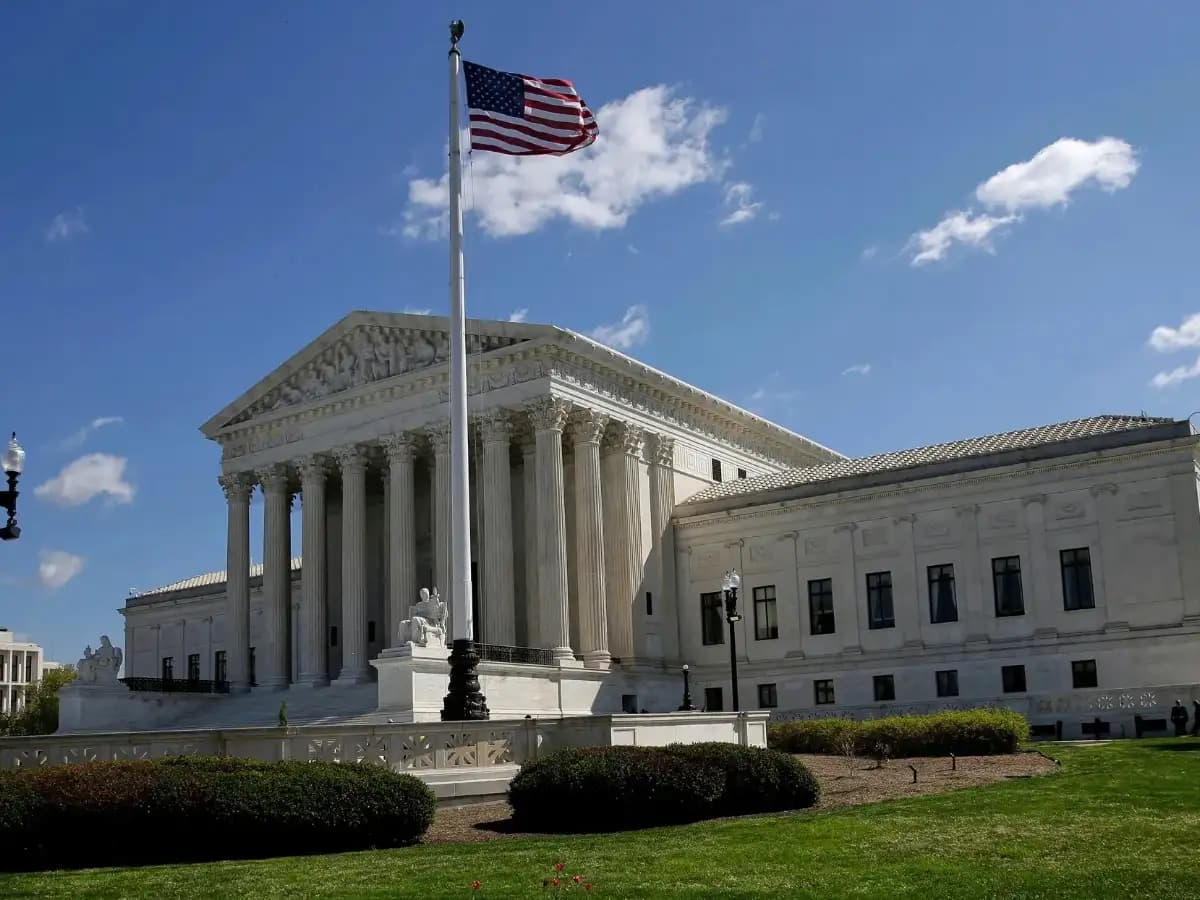
US Supreme Court Rejects Trump Bid on Citizenship, Backs Trans Sports Bans
Landmark end-of-term rulings deliver a mixed verdict for the president, reshaping immigration and gender rights.
 Staff WriterJul 1, 2026, 11:53 AM
The US Supreme Court dealt President Donald Trump a significant setback on Tuesday, rejecting his attempt to restrict birthright citizenship, while also allowing states to ban transgender student athletes from competing in women’s sports and striking down further campaign finance restrictions.
The court’s nine-month term concluded with a series of consequential rulings, delivering both victories and setbacks for Trump on key issues including presidential powers, immigration, tariffs and financial oversight.
Birthright citizenship was among Trump’s top priorities in his immigration crackdown. He signed an executive order on the issue on his first day back in office last year.
In a 6-3 ruling authored by Chief Justice John Roberts, the court found that Trump’s directive violated the 14th Amendment of the US Constitution, which guarantees citizenship to almost anyone born in the United States, with only narrow exceptions.
Ratified in 1868 after the Civil War, the amendment grants citizenship to those born in the country and “subject to the jurisdiction thereof”, excluding only limited categories such as children of foreign diplomats or enemy occupiers.
“Citizenship, then and now, was the right to have rights — to freely participate in our political community,” Roberts wrote, adding that the amendment’s framers extended that promise to every free-born person in the country.
Trump’s order had instructed federal agencies not to recognise the citizenship of children born in the US if neither parent was an American citizen or lawful permanent resident. Critics said the move disproportionately targeted immigrant communities.
Legal experts had estimated the order could affect the status of up to 250,000 babies each year and force millions of families to prove the citizenship of their newborns.
Following the ruling, Trump criticised the decision on his Truth Social platform, calling it “too bad for our Country” and urging Congress to end what he called “expensive and unfair” birthright citizenship.
Transgender Sports
The court also issued a major ruling on transgender rights, allowing states to enforce laws restricting transgender girls and women from competing in female sports teams.
The case centred on laws in West Virginia and Idaho, which classify school sports teams by biological sex. Twenty-five other states have enacted similar laws.
In a unanimous 9-0 ruling, the court held that the measures did not violate Title IX, the federal civil rights law prohibiting sex-based discrimination in education. The justices split ideologically on the constitutional question, with the six conservative justices ruling that the laws also complied with the 14th Amendment’s equal protection clause.
Justice Brett Kavanaugh wrote that states could preserve women’s and girls’ sports for biological females and determine eligibility based on biological sex.
Trump hailed the decision as a “big win” on social media.
It marked the court’s second major ruling against transgender plaintiffs within a year, following its June 2025 decision allowing states to ban gender-affirming medical treatment for transgender minors.
Campaign Finance and Wider Impact
The court also struck down federal limits on coordinated campaign spending between political parties and candidates, siding with Republican challengers including Vice President JD Vance.
In another 6-3 ruling, the court found that the spending cap violated the First Amendment’s protections on free speech.
The decision adds to a long line of rulings since 2010 that have steadily dismantled campaign finance restrictions.
The term saw several other significant decisions. In February, the court rejected Trump’s sweeping global tariffs introduced under emergency powers. On Monday, it backed his dismissal of a Federal Trade Commission member, broadening presidential authority over independent agencies, while refusing to immediately allow the removal of Federal Reserve Governor Lisa Cook.
Other rulings included limiting protections under the Voting Rights Act, allowing the administration to revoke humanitarian protections for Haitian and Syrian migrants, expanding gun rights, and agreeing to hear fresh challenges to state-level bans on assault-style rifles when the next term begins in October.
For any enquiries or information, contact ask@tlr.ae or call us on +971 52 644 3004. Follow The Law Reporters on WhatsApp Channels.