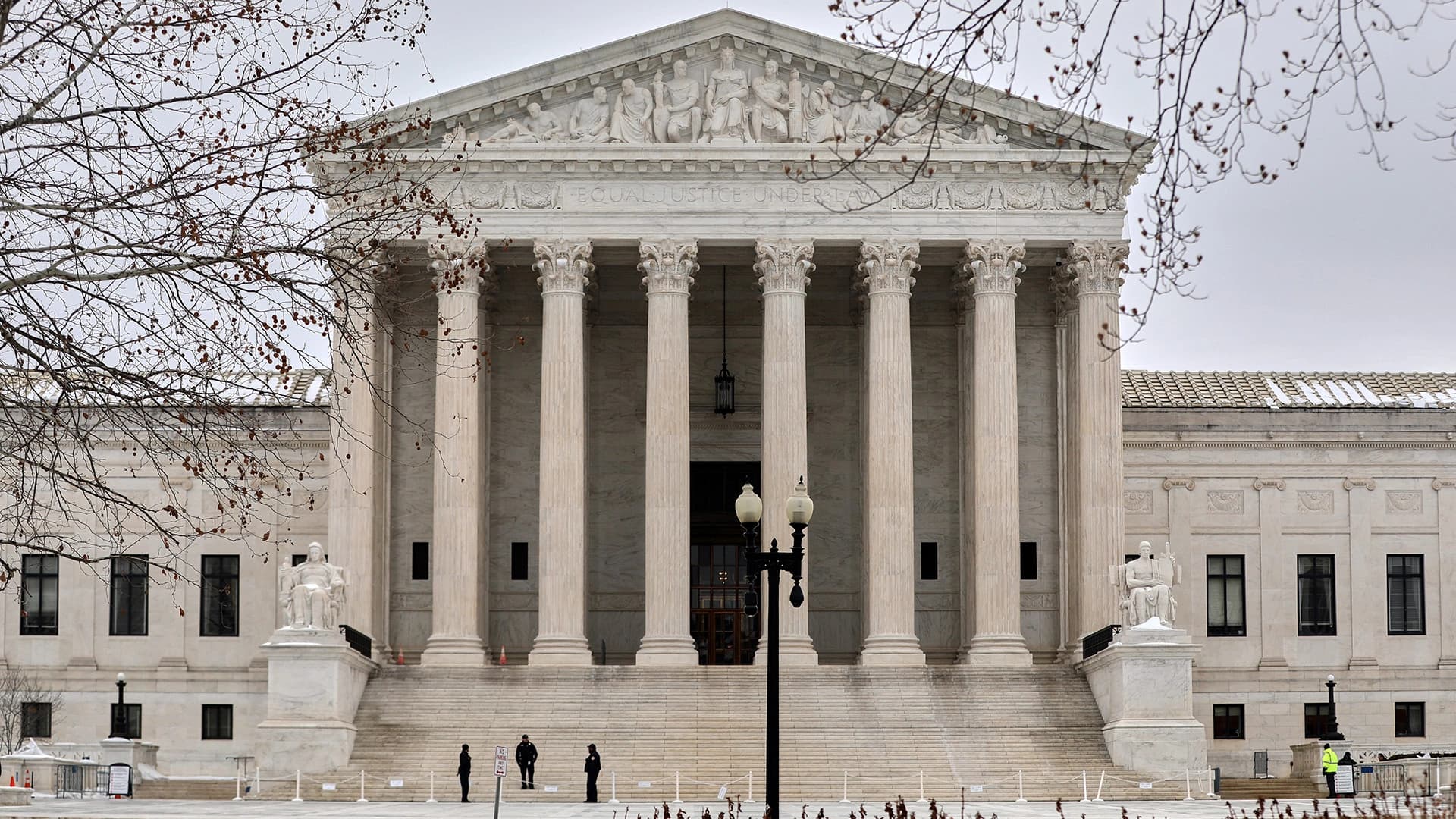
US Supreme Court Shields Federal Reserve Governor Cook but Expands Trump’s Reach Over Other US Agencies
5-4 ruling preserves the Fed’s independence, even as the court broadens presidential power to remove officials elsewhere.
 Staff WriterJun 30, 2026, 11:55 AM
The closely divided US Supreme Court has reinforced the Federal Reserve’s independence from the White House, protecting its governors from being dismissed by the president without proof of wrongdoing.
The decision came even as the court, in a separate ruling on Monday, widened presidential authority to remove senior officials at other federal agencies, overturning a 91-year-old precedent in a major constitutional shift.
In a 5-4 decision, the court said Federal Reserve Governor Lisa Cook can remain in office while she challenges President Donald Trump’s attempt to remove her over unproven mortgage fraud allegations. Writing for the majority, Chief Justice John Roberts pointed to the long-standing tradition of preserving the Fed’s independence in exercising monetary policy.
“Congress limited the president’s power to remove governors for good reason,” Roberts wrote. He and Justice Brett Kavanaugh joined the court’s three liberal justices in the majority.
The justices also faulted Trump for failing to provide Cook with notice and an opportunity to respond before seeking her removal. However, the court stopped short of deciding whether the allegations, if proven, would justify removing her during her 14-year term.
Narrow Ruling
Roberts stressed that the court was ruling on “narrow grounds”, leaving open the possibility of Trump trying again to remove Cook if he chooses. That limited scope means the case could return to the Supreme Court at a later stage.
Cook said the ruling reaffirmed a principle that has guided US economic stewardship for generations: that the Federal Reserve must make policy decisions based on evidence and independent judgement, free from political interference.
Trump, meanwhile, wrote on social media that his administration would “take appropriate action immediately” to ensure that anyone found guilty of wrongdoing would not be making vital decisions concerning the welfare of the United States.
The administration has accused Cook of fraudulently listing homes in Michigan and Georgia as her “primary residence” to secure better mortgage terms in 2021. Cook has dismissed the claims as baseless, saying they rely on “cherry-picked, incomplete snippets” of documents. She has not been charged with any offence.
The case tested the Supreme Court’s commitment to the central bank’s autonomy. While the court had previously moved to shield the Fed from Trump’s attempts to assert greater control, the Cook case introduced fresh legal questions.
Kathryn Judge, a law professor at Columbia University, said the ruling was “good news but not great news” for Federal Reserve independence, adding that it raised questions over how durable that independence would remain.
The narrow margin also exposed divisions within the court. Justices Clarence Thomas, Samuel Alito, Neil Gorsuch and Amy Coney Barrett dissented on different grounds.
Thomas, writing separately, argued that the Fed’s regulatory functions are executive powers that should fall under presidential authority. He described the ruling as “an unprecedented incursion on the executive branch”. Barrett, meanwhile, said the constitutional status of the Federal Reserve was beyond the scope of the case.
In a concurring opinion, Kavanaugh warned that even temporary uncertainty over the Fed’s status could trigger political upheaval and economic turbulence in both the US and global markets.
FTC Ruling
In the second case, the court ruled that Trump could dismiss Democratic Rebecca Kelly Slaughter from the Federal Trade Commission despite legal protections limiting removals to specified grounds. Roberts said the Fed remained distinct from other agencies because of its central role in setting monetary policy.
A victory for Trump in the Cook case could have paved the way for him to remove other Fed governors who resisted his calls for interest-rate cuts, potentially allowing him to reshape the central bank. Trump has repeatedly floated the idea of dismissing Jerome Powell, who continues to serve on the Fed’s Board of Governors even after his term as chair ended.
The ruling comes less than two weeks after Fed officials concluded their first policy meeting under new chair Kevin Warsh. Despite sustained pressure from Trump to cut rates, the Fed left its benchmark interest rate unchanged. Recent inflationary pressures have raised concerns among officials that borrowing costs may need to rise further in the months ahead.
For any enquiries or information, contact ask@tlr.ae or call us on +971 52 644 3004. Follow The Law Reporters on WhatsApp Channels.