President Trump’s Power Tested as US Supreme Court Nears Term-End Climax
Final rulings on immigration, executive power and civil rights will test Trump’s expansive use of presidential authority.
 Staff WriterJun 25, 2026, 12:02 PM
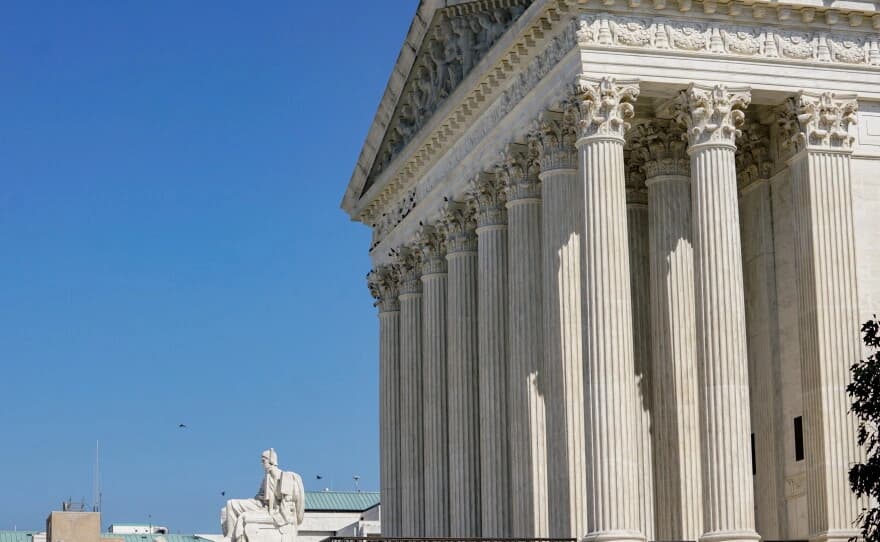
The US Supreme Court is approaching the final stretch of its current term, with a series of major rulings expected to determine the fate of several high-profile challenges to Donald Trump’s efforts to expand presidential authority.
The court issued five rulings on Tuesday, with additional decisions expected later this week. Its annual term typically runs from early October through late June or early July, although the exact end date has not yet been announced. The most consequential rulings are often reserved for the closing days of the term.
This year, however, stands out for the number of major unresolved cases centred on presidential power and Trump’s assertive use of executive authority across domestic and foreign policy.
The pending cases include challenges linked to his attempt to restrict birthright citizenship, remove Federal Reserve Governor Lisa Cook, dismiss members of independent federal agencies, and end humanitarian protections that currently shield hundreds of thousands of Syrian and Haitian immigrants from deportation.
Legal experts note that while it is normal for landmark decisions to arrive at the end of the term, the volume of high-stakes cases this year is unusual.
“It’s totally normal for the most important cases of the term to come out in the last few days. What is unusual is that there are so many blockbuster cases,” said University of Michigan constitutional law professor Sam Erman.
He added that Trump’s use of executive power has triggered broad legal scrutiny. “We’ve seen a lot of novel uses of presidential power since Trump took office… and that’s produced a very active Supreme Court term, and a big bang at the end.”
Trump, in his second term, has aggressively pursued an expansion of presidential authority in both domestic governance and foreign affairs, prompting hundreds of legal challenges.
The Supreme Court’s 6–3 conservative majority, which includes three justices appointed during Trump’s first term, has often shown support for his administration in emergency requests that allow policies to take effect while litigation continues.
Over time, the court’s conservative wing has increasingly embraced the “unitary executive” theory, which places broad control of the executive branch in the hands of the president.
However, observers say limits remain. Of the major cases heard this term, analysts suggest Trump may have stronger prospects in disputes involving the removal of federal officials than in cases such as birthright citizenship or challenges involving Lisa Cook.
“They have a view of a strong executive, but it’s not an unlimited executive,” Erman said. “So when he is essentially advancing their project, he’s pretty likely to win.”
The court is widely seen as unlikely to uphold Trump’s attempt to restrict birthright citizenship through executive order, a move that would challenge long-standing interpretations of the 14th Amendment guaranteeing citizenship to those born in the United States.
Earlier this year, the court also issued a significant setback to Trump by striking down broad global tariffs imposed under emergency powers legislation. The ruling drew strong criticism from Trump, who publicly attacked the justices involved.
Beyond Trump-related matters, several major cases remain pending on issues including voting rights, elections, firearms regulation, and transgender rights.
In one case, the court is reviewing a Mississippi law that allows a five-day grace period for mail-in ballots received after Election Day, a decision that could influence voting rules nationwide.
In another, it is considering a Republican-backed challenge involving limits on coordinated political spending between parties and candidates, a case with implications for campaign finance rules.
The court also recently narrowed a key provision of the Voting Rights Act, prompting new redistricting efforts in Southern states that could reshape congressional representation ahead of the next elections.
Separately, justices are weighing challenges to state laws in West Virginia and Idaho that ban transgender athletes from competing in girls’ sports teams, amid broader national debates over transgender rights.
On gun rights, the court is set to rule on a Hawaii law restricting the carrying of handguns on private property open to the public without explicit permission. It also recently rejected a federal position that raised questions about firearm ownership rights for marijuana users.
As the term nears its conclusion, the court’s final decisions are expected to have far-reaching consequences for presidential power, civil rights, and the balance of authority within the US government.
For any enquiries or information, contact ask@tlr.ae or call us on +971 52 644 3004. Follow The Law Reporters on WhatsApp Channels.