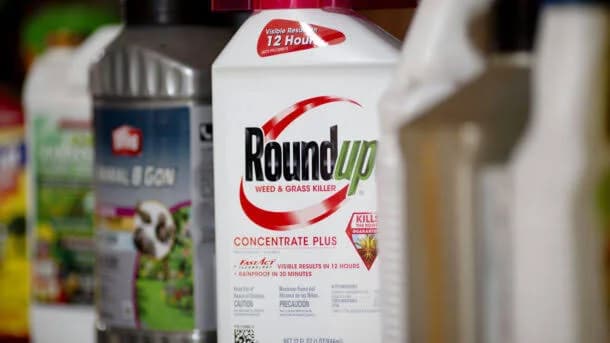

A Missouri judge on Friday approved Bayer’s $7.25 billion settlement of lawsuits alleging that its weedkiller Roundup causes cancer, potentially resolving litigation that has weighed on the German company for nearly a decade.
Judge Timothy Boyer of a state court in St Louis found the settlement to be “fair, reasonable and adequate”.
The judge also said that delaying payments could force victims, including those with terminal cancer, to wait “an indeterminate number of years” to receive compensation.
Bayer had faced approximately 65,000 claims in US state and federal courts from people who said they had developed cancer after using Roundup at home or at work.
The settlement, announced in February, was intended to resolve nearly all existing and future Roundup claims in the US.
“The court's final approval is a decisive milestone in the company's strategy to mitigate the risks of both pending and future Roundup litigation,” Bayer CEO Bill Anderson said in a statement.
Bayer has faced extensive litigation over Roundup, with its share price falling 46 per cent since it acquired Monsanto, the producer of the weedkiller, for $63 billion in 2018.
The company settled much of the Roundup litigation for $10.9 billion in 2020 but subsequently failed to secure court approval for a $1.25 billion settlement intended to resolve future claims.
Bayer has consistently maintained that Roundup and its active ingredient, glyphosate, are safe, citing decades of studies that it says have found no link between glyphosate and cancer.
The latest settlement was approved five months after the US Supreme Court overturned a $1.25 million jury award to Missouri resident John Durnell, who blamed years of exposure to glyphosate in Roundup for his non-Hodgkin lymphoma.
In a 7-2 decision, the Supreme Court agreed with Bayer that federal legislation governing pesticides barred failure-to-warn claims brought under state law, weakening a central pillar of many Roundup lawsuits.
Narrowed Path
Christopher Seeger, a lawyer representing many of the plaintiffs, said the Durnell ruling had narrowed the ability of Roundup victims to pursue claims in court.
“We look forward to getting this relief into the hands of all Roundup victims as quickly as possible,” he said in a statement.
Lawyers representing some Roundup victims who objected to the settlement did not immediately respond to requests for comment.
The settlement excludes certain lawsuits that remain pending in federal court. Bayer has said that approximately 200 such cases are still being litigated and that the Supreme Court's decision has given it strong defences.
For enquiries or further information, contact ask@tlr.ae or call +971 52 644 3004. Follow The Law Reporters on WhatsApp Channels.