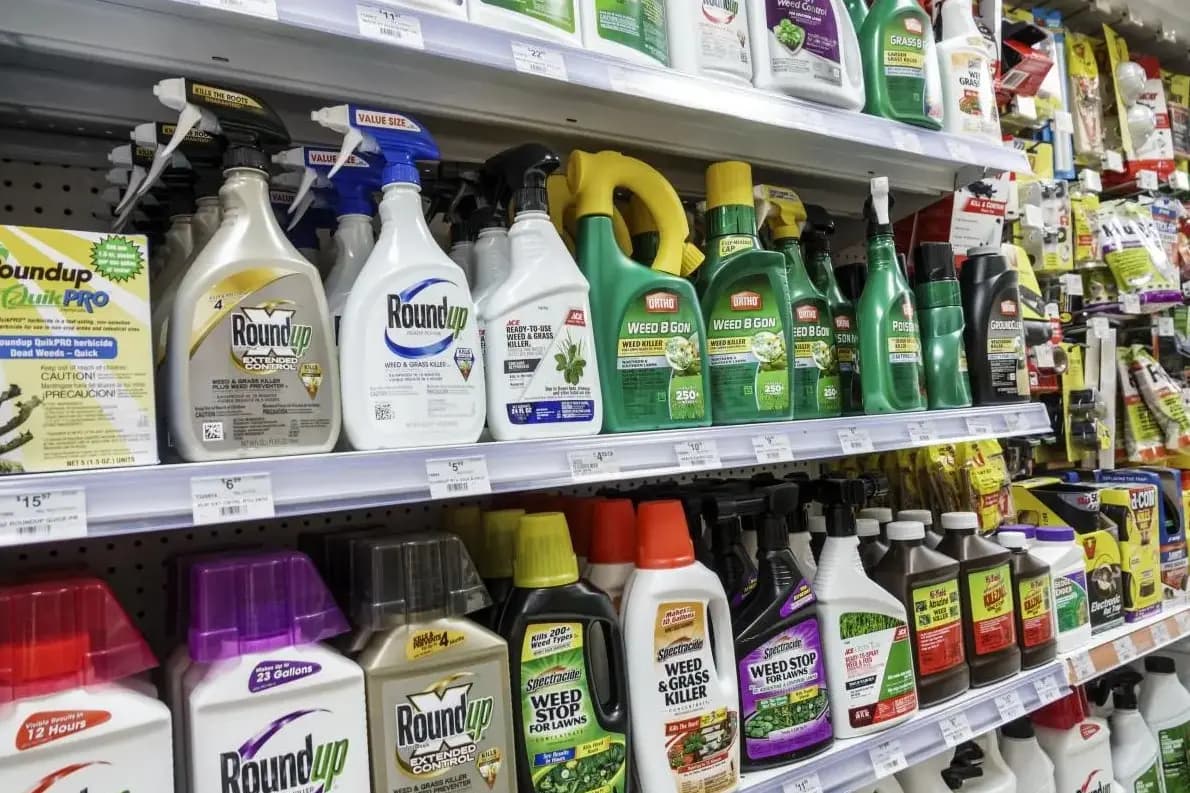

Bayer won a trial over claims by three women that its Roundup weedkiller caused their cancer, as the company awaited a separate court ruling on its proposed $7.25 billion settlement of thousands of other lawsuits involving the product.
The trial was an important test of the future of Roundup litigation following a US Supreme Court ruling in Bayer's favour that restricted the legal arguments available to plaintiffs. It comes as the German pharmaceutical and agrochemical group seeks to resolve tens of thousands of claims through a proposed settlement, which is under review by a Missouri state court judge in St Louis.
A jury in St Louis unanimously ruled in favour of Monsanto, the Bayer-owned company that manufactures Roundup, in the first case to go to trial following the Supreme Court's June ruling. The litigation has weighed heavily on Bayer since its 2018 acquisition of Monsanto, costing the company billions of dollars and putting pressure on its share price.
Bill Dodero, Bayer's US general counsel and global head of litigation, said the verdict demonstrated the difficulties plaintiffs could face in pursuing further claims following the Supreme Court decision.
The ruling, he said, should send a strong signal that plaintiffs seeking to continue their cases would face significant challenges in establishing the legal basis for their claims and presenting sufficient evidence to prove them in court.
Plaintiffs Sued in 2020
Theresa Aretino, Cynthia Fernandez and Betty Larkin filed their lawsuit against Monsanto in 2020 in St Louis, alleging that they had regularly used Roundup before developing non-Hodgkin lymphoma, a type of blood cancer. Their lawyers argued that the weedkiller was defectively designed, unreasonably dangerous and negligently marketed.
The three women are not participating in Bayer's proposed settlement. Fernandez died before the trial began.
Bayer has consistently denied that Roundup causes cancer, maintaining that decades of scientific studies have established the safety of glyphosate, the product's active ingredient.
The company faces approximately 65,000 claims in US state and federal courts from people who allege that they developed cancer after using Roundup at home or in the workplace.
Supreme Court Ruling Changes Legal Landscape
Before the Supreme Court ruling in June, most Roundup lawsuits centred on allegations that the product's label failed to warn consumers about potential cancer risks. The court, however, blocked this line of legal argument, holding that federal law requires manufacturers of herbicides to use the precise labelling approved by the US Environmental Protection Agency (EPA).
The EPA has concluded that Roundup's label does not require a cancer warning. This has significantly weakened a central argument used by plaintiffs seeking compensation from Bayer.
The legal implications of the decision, however, extend beyond warning-label claims. Bayer has argued that other grounds for liability, including defective design and negligence, are also barred by the Supreme Court's interpretation of federal law.
Plaintiffs' lawyers have disputed that position, maintaining that the ruling does not prevent them from pursuing claims based on the product's alleged defects or the company's conduct in manufacturing and marketing it.
The distinction is important because the outcome of this legal dispute could determine whether thousands of pending lawsuits can proceed, even if claims based on inadequate warnings are no longer available.
Scientific Debate Over Glyphosate Continues
The litigation also reflects a long-running scientific disagreement over the potential health risks of glyphosate.
The EPA has previously concluded that glyphosate is unlikely to be carcinogenic to humans, although the agency is currently conducting a fresh review of its safety.
In contrast, the International Agency for Research on Cancer (IARC), part of the World Health Organization, classified glyphosate in 2015 as 'probably carcinogenic to humans'. Bayer has challenged that assessment, describing it as an outlier opinion based on what it considers flawed methodology.
The different assessments have remained central to the controversy surrounding Roundup. While Bayer relies on regulatory findings and scientific studies supporting the safety of glyphosate, plaintiffs have cited research and expert opinions linking exposure to the chemical with certain cancers.
Settlement Could Reshape Bayer's Legal Exposure
The latest verdict comes at a critical stage in Bayer's efforts to contain the financial and legal consequences of the Roundup litigation. Its proposed $7.25 billion settlement is intended to resolve a substantial number of existing and potential claims, although it remains subject to judicial review.
The settlement proceedings are separate from the trial involving the three women, who have chosen not to participate in the proposed arrangement. The Missouri court's decision will therefore have significant implications for Bayer's broader strategy, but will not determine the outcome of every individual claim.
For Bayer, the combination of the Supreme Court ruling, the latest jury verdict and the proposed settlement could mark an important turning point in a legal dispute that has affected its finances and market valuation since the Monsanto acquisition.
However, the wider litigation is far from over. The extent to which plaintiffs can pursue alternative legal arguments, particularly those relating to product design and negligence, remains contested. The resolution of that issue could prove decisive in determining the scale of Bayer's continuing exposure to Roundup-related claims.
For enquiries or further information, contact ask@tlr.ae or call +971 52 644 3004. Follow The Law Reporters on WhatsApp Channels.