CJI Calls for Action to Boost Women’s Representation in Higher Judiciary
Chief Justice urges High Court collegiums to widen the pool of candidates and treat women’s elevation to the Bench as the norm, not an exception.
 Staff WriterMar 9, 2026, 12:28 PM
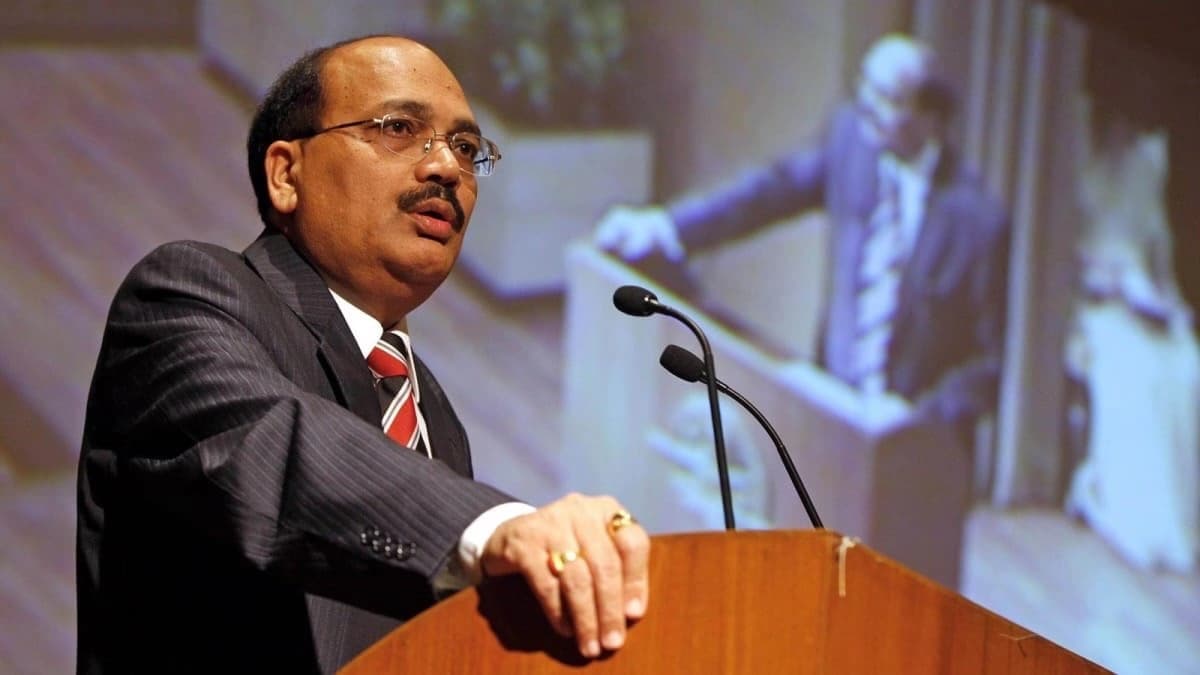
Chief Justice of India Surya Kant on Sunday said that improving women’s representation in the higher judiciary requires more than institutional intent and must be backed by concrete action.
Addressing the issue, the Chief Justice urged High Court collegiums across the country to actively consider meritorious women lawyers for judicial appointments and expand their zone of consideration wherever necessary.
Justice Kant said that when qualified women candidates are available, their elevation to the Bench should become a norm rather than an exception.
“Institutional intent is no longer enough. It must be accompanied by institutional imagination,” the Chief Justice said.
He further appealed to High Court collegiums to broaden their search for suitable candidates.
According to him, the absence of eligible women within a particular age group in a High Court’s jurisdiction should not become a barrier to their appointment.
“I earnestly request the High Court collegiums to widen the zone of their consideration and include women advocates practising in the Supreme Court who belong to that State for elevation,” he said.
Justice Kant was speaking at the inaugural session of the first National Conference of Indian Women in Law titled “Half the Nation – Half the Bench”, held at the Supreme Court of India on the occasion of International Women’s Day.
The conference was organised by Indian Women in Law, an initiative led by Senior Advocates Shobha Gupta and Mahalakshmi Pavani.
Highlighting the importance of representation in the judiciary, the Chief Justice said that when half the nation’s population looks at institutions responsible for protecting constitutional rights but sees limited representation of women, the concern goes beyond mere statistics.
“It concerns the confidence of approximately 650 million Indian mothers, sisters and daughters who must believe that the justice system understands their realities and will respond to them with fairness,” he said.
Justice Kant emphasised that the call for greater representation is not about granting preference but about ensuring equal opportunity.
“Any discussion today is not an argument for preference. It is an argument for a fair starting line — equal opportunity, equal responsibility, and equal space to demonstrate competence,” he said.
He also pointed to structural barriers that women continue to face in the legal profession, including workplace bias, inadequate facilities and professional expectations that often place disproportionate burdens on them.
Despite these challenges, the Chief Justice noted that many women have excelled in the profession and that their presence on the Bench strengthens the justice system by bringing diverse lived experiences.
“Women who ascend to the Bench do not bring a separate standard of justice. The Constitution remains the same. But lived experiences deepen the Court’s engagement with the society it serves,” he said.
Justice Kant also highlighted institutional measures already taken to encourage women’s participation in legal bodies.
He referred to earlier directions of the Supreme Court of India mandating that at least 30 per cent of seats in State Bar Councils be reserved for women advocates, along with similar directions to Bar Associations across the country.
The Chief Justice said these measures are intended to strengthen the pipeline of women lawyers who may eventually be considered for elevation to the Bench.
“If the pipeline is narrow at its source, the Bench cannot later be broad,” he observed.
Justice Kant also noted positive trends in the district judiciary, where women now constitute around 36.3 per cent of the total working strength of judicial officers.
According to him, this reflects a generational shift that could gradually lead to greater representation in higher courts.
“At the district level, the foundation is steadily strengthening. When the base of the system reflects greater inclusion, it is only a matter of time before that strength finds expression in the higher judiciary,” he said.
At the same time, the Chief Justice cautioned against complacency, emphasising that improving representation must remain an ongoing institutional effort rather than a one-time reform.
“The story should not be that one individual secured greater representation. It should be that the Supreme Court of India and the High Courts consciously embedded fairness into their processes,” Justice Kant said.
He added that meaningful change would come only when representation is embedded within institutional structures rather than dependent on individual initiatives.
For any enquiries or information, contact ask@tlr.ae or call us on +971 52 644 3004. Follow The Law Reporters on WhatsApp Channels.