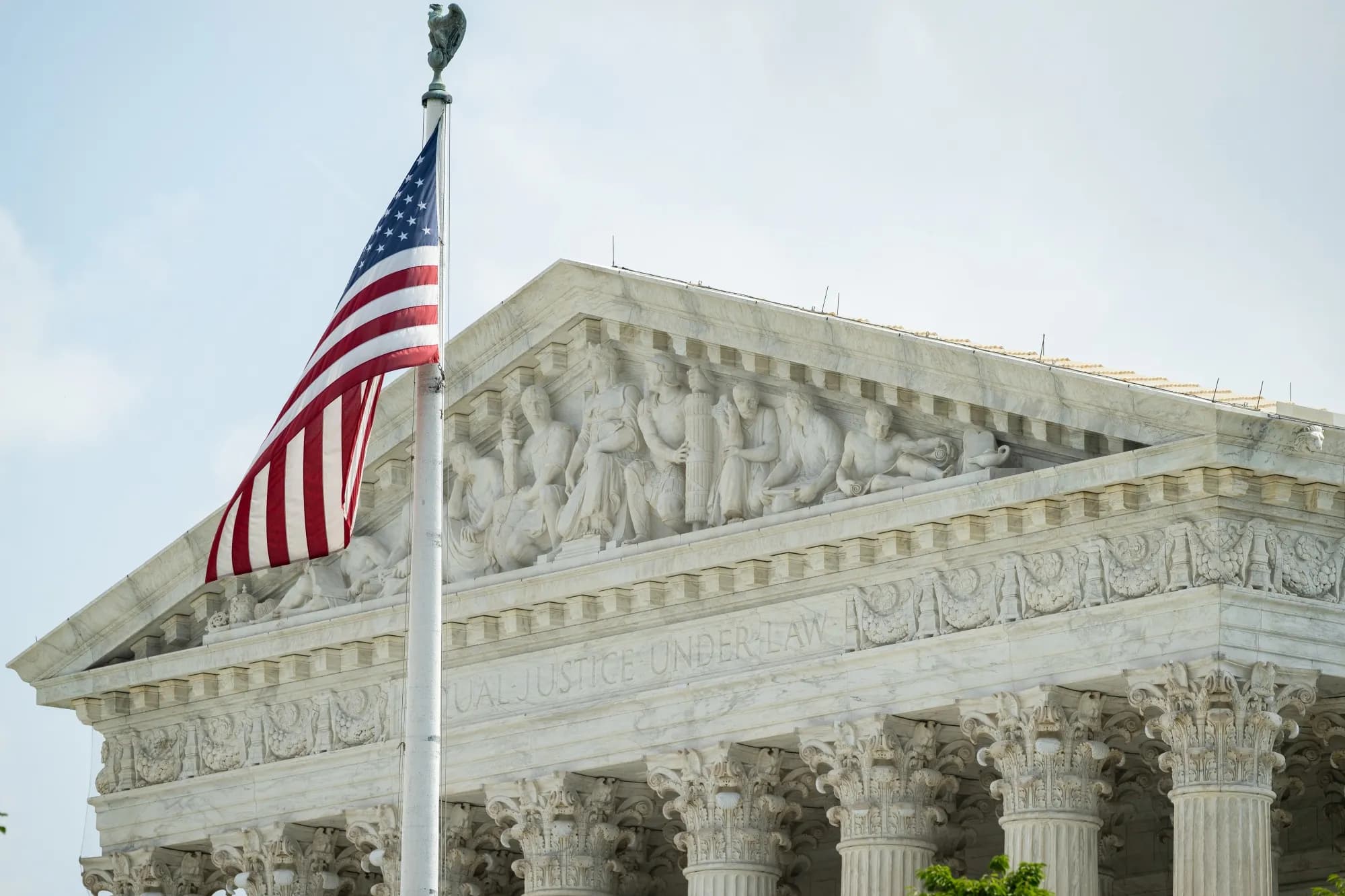
Campaigning Democratic Candidates Push for Supreme Court Reforms
Democratic candidates are increasingly backing measures such as term limits and expanding the number of justices.
 Staff WriterJul 9, 2026, 11:22 AM
Democratic candidates contesting the US midterm elections are increasingly calling for major reforms to the Supreme Court, adopting more ambitious positions than many of the lawmakers they hope to replace. The shift reflects growing frustration among progressives over the direction of the conservative-dominated court and its recent landmark decisions, Bloomberg Law reported.
Colin Allred, who is seeking to return to Congress by contesting Texas’ 33rd Congressional District, said the court had “sacrificed its legitimacy” and that lawmakers must respond accordingly.
Writing in a May Substack post, Allred said he had previously resisted proposals to reform the Supreme Court but changed his position after the court struck down a key provision of the Voting Rights Act in April. He now supports expanding the number of justices and introducing fixed term limits.
Chris Rabb, the Democratic nominee for a congressional district in Philadelphia, has also backed expanding the court following the voting rights ruling.
“It’s time to pack the court and establish term limits to reclaim our judiciary,” Rabb wrote in a social media post.
In Michigan, Democratic Senate candidate Abdul El-Sayed has proposed replacing lifetime appointments with renewable 10-year terms for Supreme Court justices. His campaign describes the court as a “major impediment to democracy”.
His primary rivals, Representative Haley Stevens and State Senator Mallory McMorrow, who suspended her campaign this week, also supported various forms of judicial reform. Illinois Lieutenant Governor Juliana Stratton, who is expected to become the state’s newest senator following her March primary victory, has similarly endorsed reform proposals.
Progressives have become increasingly critical of the court after a series of rulings that they argue weakened voting rights, curtailed abortion protections and overturned long-standing precedents limiting executive power.
Although calls for reform intensified after the court’s most significant decisions this year, it remains uncertain whether Democrats would be able to pass legislation expanding the court or introducing a binding judicial ethics code, even if they regain control of Congress.
“That sense of urgency has been missing,” said former Representative Mondaire Jones, who sponsored legislation in 2021 to expand the Supreme Court.
Growing support among Democratic leaders
There are signs that support for reform is spreading within the Democratic Party as the Supreme Court has shifted further to the right.
House Democratic Leader Hakeem Jeffries, who could become Speaker if Democrats regain control of the House, said during the American Progress Ideas Festival in May that “all options are on the table”. His predecessor, Nancy Pelosi, had previously dismissed proposals to expand the court.
Support for reform is also extending beyond the party’s progressive wing. In New York’s 10th Congressional District, both Representative Daniel Goldman and his successful primary challenger, Brad Lander, support expanding the Supreme Court.
Meanwhile, Democratic Senate candidates James Talarico in Texas and Josh Turek in Iowa have advocated ending lifetime tenure for Supreme Court justices, although neither has endorsed increasing the number of seats on the bench.
Public opinion appears more favourable towards term limits than court expansion. A June poll by Marquette University found broad support for fixed terms for Supreme Court justices, with 79 per cent of respondents backing the proposal.
That level of public support has prompted some reform advocates to argue that term limits should be the starting point for any changes. The proposal has previously attracted bipartisan backing, with Republicans including Senator Ted Cruz and Secretary of State Marco Rubio having supported term limits in the past.
In 2015, following landmark Supreme Court decisions upholding same-sex marriage and tax subsidies under the Affordable Care Act, Cruz proposed a constitutional amendment requiring justices to face a national retention election every eight years.
However, Republican support for reform has largely faded as the court's 6–3 conservative majority has advanced several long-standing conservative legal priorities. Cruz now supports maintaining the court at its current size of nine justices.
Conservative groups argue that Democratic proposals to expand the court are intended to pressure the judiciary. Carrie Severino, president of the Judicial Crisis Network and a former law clerk to Justice Clarence Thomas, said calls for court-packing were designed to "undermine and intimidate" Supreme Court justices.
Expansion versus term limits
Democrats remain divided over how extensive Supreme Court reform should be.
Senator Sheldon Whitehouse, who could become chairman of the Senate Judiciary Committee if Democrats regain control, introduced legislation in 2023 proposing staggered 18-year terms for Supreme Court justices. Asked about expanding the court, Whitehouse said his focus remained on his term-limits proposal.
Some progressive organisations argue that term limits alone would not adequately reduce the influence of the court’s current conservative majority and could face constitutional challenges.
Josh Orton, president of Demand Justice, which supports expanding the court, questioned whether the current Supreme Court would uphold legislation introducing term limits if its own authority were affected.
In the House of Representatives, Representative Jamie Raskin, who is expected to chair the Judiciary Committee under a Democratic majority, has also expressed support for expanding the court.
Even if Democrats regain control of Congress, however, they are unlikely to secure the supermajority required to overcome legislative obstacles such as the Senate filibuster.
Tré Easton, a former aide to Senator John Fetterman and now with the Democratic think tank Searchlight Institute, said proposals such as court expansion remain highly polarising and that Democrats would need to be realistic about what they could achieve legislatively.
A debate likely to continue
Many Democrats believe any significant restructuring of the Supreme Court would ultimately depend on the support of a future Democratic president.
Potential contenders for the 2028 presidential election, including Senator Ruben Gallego, Representative Ro Khanna and former Transportation Secretary Pete Buttigieg, have all expressed support for expanding the court and introducing term limits.
Pennsylvania Governor Josh Shapiro also joined calls for what he described as "radical reform" following the court's closely divided ruling rejecting former President Donald Trump's efforts to end birthright citizenship.
Former Congressman Mondaire Jones said Supreme Court reform should not become the defining issue of the midterm elections but acknowledged that it would almost certainly dominate the Democratic presidential primary in 2028.
President Joe Biden showed little enthusiasm for overhauling the court during his administration. He established a bipartisan commission to examine possible reforms, but it produced no policy recommendations and concluded that expanding the Supreme Court remained a deeply divisive issue.
Nancy Gertner, a retired federal judge who served on the commission and supports expanding the court, said meaningful reform had become unavoidable despite concerns that it could provoke institutional conflict.
Harvard Law School professor Nikolas Bowie argued that the most significant reform would not necessarily involve changing the composition of the court but rather redefining the constitutional balance of power.
“Congress needs to reclaim its constitutional authority,” Bowie said. “The question is not simply who sits on the Supreme Court, but how much power the court should exerc
For any enquiries or information, contact ask@tlr.ae or call us on +971 52 644 3004. Follow The Law Reporters on WhatsApp Channels.