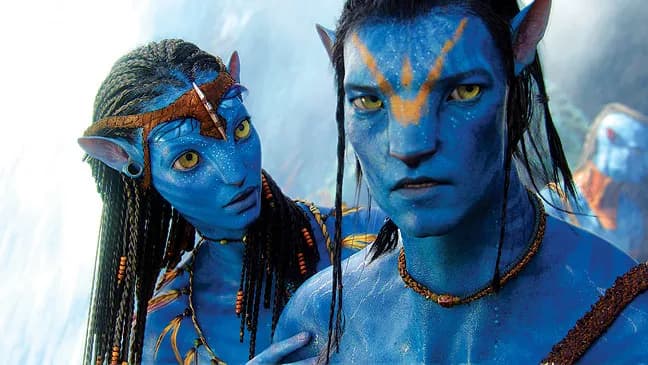
Disney, James Cameron Win Dismissal Of Copyright Lawsuit Over ‘Avatar’ Sequels
Judge finds the films are not substantially similar to the science-fiction story cited by animator Eric Ryder in his claim.
 Staff WriterOct 6, 2026, 11:42 AM
A US federal judge has dismissed a copyright infringement lawsuit against Disney and filmmaker James Cameron, rejecting claims that the Avatar sequels copied elements of a science-fiction story created by a 3-D animator.
The case, brought by animator Eric Ryder, alleged that Cameron and Disney copied his original work, known as KRZ, in developing Avatar: The Way of Water and Avatar: Fire and Ash.
The ruling by the US District Court for the Central District of California gives Disney and Cameron a legal victory in the dispute over the blockbuster film franchise.
Ryder had argued that the two sequels contained similarities to his work that amounted to copyright infringement. The court, however, found that the alleged similarities were either based on material that predated Ryder's work, carried forward from the original Avatar film, or involved ideas that were not protected by copyright.
Cameron had developed a detailed treatment for the original Avatar film in 1995, before Ryder presented his KRZ project to Lightstorm Entertainment in 2000.
The court also noted that an earlier case had already found that the original Avatar was not substantially similar to Ryder's work. It therefore excluded elements carried forward from the first film when assessing the allegations concerning the sequels.
Among the similarities highlighted by Ryder was the depiction of underwater harvesting of organic material said to have life-extending properties. The judge found that the alleged similarities, when examined in context, were not sufficient to establish copyright infringement.
The court also rejected the argument that expert testimony or further discovery was required to determine whether the works were substantially similar. It said the remaining issues could be assessed without specialised knowledge because the works were intended for general audiences and dealt with readily understandable subject matter.
Ryder's copyright claim included allegations of direct, contributory and vicarious infringement. The court dismissed those claims, finding that secondary copyright liability could not stand without an underlying finding of direct infringement.
The judge also dismissed Ryder's related state-law claims without prejudice after declining to exercise supplemental jurisdiction over them. The court had previously allowed Ryder an opportunity to amend his complaint, but he chose to stand on his existing filing.
The lawsuit is Ryder v. Cameron, No. 2:25-cv-11854, in the US District Court for the Central District of California. Reuters identified Daniel Saunders of Kasowitz LLP as representing Ryder and Kelly Klaus of Munger Tolles & Olson as representing Disney.
For enquiries or further information, contact ask@tlr.ae or call +971 52 644 3004. Follow The Law Reporters on WhatsApp Channels.