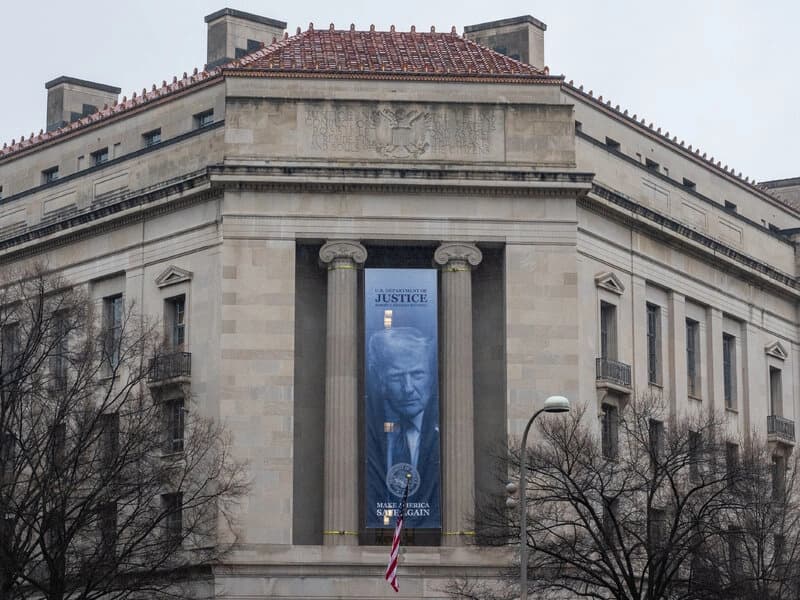
DOJ Honors Programme Loses Appeal Among Students Amid Growing Uncertainty
Concerns over job stability, political perceptions and career prospects are prompting aspiring lawyers to explore alternative career paths.
 Staff WriterJul 28, 2026, 8:40 AM
Angelica Afanador entered American University’s law school in 2024 with hopes of securing a position through the US Justice Department’s prestigious honours programme. She has since changed course.
After seeing fellow students have their honours programme offers withdrawn in early 2025 and Justice Department internships suspended, Afanador is now focusing on nonprofit roles and judicial clerkships as she approaches her final year of law school.
Afanador is among a growing number of students reconsidering the decades-old route into the Justice Department, according to four law school administrators interviewed by Bloomberg Law.
“Watching their peers lose those offers” and “seeing delays and difficulties around government shutdowns” have made the honours programme “a less attractive option,” said Daniela Kraiem, assistant dean for Career and Professional Development at American University’s Washington College of Law.
However, interest in the programme has not disappeared. Hundreds of law students are still expected to apply for the estimated 223 positions advertised this year when the 12-day application window opens on August 28.
Interest remains visible on law student discussion forums, while graduating students continue to publicly announce their acceptance of honours programme offers.
But uncertainty over job security, reputational concerns and training opportunities under the Trump administration’s Justice Department is causing some potential applicants to reconsider a career path that was once viewed as a prestigious gateway into federal public service.
Reputation and Ideology Concerns
Leah Gould, assistant dean of Public Interest at Northwestern University’s Pritzker School of Law, said she previously helped about a dozen students each year apply for the honours programme and SLIP, the Justice Department’s summer internship programme. However, the number of interested students has “dropped significantly”, she said.
Students who have spoken with Gould about their concerns have questioned how accepting a Justice Department position now could affect their future careers and professional reputation.
Some fear that joining the department could be interpreted as an endorsement of the current administration, she
said.
“I think that’s their biggest concern,” Gould said.
One Yale Law School graduate, who previously worked at the Justice Department before attending law school, said he had planned to return after graduation but decided against applying following Donald Trump’s election.
He said he was concerned about how such a move might be perceived by future employers.
Political and ideological differences have also discouraged some potential applicants, said the graduate, who requested anonymity due to concerns about possible career consequences.
“A lot of people want to go sue the federal government,” rather than work for it, he said.
The Justice Department did not respond to requests for comment.
Questions Over the Future Path
Career advisers are now weighing how to guide students considering the programme.
“That depends,” said Julie Zebrak, a former special counsel for attorney development and inclusion at the Justice Department and former head of its Criminal Division honours committee.
Zebrak said she would advise young lawyers to be cautious about beginning their careers today as Criminal Division prosecutors, citing concerns that junior attorneys could become involved in cases they may not wish to handle, particularly where individuals’ lives and liberty are at stake.
However, she said the department still has experienced career lawyers who can provide valuable training and mentorship in litigation, trial work and discovery.
“The prestige of the honours programme has shifted, but not every case at DOJ that a newly minted attorney will work on will be newsworthy or controversial,” Zebrak said.
The impact of recent changes has varied across different Justice Department offices and divisions.
“Some offices within the department have tried to shield more junior attorneys from potentially controversial cases, while others may not have that flexibility,” Gould said.
She added that students are increasingly looking towards state attorneys general offices as an alternative route into public interest law.
“That’s where a lot of the action is anyway,” she said. “They’re going to get great experience, excellent training, and remain committed to public service and the mission of the office.”
State and local attorneys general offices may also offer students opportunities that better align with their individual interests and values.
These offices are attracting attention because they may “align more closely with their particular interests and values”, said Matt Nosanchuk, dean for public interest and public service law at George Washington University Law School, who previously worked at the Justice Department.
“You need excellent public servants working in government,” Nosanchuk said, encouraging aspiring lawyers to “find a government role” where they feel comfortable, whether through the honours programme or another pathway.
For Afanador, who is entering her final year at American University, working on voting rights cases at the Justice Department was once “kind of a dream”.
Instead, she is now exploring fellowships and roles with nonprofit advocacy organisations such as the American Civil Liberties Union (ACLU), where she completed an internship this summer.
The prospect of starting her career at the Justice Department, she said, “just kind of withered away — or at least became the antithesis of what I had hoped for.”
For any enquiries or information, contact ask@tlr.ae or call us on +971 52 644 3004. Follow The Law Reporters on WhatsApp Channels.