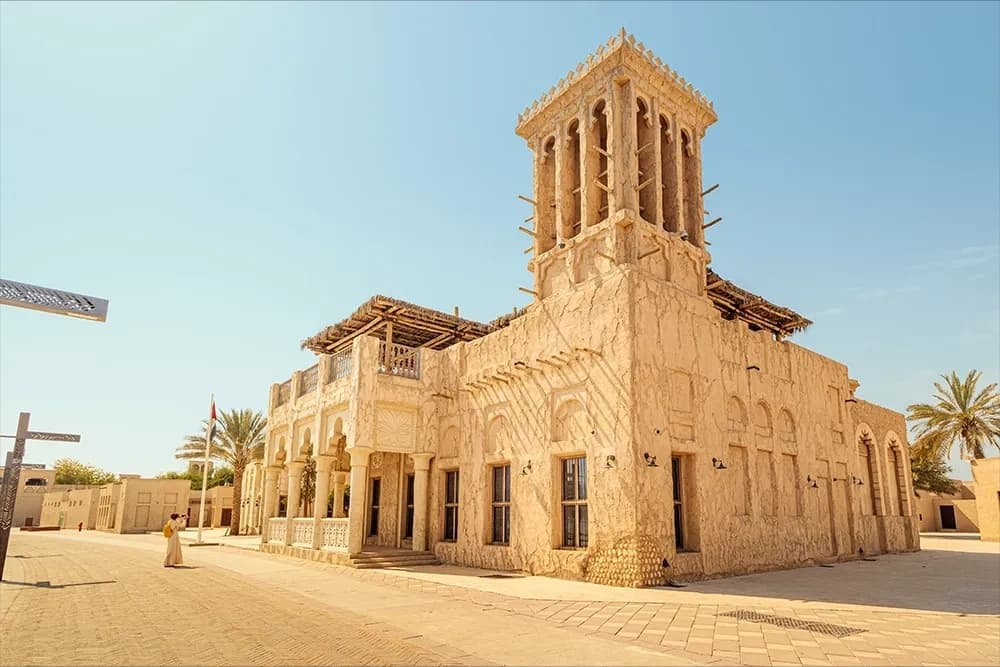
Dubai Enacts Sweeping Law to Safeguard Antiquities, Archaeological Heritage
New legislation strengthens protection, registration and regulation of archaeological sites and artefacts across the emirate.
 Staff WriterMay 22, 2026, 11:06 AM
In his capacity as Ruler of Dubai, His Highness Sheikh Mohammed bin Rashid Al Maktoum, Vice President and Prime Minister of the UAE, has issued Law No. 11 of 2026 on antiquities and archaeological sites in the Emirate of Dubai. The law applies to both existing and newly discovered archaeological sites and artefacts across all land, marine and mountainous areas of Dubai, including special development zones and free zones, among them the Dubai International Financial Centre.
The law seeks to identify, register, classify and preserve Dubai’s antiquities and archaeological sites, recognising them as key national assets of the emirate. It also aims to raise awareness of their historical, cultural and architectural value, while strengthening their protection and regulating archaeological activities across Dubai.
Under the legislation, the Dubai Culture and Arts Authority (Dubai Culture) is designated as the competent authority responsible for overseeing antiquities and archaeological sites in the emirate.
The law stipulates that antiquities and archaeological sites in Dubai are considered property of the emirate, except for privately owned movable or immovable artefacts and sites that can be proven through possession, official documentation or registration in the official register. It further clarifies that land ownership does not extend to antiquities discovered on or beneath it, nor does it permit excavation or related activities without authorisation.
Artefacts owned by the emirate may not be gifted except with the approval of Dubai Culture, and may be temporarily moved outside the country only for exhibition, restoration or study with its permission. The authority may also approve loans of artefacts to official, scientific or museum institutions inside or outside the UAE in accordance with executive regulations governing gifting, export and lending.
The law affirms that the emirate retains intellectual property rights over images, models, reports and replicas of its artefacts, including those produced by authorised entities.
It requires any person who discovers an artifact — whether intentionally or by chance — to leave it undisturbed, halt any related work, including construction, and immediately notify Dubai Culture or Dubai Police within 48 hours. This also applies to surrounding areas deemed integral to the site, as defined and mapped by the authority in coordination with relevant entities.
In marine zones, any accidental discovery must be reported immediately to Dubai Culture and handed over within seven days. Subject to third-party rights, artefacts found by chance become property of the emirate if no owner is identified within five years, during which the authority will attempt to trace ownership while ensuring preservation and registration.
The law establishes a dedicated register at Dubai Culture for all antiquities and archaeological sites, including eligible privately owned assets. It recognises existing registered sites as compliant and requires owners of qualifying artefacts or sites to apply for inspection and registration. It also sets classification criteria, defines conservation obligations, regulates restoration, governs the entry of foreign artefacts and outlines administrative penalties for violations.
It prohibits damaging, altering, relocating or defacing any antiquity or archaeological site, including surrounding areas, and bans waste dumping or unauthorised signage. Entry to restricted sites without approval is also prohibited, as is the use of such areas for activities including storage, quarrying, industrial, military or hazardous operations.
Any excavation, construction or landscaping works require prior approval from Dubai Culture in coordination with relevant authorities. The law also mandates approval for exhibitions, auctions and online trading of antiquities, as well as for importing artefacts without proof of lawful ownership and for their temporary or permanent export.
No archaeological activity may be undertaken in Dubai without a permit issued by Dubai Culture, with the Executive Council to regulate licensing conditions and procedures. In addition, a no-objection certificate from the authority is required for major projects in areas that may contain archaeological sites, following assessment in coordination with relevant entities.
All stakeholders must comply with the law within one year of its effective date, with the Director General of Dubai Culture empowered to extend this period for a further year if necessary. Any conflicting legislation is hereby repealed, and the law comes into force from the date of its publication in the Official Gazette.
For any enquiries or information, contact ask@tlr.ae or call us on +971 52 644 3004. Follow The Law Reporters on WhatsApp Channels.