
A recent Dubai court ruling ordering a developer to refund Dh1.8 million to a purchaser in The Heart of Europe project has brought the legal risks surrounding property investments with promised guaranteed returns into focus. The judgment highlights a crucial distinction between completing a development and fulfilling the contractual obligation to transfer ownership. It also raises wider questions about investors’ rights when developers fail to honour sale agreements, register properties or deliver the financial benefits promised at the time of purchase.
The ruling is particularly significant for investors in hotel units and managed properties, where purchase decisions are often influenced by promises of fixed annual returns, rental income and eventual buyback. Alongside an earlier judgment involving another purchaser in the same development, it highlights how Dubai courts assess developers’ contractual obligations, the legal significance of property registration and the evidence required to establish claims for refunds and compensation.
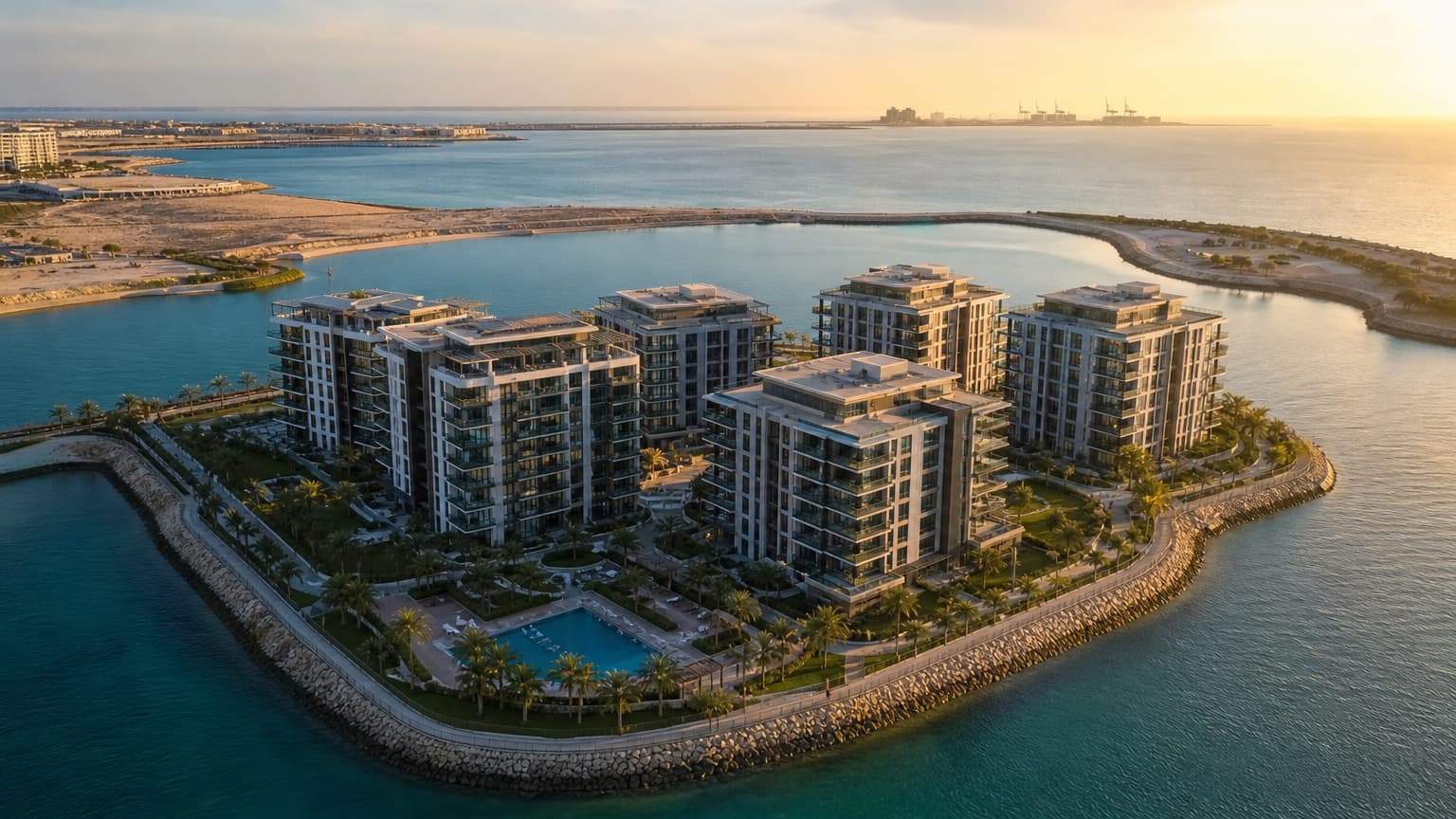
Dubai’s The Heart of Europe, a luxury island development in the World Islands archipelago, was marketed as both a premium property destination and an attractive investment opportunity. Developed by the Kleindienst Group, the project offered hotel units and residential properties backed by promises of guaranteed rental income, annual returns on investment and buyback arrangements.
The court ordered the cancellation of the purchase agreement, a refund of Dh1,805,040 and an additional Dh150,000 in compensation after finding that the developer had failed to complete the sale and register the property in the purchaser’s name. The decision is significant because it demonstrates that even where a development has been completed, the purchaser's contractual and proprietary rights cannot be treated as fulfilled until the required legal formalities are completed.
The dispute also raises wider questions for investors in Dubai’s property market: What legal protection exists when a developer fails to transfer ownership? Can a purchaser recover promised investment returns? When does a delay become a fundamental contractual breach, and what compensation can a court award?
The Investment Proposition And its Contractual Obligations
The Heart of Europe, developed by the Kleindienst Group, attracted attention through its distinctive architectural concept and investment-oriented sales model. Alongside the development's hospitality facilities and residential offerings, prospective purchasers were presented with rental income arrangements and guaranteed investment returns.
The developer's promotional material has referred to a 100% net guaranteed return on investment. Earlier sales campaigns also highlighted annual rental returns of 8.33%, amounting to approximately 100% over 12 years. Such representations can be particularly influential when purchasers are acquiring hotel units or managed properties primarily for their income-generating potential.
The legal significance of these promises, however, depends on the actual contractual documents. An advertised return does not automatically create an enforceable entitlement unless its terms are incorporated into the relevant agreement or otherwise form part of the legally binding arrangement.
A purchaser must examine the sale and purchase agreement (SPA), hotel management agreement, rental guarantee, payment schedule and any separate buyback undertaking. These documents may identify different obligations, responsible entities and conditions for payment. They may also specify whether returns become payable only after handover, commencement of hotel operations or completion of other contractual requirements.
This distinction becomes particularly important when a property transaction does not progress as expected. A developer may have completed the building and commenced hospitality operations, but those developments do not necessarily establish that the purchaser has received legal ownership or that all financial obligations have been discharged.
The Dh1.8 Million Dispute: Why the Court Ordered a Refund
The recent dispute concerned a property purchase arrangement entered into on April 17, 2025, for a unit in the second phase of The Heart of Europe. The agreed purchase price was Dh1,651,377. The purchaser maintained that the required payments had been made, including the purchase consideration, VAT, Dubai Land Department charges and administrative fees. The total amount sought for recovery was Dh1,805,040.
The contractual arrangement also provided for an annual investment return of 10% over 10 years, subject to full payment, together with a buyback arrangement at the end of the 10-year period. The parties were required to execute the final sale and purchase agreement within seven days of the initial instalment and complete the relevant registration formalities.
The purchaser approached the court after the transaction failed to progress to a completed sale and registration. The developer disputed the claim, contending that the document was only a reservation form and that the purchaser had obstructed the registration process. It also maintained that the relevant building had been completed.
The court examined the payment records, contractual documents and correspondence between the parties. Although the developer produced records indicating that the building was 100% complete, the court found that the sale had not been finalised and ownership had not been registered in the purchaser's name.
The court also considered an alternative property offered by the developer during the dispute. However, the correspondence did not establish that the original agreement had been formally amended through an accepted replacement arrangement. The offer of an alternative unit, therefore, did not establish that the original contractual obligations had been discharged.
Finding that the purchaser had fulfilled the payment obligations but the developer had failed to complete the sale and registration, the court rescinded the agreement and ordered restitution. The developer was directed to refund Dh1,805,040, together with annual interest of 5% from the date the lawsuit was filed until full payment. An additional Dh150,000 was awarded as compensation for the loss of investment benefit.
The court did not, however, grant every amount claimed by the purchaser. The request for 9% interest from the date of payment was rejected in favour of the 5% rate awarded from the filing of the judicial claim. It also declined to award a further 10% for anticipated property appreciation because the alleged increase in value had not been established through expert evidence.
The distinction is important. The judgment recognised the loss arising from the failure to complete the transaction, but did not accept an unsubstantiated claim for future capital appreciation. It demonstrates that compensation must be supported by evidence and cannot simply be calculated by adding projected investment gains to the refund claim.
An Earlier Judgment Raises the Question of Ownership Restrictions
The October decision follows another significant ruling involving a hotel unit in The Heart of Europe. In June 2026, the Dubai Real Estate Court cancelled a 2022 sale and purchase agreement and the associated hotel management agreement after finding that the property could not be transferred to the purchaser because of legal attachments registered against it.
The investor had paid approximately Dh1.4 million but had not received a title deed. During the proceedings, property records revealed 13 attachments registered against the unit, with the earliest dating from February 2024 and the latest from July 2025.
The developer relied on project completion records, tourism approvals, hotel classification documents and interim registration records. It also maintained that investment returns had already been paid to the purchaser. However, the court found that the attachments prevented the transfer of ownership, which was a fundamental obligation under the sale agreement.
The court ordered repayment of Dh1,370,749.12 and awarded Dh150,000 in compensation, together with applicable interest. The claim that Dh320,048 had already been paid as investment returns was not accepted because sufficient supporting evidence had not been produced.
The court also treated the hotel management agreement as dependent on the underlying property ownership arrangement. Once the sale agreement was cancelled, the associated management agreement could not independently sustain the investment relationship.
Taken together, the two decisions highlight different aspects of contractual failure. In the June dispute, legal attachments prevented the transfer of title. In the October case, the failure to finalise the sale and register ownership led to rescission and restitution. Neither ruling should be interpreted as establishing that every purchaser in the development is entitled to the same remedy; each dispute was decided on its own contractual documents and evidence.
Property Registration: A Fundamental Legal Requirement
Dubai's property registration framework gives legal significance to the registration of transactions affecting real estate rights. Under Law No. 7 of 2006 concerning Real Property Registration, as amended, Article 9 requires dispositions creating, transferring, changing or extinguishing real property rights to be recorded in the Property Register. Such dispositions are not treated as effective unless registered.
For off-plan transactions, Law No. 13 of 2008 regulating the Interim Property Register provides a separate registration mechanism. Article 3 requires dispositions involving off-plan units to be entered in the Interim Property Register. Article 8 further requires developers to register completed projects in the main Property Register after receiving the relevant completion certificate, including the registration of units in the names of purchasers who have fulfilled their contractual obligations.
These provisions underline the difference between construction completion and legal completion of a property transaction. A building may be ready for occupation, have received regulatory approvals and even be operating as a hotel, but these circumstances do not automatically establish that an individual purchaser's ownership rights have been properly transferred.
Similarly, interim registration and final registration serve different purposes. Purchasers should not assume that evidence of an initial registration or payment of registration fees necessarily establishes that all requirements for final ownership registration have been satisfied.
The existence of mortgages, attachments, court orders or other restrictions may also affect the developer's ability to transfer ownership. Consequently, checking the property's registration status and any encumbrances is an essential part of property due diligence, particularly where the investment involves a hotel unit or a managed property.
Guaranteed Returns: What Can Investors Legally Claim?
The investment-return component of The Heart of Europe dispute deserves separate consideration. A guaranteed ROI is commercially attractive, but its enforceability depends on the wording and legal status of the promise.
If an agreement expressly guarantees a specified annual return, the purchaser may have a contractual basis to claim payment when the relevant conditions are satisfied. The agreement must be examined to determine the payment commencement date, duration, calculation method, responsible contracting entity and circumstances in which payment may be suspended or withheld.
A hotel management agreement may also impose separate obligations concerning rental income, operating expenses, management fees and distribution schedules. These obligations should not be confused with the developer's responsibility to complete the sale and transfer ownership.
The October judgment is particularly instructive in this regard. Although the purchaser's agreement included a 10% annual investment return and a buyback arrangement, the court did not simply award the entire projected return for the 10-year period. Instead, it awarded Dh150,000 as compensation for the loss of investment benefit arising from the failure to complete the transaction.
This distinction matters because contractual returns, accrued payment entitlements and judicially assessed compensation are legally different categories. A purchaser cannot automatically claim the full value of future returns merely because the developer has breached the agreement. The court will need to consider the contractual terms, the nature of the breach, the evidence of loss and the applicable legal principles.
Equally, a developer's assertion that returns have already been paid must be supported by reliable documentation. Payment statements, bank transfers, receipts and account records may become critical when the parties dispute whether contractual benefits have been delivered.
Rescission, Restitution and Compensation Under UAE Law
The UAE Civil Transactions Law provides the general legal framework governing contractual obligations, good faith, performance, rescission and compensation. Federal Decree-Law No. 25 of 2025 promulgating the new Civil Transactions Law came into force on June 1, 2026, replacing the previous 1985 legislation.
The timing of a transaction and the alleged breach is important when determining which statutory provisions apply. The October dispute concerned an agreement entered into in April 2025, before the new law came into force. Its legal treatment must therefore take account of the rules governing the temporal application of legislation rather than automatically applying the new law retrospectively.
In general, where one party fails to fulfil a material contractual obligation, the other party may, depending on the agreement and applicable law, seek enforcement or rescission and compensation. Rescission seeks to unwind the contractual relationship, with the parties restored, as far as legally and practically possible, to their pre-contractual positions. Restitution of payments is therefore a central consequence where a sale agreement is cancelled.
Compensation is a separate issue. A purchaser seeking damages must establish the loss arising from the breach and provide an adequate basis for its assessment. The court may distinguish between amounts actually paid, contractual sums that have become due, loss of investment benefit and speculative future gains.
The two Heart of Europe judgments illustrate this approach. Both resulted in refunds and compensation, but the courts examined different contractual failures and supporting evidence. The rejection of the claim for anticipated property appreciation in the October dispute also demonstrates that projected gains cannot be treated as established losses without an adequate evidential foundation.
What Investors Should Examine Before Buying Managed Property
The disputes offer practical lessons for purchasers considering hotel units, serviced residences and other income-generating properties in Dubai.
The first is to distinguish promotional assurances from binding contractual commitments. Any promise of guaranteed rental income, fixed ROI or buyback should be clearly reflected in the signed agreements, with the payment obligations, duration, conditions and responsible parties expressly identified.
The second is to verify the property's registration status. Purchasers should establish whether the transaction has been entered in the appropriate Dubai Land Department register, whether the unit can be transferred and whether any mortgages, attachments or other legal restrictions affect the property.
The third is to examine the relationship between the sale agreement and the hotel management arrangement. If the purchaser's investment depends on a management company operating the unit, the agreements should clarify what happens if ownership is not transferred, the hotel does not commence operations or the management arrangement is terminated.
Payment records and written correspondence should also be preserved. Where a developer proposes a replacement unit, revised payment schedule or alternative contractual arrangement, the purchaser should ensure that any change is properly documented and accepted. Informal assurances may not be sufficient to establish that the original agreement has been amended.
Where a dispute arises, the purchaser's remedy will depend on the precise contractual obligations, the nature of the breach and the available evidence. A legal assessment should therefore be undertaken before assuming that rescission, a full refund, guaranteed returns or additional compensation will necessarily follow.
The Wider Implications for Dubai's Property Market
The Heart of Europe disputes illustrate why investor confidence depends on more than the scale of a development, its architectural appeal or its commercial projections. A property investment involves a chain of obligations extending from marketing and contracting to payment, construction, handover, registration and, where applicable, the distribution of rental income.
The distinction between physical progress and legal performance is particularly important in developments involving hotel units and managed investment products. A completed building may demonstrate construction progress, but it does not by itself establish that the purchaser has obtained the ownership rights promised under the agreement.
The recent judgments also underline the importance of documentary evidence. Payment records, title and registration documents, property encumbrance searches, management agreements and written communications can determine whether a purchaser has fulfilled contractual obligations and whether a developer has committed a legally actionable breach.
For investors, the central lesson is that a guaranteed return should never be considered in isolation from the legal status of the underlying property. The enforceability of the investment proposition ultimately depends on the contractual commitments, the ability to transfer ownership and the evidence available when those obligations are disputed.
For Dubai's property market, effective investor protection requires the commercial promises made during the sales process to be matched by legally enforceable obligations and timely performance. The Heart of Europe judgments provide a reminder that the delivery of a development and the delivery of an investor's legal rights are not necessarily the same thing.
For enquiries or further information, contact ask@tlr.ae or call +971 52 644 3004. Follow The Law Reporters on WhatsApp Channels.