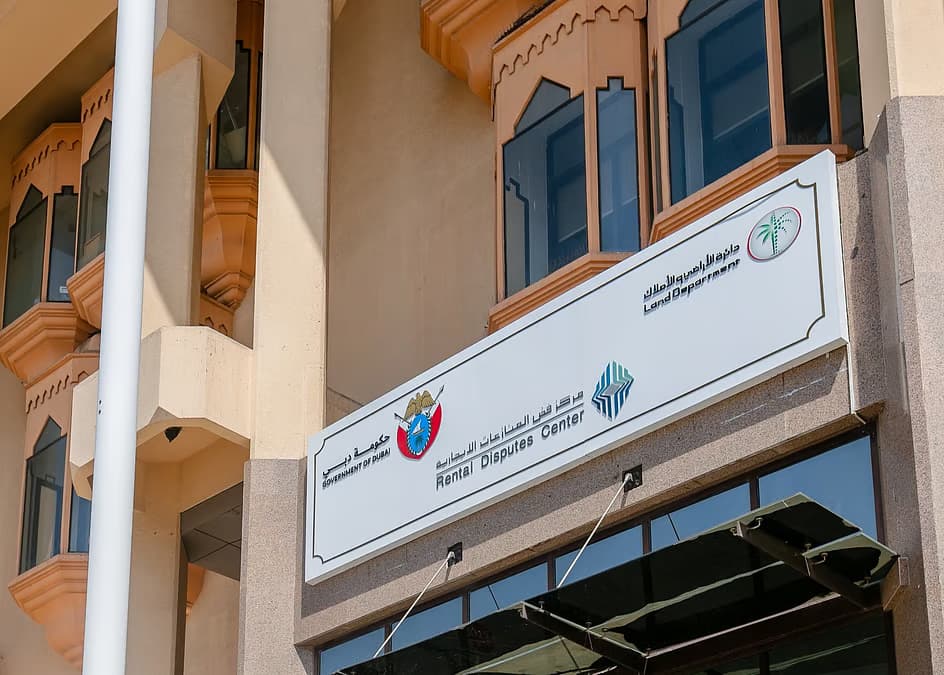
How Dubai Tenants Can Use the RDC’s ‘Offer and Deposit’ Procedure When Landlords Refuse to Accept Payment
Filing an application does not automatically resolve disagreements over rent increases or tenancy renewal terms.
 Staff WriterOct 14, 2026, 12:57 PM
A disagreement over a rent increase can become more complicated when a landlord refuses to accept payment. The tenant may be willing to pay the existing rent but unable to reach an agreement over the amount demanded for renewal.
Dubai’s Rental Disputes Centre (RDC) provides an Offer and Deposit service that creates a formal route for offering rent in these circumstances. The procedure allows an applicant to seek a judge’s order to offer rent or property keys to the landlord without deciding the parties’ wider tenancy rights.
However, using the service does not automatically resolve the disagreement. Tenants must distinguish between formally offering a payment and obtaining a ruling on whether a proposed rent increase or renewal condition is lawful.
When Offer and Deposit Can Help
The procedure may be used when a landlord declines to receive rent, including during a disagreement over renewing the tenancy. It can also apply to the return of property keys when a tenant is surrendering the premises and the landlord refuses to accept them. Rather than leaving the payment or handover unresolved, the applicant can ask the RDC to deal with the offer through its prescribed process.
For landlords, this provides an official channel through which the rent or keys can be offered while their position on any outstanding tenancy dispute remains preserved. The process does not require either party’s wider contractual claims to be decided at that stage.
Preparing and Submitting an Application
Applications can be submitted through the RDC website or a Real Estate Services Trustee Centre. Online applicants must register or sign in, select the service, enter the required information and upload their supporting records. The applicable fees are paid after electronic verification, and the judge’s decision becomes available through the website.
The published document requirements include a written Offer and Deposit motion, the applicant’s Emirates ID, the latest signed tenancy contract and a proposed new agreement carrying the same terms and conditions. Copies of the relevant cheques and any correspondence between the parties should also be included. Where the applicant is a company, the latest trade licence and the Emirates ID of the manager named on that licence are required. Documents must be submitted in Arabic or accompanied by a legal Arabic translation.
Tenants should also preserve evidence of their attempts to pay. Emails, messages and written notices can help establish when the rent was offered and how the landlord responded. Keeping these records provides a clearer account of the disagreement than relying only on conversations that were not documented.
Fees Are Separate From the Rent
The published application charges are Dh50 for Offer and Deposit, Dh10 as a Knowledge Fee and Dh10 as an Innovation Fee, bringing the basic total to Dh70. Filing through a Real Estate Services Trustee Centre attracts an additional Dh130 service fee, plus VAT on that service fee.
These charges cover the application process. They are not the rent itself, and paying them does not mean the tenant has completed the required rental payment. The rent must be dealt with separately in accordance with the RDC’s procedure and the judge’s order.
What Happens After the Judge Reviews the Request?
Approval is not automatic. A judge considers the application, and the applicant must check the decision and comply with any directions concerning the deposit of rent or the handover of keys. Submitting the request is therefore only one stage of the process, rather than confirmation that every necessary step has been completed.
The RDC’s guidance states that the landlord is notified once the Centre receives the rental payment. Applicants should provide accurate contact information and confirm that the required notification has taken place. Private emails or WhatsApp messages may help document the dispute, but tenants should not assume that these replace the Centre’s formal notification requirements.
How the Deposited Rent Is Treated
Rent deposited through the prescribed procedure is held in the RDC’s treasury for the landlord. It remains a rental payment, rather than an application charge or a replacement for the tenancy security deposit.
The RDC’s published guidance states that, where its required procedure is followed, the tenant is regarded as having paid from the date the judge accepts the request. Tenants should retain both the judicial order and evidence that the deposit was completed. Filing an application without fulfilling the payment requirements should not be treated as equivalent to paying rent.
The Wider Dispute May Still Need a Decision
An accepted Offer and Deposit application does not, by itself, establish that a rent increase is invalid or secure renewal on the tenant’s preferred terms. Where the disagreement remains unresolved, either party may need to pursue RDC conciliation or the appropriate rental claim to address the underlying issue.
Tenants must also continue meeting rental obligations as they fall due. Article 31 of Dubai’s Law No. 26 of 2007 expressly provides that an eviction claim does not exempt a tenant from paying rent during the proceedings and until the resulting decision is issued and enforced. A pending dispute should therefore not be treated as permission to stop paying.
For enquiries or further information, contact ask@tlr.ae or call +971 52 644 3004. Follow The Law Reporters on WhatsApp Channels.