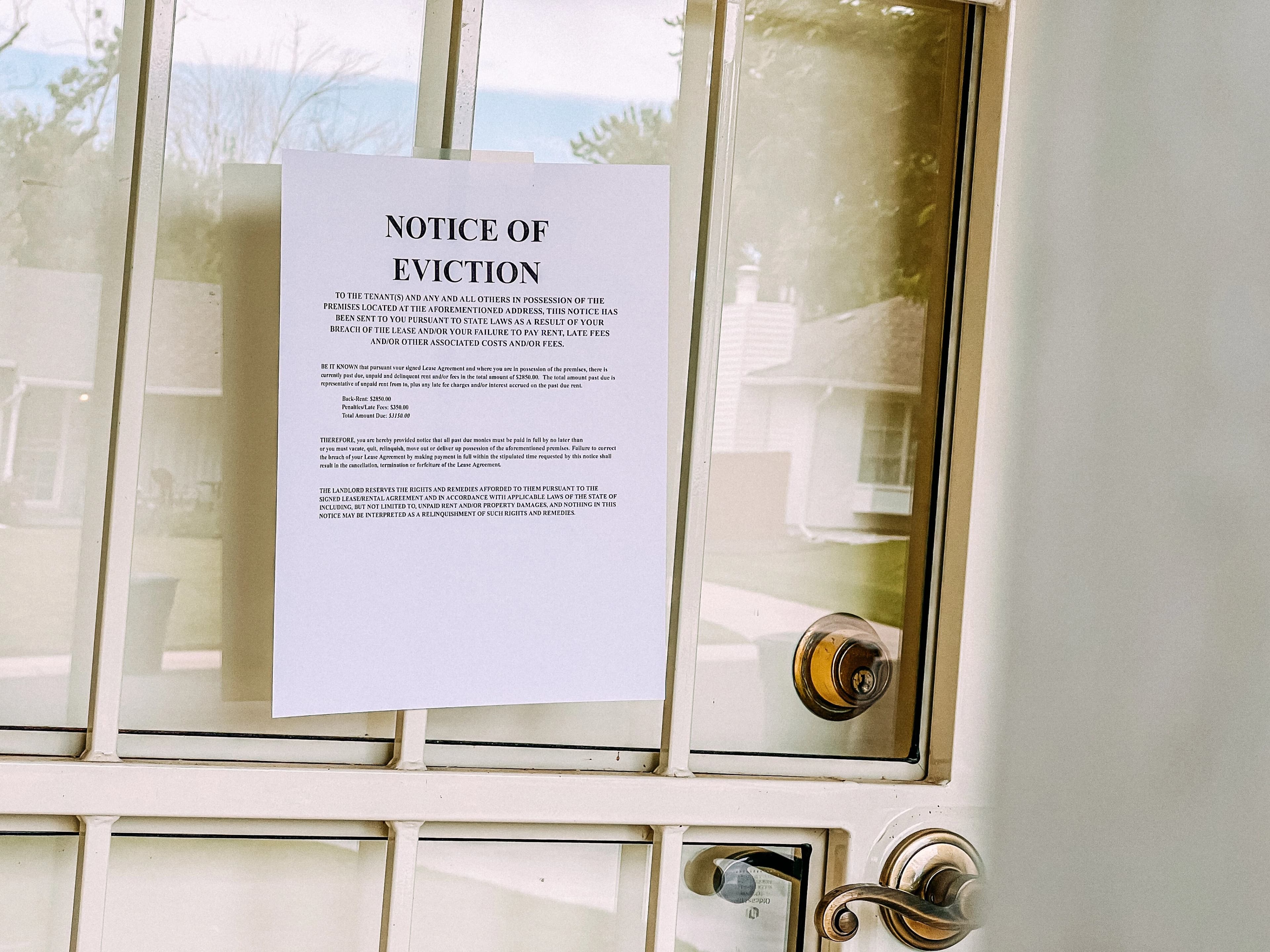
No Notice, No Eviction: A Guide to Dubai's Eviction Rules and Legal Rights Every Landlord and Tenant Should Know
Dubai law allows eviction only on specific legal grounds and after strict notice requirements are met.

One of the most common misconceptions in Dubai's rental market is that a landlord can ask a tenant to leave whenever they wish. Many tenants, meanwhile, believe they have little say in the matter. Both assumptions are incorrect, and acting on either can prove costly.
Dubai's tenancy laws regulate eviction with precision. They prescribe specific grounds, mandatory notice periods and legal procedures that must be followed in every case. A landlord who fails to comply with these requirements cannot lawfully evict a tenant. Likewise, a tenant who understands these protections is in a far stronger legal position.
Your Rights as a Tenant
Under Law No. 26 of 2007 Regulating the Relationship between Landlords and Tenants in the Emirate of Dubai, as amended by Law No. 33 of 2008, a signed and registered tenancy contract remains binding for its full term. A landlord cannot evict a tenant during the lease without a legally recognised reason, nor can they recover possession at the end of the tenancy without following the prescribed legal process.
Where neither party serves written notice before the lease expires, the tenancy renews automatically under Article 25 of the amended law on the same terms and conditions. A tenant who fulfils their contractual obligations, including paying rent on time, has the legal right to remain in the property. That right cannot be overridden simply because the landlord wishes to recover the premises.
Eviction During the Lease
Dubai law permits eviction during the tenancy only where the tenant has committed a specific breach recognised under Article 25(1) of the amended law. These grounds include failing to pay rent within 30 days of receiving a formal written demand, subletting the property without the landlord's written consent, using the property for illegal activities or in a manner contrary to public order or morals, using it for purposes other than those agreed in the tenancy contract, or causing damage beyond normal wear and tear.
Before commencing eviction proceedings, the landlord must serve a written notice identifying the breach and granting the tenant 30 days to remedy it. If the breach is rectified within that period, the matter ends there. Only if the breach continues may the landlord file an eviction claim before the Rental Dispute Centre (RDC). This legal step is mandatory, and any attempt to bypass it is likely to result in the claim being rejected.
Eviction at the End of the Lease
Eviction at the expiry of a tenancy is governed by a separate and more restrictive framework. Under Article 25(2) of the amended law, a landlord may recover possession only on one of four recognised grounds: where the property is to be demolished or reconstructed with the necessary government approvals; where major renovation or maintenance cannot reasonably be carried out while the tenant remains in occupation, supported by a technical report from Dubai Municipality; where the landlord or a first-degree relative genuinely intends to occupy the property and owns no suitable alternative; or where the landlord intends to sell the property.
These four grounds are exhaustive. Unless a landlord's circumstances fall within one of them, there is no legal basis to recover possession at the end of the lease, regardless of personal circumstances or the duration of the tenancy.
The Twelve-Month Notice Requirement
Where one of the recognised grounds under Article 25(2) applies, the landlord must serve a formal eviction notice at least 12 months before the intended eviction date. The notice must be served through a Notary Public or by registered mail. Notices delivered by hand, WhatsApp, email or through an agent without notarisation generally do not satisfy the statutory requirements and may be successfully challenged before the RDC.
The notice must also specify the exact legal ground relied upon. A general request asking the tenant to vacate is insufficient, even if properly served. Importantly, the 12-month notice period begins from the date of valid service, not from the date the landlord decided to recover the property. If the notice is defective in any respect, the tenant may challenge its validity and remain in the property until the correct legal process has been followed.
When Landlords Misuse the Process
Dubai's tenancy laws also protect tenants from the misuse of eviction grounds. Under Article 26 of Law No. 26 of 2007, as amended, where a landlord recovers a residential property claiming personal use and subsequently re-lets it to another tenant, the former tenant may seek compensation before the RDC. The law prohibits landlords from re-letting a residential property for two years after repossession, or three years in the case of commercial premises.
The law also prohibits self-help eviction. Under Article 34 of Law No. 26 of 2007, a landlord cannot change locks, disconnect utilities, remove a tenant's belongings or otherwise interfere with the tenant's peaceful occupation of the property. Such actions are unlawful regardless of whether eviction proceedings have commenced. A tenant subjected to such conduct may file a complaint before the RDC and report the matter to Dubai Police.
Challenging an Eviction Notice
Receiving an eviction notice does not necessarily mean a tenant must vacate the property. The notice should first be assessed to determine whether it was served through a Notary Public or by registered mail, whether it clearly states one of the recognised grounds under Article 25(2), and whether the full 12-month notice period has been observed from the date of valid service.
If any of these requirements has not been met, the notice may be challenged before the RDC. Tenants should seek legal advice before deciding to vacate voluntarily, as leaving under pressure may weaken their legal position. Where the landlord's stated ground is disputed, the RDC has the authority to dismiss the eviction claim and, where appropriate, award compensation.
Conclusion
Eviction in Dubai is not a matter of a landlord's discretion or a tenant's obligation to simply comply. The law clearly defines the grounds for eviction, the procedures to be followed and the applicable notice requirements. Tenants who understand these protections are better equipped to safeguard their rights, while landlords who comply with the law have a clear and legitimate route to recovering possession of their property.
Those who have received an eviction notice or require guidance on tenancy matters should seek timely legal advice to protect their rights and interests.
For any enquiries or information, contact ask@tlr.ae or call us on +971 52 644 3004. Follow The Law Reporters on WhatsApp Channels.