Ex-CJI Chandrachud Sees AI Handling Cheque Bounce Cases as Feasible
Justice Chandrachud highlights AI’s potential to ease judicial backlog while stressing human oversight for sensitive disputes.
 Staff WriterDec 8, 2025, 11:54 AM
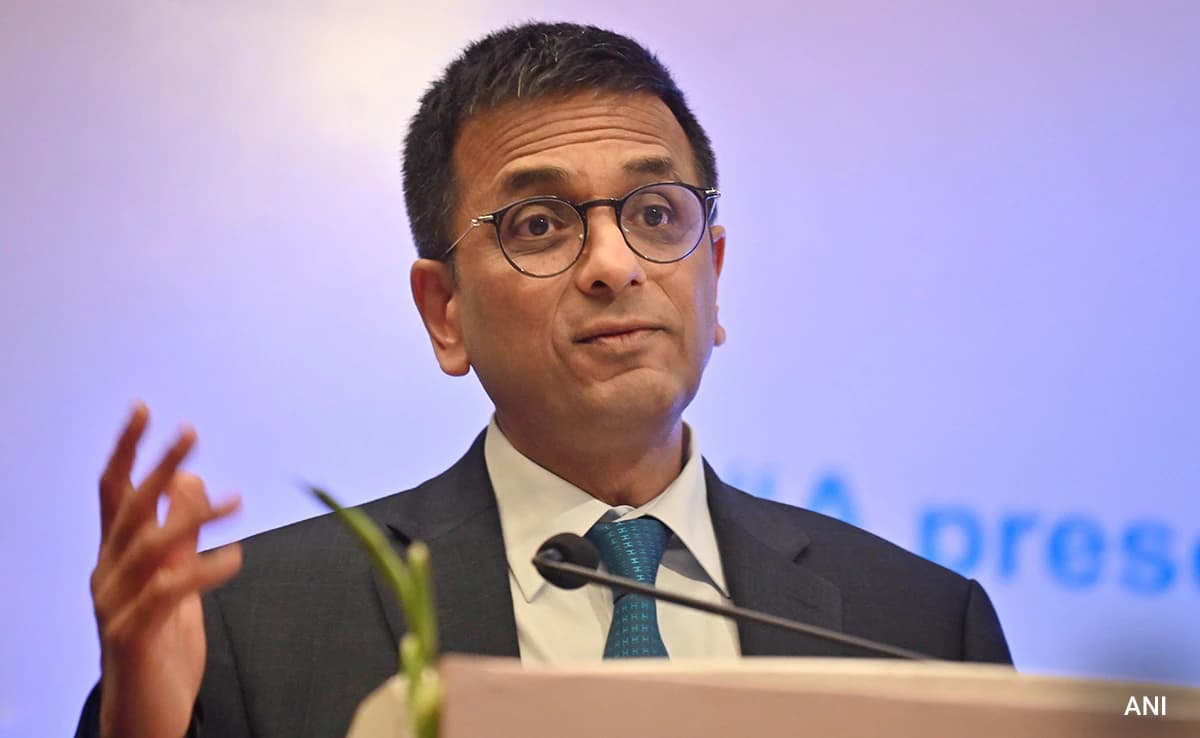
Ex-Chief Justice of India Justice DY Chandrachud on Saturday suggested that artificial intelligence (AI) could be deployed to resolve certain categories of litigation, such as cheque dishonour disputes, given their high volume and transactional nature.
Speaking at the IBA Litigation and ADR Symposium, Justice Chandrachud emphasised the need to distinguish between areas where AI can accelerate adjudication and those where human oversight remains indispensable.
“One of the largest categories of pending cases in India are cheque bounce matters. It is possible to consider automated handling for disputes where outcomes do not significantly impact fundamental human rights,” he said, adding that such experimentation could help reduce judicial pendency without compromising fairness.
Justice Chandrachud pointed to India’s experience with Delhi’s virtual courts, which successfully handled routine traffic cases, freeing judicial officers to focus on matters requiring meaningful adjudication. He suggested a similar AI-enabled model could be applied to cheque dishonour litigation.
However, he cautioned that disputes such as housing and rent control cases should remain under human supervision due to the risk of evicting vulnerable tenants. He also noted that AI could be optionally applied to motor accident compensation claims, allowing insurers to provide instant awards while giving victims the choice to seek judicial adjudication.
The former CJI linked these ideas to the symposium theme, “The benefits and impact of artificial intelligence on dispute resolution -- is India’s Grand Trunk Road warning ‘speed thrills but kills’ at all relevant in this context?” He stressed that while efficiency is an emerging constitutional value, it cannot overshadow access to justice and fairness.
Reflecting on AI’s impact on the legal profession, Justice Chandrachud described it as a disruptive force requiring resilience from lawyers and judges. He called for explainable AI systems that allow contestation, safeguard dignity, and enhance judicial decision-making rather than replace it.
“Technology must remain a means to accelerate justice, not a substitute for its core values,” he concluded.
For any enquiries or information, contact ask@tlr.ae or call us on +971 52 644 3004. Follow The Law Reporters on WhatsApp Channels.