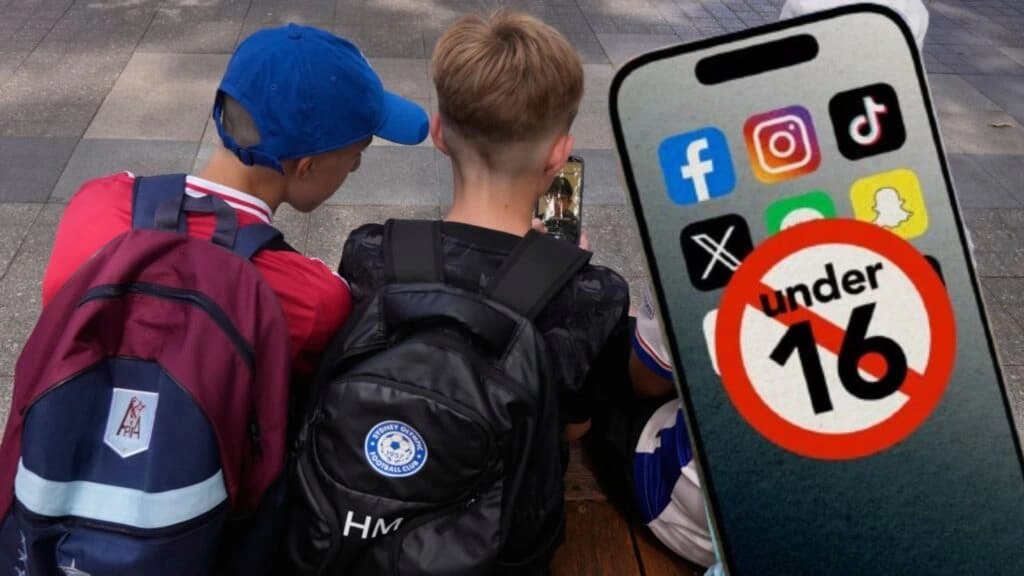
Centre Urged to Consider Aussie-style Ban on Social Media Use by Children Under 16
Court flags rising risks to minors online, calls for tougher safeguards, awareness drives, and stronger parental responsibility.
 Staff WriterDec 26, 2025, 12:22 PM
The Madras High Court has urged the Union government to explore the possibility of enacting legislation similar to Australia’s recently introduced law that bars children under the age of 16 from accessing social media platforms such as X, Facebook, Instagram and TikTok. The observation was made in a case highlighting the easy availability of pornographic content on the internet.
A Bench comprising Justices G. Jayachandran and K.K. Ramakrishnan said that until such a law is considered and enacted, authorities must intensify awareness campaigns on the dangers of child pornography and online exploitation. Emphasising the heightened vulnerability of children, the Court noted that parental responsibility must correspondingly be greater.
“Union of India may explore the possibility of passing legislation like Australia. Till such legislation is passed, the authorities concerned shall accelerate their awareness campaign more effectively and reach the vulnerable group through all available media,” the Bench said, adding that both the State and Central Commissions for Protection of Child Rights should draw up and implement a concrete action plan.
Under the Australian law that recently came into force, social media companies are required to prevent children under 16 from holding accounts on their platforms, failing which they face hefty penalties. The legislation does not penalise children or their parents.
The Court’s remarks came while disposing of a petition that sought directions to curb the easy access to pornographic material online and asked that internet service providers (ISPs) be mandated to offer parental control or “parental window” services.
After examining the material placed before it, the Bench observed that child rights commissions were not adequately discharging their statutory duties under the National Commission for Protection of Child Rights Act, 2005. While acknowledging that some awareness programmes were being conducted in schools, the Court said these efforts were insufficient.
However, the Court refrained from issuing detailed directions or guidelines, noting that the Supreme Court had last year made similar recommendations to the Centre and other stakeholders regarding the rights of victims of child sexual abuse.
On the role of ISPs, the Court noted submissions that intermediaries were governed by separate legislation and periodically reviewed content in line with the Information Technology (Intermediary Guidelines and Digital Media Ethics Code) Rules, 2021, including blocking objectionable websites when flagged.
At the same time, the Bench observed that websites containing child sexual abuse material continued to remain accessible, underscoring the need for control at the user end. This, it said, could be effectively achieved through parental control applications on devices.
Stressing the importance of awareness, the Court said end users must be informed about the menace of child pornography and the measures available to prevent it. “As far as children are concerned, the vulnerability is high, so the parents’ responsibility is higher,” the Bench said while closing the matter.
For any enquiries or information, contact ask@tlr.ae or call us on +971 52 644 3004. Follow The Law Reporters on WhatsApp Channels.