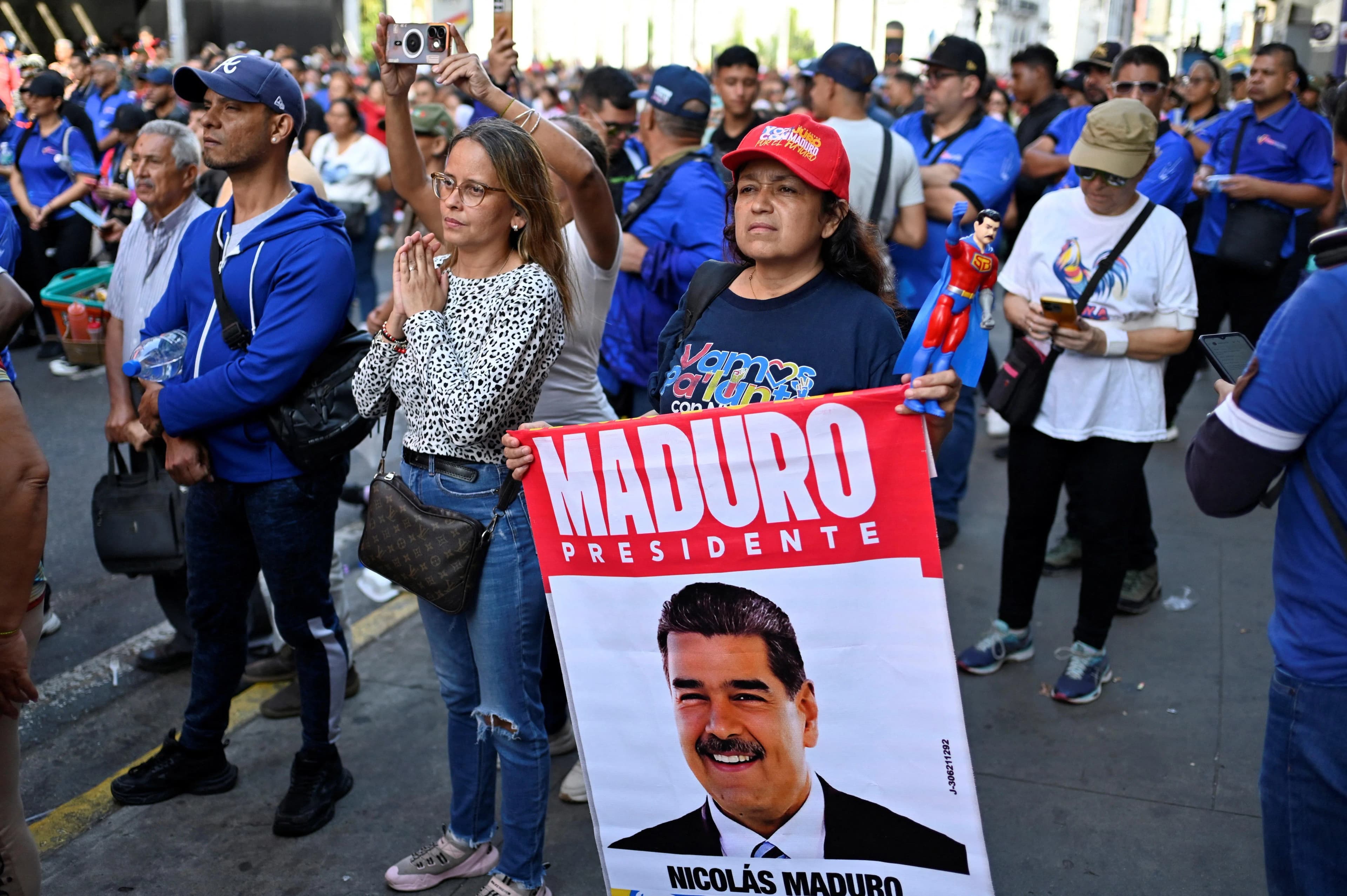
Maduro’s Immunity Claim Tests US Authority to Prosecute Foreign Leaders
The Venezuelan president faces narco-terrorism charges in a US court, raising rare legal questions over head-of-state immunity and international jurisdiction.
 Staff WriterJan 7, 2026, 10:34 AM
Nicolás Maduro’s first appearance in a US courtroom offered a glimpse of the legal battle ahead over seldom-tested questions -- chief among them whether he can claim immunity from prosecution.
Maduro, who pleaded not guilty to narco-terrorism and cocaine charges on Monday, defiantly insisted that he remains the president of Venezuela, setting the stage for a showdown over the legal protections customarily afforded to heads of state.
His lawyer, Barry Pollack, signalled a second line of defence at the arraignment, promising extensive litigation challenging what he described as Saturday’s "abduction" by the U.S. military of Maduro and his wife.
At the heart of the case is whether Maduro, 63, is entitled to head-of-state immunity under international law -- a doctrine that would shield him from prosecution for his alleged role in what the Justice Department calls a decades-long narco-terrorist conspiracy.
The U.S. contends that Maduro has not been Venezuela’s president following a disputed 2018 election -- a position that would weigh against granting him head-of-state immunity.
Venezuela’s attorney general, however, argues that the United States lacks jurisdiction and that Maduro remains immune as the country’s leader.
Caren Morrison, a law professor at Georgia State College of Law and former federal prosecutor, noted that immunity could pose a challenge for prosecutors, who allege that Maduro was corrupt and used his office to facilitate the conspiracy.
Legal experts say the matter may hinge on whether Maduro’s alleged actions fell within the scope of his official duties as president. Most believe prosecutors are likely to prevail eventually.
Noriega Unsuccessfully Invoked Similar Argument
Head-of-state immunity is rarely litigated in criminal cases. Former Panamanian strongman Manuel Noriega unsuccessfully invoked it against drug trafficking and money-laundering charges after his 1989 capture by US forces during the Panama invasion. Unlike Maduro, Noriega never formally held the title of president.
US courts have dismissed civil lawsuits against heads of state recognised by the State Department, including one against Philippine President Ferdinand Marcos in 1975 and another in 2022 against Saudi Crown Prince Mohammed bin Salman over the killing of US-based journalist Jamal Khashoggi.
However, courts can also dismiss cases against former leaders and government officials who demonstrate that their actions were part of official duties, though they may still be held liable for illegal acts.
A civil case involving a former Somali prime minister ultimately reached the US Supreme Court, which sent it back to a lower court that ruled he was not immune from accountability for torture and extrajudicial killings.
Defence to Press Case Against Abduction
In addition to contesting the prosecution on immunity grounds, Maduro’s lawyer told the court on Monday that his client would challenge what he called the leader’s "military abduction," which scholars say may have breached international law.
Noriega raised a similar argument following his capture, but a federal appeals court rejected it, citing Supreme Court rulings that forcible abduction does not violate due process or a court’s jurisdiction over a defendant.
Noriega was convicted by a US jury in 1992 and subsequently served sentences in the United States, France, and Panama, where he died in 2017.
Prosecutors May Face Hurdles Linking Maduro to Others
Even if Maduro cannot secure dismissal of the indictment, legal experts suggest he may still challenge the government’s case.
The indictment describes a decades-long drug operation, but few events directly link Maduro to the alleged narcotics and terrorism conspiracy outlined by US prosecutors.
"When you look closely at that indictment, there’s really not a lot of Maduro in there," said Zachary Margulis-Ohnuma, a defence attorney who represented Hugo Armando Carvajal Barrios, a former Venezuelan official who pleaded guilty to narco-terrorism charges.
To prove conspiracy, prosecutors must show that Maduro agreed with others to commit a crime. The indictment is thin on connections to terrorist groups, said Richard Broughton, a professor at the University of Detroit Mercy School of Law.
He added that the Justice Department may be holding back evidence to protect witnesses.
"Was a particular terrorist organisation paid by Maduro and his associates for any kind of protection, for assisting with any kind of shipment?" Broughton said. "That’s the sort of detail I would want to know."
For any enquiries or information, contact ask@tlr.ae or call us on +971 52 644 3004. Follow The Law Reporters on WhatsApp Channels.