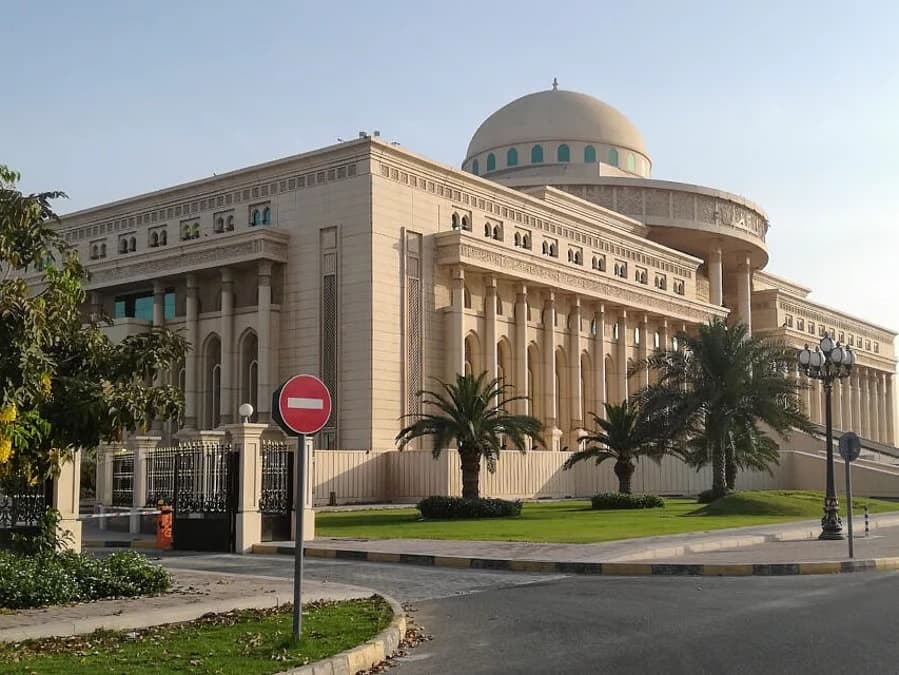
Sharjah Court Jails Man for Blasphemy, Orders Deportation After Prison Term
Man sentenced to one month in jail after court finds him guilty of insulting God during heated telephone argument.
 Staff WriterAug 21, 2026, 12:08 PM
Sharjah Misdemeanor Court has sentenced an Arab man to one month in prison, followed by deportation, after finding him guilty of blasphemy during a heated telephone conversation.
According to the case records, the incident began when the accused and the complainant became involved in a dispute during a telephone call. The argument escalated into a verbal altercation, during which the accused allegedly uttered insulting phrases against God and repeated them several times despite the complainant objecting.
The complainant subsequently reported the matter to the police and submitted an audio recording of the telephone conversation as evidence.
Following the complaint, the competent authorities initiated legal proceedings and referred the accused to the courts.
When confronted with the charge, the defendant did not deny making the statements. Instead, he told the court that he had been angry and agitated during the argument and that his conduct had not been intentional.
After examining the case file, the evidence submitted and the defendant's statements and defence, the court found him guilty. It sentenced him to one month in prison, to be followed by deportation from the UAE.
What Does UAE Law Say About Blasphemy?
Blasphemy is treated as a criminal offence under UAE federal legislation, with the law protecting religious beliefs, sacred figures, religious books and places of worship.
The UAE's Federal Law by Decree No. 34 of 2023 on Combating Discrimination, Hatred and Extremism expressly defines blasphemy as any act that insults the Divine Essence, religions, prophets, messengers, divine books or houses of worship. The law also states that freedom of opinion and expression cannot be invoked to justify statements or acts that constitute blasphemy or cause harm in violation of its provisions.
The legislation applies to different forms of expression, including speaking, writing, drawing, pointing, photography, singing, acting and gestures. This means that conduct potentially falling within the definition is not limited to written or online material.
Penalties can be severe. Under the 2023 law, certain offences involving contempt of or incitement against religions can attract imprisonment and fines ranging from Dh250,000 to Dh2 million, depending on the nature of the offence. The law also provides for enhanced penalties in aggravated circumstances, including where an offence leads to a breach of public peace.
The UAE's Crimes and Penalties Law also contains provisions dealing with offences against religious beliefs and rites. Article 362 provides penalties for offending Islamic sacred beliefs or rites, insulting recognised divine religions, or approving, instigating or promoting sin. Where such an offence is committed publicly, the law provides for imprisonment of at least one year and/or a fine of at least Dh100,000.
There are also specific provisions dealing with blasphemous conduct carried out through electronic means. Federal Decree-Law No. 34 of 2021 on Countering Rumours and Cybercrimes provides penalties for using information networks, information technology or websites to offend Islamic sanctities or rituals, insult recognised monotheistic religions or commit other specified religious offences. Where the conduct involves an insult to the Divine Essence or the prophets and messengers, the law provides for temporary imprisonment of up to seven years.
These provisions operate alongside the UAE Constitution. Article 7 establishes Islam as the official religion of the UAE and states that Islamic Sharia is a main source of legislation. At the same time, Article 30 guarantees freedom of opinion and expression within the limits provided by law, while Article 32 guarantees freedom of religious worship subject to public policy and public morals.
The Sharjah case therefore highlights an important distinction under UAE law: freedom of expression is recognised, but it is subject to statutory restrictions protecting religions, religious symbols and public order. The precise offence and applicable penalty depend on the nature of the conduct, the circumstances in which it occurred and the legislation under which the prosecution is brought.
In the present case, the court considered the evidence, including the recorded telephone conversation and the accused's own response to the allegation, before reaching its decision. The judgment demonstrates that statements made during a private dispute can still result in criminal proceedings where they fall within the scope of UAE laws protecting religious sanctities.
For enquiries or further information, contact ask@tlr.ae or call +971 52 644 3004. Follow The Law Reporters on WhatsApp Channels.