Sharjah Consultative Council Approves Law Regulating Judicial Expert Witnesses
Law sets licensing, ethics, and accountability framework to strengthen the quality and integrity of expert testimony.
 Staff WriterJun 17, 2026, 12:59 PM
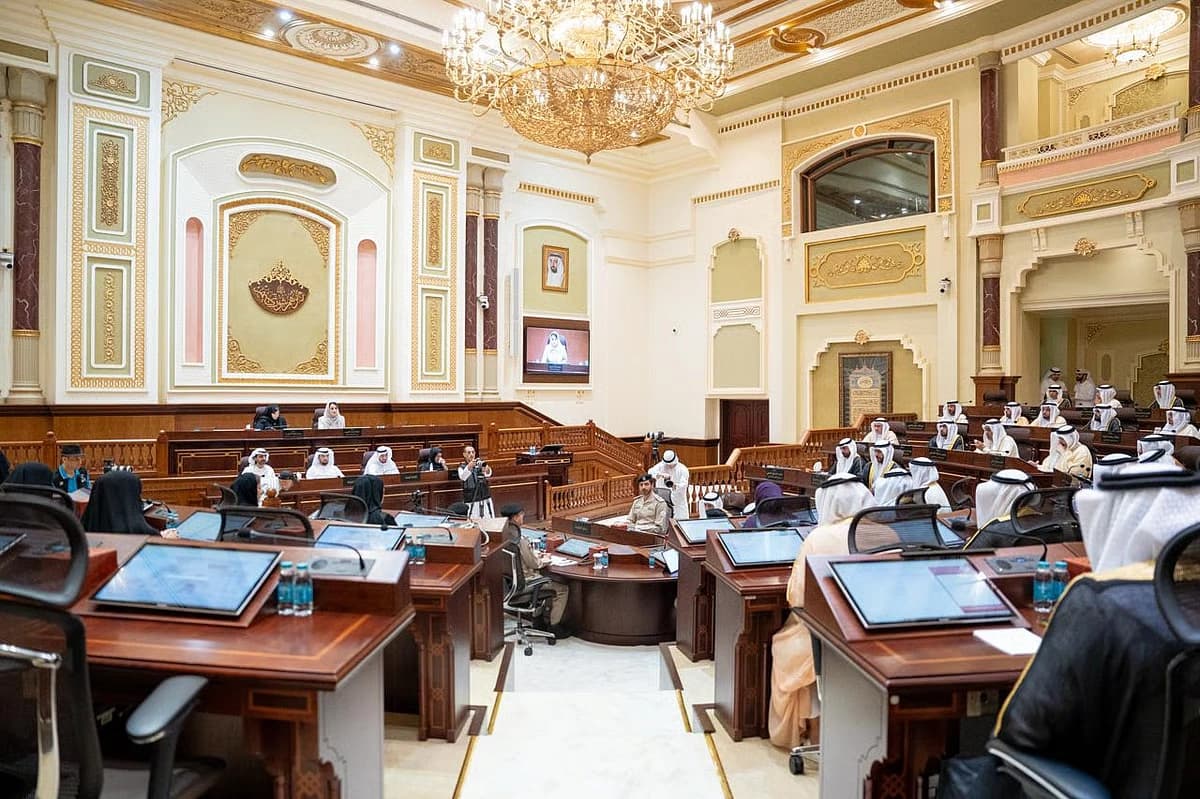
The Sharjah Consultative Council has approved a draft law for 2026 regulating the profession of expert witnesses appearing before judicial authorities in the Emirate of Sharjah, following a series of amendments introduced during deliberations.
The approval was made during the Council’s eighteenth and final session of its third ordinary session in the eleventh legislative term, held at its headquarters in Sharjah.
The session was chaired by Halima Al Owais, Chairperson of the Council. Members reviewed the draft law alongside a report submitted by the Legislative and Legal Affairs Committee.
Advisor Dr Mansour Mohammed bin Nassar, Member of the Executive Council and Head of the Sharjah Government Legal Department, attended the session, along with officials from the department. Sheikh Faisal Bin Ali bin Abdullah Al Mualla, Secretary-General of the Judicial Council, was also present.
During the plenary session, members engaged in detailed discussions on the provisions of the draft law, which governs the work of expert witnesses whose technical opinions—delivered orally or in writing—are relied upon in judicial proceedings based on court mandates or agreements between disputing parties.
Members highlighted the importance of strengthening the judiciary with qualified and accredited experts to ensure the accuracy of rulings and reinforce the integrity of the justice system, while also raising professional standards within the field.
The Council reviewed key provisions covering registration procedures for expert witnesses, grievance mechanisms, the formation of an Expert Accountability Council, and the introduction of a code of conduct and professional ethics framework.
Discussions also covered licensing requirements, remuneration and expense entitlements, and registration categories for national and non-national experts, including government employees. Members further examined rules governing the registration of local and international expert firms, as well as procedures for administering the legal oath prior to undertaking official duties.
Government representatives responded to members’ queries, clarifying legal interpretations and outlining how the provisions would be implemented in practice.
Following deliberations, the Council formally approved the draft law regulating the expert witness profession before judicial authorities in Sharjah.
The session concluded with the closing ceremony of the Council’s third ordinary session of the eleventh legislative term, during which Halima Al Owais delivered a speech reflecting on nine months of legislative work and 18 plenary sessions that reviewed government policies and advanced parliamentary oversight.
For any enquiries or information, contact ask@tlr.ae or call us on +971 52 644 3004. Follow The Law Reporters on WhatsApp Channels.