
A holding company can make a significant difference to international groups looking to expand across borders. The structure can influence how investments are managed, how intangible assets are owned, how profits are repatriated, how acquisitions are financed and, ultimately, how a business is transferred to the next generation or new investors.
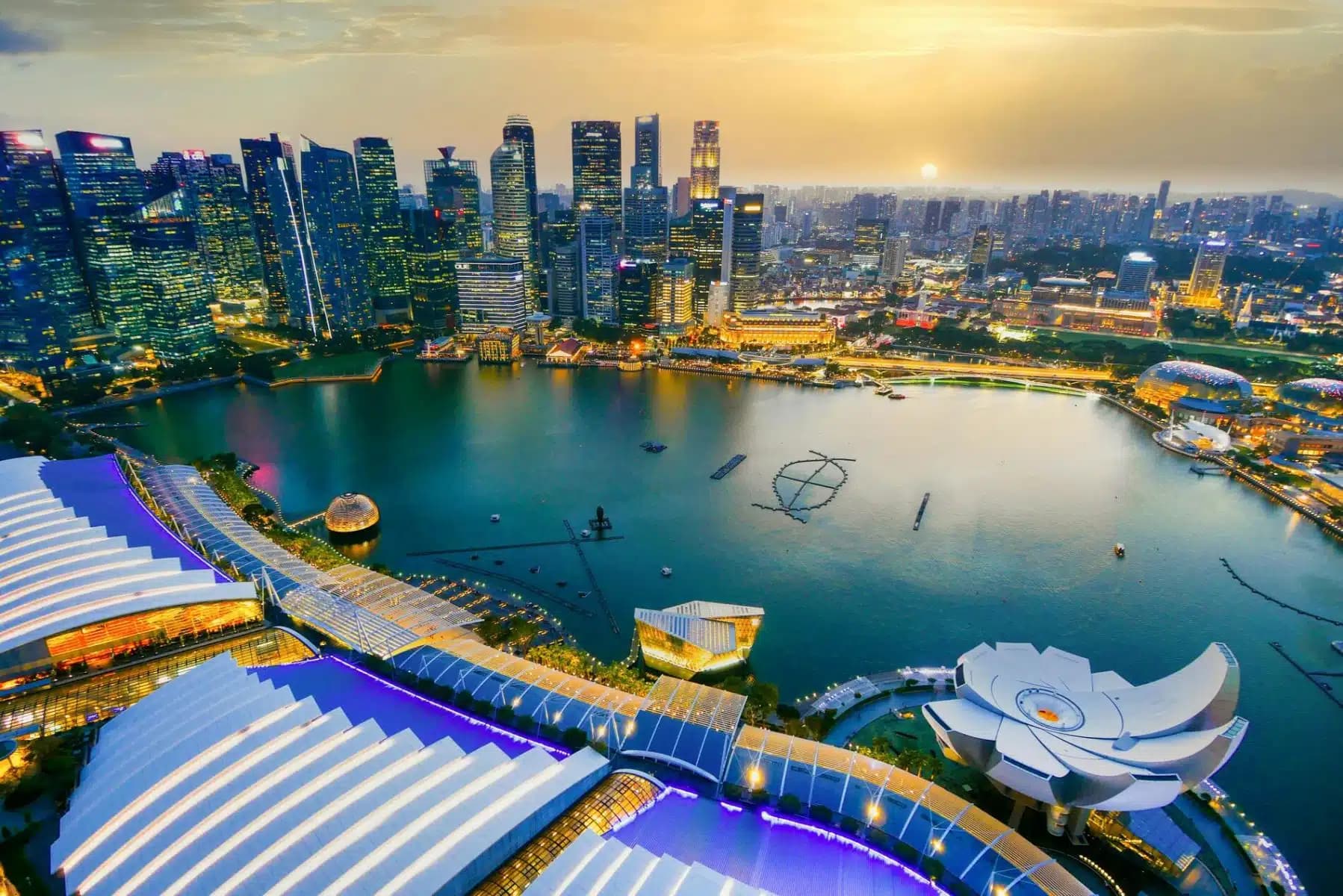
Singapore is one of the most preferred locations in Asia because of its strong corporate laws, financial services sector, political and regulatory stability, international connectivity and favourable tax environment. With many companies operating across Asia, the Middle East, Europe and other emerging markets, Singapore is increasingly being considered as a hub from which to manage international business interests.
A holding company may not conduct active business operations. Its primary purpose may simply be to hold shares in subsidiaries, own strategic investments or intellectual property, or facilitate financing within the group. However, to obtain the intended benefits, the legal and commercial aspects of the structure need to be carefully considered.
Central Holding Company
An international group may have several companies incorporated in different jurisdictions. Without a central holding company, shareholders may have multiple ownership interests and corporate relationships to manage.
A holding company can provide a central structure for share ownership. Establishing an entity in Singapore allows the ultimate shareholders to consolidate their interests through a single corporate vehicle.
For example, if a group has several subsidiaries in the UAE, India, Malaysia and Indonesia, the investments could be placed under a holding company incorporated in Singapore. Each subsidiary would remain a separate legal entity and continue to be governed by the laws of its country of incorporation. The holding company would oversee the group's investment strategy and major ownership decisions.
Having a holding company can bring greater clarity to the ownership structure, make it easier to bring in new investors and simplify acquisitions, disposals and corporate restructurings. It can also help separate investment ownership from the operational risks associated with individual businesses.
However, this does not remove the legal obligations of the underlying companies. All subsidiaries remain subject to their respective company, employment, licensing, tax and regulatory requirements.
Legal Entity and Asset Protection
One of the main reasons for establishing a holding company is to achieve separation of legal ownership. Under the Companies Act 1967, companies have a legal personality distinct from their shareholders. They can own property, enter into contracts, borrow money, and sue or be sued in their own names.
If structured correctly, this separation can provide a degree of protection. Where a subsidiary incurs liabilities through its normal business operations, those liabilities do not automatically pass to its parent or sister companies.
For example, if a construction subsidiary faces liabilities arising from contractual obligations, commercial disputes or creditor claims, other companies owned by the holding company do not automatically become responsible for those liabilities.
There are, however, limitations to this protection. Where fraudulent activities, improper asset transfers, sham arrangements, personal guarantees or misuse of corporate entities are involved, courts and regulators may examine the circumstances. Parent companies may also assume direct responsibility through guarantees, contractual obligations or their own actions.
Ultimately, effective asset protection requires genuine separation between the entities. A holding company should not be viewed as a mechanism for moving assets beyond the legitimate reach of creditors.
Tax Environment and Dividend Repatriation
Singapore has an attractive tax environment. The corporate income tax rate is 17%, although qualifying businesses may benefit from partial tax exemptions and various tax incentives. There is no separate, dedicated holding company tax regime. Instead, Singapore's general tax framework, foreign-sourced income exemptions, tax treaties and regulatory stability contribute to its popularity.
One important feature is the exemption available for certain foreign-sourced income received in Singapore.
Under Section 13(8) of the Income Tax Act 1947, a Singapore tax-resident company may receive specified categories of foreign-sourced income tax-free, subject to statutory conditions. These include foreign dividends, foreign branch profits and certain foreign-sourced service income.
There are several requirements to qualify for the exemption. Under Section 13(9), the income must have been subject to tax in the foreign jurisdiction, the highest corporate income tax rate in that jurisdiction must be at least 15% when the income is received in Singapore, and the Comptroller of Income Tax must be satisfied that granting the exemption is beneficial to the Singapore-resident company.
This is an important consideration for groups looking to repatriate profits from overseas subsidiaries. The tax residence of the holding company, the nature of the income, the subsidiary's tax position and the applicable statutory requirements must all be examined.
Singapore also operates a one-tier corporate tax system. Dividends paid by Singapore-resident companies are generally exempt from further Singapore tax in the hands of shareholders. This can facilitate the movement of profits through the group without an additional layer of domestic dividend taxation.
However, foreign withholding taxes, the laws of the subsidiary's jurisdiction and the tax residence of the ultimate shareholders may still affect the amount that can be distributed.
Double Taxation Agreements
Another reason Singapore is a popular international holding location is its extensive network of Avoidance of Double Taxation Agreements. These agreements are designed to prevent the same income from being taxed twice and to allocate taxing rights between the countries concerned.
Depending on the relevant agreement, a Singapore-resident company receiving dividends, interest or royalties from an overseas subsidiary may qualify for reduced withholding tax rates. This can be particularly beneficial for international groups with investments across several jurisdictions.
The holding company may receive dividends from operating subsidiaries and, where commercially appropriate, provide funding to other businesses within the group.
However, access to treaty benefits is not automatic. Companies will generally need to demonstrate that they are tax-resident in Singapore and satisfy the relevant conditions under the applicable agreement. IRAS generally considers whether control and management are exercised in Singapore. The location of board meetings and the decisions made by directors are among the relevant considerations.
In the case of foreign-owned investment holding companies, IRAS notes that those earning only passive or foreign-sourced income may generally not be regarded as Singapore tax-resident if they merely follow instructions from overseas shareholders.
To establish tax residence, the company must demonstrate that its board exercises genuine control over its affairs. Board meetings should involve substantive discussions about investment opportunities, financial commitments, acquisitions and risk management. Directors should make decisions based on the information available to them rather than simply approving instructions received from overseas.
Depending on the company's activities, appropriate staffing, expenditure, office facilities and administrative resources may also be necessary. There is no single substance requirement that applies to every holding company. However, the company must have arrangements that support the functions it claims to perform.
Good governance is equally important. This includes maintaining proper statutory registers, accounting records, filing annual returns, preparing financial statements where applicable and complying with beneficial ownership disclosure requirements.
Funding Subsidiaries
A holding company can also serve as the central financing vehicle for an international group. The parent company can coordinate funding requirements rather than requiring each subsidiary to approach lenders independently.
The parent company may raise equity, borrow from banks, provide shareholder loans or arrange other forms of financing. This will depend on the company's legal powers and any applicable regulatory requirements. The funds can then be advanced to subsidiaries to finance acquisitions, infrastructure projects, working capital or business expansion.
A central funding arrangement can provide greater visibility over group debt, reduce duplication and help management assess the financial performance of different businesses. It can also offer a more structured approach to bringing in external investors or lenders.
Loans to related parties should be properly documented and priced on an arm's-length basis. Singapore's transfer pricing rules require related-party transactions to reflect the conditions that independent parties would have agreed under comparable circumstances. Supporting documentation may also be required.
Interest deductibility, withholding tax, debt-equity considerations and restrictions imposed by the subsidiary's jurisdiction must also be examined. A financing arrangement that appears efficient at the holding company level may create unexpected tax or regulatory issues elsewhere in the group.
Intangible Assets
If a business relies on technology, trademarks, patents, software, proprietary processes or other intangible assets, a holding company may be used to own these valuable assets.
Centralising ownership can help manage licensing arrangements, brand protection and the commercial exploitation of intellectual property. Operating subsidiaries may obtain rights to use these assets through licensing agreements, with payments determined by the commercial arrangements and applicable transfer pricing rules.
Singapore has a well-established intellectual property protection framework and is an important business hub in the region.
However, the fact that intangible assets are owned by a Singapore company does not automatically mean that the resulting profits will be taxed there. Tax authorities increasingly examine which entities perform and control the functions involved in developing, enhancing, maintaining, protecting and exploiting intellectual property.
A company claiming income from the ownership of intangible assets must be able to demonstrate the commercial basis for its role. Artificially transferring valuable intellectual property to a holding company, without transferring the relevant functions, risks and decision-making responsibilities, can lead to challenges under local tax and transfer pricing rules.
Acquisitions and Succession Planning
Establishing a holding company in Singapore can also offer practical advantages when a group plans to acquire another business, sell an existing subsidiary or bring in a strategic investor.
Instead of changing the ultimate shareholders' interests in several operating companies, investors may purchase shares in the holding company or in a particular subsidiary. The appropriate approach will depend on the transaction, regulatory approvals, tax implications and the rights of existing shareholders.
For family-owned international businesses, a holding company can form part of a long-term succession plan. Shares may be transferred through sales or family arrangements, subject to the applicable inheritance, tax and company laws.
A holding company does not replace the need for a properly prepared succession plan, shareholder agreement or estate-planning arrangements. However, it can provide a central ownership structure within which these arrangements can be implemented.
Reasons to Choose Singapore
Singapore offers a stable business environment supported by strong legal protections, financial infrastructure, international tax relationships and an established corporate services sector. However, groups should carefully consider what they intend to achieve before incorporating a holding company in Singapore.
Important considerations include where strategic decisions will be made, how subsidiaries will be financed, where intellectual property functions will be performed, how dividends will be repatriated and what regulatory requirements apply in each jurisdiction.
International groups must also consider changes in global tax standards. The OECD's Pillar Two framework introduces a 15% global minimum effective tax rate for multinational groups within its scope. Businesses should examine how Singapore's tax incentives interact with these rules and how the tax position of individual subsidiaries may be affected.
A holding company that exists only on paper will provide little protection. However, with competent directors, properly documented decisions, genuine business functions and effective compliance procedures, the structure will be on much stronger legal and commercial footing.
Ultimately, Singapore can provide a credible platform for international businesses seeking to own, finance and manage investments across multiple jurisdictions. Its effectiveness will not depend simply on the address appearing on the incorporation certificate, but on the quality of the legal, financial and governance arrangements supporting the structure.
Dr. Sunil Ambalavelil is the Global Executive Chairman of Kaden Boriss, an international law firm specialising in franchise and business agreements. A seasoned legal adviser, he has advised and supported the international growth of numerous global brands, helping them navigate the legal complexities of cross-border expansion.
For enquiries or further information, contact ask@tlr.ae or call +971 52 644 3004. Follow The Law Reporters on WhatsApp Channels.