India SC Bans NCERT Textbook Over Chapter on Judicial Corruption
CJI Kant calls it a “deep-rooted conspiracy,” issues contempt notice to NCERT director, orders removal of all copies.
 Staff WriterFeb 26, 2026, 11:05 AM
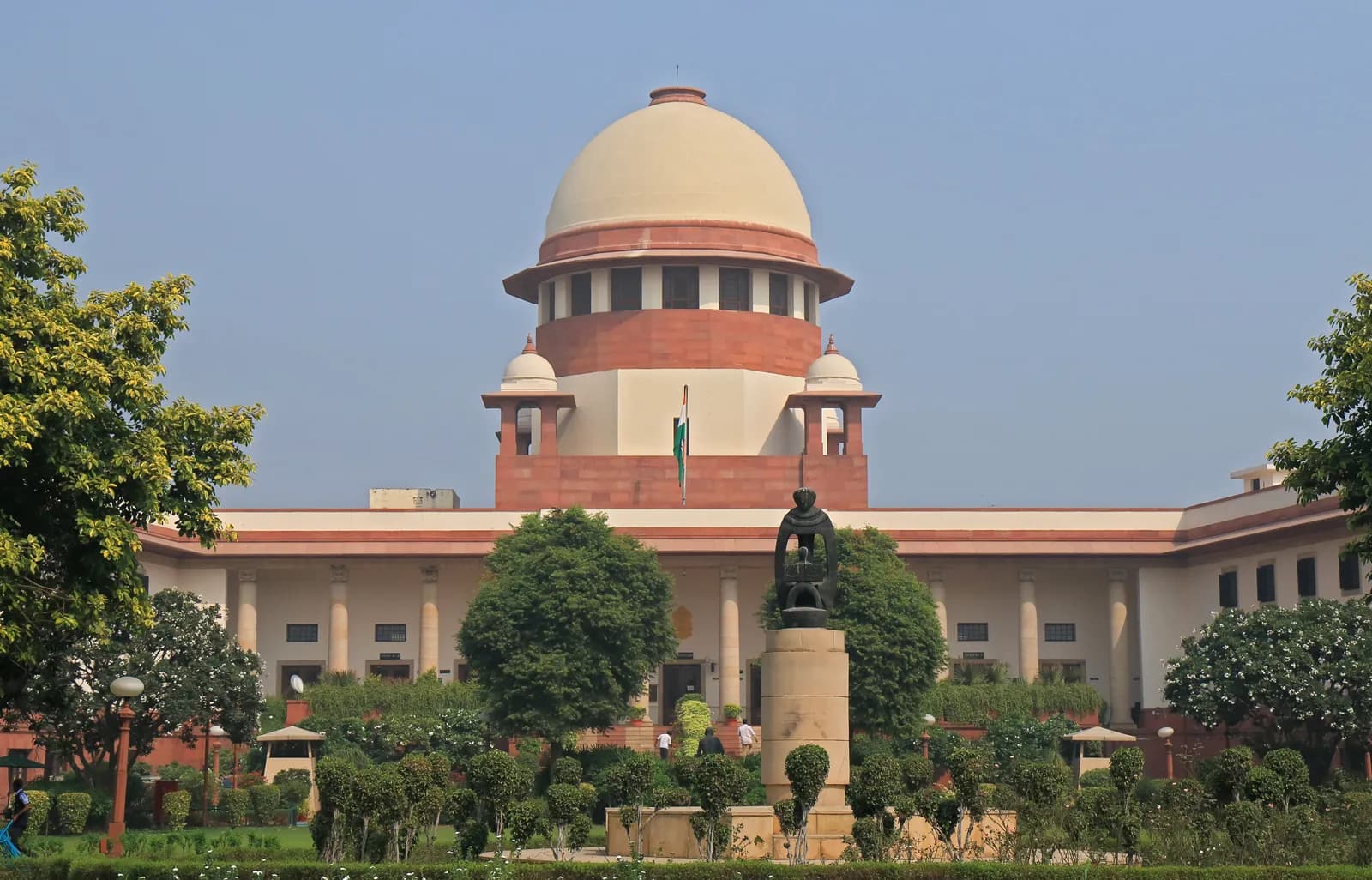
The Supreme Court on Thursday expressed strong objection to the recently released Class 8 Social Science textbook by the National Council of Educational Research and Training (NCERT), which included a chapter titled “Corruption in Judiciary.” A Bench comprising Chief Justice of India Surya Kant and Justices Joymalya Bagchi and Vipul M Pancholi termed the publication a product of a “deep-rooted conspiracy” and said those responsible must face the law.
"We would like to have a deeper probe. We need to find who is responsible and we will see who are there. Heads must roll! We will not close the case," CJI Kant remarked during proceedings.
The Court issued notices under the Contempt of Courts Act to the Department of School Education and NCERT Director Dr Dinesh Prasad Saklani, asking them to explain why action should not be initiated against them or those responsible for the controversial chapter.
In addition, the Bench ordered that all copies of the textbook, whether physical or digital, be removed from public access immediately. The Court directed NCERT, in coordination with Union and State education departments, to ensure that all copies held in schools, retail outlets, or digital platforms be seized. A compliance report is to be submitted by the NCERT Director, while principal secretaries of State education departments are required to report compliance within two weeks.
The Bench also demanded details of the National Syllabi Board members who authored the offending chapter, along with the minutes of meetings in which the content was deliberated and finalised. “Any attempt to distribute this book either physically or digitally shall be taken as a willful breach of the order of this court,” the Court said.
The Court expressed strong objection to the NCERT Director’s communication defending the contents after the controversy came to light, noting that it appeared to be a calculated attempt to undermine the judiciary. "It seems to us that there is a calculated move to undermine the institutional authority and demean the dignity of the judiciary. This, if allowed to go unchecked, will erode the sanctity of judicial office in the estimation of public at large and within the impressionable minds of youth," the Bench stated.
The Court criticised the chapter for presenting a lopsided narrative on the judiciary, washing over its historic contributions and the role of Supreme Court, High Courts, and trial courts in upholding democratic principles. “The text fails to recognise the role of judiciary which upheld the basic structure doctrine. The silence is particularly egregious since so many high-ranking officers have been held accountable for corruption or misuse of public office,” the Bench noted.
Observing that the choice of words in the chapter appeared deliberate rather than inadvertent, the Court clarified that the proceedings were not intended to stifle legitimate critique. “We do not propose these proceedings to stifle any legitimate critique or exercise of the right to scrutinise judiciary. Our intervention is to uphold the integrity of education and ensure students are not exposed to biased narratives that misrepresent the role of judiciary,” the Bench said.
The Court warned that if the misconduct is found deliberate, it could amount to criminal contempt and interfere with the administration of justice. It also indicated that, after examining compliance reports and other details, a panel may be constituted to fix responsibility.
During proceedings, Solicitor General Tushar Mehta, representing the Central government, tendered an unconditional apology on behalf of authorities. NCERT, in a press note, described the controversial portion as an “inadvertent error of judgment” and announced plans to withdraw and rewrite the chapter after proper consultation.
CJI Kant emphasised the seriousness of the matter, describing it as a “deep-rooted conspiracy” designed to portray the judiciary as corrupt. “The entire teaching community will be told that Indian judiciary is corrupt and cases are pending. This is a deep-rooted conspiracy!” he said. The Bench also expressed appreciation to the media for highlighting the issue and ensuring public awareness.
The case is scheduled for further hearing in four weeks.
For any enquiries or information, contact ask@tlr.ae or call us on +971 52 644 3004. Follow The Law Reporters on WhatsApp Channels.