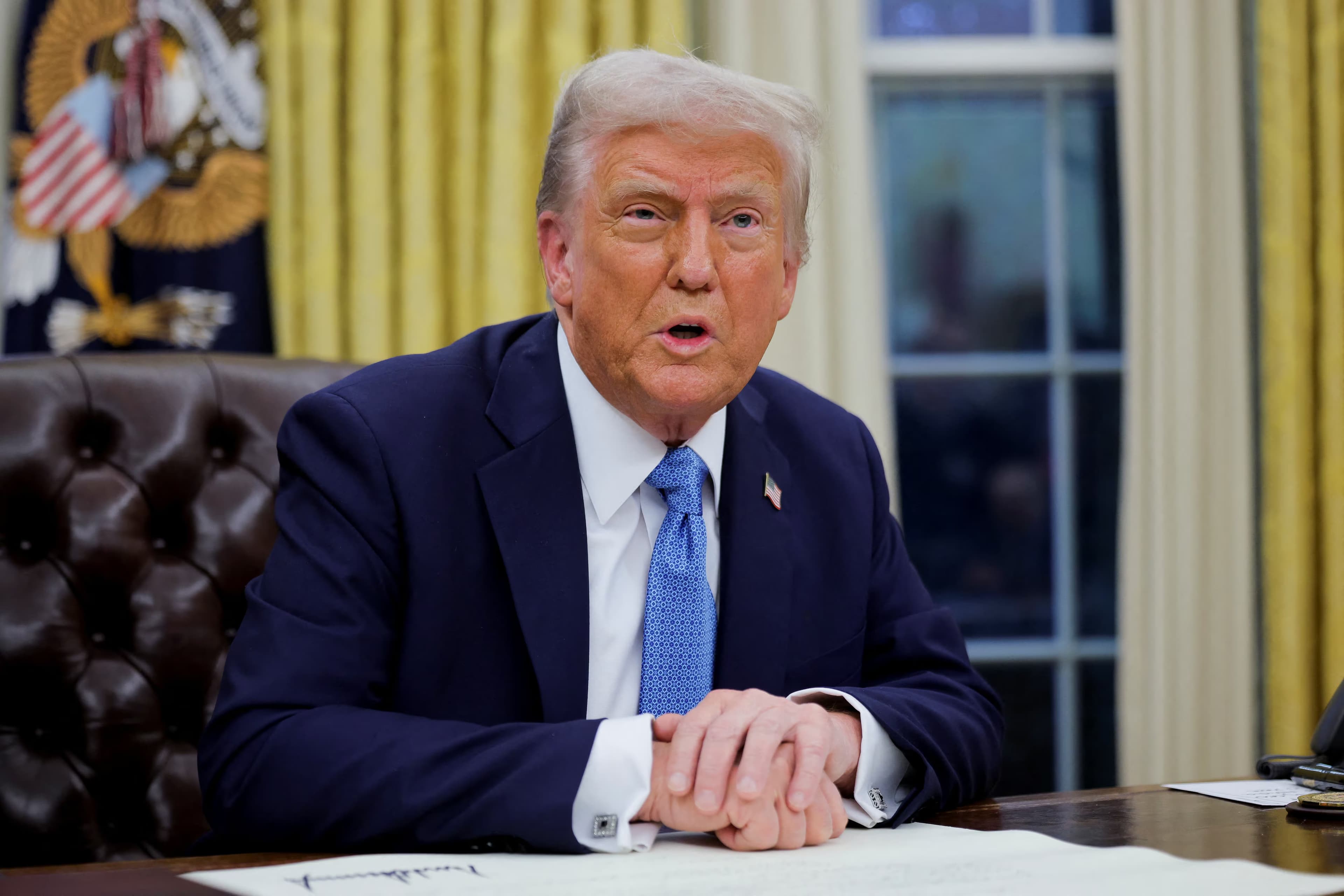

At the US Supreme Court, President Donald Trump is seeking to further restrict the power of federal judges to block his administration’s policies, targeting a judicial tool that remains available despite a major ruling in his favour last year.
After persuading the Supreme Court in 2025 to limit federal judges’ ability to block presidential actions nationwide, the administration is now challenging their separate authority to invalidate regulations issued by federal agencies.
An appeal filed by the Justice Department and now pending before the Supreme Court urges the justices to curtail the longstanding power of judges to halt the implementation of federal agency rules. Such agencies play a significant role in carrying out the Republican president’s policy priorities.
The administration argues that courts should not be able to strike down an agency regulation in its entirety. Instead, any relief granted should be restricted to the specific plaintiffs who brought the case.
Aditya Bamzai, an administrative law expert at the University of Virginia, said a ruling in Trump’s favour could allow the government to continue enforcing regulations against everyone except the plaintiffs, potentially for years while legal proceedings continue, even after judges have found the rules unlawful.
A decision supporting the administration would give the executive branch greater flexibility, Bamzai said, adding that views on such flexibility could depend on whether people supported or opposed the policies of a particular administration.
Since returning to office in January 2025, Trump and his allies have repeatedly criticised judges who have obstructed his policies, describing some as radical or corrupt, as he tests the limits of presidential authority.
At the administration’s request, the Supreme Court in June 2025 restricted the use of nationwide, or universal, injunctions. Such orders can prevent the government from enforcing a policy against anyone, rather than only those who have brought a legal challenge.
Federal judges had increasingly used these injunctions in a range of cases against the Trump administration, including challenges alleging violations of the US Constitution.
The latest appeal stems from a legal challenge brought by healthcare providers in Texas against federal regulations implementing legislation signed by Trump during his first term. The legislation was intended to protect patients from unexpected medical bills.
The appeal forms part of a wider administration effort to make it more difficult for courts to obstruct executive actions. The Supreme Court is expected to consider whether to hear the case early next year.
The disputes targeted by the administration involve the Administrative Procedure Act (APA), a 1946 federal law governing the operations of government agencies, including the process through which they introduce and implement regulations.
Judges and appellate courts have traditionally interpreted the statute as giving them the authority to ‘hold unlawful and set aside’ agency regulations they find illegal, effectively invalidating such rules nationwide.
Since Trump returned to the White House, his administration has faced hundreds of lawsuits challenging measures involving immigration restrictions, mass deportations, the termination of diversity initiatives and limits on transgender rights, among other policies that have raised questions about the scope of presidential power.
The APA has been invoked in numerous cases, including challenges to the termination of humanitarian legal status for hundreds of thousands of migrants living in the US, substantial reductions in research grants involving racial minorities and LGBT people, and the introduction of a mass voter verification system to conduct extensive citizenship checks.
Executive Overreach
Supporters of the existing judicial power, including several state governments that regularly challenge federal policies, argue that it is an essential safeguard against executive overreach. Others maintain that the APA is necessary to ensure regulations are applied consistently rather than differently to individual parties.
When an agency introduces a regulation that is subsequently found unlawful, removing it entirely may be the only practical solution, said Ronald Levin, a law professor at Washington University in St Louis.
He cited food safety and vehicle manufacturing standards as examples of regulations that cannot sensibly apply to some businesses while excluding others. Although judges should not exercise the power in every case, there are circumstances in which nationwide relief is necessary, he said.
The Supreme Court’s 2025 decision restricting nationwide injunctions arose from litigation over Trump’s attempt to limit birthright citizenship, a right long recognised in the US. That ruling dealt with the powers of federal judges rather than the legality of the president’s directive.
Former Democratic President Joe Biden’s administration had also asked the Supreme Court to restrict the use of universal injunctions after lower courts blocked several of its major initiatives. Nevertheless, the 2025 decision represented a significant victory for Trump.
In a separate 6-3 ruling in June 2025, the justices subsequently rejected Trump’s birthright citizenship policy as unconstitutional.
Dispute Over Surprise Medical Bills
The Trump administration is now seeking to extend the restrictions imposed by the 2025 ruling to similar judicial orders issued under the APA to invalidate government policies.
The regulation at the centre of the latest case was designed to limit unexpected medical bills charged by hospitals and healthcare providers outside a patient’s health insurance network.
A Texas association of medical doctors, air ambulance providers and other plaintiffs challenged the regulation, arguing that it violated the APA and artificially reduced their insurance reimbursement rates.
In August, the New Orleans-based 5th US Circuit Court of Appeals invalidated parts of the regulation nationwide, finding that they violated the APA.
The Trump administration’s appeal does not challenge the appeals court’s conclusion on the legality of the regulation. Instead, it seeks to prevent courts from using the APA to invalidate government policies on a nationwide basis.
The administration argues, as it did in the earlier dispute over universal injunctions, that the APA does not give courts such broad powers. It says judges should be able to restrict enforcement of a regulation only against the specific parties who challenged it.
The Justice Department said in its filing that the Supreme Court should restore lower courts to what it considers their proper role under the APA.
If the justices agree, it would take longer for challengers to have regulations declared unlawful and removed from the statute books, Levin said.
The Biden administration also sought to persuade the Supreme Court in 2023 to restrict judges’ use of this power in a case brought by Republican attorneys general from Texas and Louisiana challenging an immigration policy. The justices declined to address the issue and ruled in Biden’s favour on other grounds.
Trump’s latest initiative, however, could face opposition from an unusually broad group of states.
Texas, Florida and several other states, most of them Republican-led, had urged the 5th Circuit not to weaken the effectiveness of the APA. They argued that the legislation was an important safeguard for maintaining the balance of power between state governments and the federal administration.
The states described the APA as a critical instrument for checking federal overreach and protecting state sovereignty against actions by executive-branch agencies.
For enquiries or further information, contact ask@tlr.ae or call +971 52 644 3004. Follow The Law Reporters on WhatsApp Channels.