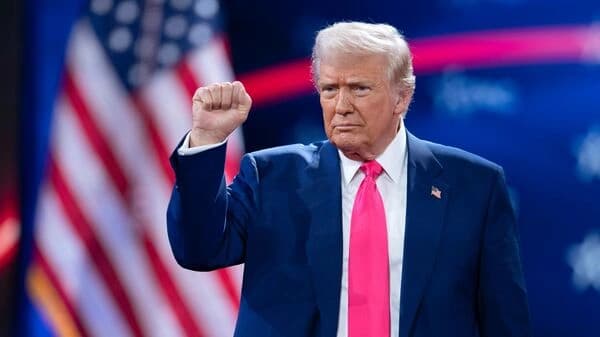
Trump Invokes Presidential Privilege in Lawsuit Over Law Firm Orders
Administration argues advisers involved in White House crackdown on major law firms are protected by executive privilege.
 Staff WriterAug 19, 2026, 10:35 AM
The US Justice Department has told a federal judge that President Donald Trump’s administration cannot be compelled to identify advisers involved in a White House crackdown on major law firms, arguing that the information is protected by executive privilege over presidential communications.
In a filing in federal court in Washington, the administration’s lawyers formally asserted executive privilege in response to an order from US District Judge Amir Ali. The order would require the White House to identify individuals involved in drafting, reviewing and approving executive orders issued last year targeting law firms and lawyers.
The American Bar Association (ABA) is seeking the records as part of a lawsuit filed last year. The lawyers’ group alleges that the Trump administration adopted an unlawful policy of targeting law firms and lawyers based on their legal work, hiring practices, diversity policies and political affiliations.
Four law firms won court orders last year permanently blocking enforcement of Trump’s executive orders against them. The Trump administration’s appeals in those cases are pending. Nine other firms reached agreements with the White House to avoid similar measures, while pledging to provide nearly $1 billion in free legal services to causes supported by the administration.
The Justice Department argued that disclosing the names of advisers involved in the executive orders would intrude on presidential decision-making, raise separation-of-powers concerns and potentially discourage advisers from giving candid advice to the President.
“Such advice provided to the President and his close advisers constitute the core of the presidential communications privilege,” the Justice Department told the court.
Courts have interpreted Article II of the US Constitution as providing a qualified privilege over certain White House communications, aimed at preserving the independence of the executive branch.
The administration’s lawyers cited a 2004 US Supreme Court decision involving former Vice-President Dick Cheney, then White House Vice-President, which they said limits the scope of evidence-gathering involving the White House.
In its filing, the government said it was not withholding information that was already public, including material contained in official statements and White House social media posts.
The case is American Bar Association v. Executive Office of the President, US District Court for the District of Columbia, No. 1:25-cv-01888-AHA.
For enquiries or further information, contact ask@tlr.ae or call +971 52 644 3004. Follow The Law Reporters on WhatsApp Channels.