US Majority Opposes Ending Birthright Citizenship Ahead of SC Ruling, Poll Finds
Reuters/Ipsos survey shows 64% support automatic citizenship for US-born children as top court prepares key rulings on immigration and civil rights.
 Staff WriterApr 27, 2026, 11:13 AM
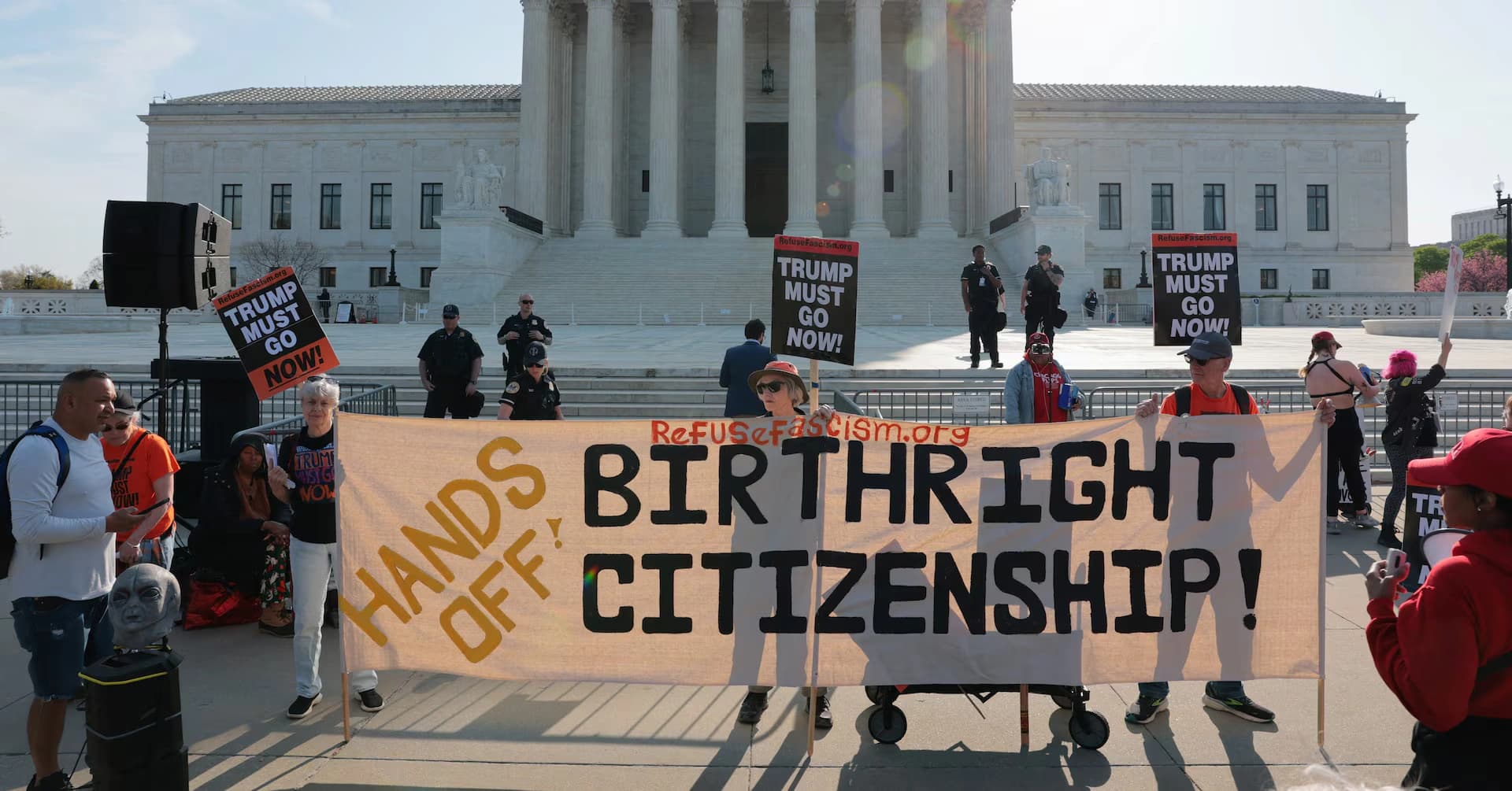
A majority of Americans believe all babies born in the United States should automatically be granted citizenship, according to a Reuters/Ipsos poll conducted as the US Supreme Court prepares to rule on President Donald Trump’s effort to end the practice.
The Supreme Court is expected to rule in the coming weeks on a range of polarising issues – from immigration policy and transgender rights to rules governing the counting of postal ballots – decisions that could help define the Republican president’s legacy and shape key parameters for the November midterm elections.
The poll, conducted nationwide between April 15 and 20, found that 64 per cent of Americans oppose ending birthright citizenship, while 32 per cent support scrapping it as proposed in Trump’s executive order issued in January 2025.
The order was challenged in court, and Supreme Court justices are expected to deliver their ruling by the end of June in what is widely seen as a landmark civil rights case and a major test of Trump’s hardline immigration agenda. The court, which has a 6–3 conservative majority, appeared sceptical of the administration’s position during oral arguments on April 1.
Public opinion on birthright citizenship remains sharply divided along party lines. Only 9 per cent of Democrats support ending the policy, while Republicans are split, with 62 per cent in favour of ending birthright citizenship and 36 per cent supporting its continuation.
The Supreme Court typically delivers its most high-profile rulings in May and June as it concludes its annual term.
In separate cases from Idaho and West Virginia, the court is expected to allow states to implement restrictions on transgender athletes participating in women’s sports. The Reuters/Ipsos poll found broad public backing for such measures, with 67 per cent of respondents supporting bans on transgender girls and women competing in female school sports. Support stood at 92 per cent among Republicans, compared with 44 per cent among Democrats.
The court is also expected to rule on whether states may count postal ballots that are postmarked by Election Day but received several days later. Around 65 per cent of respondents said they support counting such ballots, including 85 per cent of Democrats and 51 per cent of Republicans.
Another case concerns a Louisiana congressional map that increased the number of Black-majority districts from one to two to improve Black representation. A group of white voters has challenged the map, arguing it places excessive emphasis on race.
Public opinion on the issue is mixed. Around 75 per cent of respondents – including 65 per cent of Black respondents – said race should not be a factor in drawing congressional boundaries. However, about half of respondents, and six in 10 Black respondents, said they support keeping communities with shared characteristics, including race, within the same district.
In recent years, the court has issued landmark rulings expanding gun rights, striking down race-conscious college admissions policies and limiting the authority of federal agencies. Its conservative majority includes three justices appointed by Trump during his first term.
Views of the Supreme Court have become increasingly polarised. Around 70 per cent of Republicans viewed the court favourably in a Reuters/Ipsos survey conducted in March, compared with 27 per cent of Democrats. In December 2021, before the court overturned the constitutional right to abortion in 2022, 66 per cent of Republicans and 55 per cent of Democrats expressed favourable views.
The latest Reuters/Ipsos poll was conducted online among 4,557 US adults and carries a margin of error of approximately two percentage points.
For any enquiries or information, contact ask@tlr.ae or call us on +971 52 644 3004. Follow The Law Reporters on WhatsApp Channels.