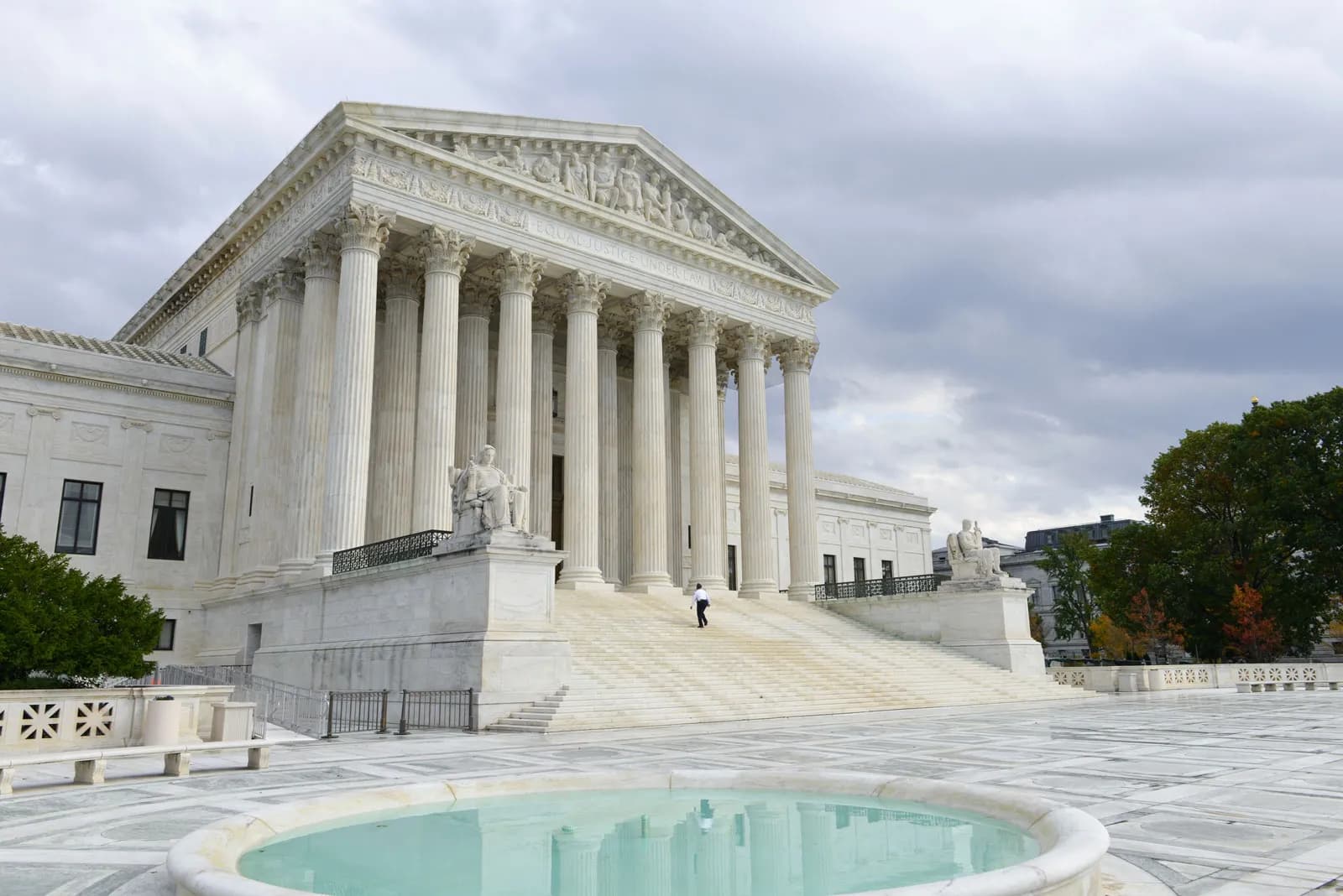
US Supreme Court Backs President Donald Trump in Asylum Processing Dispute
6–3 ruling restores federal authority to turn away migrants at Mexico border crossings deemed too congested.
 Staff WriterJun 29, 2026, 1:12 PM
The US Supreme Court has delivered a major legal victory for President Donald Trump, ruling that federal authorities may turn away asylum seekers at the US–Mexico border when officials determine that crossings are too congested to process additional claims.
In a 6–3 decision led by the court’s conservative majority, the justices overturned a lower court ruling that had found the policy unlawful under federal immigration law. The judgment clears the way for the Trump administration to potentially revive the controversial “metering” policy, which had been discontinued under former president Joe Biden.
The metering system allows US immigration officials to stop asylum seekers on the Mexican side of the border and decline to process their applications when processing capacity is deemed insufficient. The Supreme Court’s ruling is one of two immigration-related decisions issued on Thursday that also went in favour of the Trump administration.
At the heart of the case was the legal interpretation of whether migrants prevented from crossing into US territory can be considered to have “arrived in the United States” under federal asylum law. Writing for the majority, conservative Justice Samuel Alito said they cannot, arguing that in ordinary usage a person cannot be said to have arrived somewhere before physically entering that place.
“In ordinary speech, no one would say that a person ‘arrives in’ a place … before the person enters that place,” Alito wrote, adding that the statutory language supports a straightforward reading of the term.
The ruling effectively endorses the government’s position that asylum protections are triggered only once a migrant is physically on US soil, a finding that strengthens executive authority over border processing during periods of high congestion.
However, the decision triggered a sharply worded dissent from the court’s liberal justices. Justice Sonia Sotomayor, joined by Justices Elena Kagan and Ketanji Brown Jackson, warned that the ruling could have grave humanitarian consequences and undermine long-established asylum protections.
Sotomayor argued that the decision effectively allows immigration officials to block asylum seekers from ever setting foot on US territory, thereby preventing them from accessing legal safeguards guaranteed under federal law. She cautioned that the outcome would lead to more dangerous crossings, increased deaths, and greater exposure to violence for vulnerable migrants forced to seek alternative routes.
“The consequences of today’s decision are predictable,” she wrote. “More people will die. More people will attempt to cross the border illegally, and some will make it while others will not.”
In an unusual exchange, Justice Alito responded from the bench to parts of the dissent, saying additional points would have been included in his written opinion had he known the strength of the opposition would be aired in open court.
The ruling comes amid a broader set of immigration decisions from the Supreme Court that have recently aligned with Trump-era policies. In a separate ruling on Thursday, the court also cleared the way for the administration to revoke Temporary Protected Status for hundreds of thousands of migrants, including nationals from Haiti and Syria, potentially exposing them to deportation.
That decision affects more than 350,000 people from Haiti and around 6,100 Syrian nationals who had previously been granted protection from removal due to conflict and instability in their home countries.
US immigration officials first began informally turning away asylum seekers during a surge in crossings in 2016 under former president Barack Obama. The policy was later formalised during Trump’s first term, when border officials were authorised to decline processing claims if the system was deemed unable to handle additional applications. The Biden administration rescinded the practice in 2021.
Following his return to office, Trump has continued to pursue a hardline immigration agenda, and officials have indicated that the metering policy could be reinstated if border conditions worsen, although no clear timeline has been provided.
The legal challenge was brought by advocacy group Al Otro Lado in 2017. In 2024, the San Francisco-based 9th US Circuit Court of Appeals ruled that federal law requires border officials to inspect all asylum seekers who reach designated ports of entry, even if they have not physically crossed into the United States, and found that the metering policy violated that obligation.
The Supreme Court has in recent months also backed the Trump administration in a series of emergency immigration rulings, including allowing deportations to third countries and revoking temporary protections for Venezuelan migrants.
A further ruling is expected later this term on the legality of efforts to restrict birthright citizenship in the United States, a case that could have wide-ranging constitutional implications.
For any enquiries or information, contact ask@tlr.ae or call us on +971 52 644 3004. Follow The Law Reporters on WhatsApp Channels.