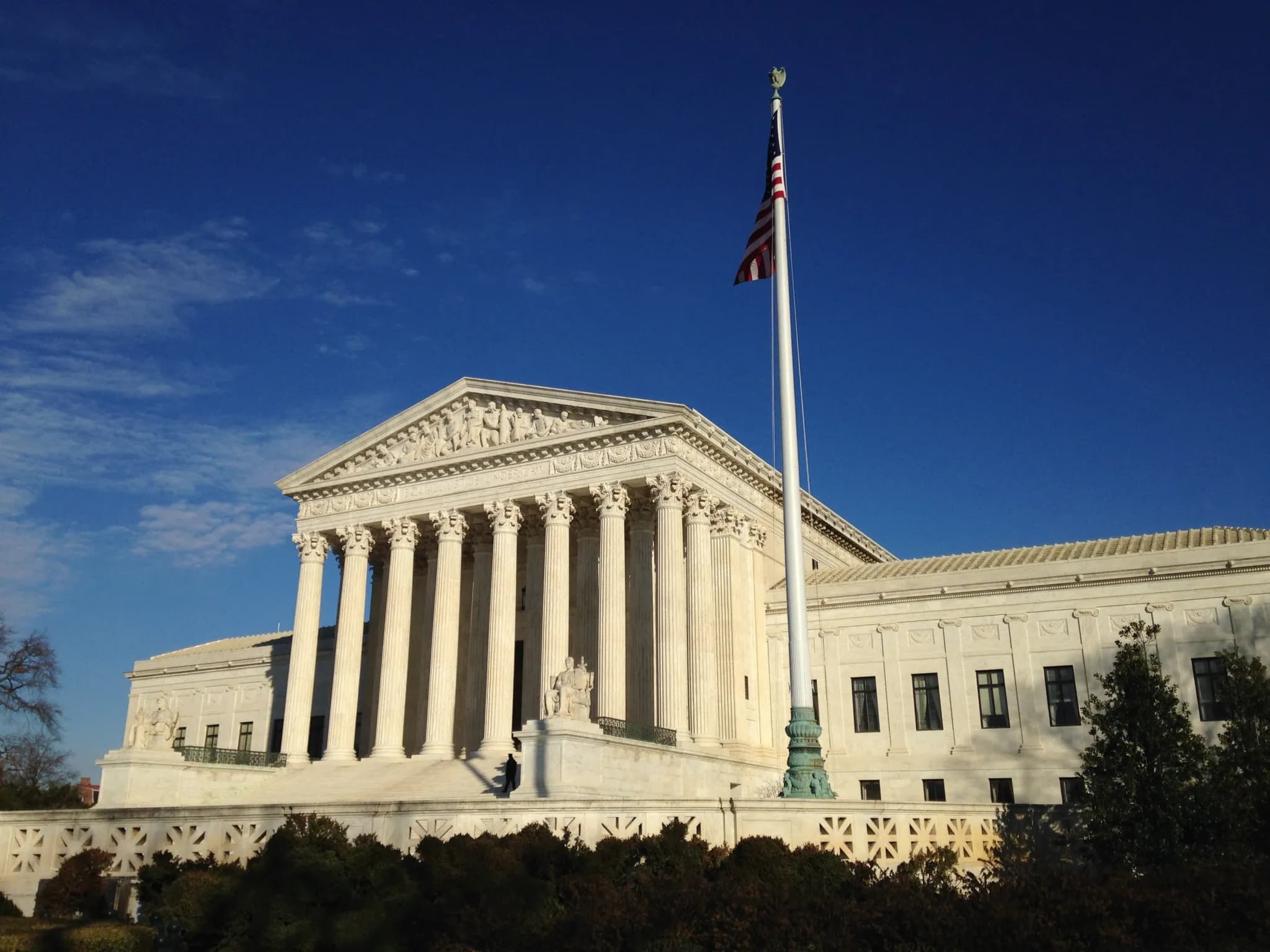
US Supreme Court Curbs Private Lawsuits Under Investment Company Act
Landmark 6-3 ruling limits investors' ability to challenge fund, placing greater enforcement responsibility on the SEC.
 Staff WriterJun 12, 2026, 12:04 PM
The US Supreme Court on Thursday sided with a group of investment funds affiliated with BlackRock and other asset managers in their effort to block certain lawsuits brought by private plaintiffs under a key federal securities law.
In a 6-3 decision driven by its conservative majority, the Supreme Court overturned a lower court ruling that had allowed hedge fund Saba Capital Master Fund to sue under the Investment Company Act of 1940 (ICA) to invalidate fund bylaws restricting the voting power of activist shareholders.
Conservative Justice Amy Coney Barrett, who authored the ruling, wrote that the Investment Company Act does not authorise private parties to bring lawsuits seeking the rescission of bylaws or other contractual provisions.
"In sum, nothing in the text or structure of the ICA indicates that Congress authorised private parties to enforce virtually every provision in the statute," Barrett wrote in the opinion, which was joined by the court's five other conservative justices.
The court's three liberal justices dissented.
President Donald Trump's administration backed BlackRock, FS Credit Opportunities and other funds involved in the case, including Adams Diversified Equity Fund, Adams Natural Resources Fund and Royce Global Trust.
The investment funds at the centre of the dispute are known as closed-end funds, which issue a fixed number of shares and often trade below the value of their underlying holdings. The funds, organised under Maryland law, adopted bylaw provisions restricting the voting power of large shareholders.
Saba, a hedge fund managed by activist investor Boaz Weinstein that owns shares in the investment funds, brought legal challenges against 11 such funds.
The hedge fund alleged that the disputed bylaw provisions violated a section of the Investment Company Act requiring each share to carry equal voting rights. It also argued that the law permits private parties – and not just the US Securities and Exchange Commission (SEC) – to seek court orders invalidating corporate bylaws or other contractual terms that breach the Act.
A federal judge in New York sided with Saba in 2024, ruling that the so-called "control-share bylaws" violated the Investment Company Act and had to be removed. The New York-based 2nd US Circuit Court of Appeals subsequently upheld that decision.
The funds then appealed to the Supreme Court, arguing that the Investment Company Act does not provide a "private right of action" allowing investors to bring such claims.
Stephen Sypherd, general counsel of Future Standard, the parent asset manager of one of the funds that prevailed in the case, said the ruling represented "a clear win for investors", allowing closed-end funds "to continue operating in the best interests of long-term shareholders".
Weinstein, of Saba Capital, said the ruling "puts the burden squarely on the SEC" to take action against control-share provisions that he argues violate the Investment Company Act.
"The evidence of shareholder harm is overwhelming," Weinstein said. "The SEC has no excuse not to act."
For any enquiries or information, contact ask@tlr.ae or call us on +971 52 644 3004. Follow The Law Reporters on WhatsApp Channels.