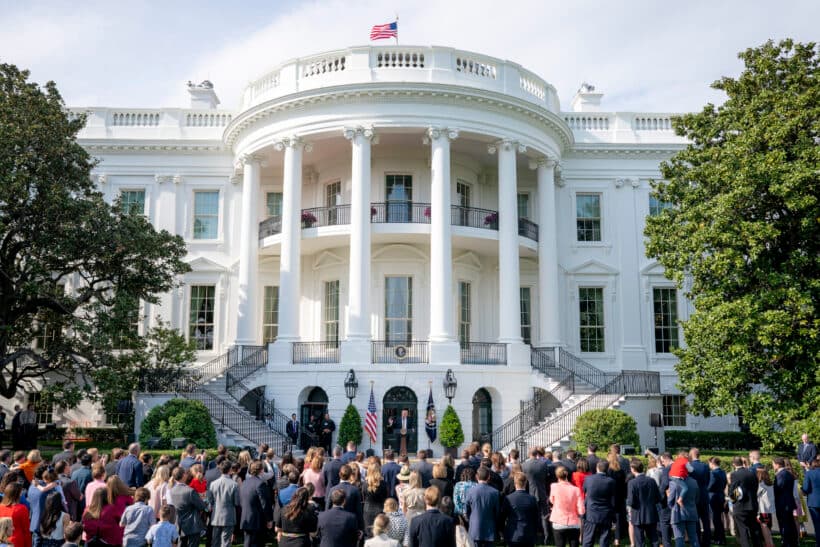
Judge Questions ‘Shifting’ Legal Defence of Trump’s White House Ballroom Project
Court presses Justice Department over authority for $400m construction as preservationists seek to halt demolition and expansion.
 Staff WriterMar 18, 2026, 1:03 PM
A federal judge has raised fresh doubts about the legal basis of President Donald Trump’s plan to build a new ballroom at the White House, questioning what he described as the government’s “shifting” defence of the project.
During a hearing on Tuesday, Richard Leon, a judge of the United States District Court for the District of Columbia, pressed lawyers from the United States Department of Justice over the different authorities they have cited to justify the president’s $400 million construction plan proceeding without congressional approval.
“This has been a case where there have been shifting theories, shifting dynamics, I regret to say, from the beginning,” Leon said.
The project involves the demolition of the East Wing to make way for a 90,000-square-foot ballroom intended to host state dinners, galas and other official events. Construction began in October and the facility is expected to be completed by 2028. Most of the funding for the project is expected to come from private donors.
Last month, a panel of the United States Commission of Fine Arts, whose members were appointed by Trump in January, approved the proposal.
However, the National Trust for Historic Preservation filed a lawsuit in December seeking to halt the project until the administration complies with federal requirements, including securing congressional approval, conducting independent reviews and allowing a public comment period.
Lawyers for the preservationists told the court that the government had put the case on a “monthslong merry-go-round ride” by repeatedly changing its explanation of who holds authority over the project. They argued that the administration is now claiming the work has progressed too far to stop.
“What they can’t do here is have it both ways,” said preservationists’ lawyer Thaddeus Heuer.
But Yaakov Roth, representing the Justice Department, told the court that the ballroom plan has always relied on a “dual source of funding and dual source of authority”.
Judge Leon was unconvinced, calling the argument a “brazen interpretation of the law’s vocabulary”.
He repeatedly stressed the symbolic significance of the White House, noting that it is not simply another government building within the national park system.
“It is an iconic symbol of this nation,” Leon said, adding that the president acts as a “steward” of the building while in office rather than its owner.
The demolition of the East Wing has already triggered strong criticism from preservationists, historians and Democratic lawmakers, who accuse the administration of bypassing the normal review process.
“There is no track record of this ever being done,” Leon observed during the hearing.
The judge had earlier declined to halt the project, ruling last month that the preservation group had not properly challenged the renovations. However, he allowed the organisation to amend its complaint and seek reconsideration.
In a February 26 ruling, Leon noted that the president’s legal authority to undertake the construction had not been clearly presented before the preservationists filed their motion. He also pointed out that the government had initially suggested a dispute over the president’s constitutional authority before later abandoning that argument.
The National Trust for Historic Preservation subsequently filed a revised complaint asking the court once again to stop the project.
Even if the court ultimately rules against the government, Roth argued that construction should not be halted, citing national security concerns and other practical considerations.
Judge Leon said he aims to deliver a ruling by the end of the month.
For any enquiries or information, contact ask@tlr.ae or call us on +971 52 644 3004. Follow The Law Reporters on WhatsApp Channels.