Global Legal Compass

Where Should You Hold Intellectual Property? The Legal, Tax Questions That Shape A Global Business’s Jurisdiction Choice
Choosing where to hold intellectual property affects tax exposure, licensing income and legal protection across markets.
Intellectual property has become one of the most valuable assets on many corporate balance sheets, even where its value is difficult to quantify. A technology company may derive much of its value from its software and algorithms, a consumer business from its trademarks and brand reputation and a manufacturer from its patents, industrial designs and proprietary production methods. As companies expand globally, the question of whose entity should own intangible assets and where that entity should be established has become an important part of international corporate structuring.
The choice of a jurisdiction for holding intellectual property is often framed as a tax-planning exercise. A company may look to transfer its intellectual property to a subsidiary in a favoured tax regime and then licence the rights to operating companies in other markets. But the legal and commercial position is more nuanced. Ownership must be established, royalty arrangements must withstand scrutiny and the company claiming the income must have a credible role in managing the assets. A structure that appears attractive on paper can prove costly if it conflicts with the way the business operates.
Ownership Is Different From Protection
The first distinction is between owning intellectual property and protecting it. A company incorporated in one country may own intellectual property used across the world, but the rights held do not enjoy universal protection. Patents, trademarks and industrial designs generally depend on protection granted or recognised in particular territories. Copyright follows different rules, with international conventions providing important cross-border recognition, but the scope and enforcement of rights must still be carefully considered.
A holding company in Singapore, the United Arab Emirates, Luxembourg or another jurisdiction does not, simply by being incorporated there, secure a global monopoly over a brand or invention. The owner may still need registrations in the markets where products are manufactured, sold or licensed. It must also consider whether local law recognises the relevant assignment, whether registrations are correctly recorded and whether contractual rights can be enforced against infringers.
For international groups, the question is not merely where to register a company, but which entity should hold each category of intellectual property, which operating companies need permission to use it and how those arrangements will work across the jurisdictions concerned. A single central owner may suit a business with a unified global brand, but a group operating through joint ventures, regulated subsidiaries or businesses acquired over time may need a more differentiated structure.
The Commercial Logic Behind A Holding Company
A dedicated intellectual property company can isolate valuable intangible assets from day-to-day operating risks. An operating subsidiary may manufacture products, employ staff, enter customer contracts and incur liabilities, while another group entity owns the brand, software or patents and grants licences to businesses using them.
Such separation can provide clearer financial reporting, make licensing arrangements easier to administer and provide a more orderly framework for acquisitions, joint ventures and future investment. A prospective buyer may find it easier to assess a business when the ownership of its principal technology, trademarks and licensing rights is documented and distinct from its operating activities.
The structure is not automatically protective, however. Moving intellectual property into a separate company does not guarantee that creditors, insolvency practitioners or courts will disregard every claim against it. The outcome will depend on the relevant law, the validity of the transfer, the circumstances in which it was made and any guarantees, security interests or contractual commitments attached to the assets.
There may also be practical disadvantages. A separate owner requires governance, accounting, legal documentation and administration. Where a business has only one product, operates in a single market and has limited licensing activity, the additional entity may create complexity without a proportionate commercial benefit. The structure should follow the business and not precede it.
Tax Benefits Must Be Tested Against Economic Substance
Tax treatment continues to be relevant, particularly where intellectual property generates substantial royalty income across several markets. Jurisdictions differ in their treatment of royalties, corporate profits, withholding taxes, deductions and incentives for research and development. Some offer preferential regimes for qualifying income generated from patents or other eligible intellectual property, while others focus tax relief on expenditure incurred in developing the underlying technology.
But an attractive headline rate tells only part of the story. The company must establish whether the income qualifies for the relevant treatment, whether anti-avoidance provisions apply and how payments will be taxed in the countries from which they originate. A royalty that is deductible in one country may attract withholding tax in another. Treaty relief may not be available if the recipient does not satisfy the applicable conditions, including beneficial ownership or anti-abuse requirements where relevant.
Economic substance is equally important. Tax authorities increasingly look at whether the entity receiving the income performs meaningful functions, controls relevant risks and has the capacity to manage the assets it claims to own. Under the Organisation for Economic Co-operation and Development (OECD)’s transfer pricing framework, legal ownership on its own does not grant a company rights to all the returns generated by an intangible. The analysis looks at functions associated with developing, enhancing, maintaining, protecting and exploiting the asset, plus the parties’ contributions, contractual arrangements and actual conduct.
A company that merely holds legal title while engineers, researchers and commercial decision-makers operate elsewhere may struggle to justify retaining the bulk of the profits. The appropriate allocation of income will depend on the facts, including who funds development, who makes important decisions, who controls risk and what other group entities provide.
Choosing Between The UAE, Singapore And European Structures
For businesses operating across the Gulf, Asia and Europe, the United Arab Emirates may be considered as a location for an intellectual property holding company. Its position as a regional business centre can be commercially useful where senior management, licensing operations or regional headquarters are based there. Yet incorporation in the UAE does not by itself establish eligibility for a particular tax outcome. The company must assess the applicable corporate tax rules, qualifying income conditions, transfer pricing obligations and any relevant cross-border withholding taxes.
Singapore may be considered by groups with substantial Asian operations, regional management or commercial relationships in the region. Its suitability depends on the business’s actual activities, the legal and tax treatment of the assets and the requirements of the countries in which the intellectual property is exploited. A company wishing to use Singapore as a regional licensing centre needs to consider whether the location fits its management arrangements and commercial strategy and not treat incorporation as an isolated tax decision.
European jurisdictions, including Luxembourg, may also factor into international structures where financing, investment funds, acquisitions or established European operations influence the choice. Their legal systems and treaty networks may offer advantages for particular groups, but their regulatory obligations, tax rules, substance requirements and the costs of maintaining the structure need to be examined.
There is no universal ranking. A technology group licensing software across Asia may have different needs from a consumer brand expanding through Gulf franchisees or a pharmaceutical company commercialising patents in several regulated markets. The right jurisdiction is the one that aligns legal ownership, management, commercial activity and tax treatment with the business’s operating model.
Royalty Payments And Transfer Pricing
Once ownership has been established, the next challenge is pricing the right to use the asset. A subsidiary that manufactures goods under a group trade mark or uses centrally owned software may pay royalties to the intellectual property company. Where entities are related, the terms generally need to comply with applicable transfer pricing rules and reflect the arm’s-length principle.
That can be difficult, given that intellectual property is often unique. Comparable transactions can be scarce and the value of a patent or brand can change as markets develop, competitors emerge or technology becomes obsolete. The parties may need to consider licensing comparables, projected earnings, the functions performed by each entity and commercial alternatives.
The paperwork must align with the transaction. Agreements should identify the rights being licensed, the permitted territories, the duration, exclusivity, royalty calculation, payment obligations and responsibility for enforcement. A trade mark licence may also require quality-control provisions, while a software licence may require rules on updates, cyber security, data and derivative works. If the operating company contributes substantially to developing a local brand or technology, that contribution may affect the appropriate allocation of returns.
Cross-border payments raise further questions, including withholding tax, exchange controls, deductibility, documentation and banking requirements. An arrangement that cannot explain itself clearly to tax authorities or financial institutions can find itself delayed despite a legitimate underlying transaction.
Transfers, Valuation And Existing Rights
Transferring intellectual property to a new holding company can be a complex exercise. The existing owner must have the right to transfer the asset and the transfer may involve written assignments, registration updates, consent from lenders or contractual counterparties or compliance with employee-invention rules. Software and creative works can involve several contributors, and trademarks can be affected by licensing obligations and rules governing goodwill.
Valuation is another concern. A transfer between related companies can trigger tax consequences, particularly where a valuable asset crosses borders. The price must be supported by an appropriate valuation method and the applicable transfer pricing rules. Tax authorities may question a transfer made for a nominal amount where the asset has substantial commercial potential or subsequent changes to royalty arrangements and the allocation of profits.
Businesses should also review existing licences, security interests, co-ownership arrangements and restrictions imposed by investors or public funding agreements. A patent may be owned by one entity but subject to an exclusive licence granted to another. A brand may be registered in the parent company’s name while franchise agreements give third parties extensive contractual rights. A restructuring that overlooks these interests can create disputes.
The Global Minimum Tax Changes The Calculation
For large, multinational groups within its scope, the OECD’s Pillar Two framework offers an additional consideration. The rules are designed to ensure a minimum effective tax rate of 15% in each relevant jurisdiction, subject to detailed scope provisions, calculations, exclusions and safe harbours. As a result, moving intellectual property income to a lower-tax jurisdiction may not deliver the expected overall benefit for a group covered by the regime.
The rules do not eliminate the need to compare jurisdictions, and their effects will vary according to the group’s size and structure. But they reinforce a broader shift in international tax planning – the nominal tax rate is only one element of the analysis, and compliance costs, access to talent, the treatment of research and development, treaty positions and the ability to demonstrate genuine business activity can be equally significant.
A Structure Built Around The Asset
The most effective intellectual property structure will begin with an inventory of the assets and the business model that depends on them. Companies should establish who created or acquired each asset, who owns it today, where protection is required, which entities use it and how its value is expected to develop. They can then compare potential jurisdictions against legal enforceability, tax treatment, operational substance, investor expectations and the costs of maintaining the arrangement.
For a start-up, direct ownership may be the most practical solution until international licensing or investment makes it worthwhile. For a mature multinational, a central holding company may help organise global rights and revenue flows, provided it is supported by credible governance, agreements and transfer pricing arrangements. A family-owned group may place greater emphasis on succession, licensing continuity and protection against disputes among shareholders.
Intellectual property can move through assignments and licences, but the legal rights, tax consequences and commercial relationships surrounding it do not disappear at the border. Choosing where to hold it is ultimately a decision about who controls the asset, who creates its value and how the business intends to use it. The strongest structure is not necessarily the one with the lowest tax rate – it is the one that can still be defended by investors, regulators, tax authorities and courts.
Dr. Sunil Ambalavelil is the Global Executive Chairman of Kaden Boriss, an international law firm specialising in franchise and business agreements. A seasoned legal adviser, he has advised and supported the international growth of numerous global brands, helping them navigate the legal complexities of cross-border expansion.
For enquiries or further information, contact ask@tlr.ae or call +971 52 644 3004. Follow The Law Reporters on WhatsApp Channels.

Bringing Foreign Investment Into The UAE: Choosing The Right Entry Structure
The right legal structure depends on market access, ownership, tax exposure, liability and long-term business goals.
Foreign investors entering the United Arab Emirates are faced with a choice that can have consequences far beyond the simple registration of a company. The decision on whether to take the form of a mainland entity, a free-zone company, a branch, a subsidiary, a joint venture or a holding structure defines how the business can operate, who controls it, where liabilities sit and how profits and capital move through the group.
The UAE provides several routes into its economy, underpinned by a mix of federal legislation, emirate-level licensing systems, free-zone regulations and sector-specific rules. The variety of options is attractive to international businesses, but it means structural planning is key. A company set up to undertake domestic trading may not prove the most suitable vehicle for a regional headquarters, a regulated financial operation or an investment platform looking to hold assets across several countries.
Foreign ownership liberalisation has broadened the options available for mainland businesses, while free zones continue to offer distinct commercial and administrative advantages. However, no structure can be universally superior. The choice must follow the proposed business activity, customer base, risk profile, financing needs and intended exit strategy, rather than assumptions about tax or incorporation costs alone.
Mainland Companies And Access To The Domestic Market
A company based in the mainland is typically licensed by the relevant emirate’s economic department or competent licensing authority. For businesses wishing to supply goods and services to customers across the UAE, bid for government contracts or set up a substantial local operating presence, this route offers considerable flexibility.
Many mainland commercial activities allow 100% foreign ownership, following reforms which removed the previous general requirement for Emirati majority shareholders in many sectors. However, the position must be checked against the precise activity and applicable legislation. Strategic-impact activities, regulated industries and some professional or commercial operations may be subject to additional ownership, approval or licensing conditions.
The main advantage of a mainland structure is that it can support direct engagement with the domestic economy without the need for a separate local distributor just because the company is foreign-owned; it can be appropriate for retailers, contractors, professional service providers, manufacturers and businesses whose employees, premises and customers are primarily in the UAE.
The corresponding obligations may include office or premises requirements, employment and immigration compliance, activity-specific permits and continuing licence renewals. Costs and procedures vary by emirate, legal form and business activity. Investors should also distinguish between permission to conduct business and permission to undertake a regulated activity; a commercial licence does not itself authorise banking, insurance, healthcare or other specially supervised operations.
Free-Zone Companies And The Limits Of Advantages
Free zones remain a key element of the UAE’s investment offer. They can provide foreign ownership, specialised infrastructure, streamlined registration procedures and a business environment, tailored to industries such as logistics, technology, media, commodities, financial services and manufacturing.
A company based within a free zone may be particularly appropriate for an international trading business, a regional service hub or an enterprise whose operations are centred on that zone and overseas. Some zones can offer a mix of facilities tailored to particular activities, plus access to warehousing, ports, industry networks or sector-specific regulatory frameworks.
The distinction between a free-zone licence and permission to conduct business elsewhere in the UAE demands close attention. A free-zone company should not be assumed automatically to be permitted to trade anywhere on the mainland. For some activities, emirates and frameworks, it may require a mainland branch or company, a relevant permit, an authorised distributor or another compliant arrangement.
Tax treatment also requires more than a simple comparison of headline rates. The UAE’s corporate tax regime applies to free-zone entities, although qualifying free-zone persons may benefit from 0% rate on qualifying income, should they satisfy the statutory conditions. The treatment of non-qualifying income, transactions with mainland counterparties, substance requirements and other compliance obligations must be assessed under the applicable rules. Free-zone incorporation does not guarantee the preferential rate.
Investors should therefore compare the commercial benefits of a particular zone against its licensing restrictions, operating costs, customer access and tax conditions; a low-cost registration may be less economical, should the company need additional licences or a separate mainland presence.
Branches And Subsidiaries: Two Different Risk Profiles
An overseas company looking to acquire a presence in the UAE may consider the option of a branch, rather than a separately incorporated subsidiary. Although the two arrangements can offer similar commercial purposes, their legal consequences are distinct.
A branch is essentially an extension of its foreign parent, operating in the UAE within the scope of its registration and approved activities. It does not normally possess a legal identity separate from that parent. As a result, the parent company may be exposed to liabilities incurred by the branch, subject to the relevant legal framework and the nature of the claim.
Branches can be appropriate for established international businesses wishing to extend existing operations into the UAE, while retaining centralised ownership and management. They can also be appropriate, should the parent wish to provide services, execute contracts or maintain a representative operating presence, without creating a separate subsidiary.
A subsidiary, by contrast, is a separately incorporated legal entity, typically in the form of a limited liability company or another permitted company form. It can enter contracts, employ staff, own assets and incur liabilities in its own name. The parent owns the subsidiary’s shares, but its obligations are generally separate from those of its shareholder, subject to guarantees, statutory liabilities, insolvency rules and circumstances that the corporate separation may be challenged.
For investors entering a new market, that separation can be of value; it can help ring-fence operational risks, accommodate local partners, allow third-party financing or see the UAE business sold independently. It is not an absolute shield, however, parent guarantees, intercompany arrangements, inadequate governance and failure to respect the entity’s separate legal status can undermine the intended protection.
The choice of a branch or subsidiary should therefore reflect the parent’s risk appetite, the nature of its contracts and whether the UAE operation is expected to become a separate business.
Joint Ventures And Allocation Of Control
A joint venture can provide foreign investors with local market knowledge, established distribution channels, technical expertise, capital or access to a partner’s customer base. It may take the form of a jointly owned incorporated company or a contractual collaboration, depending on the project and applicable law.
The structure can be particularly useful, should the investment require substantial capital, specialised local knowledge or long-term commercial relationships; it can also distribute investment risk between the participants, although the extent of that sharing depends on the agreed ownership, financing and contractual arrangements.
Ownership percentages alone do not determine control; investors must establish how directors are appointed, which decisions require unanimous consent, who controls budgets and bank accounts, how additional capital is raised and what happens, should the parties disagree. Intellectual property ownership, confidentiality, non-compete obligations, dividend policy and restrictions on share transfers also deserve attention.
Exit provisions are especially important; a shareholder may be unable to sell its interest at the desired time, should the agreement lack a workable transfer mechanism, valuation process or deadlock procedure. Rights of first refusal, tag-along and drag-along provisions, put and call options and agreed dispute-resolution mechanisms may help, subject to enforceability under the applicable law.
A joint venture should be designed around a commercial bargain; where one party supplies technology and another provides market access, for example, the agreement must deal with how those contributions are valued, protected and maintained throughout the relationship. Without that clarity, the partnership’s initial advantages can become the source of dispute.
Holding Companies And The Architecture Of Investment
A holding company serves a different purpose to an operating business. Rather than primarily selling goods and services, it holds shares in subsidiaries or other assets, enabling investors to organise ownership, governance and capital across a group.
A UAE holding structure can prove useful to investors, should they wish to manage several operating businesses, acquire regional assets or prepare for future expansion. Depending on the jurisdiction and legal form, a holding entity can centralise shareholder decisions, facilitate investment into subsidiaries and provide a framework for bringing in new investors.
It can also assist with succession planning and the separation of operating risks from the ownership of selected assets. The legal and tax consequences, however, depend on the assets held, the residence of shareholders and subsidiaries, the flow of dividends and other payments, and the substance and activities of the holding company.
A holding company should not be treated as a tax solution in isolation; corporate tax rules, withholding taxes in other jurisdictions, transfer-pricing requirements, economic substance considerations where applicable, beneficial ownership disclosures and banking due diligence can impact the arrangement. A structure that exists on paper, without sufficient governance or commercial rationale, may face scrutiny from tax authorities and banks.
Investors must also determine where the holding company should sit within the group; a UAE entity may be appropriate for regional management and investment, but a cross-border group may have reasons to retain an overseas parent or utilise different holding jurisdictions for particular assets. The answer depends on the overall legal and commercial design, rather than the place of incorporation.
Corporate Tax, Compliance And Regulatory Approval
The UAE’s business environment presents the relative accessibility of company formation, combined with a growing framework of tax, transparency and regulatory obligations. Corporate tax, VAT where applicable, accounting and record-keeping duties, beneficial ownership requirements, anti-money laundering controls and licensing conditions should be considered before the structure is finalised.
The relevant obligations vary, according to the entity’s legal form, activities, turnover, counterparties and jurisdiction; a company operating in a regulated sector may require approval from a specialist regulator, in addition to its commercial or free-zone licence. Financial services, insurance, healthcare and certain other activities can involve distinct authorisation requirements.
Cross-border groups should also consider transfer pricing and the commercial basis for transactions between related entities; management fees, royalties, shareholder loans, service charges and dividends can carry different legal and tax consequences. Banking arrangements can raise further questions on the source of funds, beneficial ownership, expected transaction volumes and the business purpose of the structure.
These issues are easier to address, at the point of planning rather than after incorporation; restructuring an existing business may require licence amendments, shareholder approvals, asset transfers, contract novations, tax analysis and regulatory consent. The initial savings from a choice of structure without considering future requirements may be outweighed by the cost of correcting it.
Choosing A Structure That Can Grow With The Business
The most appropriate UAE entry structure is the one that satisfies the investor’s commercial objectives, while being workable as the business grows; a mainland company may be appropriate for an enterprise focused on domestic customers, a free-zone company for international trade or a specialised operating base, a branch to extend an existing foreign business and a subsidiary to provide a separate platform for local operations.
A joint venture can bring together complementary resources, while a holding company can organise ownership and investment across several entities; the options are not always mutually exclusive. An investor may use a holding company to own a mainland operating subsidiary, establish a free-zone entity for regional services or create a joint venture for a particular project.
Before committing, investors should map out the intended activities, identify the required licences, confirm foreign ownership conditions, assess liability and financing needs, model tax outcomes and agree governance and exit arrangements; the plan should also consider the possibility of acquiring another business, bringing in new shareholders or selling the UAE operation.
The UAE offers multiple routes into the market, but incorporation is only the beginning; a well-designed structure ensures that the legal form matches the commercial purpose, protects the interests of investors and partners and leaves room for the business to evolve, without repeated and costly reconstruction.
Dr. Sunil Ambalavelil is the Global Executive Chairman of Kaden Boriss, an international law firm specialising in franchise and business agreements. A seasoned legal adviser, he has advised and supported the international growth of numerous global brands, helping them navigate the legal complexities of cross-border expansion.
For enquiries or further information, contact ask@tlr.ae or call +971 52 644 3004. Follow The Law Reporters on WhatsApp Channels.

Moving Money Across Borders: Why Dividends, Loans And Fees Carry Legal Costs And Risks For Investors
Tax rules, exchange controls and banking checks can affect how investors fund businesses and bring profits home.
An overseas company can have money in the bank and still be unable to send it to its owner. Its cash balance may exceed the profits that company law allows it to distribute. Even when such a transfer is permitted, with-holding tax, exchange controls or a challenge to the commercial basis of the payment might affect its value and timing.
Investors should understand the potential complexities associated with the route: a shareholder loan, subscription and management fee provide potentially different entitlements and obligations, despite identical payer and recipient. Funding choices made early on may affect the ability to extract the return later. The analysis should address the company's jurisdiction, the relevant status of the investor and actual purpose of the payment, rather than its description on the form. A convenient label cannot reconcile diverse arrangements.
Dividends are Constrained by Company Law and the Company's Position
Dividend capacity depends on the applicable company law rules and the company's finances. In Britain, section 830 Companies Act generally restricts distributions to realised profits after realised losses. A year's profit may therefore have been offset by losses previously incurred. Borrowing in itself does not create distributable profits: the relevant accounts need to be examined (including the required corporate approvals and the company's constitution) before the investor assumes the right to the balance.
Investment Funding Affects the Basis for Exit
Capital injections need to be documented in light of their final use. Subscription of shares creates an equity participation: it does not create a right upon the investor upon similar terms to a loan. Paying to reduce the shareholder loan or capital on the books can require a formal statutory reduction or other lawful mechanism to allow a repayment in certain jurisdictions. In Britain, by way of example, provision exists for a private company limited by shares to make a capital reduction on a special resolution and solvency statement, and court confirmation is available. The appropriate records of ownership, filing and any foreign investment approvals should be established when the money comes in.
A loan from a shareholder is potentially repayable but the agreement needs to address the currency in which, when and how the loan is to be serviced. The Organisation for Economic Co-operation and Development (OECD) guidance considers whether the advance has the characteristics of economically debt: the price (interest on the loan) is relevant but whether the borrower could service similar debt outside the relationship is also relevant. Depending on the domestic law, there are cases where purported debt might be found to be equity and restrictions on interest deductions even if the loan is considered to exist. An arm's-length rate alone does not necessarily determine interest deductibility: principal and interest also need to be treated separately for tax on the repayment.
Management Fees Demand Evidence of Services Rendered to Justify the Charge
Management fees bring a contrary consideration: the services rendered and those which attracted the charge. The UAE Federal Tax Authority's guidance on transfers pricing requires consideration of whether the services would provide an economic or commercial benefit that an independent business would purchase or perform itself. Costs incurred solely as a result of the parent owning the subsidiary do not support charging the subsidiary. Evidence of the performance, the beneficiaries and distribution of the cost matters as well as an annual invoice for management.
Royalties and Fees Need Scrutiny of the Licence and Basis of the Charge
In like vein, agreement on the basis on which a royalty charge is made needs to consider the entitlement and the consideration: ownership of a particular trade mark, intellectual property or other right belonging to a group company does not imply entitlement to all the revenue from its use except on agreement. The nature of functions performed, assets and risks at each entity are relevant facts. Agreements should reflect the commercial basis. Shifting a percentage of revenue offshore as royalty leaves the evaluation of the royalty vulnerable if the charge cannot be sustained. Similarly fees: the basis of the cost, what the paying entity has received in exchange, should be identified to support a claim that the sum represents compensation for a service.
Withholding Tax Can Affect the Return on Payment Outside the Jurisdiction
Depending upon the applicable domestic law, the category of payment (dividend, interest, royalty, service payment) can affect whether and to what extent the payer owes withholding tax. Classification is relevant in that different treatments might be available. Agreement to the category of the payment (and whether the sum is gross or if the payer should top-up to meet a specified net amount) should be clarified as part of the contract negotiations. That classification determines who bears the unexpected withholding tax.
A tax treaty may reduce the charge but entitlement depends on its wording and the recipient circumstances (residence, beneficial ownership of the sum received and any anti-abuse provisions). Residency, beneficial ownership and circumstances of the income must also be considered in any evaluation. An intermediary inserted to claim treaty benefits can potentially fail each test. The procedure is also relevant: Britain’s tax authority, HM Revenue & Customs (HMRC) guidance makes it clear that the relief from UK withholding tax is not automatic and distinguishes between the availability of relief at payment, and the relief for repayment of an over-withheld sum. The required certification and procedure should be established before assuming applicable relief.
For UAE investors, the destination of the currency is important: the UAE currently applies a 0% withholding tax rate to certain UAE sourced income paid to non-residents. This does not determine the tax which the income may incur upon leaving another jurisdiction. The receipt of a dividend, royalty or interest in the UAE bank account does not mean that the foreign withholding tax charge is eliminated. A UAE credit for foreign tax paid is limited to the UAE corporate tax due on the income. Unused credit cannot be carried forward, back or refunded. If the income is exempt in the UAE, foreign withholding charges remain a cost with no UAE credit.
Exchange Controls May Apply Upon the Exit of the Investment
Foreign exchange considerations can implicate legal aspects. India's Foreign Exchange Management Act differentiates between current account payments (interest on a loan and investment income) and capital account (transactions in connection with cross-border borrowing and lending by a corporate). An option available in relation to dividends cannot therefore be assumed to apply to an equity subscription or the return of the loan principal. Classification of the transaction as current account or capital account is not sufficient: not all current account payments are free, and not every capital account payment requires individual central bank clearance. The category of investment might matter on its exit. The Reserve Bank of India (RBI) rules relate the ordinary route for remittance of securities sale proceeds to repatriation status: the applicable pricing and taxation for the currency is therefore implicated. The records created on entrance to the investment can therefore affect its return years later. Agreements should provide for the currency of the payment and the sharing of costs and exposure to currency conversion: a favourable quotation cannot remedy a prohibition on making the underlying payment.
Banking Checks Cover More Than the Payer's Name
Bank scrutiny extends beyond account numbers. The Financial Action Task Force (FATF) standards require identification of the customer and of the beneficial owner and a review of the transactions in light of the customer's business and risk profile: local law dictates the duties imposed on banks. They may seek the loan agreement, dividend resolution or service contract supporting the payment. Establishing the source of funds is a question of what that particular lump of money represents. Source of wealth examinations address how the investor accumulated its assets. The extent of the checks is determined by the requirements (and the risk): banking enquiries into the owners of a company are not the same as a beneficial ownership of income for treaties which can concern the company receiving the payment. Completion of the one is not conclusive of the other.
Intermediary (correspondent) banks processing the transfer can ask further questions or sanctions. Any change to the beneficiary or an ownership trail unidentifiable or a discrepancy in the description of the invoice versus the payment can prompt further information to be provided. Processing of the payment does not validate that the payment is a lawful or properly taxed distribution. Each request exists within its own legal framework.
For an investor in funding choices internationally, the constructive exercise is to determine the return: what, how and with what documentation the payment will be made? Clarifying those questions makes the prospective return credible. Having allowed profits to accumulate abroad, restructuring the funding basis or reconstructing missing documentation may prove more complex than the initial payment.
Dr. Sunil Ambalavelil is the Global Executive Chairman of Kaden Boriss, an international law firm specialising in franchise and business agreements. A seasoned legal adviser, he has advised and supported the international growth of numerous global brands, helping them navigate the legal complexities of cross-border expansion.
For enquiries or further information, contact ask@tlr.ae or call +971 52 644 3004. Follow The Law Reporters on WhatsApp Channels.

Buying a Business Abroad Can Expose Hidden Liabilities That Change the Price or Derail the Deal
From corporate records to tax and regulatory consent, legal due diligence defines a buyer’s acquisitions and lingering risks after completion.
The most expensive aspect of an overseas acquisition could be a liability that never appeared in the seller’s valuation. A customer contract could allow termination on change of ownership, a bank may hold security over core assets, and a licence may require regulatory consent before control changes. Each could undermine an otherwise profitable business or prevent the purchase from proceeding as planned.
Legal due diligence examines what a buyer will acquire and whether the business can continue operating after completion. The initial choice is between buying the company’s shares and selected business assets. In a share purchase the company generally retains its contractual obligations and past liabilities; an asset purchase offers more control over what is acquired, although employment, tax and other statutory rules may still attach obligations to the transfer.
Ownership Beyond The Registry
Corporate diligence begins in the entity being sold, its subsidiaries and the seller’s authority to act. Incorporation documents, constitutional rules, shareholder registers, board minutes and past share transfers should be reconciled with official filings. Shareholder agreements, options and pledges can reveal rights that restrict a sale or alter the stake available. Earlier share issues need checking for proper authorisation, along with unpaid capital commitments and any shareholder waivers required before completion.
Beneficial ownership requires a separate inquiry into the individuals who ultimately own or control the business. Nominees, trusts and intermediate holding companies can strip the registered shareholder from the person exercising control. The review should reconcile ownership declarations with voting arrangements and independent records, then assess applicable reporting and sanctions requirements. Definitions and disclosure thresholds vary by jurisdiction; a familiar percentage from the buyer’s home market is an unsafe substitute for the local test. Where US sanctions apply, an entity is treated as blocked if blocked persons together own at least 50%, directly or indirectly, even when it is not listed. Control alone does not trigger that particular rule.
Licences And The Right To Acquire
The licence schedule should match the activities actually generating revenue, including operations conducted through subsidiaries. Buyers need to establish which entity holds each permission, its expiry and whether the deal triggers notification, consent or a fresh application. Foreign ownership limits and sector-specific suitability requirements also need checking before the proposed ownership structure is settled. Licence conditions, inspection findings and enforcement correspondence can reveal restrictions that are not apparent from an expiry date or a record of renewals.
Competition clearance and investment screening are separate issues. Transactions requiring notification under the EU Merger Regulation generally cannot be implemented before clearance. Under Britain’s National Security and Investment regime, an acquisition subject to mandatory notification is void if completed without approval. Legal teams must identify filing requirements early and build the necessary clearances into the completion timetable, including time to answer regulators’ questions.
Contracts And Debt Can Alter The Price
Revenue forecasts deserve to be read alongside the contracts supporting them. Customer, supplier, distribution and lease agreements may contain termination rights, exclusivity obligations or consent requirements. A share sale can trigger a change-of-control clause although the contracting company remains the same; an asset sale may require consent to assign rights or replace the seller as a party to the contract. Amendments and side letters also matter: an expiry date or a rebate agreed outside the main document can undermine the revenue forecast even where transfer is permitted. If an important customer can leave after the acquisition, the buyer has a valuation problem as well as a drafting issue.
The loan balance is only the starting point for debt diligence. Finance documents should reveal security over assets, shareholder loans, guarantees for other group companies and restrictions on further borrowing. Property and security searches must be matched to the relevant jurisdiction and asset. Where financing is to be repaid, completion arrangements should provide for repayment and effective releases. A seller’s assurance that an asset is paid for is insufficient if a lender retains enforceable security over it.
Employees And Intellectual Property
Employment costs can also change the economics. Accrued leave, bonuses, pensions and severance need examining alongside collective arrangements, contractor status and work permissions, with local advice on consultation duties. In Britain, qualifying transfers under the Transfer of Undertakings (Protection of Employment) rules can preserve employment terms and carry responsibility for earlier breaches of employment rights to the new employer. An asset purchase should not be priced on the assumption that the buyer can simply choose which staff obligations to retain.
Intellectual property presents a different ownership problem. A target may use software, branding or technical designs without owning the rights the buyer expects. In the UK, commissioned copyright works generally belong initially to their creator unless otherwise agreed in writing. Buyers should examine assignments from founders and contractors, licence restrictions, registrations and territorial coverage. The commercial question is whether the acquired rights permit the intended use and expansion, and what it would cost to secure any missing rights.
Litigation And The Tax Position
Litigation searches need to be supplemented by a schedule of pending and threatened claims, arbitration, settlements and regulatory investigations. Outstanding judgments and continuing obligations under earlier settlements also belong on that schedule. Public records cannot reveal every dispute: private arbitration materials may remain confidential under the applicable rules, while a threatened claim may not yet have been filed. The assessment should consider the remedy sought as well as potential damages. An injunction affecting a core product can be more disruptive than a larger claim payable in money.
Tax diligence should reconcile returns, accounts and correspondence with the authorities across the jurisdictions where the business operates. Corporate income tax is only part of the exposure; payroll deductions, VAT or sales taxes, customs and withholding taxes may need attention. Open audits, related-party transactions and the conditions attached to tax reliefs warrant particular scrutiny. The review period should follow local assessment rules and identified risks, rather than an arbitrary request for a fixed number of years.
An asset transaction is no universal shield against historic tax. California’s sales and use tax rules, for example, can impose successor liability on a purchaser of a business or stock of goods, making tax clearance and purchase-price withholding relevant before funds are released. Tax treatment of the acquisition itself also matters. Transfer taxes, available reliefs and financing costs should be modelled before the buyer commits to a structure.
Putting The Findings Into The Agreement
The diligence report should lead to specific decisions in the purchase agreement. Missing approvals may become conditions to completion; quantified liabilities may justify a price reduction or funds held in escrow. A known tax dispute may require a targeted indemnity covering the specified loss, with rules on who controls the defence and settles the claim. An indemnity allocates loss between the parties; it does not by itself extinguish the underlying liability to a tax authority. General warranties about the business still matter, but their protection depends on the governing law, wording, disclosures, liability caps and deadlines negotiated.
Recovery deserves equal attention. A promise from a seller with no remaining assets offers little practical protection, particularly if enforcement must take place abroad. Buyers should examine the governing law, dispute forum and location of assets before relying on an indemnity, and refresh material searches before closing. Where an essential permit or revenue contract will not survive the transaction, negotiating a lower price may leave the buyer paying less for a business it still cannot run.
Dr. Sunil Ambalavelil is the Global Executive Chairman of Kaden Boriss, an international law firm specialising in franchise and business agreements. A seasoned legal adviser, he has advised and supported the international growth of numerous global brands, helping them navigate the legal complexities of cross-border expansion.
For enquiries or further information, contact ask@tlr.ae or call +971 52 644 3004. Follow The Law Reporters on WhatsApp Channels.

Where Should a Cross-Border Joint Venture Be Incorporated? The Legal Choices That Shape Control, Funding and Exit
A joint venture’s legal home shapes shareholder rights, funding, control and exit, not just its tax position.
The most consequential decision in a cross-border joint venture may be taken before its first contract is signed: where the business should be incorporated. This decision should be tested against an uncomfortable scenario. A partner wants new investment, but the other will not invest and will not sell. Where should the business be incorporated to ensure that the company can continue to operate, despite the disagreement between its owners?
Where the Business Can Legally Operate
If a venture is focused on one country, it makes sense to start there. Creating a separate holding company in another jurisdiction should be justified by a commercial need, such as accommodating several operating subsidiaries or finding a legal regime that both parents can accept. Restrictions on ownership, screening of investments, currency controls, and availability of banking facilities should be considered in the preliminary comparison, alongside court remedies and implementation costs. The neutrality that a jurisdiction offers to its shareholders is a plus; complexity is not.
The UAE illustrates the difference between ownership and the right to operate. Full foreign ownership is permitted for many businesses on the mainland, but activities of strategic interest are subject to special conditions. A foreign or free-zone holding company should not be selected as a substitute for understanding the licences and approvals needed where the venture will operate.
Tax residence is another separate issue. Singapore’s tax authority assesses where a company’s business is controlled and managed, rather than where it is incorporated. Even meeting the board there may not be enough if decisions are taken elsewhere. A jurisdictional comparison should therefore cover the whole investment cycle, including the implications of withholding taxes, distributions and disposal proceeds, as well as the headline corporate tax rate.
The Agreement Cannot Replace Company Law
There is nothing wrong with partners trying to agree their own commercial relationship via a shareholders agreement. They should understand, however, that a contract cannot replace the company’s constitution. Section 33 of the UK Companies Act 2006 makes it clear that this binds the company and its members. Selecting a different governing law for the shareholders’ agreement does not override mandatory rules, such as voting rights, transfer restrictions and rights attached to shares. These should be consistent across both documents, with incoming shareholders required to subscribe to the agreement where appropriate. A contractual undertaking to vote in a particular way is not necessarily the same as a restriction built into the articles of association.
Control Extends Beyond the Equity Split
Election of directors alone does not guarantee control. Reserved matters can include needing the consent of specified shareholders to borrow money, to issue new shares, to dispose of significant assets or to change the nature of the business. These provisions are designed to protect an investor against decisions that may frustrate its bargain. The scope and financial limits of these consents should be carefully analysed: a requirement for unanimity on ordinary expenditure can become a major constraint. Quorum requirements similarly warrant scrutiny: a shareholder’s right to appoint a director can become a blocking right if meetings cannot be held without that nominee.
Directors’ duties impose yet another limitation. Section 172 of the UK Companies Act generally requires directors to act in good faith to promote the success of the company for its members as a whole, subject to qualifications including the need to have regard to the interests of the company’s creditors in appropriate circumstances. A parent company cannot assume that its nominee is free to take instructions regardless of the interests of the JV. If the parents remain competitors, information rights may need to be limited too: the UK competition regulator has warned that the sharing of sensitive business information may exceed the scope of the joint venture.
When Funding Becomes a Deadlock
The initial capital contribution is only the beginning of the funding negotiation. The agreement should distinguish between finance that has already been committed and further investment that will need new consent, and set out the implications of overspending, guarantees and shareholder loans. Refusal to make an additional contribution can be no different from a breach of an existing obligation. Any dilution mechanism needs to have a specific trigger and valuation methodology, rather than assuming that the shareholder providing emergency funding will be able to set the price.
Debt adds a further jurisdictional dimension. Deductibility of interest, withholding requirements and treatment of related-party lending should be analysed alongside the commercial terms. Singapore, for example, requires cross-border related-party loans to comply with the arm’s-length principle. The financing package should be evaluated as a whole: a loan that leaves the ownership percentages unchanged may redistribute economic rewards or create differing rights of repayment.
A deadlock provision should specify which unresolved decisions give rise to escalation, allow senior executives a defined opportunity to reach a deal, and keep essential operations running in the meantime. Technical disputes may be suitable for expert determination, but disagreements over the business strategy require a different solution. A buy-sell mechanism can terminate the relationship by requiring one party to purchase the other’s shares, but equal contractual rights do not create equal bargaining power. A partner unable to fund an acquisition may have no real choice but to walk away.
An Exit Needs More than a Valuation Formula
Transfer provisions determine whether either of the shareholders is entitled to introduce a third party. Rights of first refusal can preserve the existing partnership, while tag-along rights allow an investor to participate in a qualifying sale and drag-along rights can compel others to join in. Their triggering events need to be carefully drafted. Indirect change of control at parent level should also be considered: the commercial partner can change without any transfer of the JV’s shares.
Singapore’s Court of Appeal illustrated the importance of an exit route in its 2018 Perennial (Capitol) decision. It refused to wind up the companies in deadlock where the articles contained an available fair-value exit mechanism. The court recognised that an unfair mechanism might call for a different approach, but would not use winding up as a means of releasing shareholders from their bargain. The jurisdiction’s approach to judicial remedies can therefore be as important as the words used in the exit clause.
Completion should also cover release from guarantees, outstanding shareholder loans and continuing access to intellectual property. A sale price does not resolve whether the company can continue to use a parent’s software, brand or production process. Those arrangements should be coordinated with the sale of shares rather than left to be negotiated after the right of exit has been triggered.
The Dispute May Need More Than One Forum
The incorporation jurisdiction, contractual governing law and seat of any arbitration are separate choices. The arbitration clause should identify the seat, rules, appointment process and language, and coordinate related financing and licensing agreements. The New York Convention provides a framework for enforcing foreign arbitral awards, but enforcement is subject to recognised grounds for refusal. The location of assets should therefore be discussed before a dispute arises, rather than waiting for an arbitral award to be taken.
Arbitration also has limitations that affect the choice of incorporation. In the Tomolugen Holdings v Silica Investors case, Singapore’s Court of Appeal distinguished between an arbitrable dispute between shareholders and remedies that fall outside an arbitrator’s powers, such as winding up a company. A dispute may therefore call for arbitration of the allegations and subsequent court proceedings for particular relief. Putting all disagreements into a wide-ranging arbitration clause does not remove the role of the corporate courts.
The choice of jurisdiction should be tested by these considerations, rather than preceding them. For a single-market venture, a local company may suffice; a multi-country business may require a separate holding jurisdiction. The better structure is the one in which control, funding and exit provisions remain functional even when cooperation ceases, without adding unnecessary expense to the life of the business while it lasts.
Dr. Sunil Ambalavelil is the Global Executive Chairman of Kaden Boriss, an international law firm specialising in franchise and business agreements. A seasoned legal adviser, he has advised and supported the international growth of numerous global brands, helping them navigate the legal complexities of cross-border expansion.
For enquiries or further information, contact ask@tlr.ae or call +971 52 644 3004. Follow The Law Reporters on WhatsApp Channels.

Arbitration or Litigation for Global Investment Disputes: How Governing Law, Jurisdiction and Enforcement Shape the Choice
The choice between arbitration and litigation can have a decisive influence on how disputes are resolved and enforced.
International investments often comprise cross-border elements. This is particularly the case where the assets are diversified, numerous jurisdictions are involved and the contracts are negotiated in a foreign country. In commercial relationships, disputes are likely to arise that may be resolved relatively simply, but pose significant challenges when it comes to determining which venue has jurisdiction.
This is especially the case in connection with disputes over foreign shareholder agreements, infrastructure investments, joint ventures, financing arrangements and takeovers. A contractual dispute may be submitted to a national court, an international arbitration tribunal or an arbitration under an investment treaty. The consequences for the dispute management process, interim protection, costs and enforceability will be significantly different.
Arbitration is often the preferred method due to its neutrality and international enforceability, but litigation can offer more extensive powers, including appeals and greater control over third parties. At the same time, neither of these tools is universally advantageous. The choice between them depends on the nature of the investment, the contractual formulation and, above all, on the location of the assets of the obligor.
Governing Law and Jurisdiction Are Not the Same
One of the most common mistakes when drafting international investment contracts is confusing governing law with jurisdiction.
Although the terms often overlap, these concepts are different in almost every legal system and the principles that apply to them are also different. Governing law determines the law that will govern the obligations of the parties. The jurisdiction clause determines which court will have jurisdiction over disputes, while an arbitration agreement determines which arbitration rules will apply to the dispute.
An agreement governed by English law and subject to arbitration in Singapore will involve applying English substantive law to interpret the contractual obligations, while arbitration proceedings in Singapore will be governed by local arbitration legislation.
The law governing the contract does not always apply to all issues. The arbitration agreement’s validity, regulatory requirements, company law or property law may involve different rules. The tribunals or courts also have to consider whether there are mandatory laws that must be applied or whether there are applicable conflict-of-laws rules.
For investors, this nuance is especially important because in international disputes, problems often arise precisely due to the incorrect drafting of the contract. Conflicts can arise between different jurisdiction clauses, as well as different governing law and arbitration rules. The resolution of jurisdiction disputes consumes significant resources without directly shedding light on the essence of the conflict.
Why Seat of Arbitration Matters
The seat of arbitration is not a place where hearings are held, but rather the legal jurisdiction where the arbitration proceedings are considered to take place. Consequently, it is determined by the arbitration law under which the arbitration tribunal has jurisdiction.
An arbitration seated in London can have its hearings in Dubai or Singapore, without affecting the fact that it is still a London arbitration. This means that it is the law of the seat that governs the arbitration powers of the tribunal and the courts that may have jurisdiction over challenges to awards or other measures.
When choosing the seat of arbitration, investors should consider the general reliability of the judiciary, arbitration legislation, judicial oversight of arbitration, and the grounds for challenging awards. The arbitration law of individual jurisdictions such as Singapore, England and Wales, France and Hong Kong is well developed. However, this does not mean that the approaches of these jurisdictions are identical in relation to arbitration.
The arbitration legislation of many jurisdictions is based on the UNCITRAL Model Law on International Commercial Arbitration. This instrument also contains recommendations on the extent to which courts should intervene in arbitration proceedings, and what measures courts should take at the request of the parties, including preliminary injunctions. The choice of the seat of arbitration and the associated arbitration law, which determines the procedural aspects of the dispute settlement, is no less significant.
The Enforcement Question Can Often Decide the Matter
Even if the winning party manages to obtain a favorable decision or award, this does not automatically entitle them to recover the due amount. One of the advantages of arbitration is the ease of enforcement of awards under the New York Convention of 1958, which has been ratified by almost all jurisdictions. This instrument provides for the recognition and enforcement of arbitration awards in contracting states, which removes many of the obstacles to enforcement.
However, it is necessary to consider the exceptions, including the possibility for the local courts to refuse recognition or enforcement. This may be the case, if, for example, the arbitration agreement was concluded on unequal terms, or if the award was issued illegally or exceeded the jurisdiction of the tribunal. In any case, the New York Convention does not protect against local enforcement proceedings and does not ensure the possibility of immediate execution of the award.
Meanwhile, the situation with the enforcement of court decisions is more complicated. The recognition and enforcement of foreign judgments depends on the legislation of individual countries, bilateral agreements or the Hague Convention of 2019 on the Choice of Court Agreements, which has so far been ratified by a few states. This instrument provides for the recognition and direct enforcement of judgments in contracting states, but the procedure for doing so depends on the specific circumstances of each case.
Consequently, an investor who has received a favorable decision or award may face difficulties when it comes to the actual enforcement of this decision and the seizure of the assets.
The asset location factor is especially relevant in this regard. If the respondent has significant assets in a particular jurisdiction, enforcement proceedings should be initiated there, even if this is not the most convenient option. Even an enforceable award may be subject to various objections, including the insufficiency of assets for offsetting the due amount, the priority of other creditors, or the impossibility of enforcing this measure under local law.
Urgent Measures Are Sometimes More Significant than Waiting for the Final Decision
There are disputes in which time is of the essence. This is especially the case when it comes to investments protected by international treaties or arbitration agreements. A shareholder may believe that company assets are at risk of being transferred to another party, a contracting party may terminate the agreement to dereference pledged assets, or confidential information may be at risk of being misappropriated.
National courts are often in a better position to respond to such situations, as they can issue and enforce decisions that restrain the enforcement of disputed assets. However, this factor also applies to arbitration. The seat of the arbitration determines the law according to which the arbitral tribunal can issue all measures, including preliminary, interim and final measures.
This may be limited by the rules of the arbitration institution, but the possibility of requesting preliminary measures is usually provided for, as is the case with the rules of the ICC, according to which an emergency arbitration award may also be issued. Under the new ICC Arbitration Rules 2026 that came into force in June 2026, an emergency arbitrator may be appointed ex officio.
However, the availability of this option and the extent to which it is available depends on the specifics of the dispute, the arbitration rules and the seat of arbitration. Emergency measures are subject to the law of the seat, which may require additional steps to enforce them.
If the dispute concerns assets that must be subject to immediate seizure or other third-party measures, the situation may arise where it is necessary to resort to the intervention of the local judiciary, despite the existence of an arbitration agreement. Investors in disputes of this kind should carefully consider whether the arbitration clause includes language that would prevent them from applying to the local court for urgent measures. A properly drafted arbitration clause should minimize the risk that the request for judicial protection will be interpreted as a violation of the arbitration agreement.
Litigation Has Its Own Advantages over Arbitration
Although arbitration is often the preferred choice when it comes to international investment disputes, litigation has its advantages. Above all, courts have more tools at their disposal to compel witnesses to appear and produce evidence. This is important in disputes in which there are allegations of fraud, concealment of evidence or other violations committed by third parties who have not concluded an arbitration agreement. Litigation also provides for detailed procedural controls, which are often considered a disadvantage in arbitration, but which turn out to be decisive in complex disputes.
Finally, this kind of dispute resolution is characterized by transparency, although this varies depending on the jurisdiction. Arbitration proceedings are held behind closed doors by default, but this may not be the case if the parties so agree. On the contrary, litigation is conducted in public, which makes it difficult to protect commercial secrets. This factor, among others, may be decisive in choosing between arbitration and litigation for an investor who cares about the confidentiality of the dispute details.
Neither of the two methods is universally superior in terms of costs and speed. Litigation is generally considered to be more time-consuming, but arbitration costs can be prohibitively high for small disputes. At the same time, the complexity of the claims, the need for additional evidence and enforcement proceedings also affect the final cost. Commercial litigation, especially when it comes to proving allegations of fraud, can be associated with significant expenses, including legal fees and a long trial.
Treaty Claims Require a Separate Analysis
Not all investment-related disputes are purely contractual in nature. If the measures taken by the state affect the investor’s assets, they may have to turn to the bilateral investment treaties that have been concluded between the investor’s home country and the host country. These instruments set out the terms for protecting investments and require states to submit disputes to international arbitration. The content of such treaties varies from jurisdiction to jurisdiction, but they generally cover compensation for expropriation, protection against discrimination and other violations. However, the mere existence of the treaty does not automatically entitle the investor to compensation, but rather requires a separate analysis of the details of the dispute.
Investor-state disputes are often governed by the ICSID Convention, but other arbitration rules are also available. Each of these instruments, in turn, has detailed provisions on the recognition and enforcement of awards. An ICSID award is binding on the contracting states, which must enforce it as if it were a domestic judgment. However, this does not extend to all measures, for example, the seizure of assets in the event of the respondent’s default. In addition, each state has the right to adopt laws on ICSID arbitration and its enforcement, including those relating to state immunity from execution.
ICSID arbitration and other forms of dispute resolution under investment treaties have their own procedural peculiarities. At the same time, there are also exceptions, including variations in the requirements for eligibility to bring a claim, definitions of the term investment, and the ability to restructure investments. When choosing between arbitration and litigation, an investor who finds himself in a dispute under an investment treaty should take into account all the subtleties of the wording of the applicable instruments. The same applies to the analysis of jurisdiction, which is often complicated by overlapping claims and potential double recovery.
The Nuances of the Contract Are Often Decisive
Dispute resolution clauses are often the last detail in an investment contract, which means that they are given less attention. However, the choice between arbitration and litigation and all the nuances that go with it can affect the entire transaction.
A properly drawn up clause should contain information on the governing law, the seats of arbitration, the rules of arbitration institutions, language, the number of arbitrators, and the list of disputes subject to arbitration. The allocation of jurisdiction clauses is particularly relevant to disputes concerning complex investment structures that may include many contracts. Their wording should be carefully considered so that, for example, a dispute arising under one agreement does not end up in a completely different dispute resolution procedure than a dispute under a related agreement.
Parties should also consider whether consolidation of disputes is possible, whether new parties can be added to the dispute, and whether the dispute resolution method allows for recovery against guarantors or related entities. Finally, before determining which procedure to use, it is necessary to analyze the practical aspects of enforcing the decision, the availability of urgent measures, the complexity of evidence collection, and the cost of lengthy proceedings.
A Commercial Decision With Long-Term Legal Consequences
The choice between arbitration and litigation is ultimately a commercial decision that weighs the risks to the investment against the possibility of a swift and safe recovery of the due amount. Arbitration offers neutrality and expertise, as well as relatively simple enforcement of awards through the New York Convention. Litigation, on the other hand, offers more options for enforcing assets, especially when it comes to third-party claims. International investors considering one of these two options should understand the advantages of each procedure, as well as the alternatives that may be available to them.
They should also consider that, in some cases, the two procedures can be combined. Courts can be used to supplement arbitration, for example, by obtaining urgent interim measures, while arbitration agreements under investment treaties can be used to protect against state interference.
In making this choice, investors should bear in mind that the enforceability of the decision in the relevant jurisdictions is often more important than the ability to win the dispute. The right to recover the investment with a minimum of costs and time is essential to any commercial decision.
Dr. Sunil Ambalavelil is the Global Executive Chairman of Kaden Boriss, an international law firm specialising in franchise and business agreements. A seasoned legal adviser, he has advised and supported the international growth of numerous global brands, helping them navigate the legal complexities of cross-border expansion.
For enquiries or further information, contact ask@tlr.ae or call +971 52 644 3004. Follow The Law Reporters on WhatsApp Channels.

Why Opening A Corporate Bank Account Is A Test Of Legal Structure, Ownership And Commercial Substance
Banks scrutinise ownership, origins of funds, business substance and cross-border transactions before opening accounts.
An international company can be incorporated within days, with a registered address, constitutional documents and a certificate confirming its legal existence. Opening a corporate bank account, meanwhile, can prove to be significantly more challenging. Financial institutions are now asking not only who owns a company, but why it was incorporated in a specific jurisdiction, where the funds will come from, how the business will operate and whether its transactions conform to its commercial purpose.
For international investors, entrepreneurs and groups of corporate entities, banking is becoming an integral element of legal structuring, not an administrative step to be taken after incorporation. A company may meet all requirements imposed by the relevant company registrar but still be denied a bank account. The difference between the two lies in the fact that state entities are concerned with facilitating corporate formation and legal existence, while financial institutions worry about money laundering, regulatory compliance and the very customers they deal with.
The shift has particularly impacted businesses operating networks of companies across the Gulf, Europe, Asia and other financial centres. Holding companies, special purpose vehicles, trading groups and family office structures can all benefit from being organised across multiple jurisdictions. At the same time, interlinked corporate groups with complex ownership structures, large volumes of cross-border transactions and significant intercompany receivables/payables may find themselves questioned by banks about their economic substance.
Incorporation Does Not Guarantee Banking Access
Company formation and bank account authorisation are two separate processes. A corporate registry can grant incorporation approval upon submission and payment of the required documentation, while a financial institution will review and analyse all matters pertaining to the company before granting access to its services. The latter may examine the company’s line of business, owners, directors, physical and virtual location, projected revenues, customers and the countries where transactions will take place.
Company licensing and incorporation certification confirm certain aspects of a business’s existence but say little about its banking needs and ability to satisfy them. A newly incorporated consultancy firm with a business licence and headquarters may have no employees, contracts or operations to report at the time of account opening. Similarly, a holding company with no operational staff may be entirely legitimate if it exists to facilitate equity transfers, share dividends and other corporate finance matters. In either case, the documentation may be sufficient, but the evidence of operations and commercial substance may be required.
In addition, banking institutions tend to make commercial judgments within their areas of responsibility. They operate under different guidelines depending on the country, sector and products, and therefore vary in their risk appetites and willingness to comply with specific customer segments. One bank may be comfortable with facilitating international trade finance, while another may be hesitant to engage with the same transaction due to its complexity and costs. At the same time, a positive response from a company registrar does not obligate a bank to accept an application. Companies should be aware that banking considerations should inform their international corporate structuring decisions at the earliest stages. The choice of jurisdiction, for example, is not merely a matter of cost or speed but of the bank’s ability to understand and accommodate its customers’ needs.
Know Your Customer And The Ownership Chain
Know your customer (KYC) requirements are the cornerstone of account opening. As the name implies, banks aim to understand the corporate entity they intend to deal with, reviewing its legal structure, directors, signatories and beneficial owners in the process. Some of this information is standard across all entities, but others are down to the company’s organisational choices.
The most common concern that arises during KYC checks is the identity of ultimate beneficial owners and their ownership structures. A company can be owned by another, which can be held indirectly by a trust, foundation or special purpose vehicle. Each structure is entirely legitimate and common across jurisdictions, but the chain of ownership must be reviewed and documented for banking purposes.
Ultimately, a bank must be able to demonstrate a direct link between an individual and the shares, assets or voting rights they possess in the company. It may request ownership documentation, share certificates, company constitutions, shareholder registers, trust deeds or any other relevant information. It may also seek clarification on who exercises control over the customer, even if they do not hold the majority of shares, by examining voting rights, appointment rules or any other factors.
Several discrepancies can arise during this stage, as one would expect from the differences between corporate registry requirements and those of financial institutions. A shareholder may not be registered against the same company in the same capacity as per corporate filings, while a company’s ownership register may indicate a significantly different level of ownership. It is not uncommon for the registered owner to be different from the one nominated in a trust, nor for a family member to hold entitlements to shares indirectly.
While such circumstances are not necessarily fraudulent, they may require additional clarification and even correction of the records. International groups in particular should review the consistency of their accounting, tax, ownership and banking documentation, as variations between the levels of detail or filing requirements are common across jurisdictions. One country’s filing rules do not necessarily apply to another, and beneficial ownership rules can differ for corporate entities in different jurisdictions. Therefore, a company should be aware that meeting the requirements of one banking regulator does not oblige it to comply with another.
Source Of Wealth And Source Of Funds
Source of wealth and source of funds are frequently conflated, but the two terms describe significantly different concepts. Simply put, source of wealth refers to how a customer acquired their wealth, while source of funds describes the origin of the money being deposited by them. The two are often intertwined, but the distinction is significant in certain scenarios.
Wealth can come in many forms, such as the sale of an asset, business or even skills, and the supporting documentation will depend on the method. An individual who has sold their interest in a company, for example, may be asked to provide relevant sale documentation, while a shareholder redeploying their earnings into a new venture will be expected to demonstrate their ownership of said gains.
At the same time, funds are received from a source, which may also have varied from the ones from which the customer has acquired their wealth. The deposits can be made directly by the owner/investor or by another entity on their behalf, particularly in the case of international transfers. Documentation will therefore be required outlining the source, as well as supporting evidence such as bank statements, audited accounts, tax computations, dividend certificates, sale agreements and others depending on the situation.
It is rare for a single document to suffice, as the bank must be satisfied that the customer’s wealth equals or exceeds the value of the proposed transactions. Similarly, the funds deposited with the bank must be demonstrably linked to the customer’s wealth. Where deposits do not originate from the customer themselves, the bank must be able to verify that the instructions provided are legitimate.
Particularly with international transfers, the chain of custody must be established using the relevant documents, ensuring that the money is reaching its intended destination. Multiple accounts may be used across jurisdictions to complete the transfer, with local currency conversion and other factors impacting the final deposit amount. A completed transaction should therefore be able to demonstrate the parties involved and the purpose of the movement of funds, which may require an explanation of the circumstances.
Business Substance And The Purpose Of The Structure
Economic substance has become a popular topic in relation to international companies, although it is one of those grey areas that can be difficult to define. Its requirements vary significantly between jurisdictions, and its compliance procedures have been challenged in court on more than one occasion. At the same time, economic substance should not be mistaken for an absolute requirement to operate from a specific region with employees on payroll.
A company’s operations are dictated by its purpose, which in turn defines its substance. A company can operate with minimal staff if its purpose is to hold and distribute dividends, as is the case with many holding companies. A special purpose vehicle (SPV) exists to finance a specific project and may have only one asset to its name. In contrast, a trading company must have more extensive operations in order to justify its expenditures, including staff, suppliers, logistics and more.
Banks will typically consider a company’s stated purpose when reviewing applications, as well as determining whether its operations align with it. They may ask to review the company’s management structure, where contracts are negotiated, where documentation is stored, where the company’s revenue is derived, and why the company is organised the way it is. The location of a registered office is informative but rarely sufficient. Similarly, tax residency, licensing requirements, local company law, and substance regulations in the relevant jurisdictions may dictate additional requirements.
A company should therefore understand the requirements of all relevant jurisdictions, which may differ significantly. Just because a bank will accept certain documentation does not mean that a local tax authority will view it as sufficient. Likewise, a bank’s requirement to review local presence documentation should not be mistaken for a formal statutory requirement by an international company law regulator. The challenge for international groups is to ensure that their legal, tax and banking documentation supports the purpose of the entity, outlining its operations and the rationale behind them.
Anti-Money Laundering And Transaction Monitoring
Anti-money laundering (AML) requirements go far beyond account opening, but they can certainly impact it. AML compliance measures are designed to prevent illicit activities such as money laundering and terrorist financing. They entail additional transaction monitoring procedures, which may flag suspicious movements for additional review. These can relate to the value and frequency of payments, counterparty risk, geographic risk, and other factors.
A company that has recently been incorporated and only reports minimal local activity but receives substantial payments from overseas may be subjected to enhanced scrutiny. Similarly, a business that does not report significant local revenue but regularly transfers money overseas may also be viewed as unusual. It is also relevant whether payments are being made to or from third parties with whom the company has no reported dealings.
A change in the transaction profile, including the volume of payments sent or received, can also raise concerns. This goes hand-in-hand with the company’s expectations, which should be realistic given the company’s status and operations. A newly incorporated entity may see an increase in its transaction volumes over time, while an international company may benefit from higher revenues due to its expanded operations.
It is important to note that changes in a company’s circumstances do not necessarily indicate fraudulent intent. New customers, contracts, suppliers and other factors can affect an entity’s transaction profile, particularly at the early stages of its operations. In any case, updated documentation should always be prepared to review and explain the situation, particularly where the bank has raised questions. It can also be a good idea to update the bank on a regular basis, particularly where the company anticipates an increase in activity.
Banks can also take additional steps if a suspicious transaction is identified, including halting payments, restricting specific services or terminating the relationship, depending on the severity and the bank’s internal policies. In some cases, the bank may be obliged to report the suspicious activity to local AML authorities. Suspending or terminating a customer is likely to have serious consequences, but in many cases, either option is preferable to becoming a party to illegal activities. A company is unlikely to be notified of a suspicious activity report, as such information is often confidential due to legal protection.
Corporate customers should always remember that transaction monitoring is an ongoing process and not a one-time procedure. Changes in ownership, operations, turnover, customers, jurisdictions, and sources of wealth and funds may impact transaction monitoring rules. Keeping documentation up to date and engaging proactively with banks can prevent unnecessary complications, although no company should overestimate their ability to predict what a bank will do in a specific scenario.
Cross-Border Structures And Jurisdictional Risk
Many international companies operate across borders, using the jurisdictions of their choice to their advantage. Holding companies, family offices and project-specific SPVs frequently utilise multiple financial centres to complete their objectives. A parent company may be incorporated in one jurisdiction, have subsidiaries in another and be serviced by a third, while a family investment vehicle may hold tangible and intangible assets in several.
Each additional jurisdiction added to a corporate structure brings additional considerations, as does the complexity of the choice itself. In particular, a bank will review the risk profile of the countries involved, reviewing whether they are subject to sanctions, money laundering rules, restrictions and other factors relevant to the transaction. It can also evaluate whether the company’s operations, counterparties and the movement of funds comply with the relevant regulations and the bank’s own risk appetite. All documentation must therefore include information about each jurisdiction involved, outlining the rationale for the decision.
It is important to remember that the evaluation of a company’s legal, tax and banking risks will be undertaken on a jurisdictional basis. A company that is incorporated in a renowned international financial centre is not automatically exempt from scrutiny, while one registered in a lesser-known location is not necessarily illegitimate. The focus should be on documentation, transparency, the nature of the company’s activity, the source and destination of funds, and the bank’s ability to review them all.
International groups should also be mindful of the difference between regulatory requirements and those imposed by a specific bank. A financial institution can request additional documentation beyond the ones explicitly required by the local company law. Another bank may have different requirements, which may vary significantly from one institution to another. If an application is rejected, it is always useful to review the reasons, if they are available, to understand whether the problem can be resolved by updating the documentation or choosing a different bank.
Building Banking Readiness Into Corporate Planning
Founders and investors should think about banking requirements alongside incorporation, licensing, tax and governance considerations. Before establishing a company, they should therefore be aware of the requirements they will need to satisfy, including preparing a comprehensive view of beneficial ownership, outlining the source of initial deposits, and projecting turnover and expenses with relevant transaction forecasts.
The supporting documents should be informative and relevant to the purpose of the company, as the bank will always scrutinise them for signs of legitimacy. A trading company, for example, will need to provide evidence of its contracts, suppliers and logistics, while a project company will need to provide documentation regarding its financing and the relevant transactions. Documents should be recent and relevant to the needs of the bank, with all information being verifiable upon request. Professional advisers can help companies satisfy the expectations of financial institutions, but neither a corporate service provider nor a lawyer can force a bank to open an account.
A company should choose its corporate structure based on its own commercial needs, rather than what it thinks a bank may find appealing. In that vein, it does not make sense for a company to revise its ownership structure or operations if the changes will not bring tangible benefits to its operations. At the end of the day, the ability to satisfy a bank’s requirements always comes down to a company’s ability to explain its activities. The company must be able to demonstrate why it was created, how it operates and what it intends to do in the future.
As international regulation becomes stricter, banking access is set to become a test of corporate transparency. An international company’s account is unlikely to be the end of its incorporation but the start of an ongoing relationship, which must be nurtured with care. Cross-border entities must be mindful of the questions they will be asked and the documentation they will need to provide.
Dr. Sunil Ambalavelil is the Global Executive Chairman of Kaden Boriss, an international law firm specialising in franchise and business agreements. A seasoned legal adviser, he has advised and supported the international growth of numerous global brands, helping them navigate the legal complexities of cross-border expansion.
For enquiries or further information, contact ask@tlr.ae or call +971 52 644 3004. Follow The Law Reporters on WhatsApp Channels.

From Founder To Family: How Global Businesses Can Protect Ownership, Control And Continuity Across Generations
How cross-border legal structures can safeguard family ownership, manage control and prepare businesses for generational change.
The founder of an international business typically spends years or decades building the enterprise, accessing different markets and nurturing a management team capable of succeeding them in the role of chief executive. The structures designed to govern the transfer of power and ownership, however, often fail to be fully thought through until a succession crisis is at hand.
For a multinational enterprise, the succession planning is more involved than mere considerations of who gets a bigger slice of the founder’s equity. It often encompasses a number of interrelated but distinctly different issues, including the location of the family’s assets, the nationalities of the founder’s dependents, the directorships controlled by them and the loan agreements secured by the enterprise.
This is because a family member’s ownership of a business may be located in one jurisdiction, its operating entities controlled from another, the founder’s liabilities domiciled in a third and the nationality of the potential heir located in a fourth. In addition, the family’s ownership structure will need to take into account the voting rights, management responsibilities, wealth and dispute resolution mechanisms that the founder wishes to grant or deny to different lineages of descendants.
While there is clearly overlap between these matters, ownership and management are not the same matter. A founder’s daughter may not be entitled to vote on the company’s matters or lack the skill to fill the founder’s shoes, while a capable chief executive may be deprived of an economic interest in the enterprise.
International family groups, however, must consider such factors especially when transitioning from founder-led to family-controlled mode of governance. Failure to fully appreciate the nuance of the founder’s intentions can lead to dilution of voting power, liquidity constraints of the shares and even protracted family and shareholder disputes over the wealth and control of the business.
Ownership And Management Are Different Questions
The succession planning for international businesses must always seek to decouple ownership and control, so as to ensure that the founder’s views on the distribution of economic benefits are not conflated with the management prerogatives of the surviving shareholders.
A founder may, for instance, intend for their children to enjoy the economic returns from the business while reserving for themselves the right to make decisions on its operations, or have one daughter run the enterprise while giving the others a share of the economic proceeds. This can be useful, for instance, when the founder has insufficient confidence in the capabilities of the potential heirs but stands to benefit from their active involvement in the enterprise.
The founder’s views on this matter will largely dictate the class of shares that can be issued to the potential heirs. In most cases, the economic and voting rights of ordinary shares are determined by the company’s constitution and the relevant company law.
The different categories of shares will therefore dictate the extent to which a family member can participate in the management of the business, vote on matters of importance and receive dividends from the company. It is important to note, however, that such rights are subject to the terms of any trust, will or shareholder agreements that apply to the shares.
This consideration is particularly relevant to international enterprises as it seeks to address the divergent legal requirements of different jurisdictions. For instance, the right to transfer or subscribe to new shares may be subject to specific restrictions in the company’s governing documents, which in turn can affect the flexibility of fundraising, share buybacks and the overall control by the founder.
A family business, accordingly, should always consider separating the transfer of economic benefits from decision-making authority. This means that the succession process should always consider the differences between the appointment of directors and the transfer of shares. Even after the death or incapacitation of the founder, company law, directorships, fiduciary duties and management responsibilities still apply. The family members, for instance, cannot simply expect to step into the shoes of the founder and take over the running of the enterprise.
For international family businesses, the succession plan should always consider whether the family needs to retain control of shares while engaging independent professional managers, or have a family member as the chief executive while having independent directors who hold a substantial economic interest. This is especially true for businesses with complex commercial structures, such as those that operate subsidiaries and engage in franchising.
Shareholder Agreements Can Prevent Disputes
A shareholder agreement is often a vital element of succession planning for family businesses with multiple family shareholders, outside investors or business partners. It is a contract that sets out the terms governing the relationship between the company and its shareholders. The agreement can be used to set out the process for transferring shares, appointing directors, resolving disputes and addressing the death, incapacitation or resignation of a family member.
Most agreements of this nature usually have pre-emption rights that allow an existing shareholder to buy any shares that another family member wishes to sell. Such a right helps to maintain the family’s majority voting interest while restricting the transfer of shares to outsiders. The purchase of shares will also entail valuation rights, which are designed to protect the buyer and seller from disagreements over the worth of the company.
Buyout agreements are particularly important in succession planning. The right to buy the shares of another shareholder upon their death, incapacitation or sale is critical to ensuring the uninterrupted continuation of the business. It is therefore important for families to consider the relevance of formula valuations or independent expert assessments for this purpose. If the company’s worth is to be calculated according to the average or median profit, for instance, a dispute is more likely to arise if the founder’s departure coincides with a dip in revenue.
The agreement should also address the practical aspects of the buyout. This includes whether the shares will be valued on a discounted basis, how the proceeds will be paid and who bears the cost of the buyout. For instance, if a family shareholder passes away, the remaining owners have the right to purchase their shares from the deceased’s estate.
By contrast, a purchase option can help to ensure that the business survives such a scenario while preventing the forced liquidity of the shares. Where possible, the purchase should be funded with insurance, thereby negating the need to raise cash to settle the claim.
The shareholder agreement should also be carefully tailored to the company’s constitution and local law. This is because a private agreement between the family members may not override the mandatory requirements of the company law. In addition, such an agreement may not be binding on all of the shareholders, especially if they are uninterested in the family business.
Such a document may also fail to override the mandatory succession laws of the relevant jurisdiction. Accordingly, the family should always consult with expert legal counsel, especially when considering the practical implications in different jurisdictions.
Trusts Can Separate Wealth From Direct Ownership
Wealth management trusts are often used in international family succession planning to separate the rights of possession and control of family wealth. By their very nature, trusts are designed to safeguard and control assets, with the settlor granting the trustees the right to deal with the assets on behalf of the beneficiaries.
As such, a trust can be a useful tool for an international business founder to ensure the uninterrupted continuation of the business while balancing the different family needs and succession plans. The shares can be placed in the trust, so that the trustee has the right to manage and control them while the founder and their family enjoy the benefits of ownership.
By virtue of the trust deed and the applicable law, the founder’s successors and other beneficiaries can have access to the proceeds from the shares. The terms of the trust can help to prevent the immediate division of the company’s shares upon the founder’s death while ensuring that the income from it is distributed according to the founder’s instructions.
A trust can also be useful in managing the succession needs of different beneficiaries who require regular income from the business. This can be a more practical approach than dividing the shares and allowing each heir to take a more direct role in the management of the company.
A trust, however, is not always the most appropriate structure for family business succession. Its use often depends on the local law and the founder’s intentions. This is because the law of the relevant jurisdiction will determine whether the trust is valid, whether the assets placed in it are subject to any limitations and how the trust interacts with matrimonial, debt recovery, forced heirship and tax laws.
The terms of the trust deed are also extremely relevant to its success in succession planning. The document will determine whether the settlor retains any powers, whether the trustees can control the company and how its different powers interact. Unless the trust deed provides otherwise, the terms of the company law will govern the relationship between the director, company and shareholders. In addition, the trustee must always adhere to their fiduciary duties, which often prohibit them from treating the company’s shares as an extension of the settlor’s wishes.
Trusts, accordingly, should be considered as a way of managing the succession needs of the founders and their dependents while keeping in mind their ability to withstand the scrutiny of tax and court officials. If the founder wishes to retain control, it is important for the trust deed to state this clearly.
Foundations Offer Another Route For Family Wealth
In some jurisdictions, foundations serve as an alternative to wills, trusts or private foundations. Unlike the latter, a foundation typically has a separate legal personality and can hold assets for the benefit of specific relatives or other beneficiaries identified in its charter.
These entities are typically established under specific laws, which will govern their functions and the responsibilities of their council members. For international family succession planning, a foundation can be useful in holding the shares of the company while ensuring that the control and management of the business survive the founder’s demise.
A foundation is particularly useful for international family succession planning, as its structure allows the founder to retain flexibility while adhering to strict local legal requirements. The documents establishing the foundation can set out how its council members are nominated, the rules regarding the appointment of directors, their responsibilities to the founder and how the enterprise should continue to operate in the event of the founder’s death.
The differences between a foundation and a trust are also critical to the consideration of their use in succession planning. Whereas a trust is based on a fiduciary relationship between the settlor, trustee and beneficiaries, a foundation typically has its own legal personality. The distinctions between the two structures are important, as they determine how the succession terms will be enforced.
A foundation, accordingly, should be considered for use in international family succession planning. It can be a useful structure for preserving the founder’s wealth while ensuring the uninterrupted continuation of the business. It is important to note, however, that incorporation alone does not ensure continuity. In addition to complying with the local laws regarding such entities, the foundation must also ensure that its ownership of the company’s shares complies with the relevant law.
Choosing between a trust and foundation will mostly depend on the specific requirements of the family and the laws of the relevant jurisdictions. The experience of family office or financial centre in a particular jurisdiction should not always dictate the choice of structure.
Wills Remain Essential To The Succession Plan
No matter how comprehensive the succession plan is, a properly executed will remains integral to the transition of a founder’s wealth and company shares to their dependents. A will typically identifies the beneficiaries, appoints executors, and sets out the division of the founder’s estate. It can also ensure that the assets, company shares and other valuable items are distributed in accordance with the founder’s wishes.
For cross-border family succession planning, however, the law applicable to a will should be carefully considered. This is because the applicable law will govern the testamentary disposition of the founder’s wealth and company shares.
The law of the founder’s domicile, habitual residence, nationality and the location of the property often plays a part in determining which law applies to the will. Some jurisdictions make a distinction between personal and real property, while others are more protective of family wealth and impose mandatory inheritance rules.
Forced-heirship laws are particularly relevant to international succession planning, especially for family business owners. They typically stipulate that a founder cannot disinherit their direct descendants from inheriting part of their business.
The situation can become even more complicated for international family business owners. This is particularly the case for founders whose shares are located in the UAE, India, Singapore or European financial centres while their residence and habitual location are in another jurisdiction. The will, accordingly, must take into account the relevant succession laws that apply to the different properties and company shares.
Separate wills can also be necessary when the applicable law does not allow a single document to govern the succession of different property types. If a founder owns different assets in various jurisdictions, separate wills may be necessary to ensure their smooth succession. It is important for the wills to be coordinated with all other estate planning documents.
The family should also consider how best to deal with property that has not been transferred to third parties, such as shares in privately held enterprises or family trusts. A founder’s will can also be useful in determining how their personal assets and property should be distributed to their dependents.
A will can also serve to appoint executors who have the legal authority to distribute the founder’s assets. In addition, the document can identify the financial institutions where the executor has access to the founder’s finances. It should also be noted that a will can revoke existing powers of attorney.
Family Governance Must Outlast The Founder
The documents described above can set out the exact terms of succession and family ownership, but they cannot dictate the conduct of the heirs. A family constitution or governance charter can help with the succession process, particularly for complex family structures. This governing instrument can set out the expectations for employment, directorships, dividend policies and the involvement of future generations.
It can also state the qualifications for executive positions, the circumstances under which other family members can join the board of directors and how disputes should be resolved. The document should also make it clear that the family’s role as owners is distinct from the board’s role in managing the company in accordance with its legal responsibilities.
Some family constitutions provide for a family council that can advise or oversee such matters as education, family charities, wealth planning, and the governance of the company. There are also family governance structures that allow the non-working members of the family to get involved with the affairs of the enterprise.
These instruments, however, should not replace corporate governance. The objective of family governance is to ensure that all members understand their roles while respecting the legal duties of the company’s directors.
The most practical way to ensure that family members fully understand the succession process is to make the terms of reference freely available to them. It is equally important to periodically review these documents to ensure that their terms still apply. It is not uncommon for the succession plan to need adjustment as the founder’s children grow up and pursue their own careers or settle in different jurisdictions. As long as the principles of family governance have been clearly articulated, their practical application can change with time.
Cross-Border Tax, Estate Regulations Can Change The Outcome
It is extremely important to consider the tax and regulatory implications of any succession plan. The transfer of a founder’s shares, both during their lifetime and after their death, can have serious tax repercussions. Estate duties, gift duties, capital gains and stamp duties, among other charges, can apply to shares transferred to the heir, depending on the applicable law. The tax implications of trusts and foundations also depend on the founder’s tax residency, the beneficiaries’ tax obligations, the location of the assets, and the extent of the settlor’s control.
Tax law should, accordingly, be a central consideration in international family succession planning. The succession options should be identified and evaluated in light of the potential tax liabilities and opportunities for relief. The tax implications will differ depending on whether the transfer takes place at the time of death, through a trust, foundation or a transfer during the founder’s lifetime.
It is also important to consider the applicable tax residence rules and beneficial ownership rules. Tax authorities may require disclosure of the ultimate beneficial owners, while financial institutions may identify the source of funds, the purpose of the transaction and the individuals who will benefit from it.
The succession structure should, accordingly, be carefully reviewed to ensure that it is not susceptible to scrutiny by tax authorities, creditors or courts of law. Offshore vehicle structures should not be relied on as a means of avoiding taxation, regulation or disclosure. It is also important for regulators to be aware of the existence of such structures.
A succession structure should also consider the impact on any regulatory approvals of the target company. In respect of the management of an enterprise in a regulated sector, the transfer of shares may require the approval of the relevant licensing authority or a review of certain change-of-control agreements. This is especially true for financing agreements, joint ventures and commercial contracts that have restrictions in respect of the transfer of shares to the founder’s heirs or a family trust or foundation.
A Practical Plan Begins Before A Crisis
The most important thing for a founder to consider as they develop their succession plan is the full breadth of their assets. It is advisable to compile an inventory of the founder’s interests in the business in order to determine the exact extent of their involvement and the responsibilities attached to them.
The review will typically identify the direct and indirect shares in the company, as well as the liabilities in the form of guarantees and credit facilities provided to the enterprise. The founder should also determine the intellectual property controlled by them, the private property owned, and the existing wills or estate-planning documents executed.
After compiling this information, the founder should identify the preferred outcome in terms of succession planning. Some founders, for instance, want a family member to run the enterprise while others intend to leave the management responsibilities to professional administrators.
A legal adviser can help a founder to identify the combination of share classes, shareholder agreements, wills, trusts or foundations that will achieve their desired outcome. The existing wills and documents must also be reviewed and integrated into the overall corporate and family succession plan. Particular care must be taken to ensure that the documents allow for flexibility in share transfers, voting rights, valuation, funding and the management of the company during the incapacity of the founder.
The succession plan should also be stress-tested against potential adverse scenarios. If the founder dies suddenly, for instance, how will the succession process unfold? If a family member has refused to inherit the company or the business incurs significant liabilities, what is the next course of action? What happens if a tax authority challenges the succession structure or a potential buyer expresses an interest in purchasing the family’s shares?
It is not enough to have a succession plan that only works when everyone agrees to it and the business continues to prosper. A practical succession plan ensures that wealth, power and governance continue long after the founder is gone.
Overall, succession planning is not a family matter, but rather a company law issue. Shares dictate wealth, governance documents define control, and estate-planning structures determine ownership. At the end of the day, it is their interaction under the laws of a particular jurisdiction that determines their practical application.
For international family business owners, the main aim of succession planning should be to ensure that ownership of the company survives the founder’s death or incapacitation while minimising the potential for disputes. It is important to remember, however, that the most sophisticated structures are only useful to the extent of their ability to withstand the scrutiny of government agencies.
Dr. Sunil Ambalavelil is the Global Executive Chairman of Kaden Boriss, an international law firm specialising in franchise and business agreements. A seasoned legal adviser, he has advised and supported the international growth of numerous global brands, helping them navigate the legal complexities of cross-border expansion.
For enquiries or further information, contact ask@tlr.ae or call +971 52 644 3004. Follow The Law Reporters on WhatsApp Channels.

One Business, Three Jurisdictions: How Global Groups Can Structure Ownership, Investment and Operations Across Borders
How UAE and Singapore structures can help global businesses manage ownership, investment and legal risks.
An international business rarely takes the form of a single, monolithic legal entity. As the group grows into new markets, attracts new investors or acquires new assets, the question arises of where the different companies should be based. The implications cut across ownership, investment, taxation and liabilities.
A possible answer is a parent company in the United Arab Emirates (UAE), a regional holding company in Singapore and operating subsidiaries in the key markets where the group does business. The parent could own the group as a whole while the Singapore entity could hold investments in different Asian businesses, while the local subsidiaries could undertake day-to-day operations and employment.
Such a structure can make commercial sense, particularly for a group that operates across the Middle East and Asia. But it is not the only answer: every company must have its purpose, and the structure must be examined in the context of the relevant laws and requirements.
The crucial question is not how many companies a group should have, but whether each one is fulfilling a purpose.
Separating Ownership From Operations
The most basic distinction is between owning a business and operating it. A parent company can own shares in other groups, manage its assets, and exercise its rights as a shareholder. An operating company can engage in the day-to-day activities with customers, suppliers, employees and regulators. In between, a holding company can own shares in a particular business or region.
The distinction is not always absolute, but it can simplify the management of a complex group structure. A company that owns and operates a factory, for instance, is likely to be subject to employment claims, product liability and regulatory demands. Creating a separate holding company to own the shares in the operating company can shield the parent from some of these risks.
It does not eliminate all risks: creditors can often look to the assets of the company that owes them money. Guarantees, security interests, insufficient capitalisation or the failure to operate separate companies can create liabilities. Courts can pierce the corporate veil when transactions have been structured to avoid obligations or obscure the relevant commercial realities.
Holding companies are not a guarantee of safety for subsidiaries, nor are any other corporate form. They are subject to the relevant laws depending on their location, organisation and activities. In general, a subsidiary can only protect itself against the liabilities of another company if it does not deal with its creditors directly and has no other obligations.
For an international group, the goal is to organise its activities in a way that reflects its purpose, not a structure that creates the appearance of separation without substance.
Why A UAE Parent May Make Commercial Sense
The UAE has become a popular location for businesses seeking to operate within the Gulf, the Middle East and international networks of investors. A parent company based in the UAE can serve as the ultimate holding company, providing governance, financing and strategic direction to the group, depending on its form, licence and activities.
The choice of the company's form is critical: a company incorporated in main UAE is subject to different laws than one incorporated in a free zone such as the Dubai International Financial Centre or Abu Dhabi Global Market. Free zone companies have different rules, restrictions and permitted activities.
A group considering a parent company in the UAE should consider where its directors will be based, which entity will own the intellectual property, how the funding will take place and whether the proposed activities are permitted or licensed. Tax rules also play a role: a parent company in the UAE may generate income from dividends, interest or other forms of investment income from its subsidiaries.
The UAE corporate tax regime in particular has important implications. A qualifying free zone person may benefit from a 0% rate on qualifying income if the relevant requirements are met. However, it is not always the case that a free zone company benefits from a 0% tax rate on all forms of income: it depends on the tax rules for the relevant category of income, and the requirements for qualifying income.
The location of a parent company should reflect the underlying commercial realities rather than assumptions about tax benefits.
Singapore As A Regional Holding Platform
Singapore is often considered by groups that operate investments and businesses across Asia. Its corporate laws, financial infrastructure, network of treaties and access to professional services can make it a useful location for a regional holding company.
In the proposed structure, a Singapore company could own the shares of several operating companies in different Asian markets. It could provide a platform for regional investment and management, taking in dividends and deploying capital in acquisitions, investments or operating companies, depending on the group's strategy and the relevant laws.
There are other considerations, starting with taxation. Singapore's rules regarding foreign-sourced income, exemptions, deductions and withholding tax apply depending on the source and type of income, and the conditions that must be met.
A company incorporated in Singapore is unlikely to be exempt from taxation on dividends, interest or other forms of income simply because it is located there. Its residence for tax purposes may also be relevant: a company's seat and tax residence are not always the same.
In general, Singapore's rules on corporate tax residence focus on where a company is effectively managed and controlled, looking at the relevant facts and circumstances. Board meetings, decision-making powers and the actual operation of the business can all be relevant.
A Singapore holding company that is managed and controlled elsewhere could find that it does not benefit from the same rules, or that its residence is not in line with its purpose or the application of relevant treaties. The structure needs to be justified on its merits.
For an international group, a Singapore holding company can be a useful structure. It is not one that always applies: costs, local tax rules, regulatory requirements and the question of whether the added layer of complexity creates value have to be taken into consideration.
Mapping The Flow Of Capital And Income
A multi-jurisdictional structure should be designed with a view to the flow of capital and income. The relevant categories include equity, shareholder loans, dividends, royalties, management fees and payments for goods or services. Each has its own implications, including its residence for tax purposes, potential exemptions or deductions, and any applicable withholding taxes.
For instance, the UAE parent company could finance the Singapore holding company, which could finance the operating subsidiary. The investment can take the form of equity, debt or a combination of the two, with its own rules in terms of documentation, taxation, transfer pricing and other considerations.
Debt financing can create obligations to repay, and to pay interest on the loan. These obligations can fall under different sets of rules, depending on the relevant domestic laws for borrowing, lending, taxation and other considerations. Interest deductions may be restricted, depending on thin capitalisation rules, earnings-stripping limitations or other domestic restrictions.
Intercompany transactions can be subject to withholding taxes, reporting obligations and other requirements. A tax treaty may reduce the rate of withholding tax, but only if the relevant requirements apply.
Dividends, meanwhile, involve considerations on both sides of the transaction. The operating subsidiary may be subject to rules in its jurisdiction regarding dividends, such as a withholding tax on payments to its shareholder. The tax treatment in the holding company's jurisdiction may be equally relevant, as may the parent company's rules on foreign dividends and participation exemptions.
Other considerations include foreign exchange controls, banking documentation, requirements regarding beneficial ownership and any restrictions on capital movements. A payment that is allowed under company law can encounter difficulties under tax, exchange control or banking rules.
A capital flow diagram is useful, but it has to be accompanied by a detailed analysis of the tax and legal implications of each transaction. The purpose, documentation and treatment should be consistent across the group.
Substance, Transfer Pricing And Treaty Access
Intermediate holding companies have come under increased scrutiny by tax authorities around the world. Regulators are examining whether the owners of cross-border income have an economic interest in the activities, and whether the rules of transfer pricing apply.
The latter is of particular relevance for management fees, intercompany loans, royalties and the supply of shared services. Related-party transactions must comply with the arm's-length principle where the relevant rules apply, examining the functions performed, assets used and risks assumed by each party to the transaction.
An operating subsidiary should not be charged large management fees simply because a parent company has issued an invoice. The group must be able to justify the services provided, the charges made and the benefit received where the rules require it.
The same applies to the ownership of intellectual property. A company may formally own a trademark or patent, but the economic benefits can be affected by development, enhancement, maintenance, protection activities and other factors across the group. Contractual ownership alone may not be sufficient to determine the allocation of taxable profits.
Treaty access is similarly complex. Tax treaties can be used to reduce or eliminate withholding taxes on certain forms of income, but only where the requirements apply. This may include tests related to residence, beneficial ownership, anti-abuse rules and other considerations.
Domestic laws and international standards may deny benefits where the arrangement does not reflect commercial realities or where it is designed to achieve a tax advantage. The relevant rules apply on a country-by-country basis: a structure that works in one treaty may not apply in another.
Local Subsidiaries Must Remain Fit For Purpose
The operating company in each market is often the final element. It typically has to comply with local incorporation, licensing, employment, consumer protection laws, data protection rules and regulations affecting its sector. It may need approvals, capital requirements or authorised management depending on the activity.
A group that sells software in one country, operates a logistics business in a second and provides financial services in a third cannot assume that the same form of ownership will apply in each.
Restrictions on foreign ownership, local participation and licensing requirements can dictate the choice between a subsidiary, branch, joint venture or other form of ownership.
The location of employees and customers can be relevant: a company organised outside the country can create tax or regulatory liabilities in another, depending on its activities, dependent agents, employees or other presence. The rules on permanent establishment are particularly relevant where a group operates activities without establishing a local subsidiary.
Operational considerations are equally important. The group needs to take into account who will sign contracts with customers, who will be responsible for employing staff, who will take possession of inventory, who will assume the risks and rewards of operations, and who will receive the revenue. If the contracts allocate responsibilities to one company and another carries out the operations, it can create disputes with customers, tax authorities, regulators or creditors.
It is not enough for the group to have the right structure on paper: it must reflect the realities of its operations.
The Right Structure Is The One That Can Be Defended
An international group must consider the alternatives before committing to one structure. One company may be sufficient for a group with limited overseas operations. A parent and several subsidiaries may be preferable to a parent, a regional holding company and several subsidiaries. A separate investment vehicle may be appropriate if the group has different investors, financing requirements, intellectual property or protection requirements.
Each option has its costs and benefits. They should be analysed with a view to the total costs of organisation, filings, auditing, tax returns, transfer pricing documentation, regulatory approvals and any professional advice. Considerations should include the entry and exit of investors, the financing of acquisitions or divestitures, and whether the structure allows for new markets without a complete overhaul.
Legal and tax advice should be obtained in each relevant jurisdiction before finalising a structure. It should cover corporate laws, tax residence, withholding taxes, access to treaties, transfer pricing, beneficial ownership, economic substance (where applicable), exchange controls and other requirements. The structure should be reviewed and updated as circumstances change.
A UAE parent, a Singapore holding company and a series of operating subsidiaries can be an appropriate structure for an international enterprise. Its value lies not in the number of jurisdictions on an organisation chart, but the allocation of ownership, capital and management that complies with the relevant laws.
For international investors, the best structure is not necessarily the most complex one. It is one where the commercial purpose is clear, the entities perform their functions and the tax and legal implications are appropriate as the business grows.
Dr. Sunil Ambalavelil is the Global Executive Chairman of Kaden Boriss, an international law firm specialising in franchise and business agreements. A seasoned legal adviser, he has advised and supported the international growth of numerous global brands, helping them navigate the legal complexities of cross-border expansion.
For enquiries or further information, contact ask@tlr.ae or call +971 52 644 3004. Follow The Law Reporters on WhatsApp Channels.
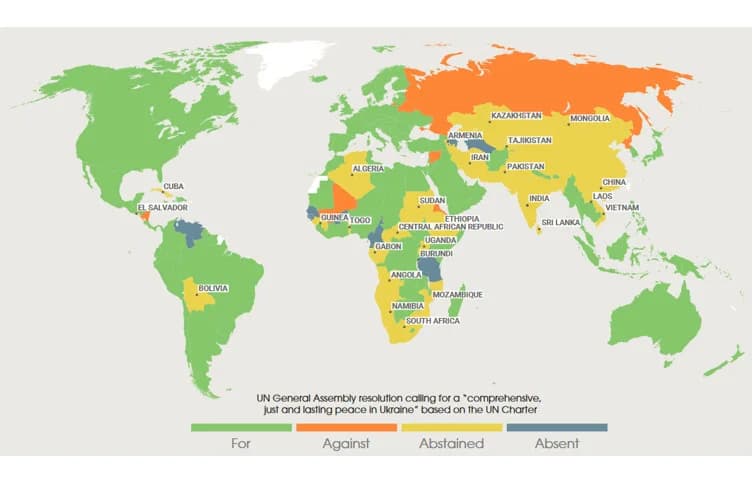
Global Investor’s Legal Map: How Companies, Trusts And Foundations Serve Different Cross-Border Purposes
Choosing the right structure depends on what is owned, who controls it and what happens when ownership changes.
For an international investor, establishing a legal structure is rarely just a matter of incorporating a company in a favourable jurisdiction. The more important question is what the structure is intended to achieve.
A trading business needs an entity capable of entering contracts, employing staff and assuming commercial liabilities. A family seeking to consolidate investments may have little need for an operating company but may benefit from a holding structure. Someone planning for succession may be looking beyond corporate ownership altogether, while a family or founder seeking a separate legal vehicle for long-term assets may consider a foundation.
Companies, holding companies, trusts and foundations can all appear in international wealth and business planning, but they do not perform the same legal function. Their differences become particularly important when assets, beneficiaries, shareholders, directors and tax obligations span several jurisdictions.
The choice is also not determined by the jurisdiction in which an entity is registered. Residence, management and control, beneficial ownership, tax residence, the location of assets and the laws governing succession can all affect how a structure is treated.
The Company As The Operating Vehicle
The company is generally the most familiar of the four structures because it is designed to conduct business. Depending on the jurisdiction and the form selected, it has a legal personality separate from its shareholders and can own property, borrow money, enter contracts, employ personnel and bring or defend legal proceedings.
That separation is central to the corporate model. In principle, the company's obligations are its own, rather than those of its shareholders. A shareholder normally risks the capital invested in the company rather than becoming personally liable for every corporate debt. The protection is not absolute, however, and can be affected by guarantees, misconduct, insolvency rules and other circumstances recognised by applicable law.
For an international entrepreneur, a company can also provide a relatively clear framework for ownership. Shares can be issued, transferred or reorganised, subject to local company law, constitutional documents and regulatory requirements. Directors or managers are responsible for running the business, while shareholders generally exercise ownership rights through the corporate framework.
An operating company is therefore suited to an active commercial enterprise. It may own intellectual property, enter distribution agreements, purchase equipment, employ workers and generate revenue. It is not necessarily the best vehicle for simply holding a family's investments or planning the transfer of wealth across generations.
What A Holding Company Actually Does
A holding company is still a company. The distinction lies primarily in its purpose. Rather than conducting substantial trading activity itself, a holding company is commonly established to own shares or other interests in subsidiaries and investments. A group may place operating companies in different jurisdictions underneath a parent entity, allowing ownership to be organised through a single corporate layer.
That arrangement can simplify governance and make changes in ownership easier to manage. An investor who owns several businesses through a parent company may be able to restructure the group by transferring shares at the holding-company level rather than altering the ownership of every underlying operating business.
Holding structures can also be used for investment portfolios, intellectual property or real estate, although the suitability of a particular structure depends heavily on local law and tax treatment. Some jurisdictions offer participation regimes or other rules that may affect dividends, capital gains or payments between related companies. Those advantages cannot be assumed merely because a company is incorporated in a particular financial centre.
The holding company also introduces another layer of compliance. Banks, regulators and tax authorities increasingly examine the economic purpose of corporate structures, the identity of ultimate beneficial owners and the movement of funds between related entities. A parent company without a credible commercial or investment rationale can attract questions that a straightforward operating structure might avoid.
The key point is that a holding company is not a separate legal species comparable to a trust or foundation. It is usually a company whose principal function is to hold and manage ownership interests.
A Trust Changes The Ownership Relationship
A trust operates on a fundamentally different legal concept.
In a conventional trust, assets are transferred to trustees to hold and administer for beneficiaries, subject to the terms of the trust. The person establishing it is commonly known as the settlor, while the beneficiaries are those entitled to benefit from the trust. The trustee holds legal title to the trust property and administers it according to the trust instrument and applicable law.
That division between legal ownership and beneficial entitlement is one of the trust's defining characteristics.
A trust can be useful where the objective is not simply to own an asset but to determine how that asset is managed and ultimately enjoyed by others. A family, for example, may use a trust to hold investment assets for children or future generations, with provisions governing distributions and the circumstances in which beneficiaries can receive them.
Trusts can also be used in succession planning, particularly where an investor wants to avoid dividing a portfolio into separate pieces every time an inheritance occurs. Instead, the assets can remain within the trust while the beneficiaries' rights are determined by its terms.
But a trust is not simply a company without shareholders. Trustees have fiduciary and other legal duties, which can include acting in accordance with the trust deed, protecting trust property and properly considering beneficiaries' interests. The extent of those duties depends on the governing law.
Cross-border recognition can also be complicated. A trust created under one country's law may hold assets in another country where local courts, registries, forced-heirship rules or tax authorities take a different view of the arrangement. International investors therefore need to examine not only the law governing the trust but also the laws of the countries in which the trustees, beneficiaries and assets are located.
The Foundation Sits Somewhere Between
A foundation occupies a different position again. Its legal form varies significantly between jurisdictions, but broadly it is an independent legal person established to hold and administer assets for specified purposes or beneficiaries.
Unlike a company, a foundation does not ordinarily have shareholders who own it. Unlike a trust, it is generally constituted as a separate legal entity rather than being based on the separation between legal and beneficial ownership.
That distinction can make foundations attractive for certain succession, family wealth and philanthropic arrangements. Assets can be transferred into the foundation and managed according to its constitutional documents and governing rules. Depending on the jurisdiction, a council or board may oversee its affairs, while a founder can retain certain powers without necessarily remaining the owner of the underlying assets.
Foundations have become more prominent in international wealth planning partly because some jurisdictions have developed legal regimes specifically designed to provide a civil-law alternative to the trust. They can be particularly relevant for investors from legal systems where the concept of a trust is unfamiliar or where a separate legal personality is considered more appropriate.
Yet the word "foundation" should not be treated as evidence of a particular legal outcome. A foundation established in one jurisdiction can differ materially from one established elsewhere in terms of governance, founder powers, beneficiary rights, creditor protection and succession consequences.
Four Structures, Four Different Questions
The easiest way to distinguish the four structures is to start with the question the investor is trying to answer.
If the question is, "What entity should conduct my business?", a company is generally the starting point. If the question is, "How should I organise ownership of several businesses or investments?", a holding company may provide the corporate framework.
If the question becomes, "How should assets be held and distributed for particular beneficiaries over time?", a trust may be more relevant. Where the objective calls for an independent legal entity without shareholders, a foundation may provide another route, depending on the jurisdiction.
These distinctions become particularly important when structures are combined. An international family may, for example, have an operating company conducting business, a holding company owning that business and a trust or foundation sitting above the holding structure for succession purposes.
Such arrangements can be legitimate and commercially rational, but additional layers do not automatically provide greater protection. Each layer creates its own governance, reporting and compliance obligations and may have tax consequences in multiple countries.
The Cross-Border Test
The real test of an international structure comes when the laws of more than one jurisdiction apply. An investor may establish a company in one country, own property in another, live in a third and have beneficiaries spread across several jurisdictions. Tax residence may differ from the place of incorporation. Mandatory succession rules may affect assets despite provisions contained in a trust or foundation document. Local rules may also impose reporting requirements on foreign entities, trusts or foundations.
Banks and other regulated institutions increasingly require detailed information about beneficial ownership, source of funds and the purpose of complex structures. International transparency standards have also made it considerably harder to rely on legal form alone to conceal who ultimately controls or benefits from an arrangement.
For that reason, the most efficient structure is not necessarily the one with the fewest taxes, the lowest incorporation cost or the greatest number of legal layers. It is the one whose ownership, governance and economic purpose can withstand scrutiny in every relevant jurisdiction.
The four structures should consequently be viewed as different points on an international investor's legal map, rather than competing versions of the same vehicle. A company is principally an instrument for carrying on business; a holding company organises ownership; a trust separates legal title from beneficial enjoyment; and a foundation provides a separate legal personality for assets held according to defined purposes or rules.
Choosing between them begins with the assets, the business and the people involved. Only then should the investor consider the jurisdiction.
Dr. Sunil Ambalavelil is the Global Executive Chairman of Kaden Boriss, an international law firm specialising in franchise and business agreements. A seasoned legal adviser, he has advised and supported the international growth of numerous global brands, helping them navigate the legal complexities of cross-border expansion.
For enquiries or further information, contact ask@tlr.ae or call +971 52 644 3004. Follow The Law Reporters on WhatsApp Channels.