Technology

MIT Sues Amazon in Boston Federal Court Over Alleged Patent Infringement In Cloud Security Technology
The university alleges that Amazon Web Services uses patented technology to generate unique cryptographic keys.
The Massachusetts Institute of Technology (MIT) has sued Amazon in a federal court in Boston, alleging that its Amazon Web Services (AWS) business infringes two patents relating to technology used to strengthen digital security.
The lawsuit, filed on October 9 in the US District Court for the District of Massachusetts, centres on physical unclonable function (PUF) technology, which uses distinctive physical characteristics of electronic components to generate unique identifiers. MIT alleges that AWS uses the technology to generate unique cryptographic keys, infringing patents associated with innovations developed by an MIT professor.
The university is seeking an unspecified amount in monetary damages. An AWS spokesperson declined to comment on the lawsuit on October 12.
Dispute Centres On Hardware Security
PUF technology derives unique identifying information from minute variations in the physical properties of electronic components. These characteristics can be used to distinguish one device from another and support security applications, including device authentication and cryptographic key generation.
Unlike conventional systems that store digital keys in memory, PUF-based approaches use characteristics inherent in the hardware to produce distinctive responses. This can help strengthen security by reducing reliance on permanently stored identifiers, although the level of protection depends on how the technology is implemented.
Such systems have potential applications in environments where data protection and hardware integrity are critical. Cloud computing providers operate extensive networks of data centres and offer services that enable businesses to store information, run applications and manage digital operations remotely. Security technologies are therefore an important component of the infrastructure supporting these services.
MIT alleges that Amazon uses cloud security technology supplied by software company Synopsys that incorporates innovations protected by its patents. Synopsys has not been named as a defendant in the case.
Patents At The Heart Of The Case
The complaint concerns two US patents, numbered 7,681,103 and 7,818,569, relating to PUF technology. MIT maintains that AWS infringes its rights through its use of the disputed technology.
Patent infringement disputes generally require courts to examine the scope of the rights granted by the patents and compare them with the technology or processes used by the defendant. The court may also need to consider whether the relevant patent claims are valid and whether the alleged use falls within their legal protection.
The allegations against Amazon have not been established in court. The company will have an opportunity to respond, and the outcome will depend on the evidence and applicable law.
MIT has not specified the amount of compensation it is seeking in the publicly reported details of the case. The court could consider monetary remedies if infringement is established, subject to the evidence and applicable legal standards.
Wider Implications For Cloud Security
The case highlights the intellectual property challenges facing technology companies that depend on complex networks of hardware, software and third-party suppliers.
Cloud service providers incorporate numerous technologies into their platforms, including systems designed to authenticate devices, protect information and manage access. When a patent holder alleges that a protected invention has been used without authorisation, disputes can arise over the technology’s implementation, licensing arrangements and commercial use.
For universities and research institutions, patent enforcement can be a way to protect innovations developed through research and seek compensation for alleged unauthorised use. For technology companies, such litigation can create uncertainty over the legal status of particular products or services.
The proceedings do not, however, establish that AWS has infringed MIT’s patents or indicate that its cloud services will be affected.
Similar Lawsuit Against Microsoft
The action against Amazon follows a similar lawsuit filed by MIT against Microsoft in Texas in May 2026. That case also concerns PUF technology and remains ongoing.
The two proceedings are separate, and the allegations against each company must be assessed independently.
The Amazon case, Massachusetts Institute of Technology v. Amazon Web Services Inc., was filed in the US District Court for the District of Massachusetts under case number 1:26-cv-14600. The proceedings remain at an early stage, with no judicial determination of the infringement claims reported as of October 12.
The outcome could help clarify the parties’ rights and responsibilities concerning the disputed technology, although any wider implications for cloud security will depend on the court’s findings and the remedies, if any, that it orders.
For enquiries or further information, contact ask@tlr.ae or call +971 52 644 3004. Follow The Law Reporters on WhatsApp Channels.
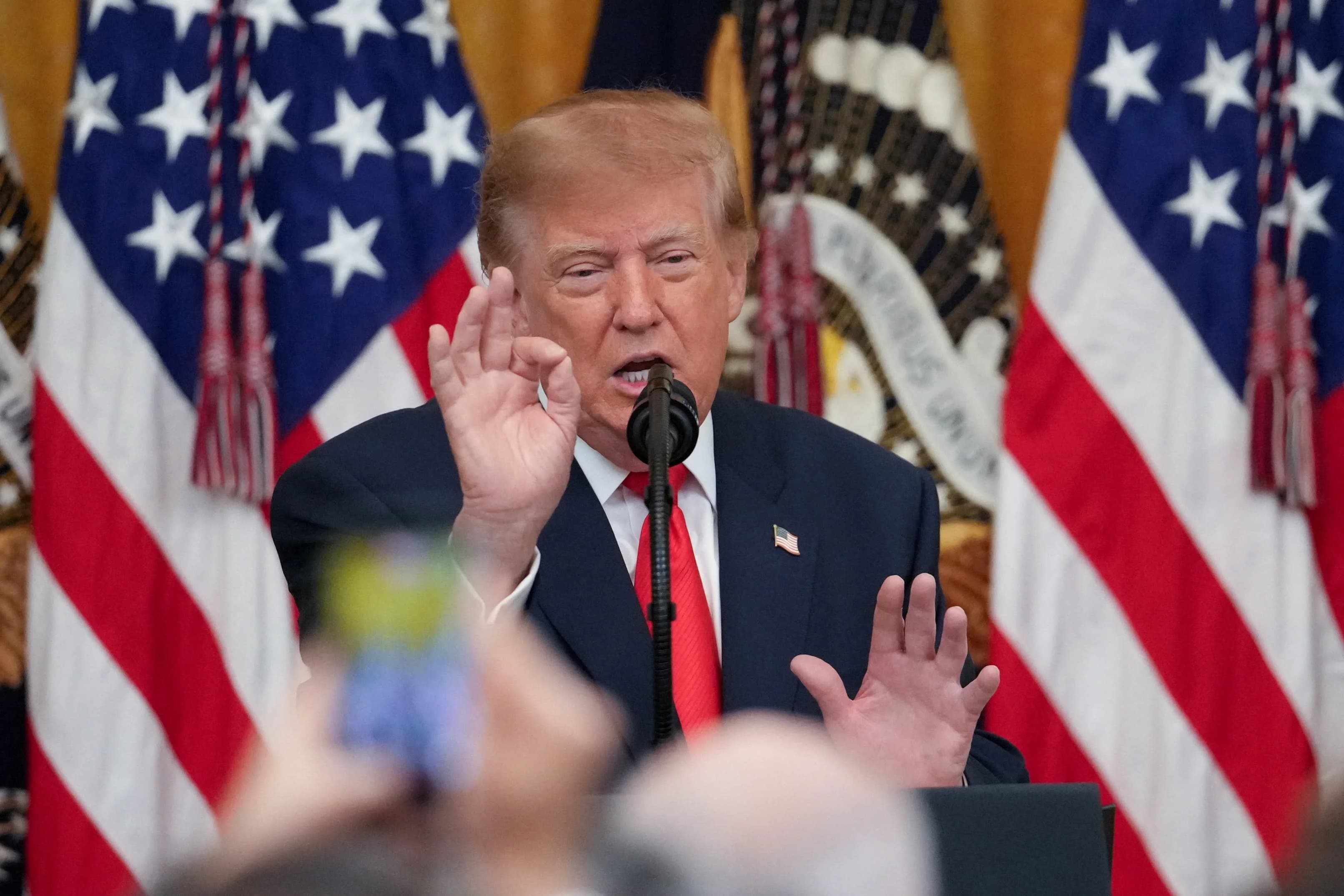
Trump Administration’s Plan to Livestream Military Execution Faces Legal Scrutiny Over Lack of Precedent
Legal experts question the plan, warning that public executions are increasingly associated with authoritarian regimes.
The Trump administration’s plan to livestream a military execution for the first time in nearly a century has no clear legal precedent and revives a practice more commonly associated today with authoritarian governments, military law professors and legal historians have said.
Defence Secretary Pete Hegseth confirmed on Thursday that the public would be able to watch the planned December 3 execution of Nidal Hasan, the former US Army physician sentenced to death for the 2009 mass shooting at Fort Hood, Texas, which killed 13 people and wounded 32 others.
Hegseth presented the execution, which would be the first carried out by the US military since 1961 and the first by firing squad since the Second World War, as a means of deterring serious crimes.
“People need to understand that there’s serious consequences for these types of things,” he told conservative news outlet Real America’s Voice in an interview aboard the USS Abraham Lincoln.
His justification has failed to convince several military law professors and historians, who say changing public attitudes towards capital punishment have made public executions increasingly difficult to contemplate. The last public execution in the United States took place in the 1930s. Although some countries have carried out public executions in recent years, the practice remains rare.
Legal experts have suggested that the administration’s plan could be an attempt to generate political support for its renewed use of the death penalty, particularly following a recent botched execution in Tennessee.
“What is really going on here is basically a performative action and one that smacks of spectacle,” said Eugene Fidell, a visiting lecturer at Yale Law School and co-founder of the National Institute of Military Justice.
It remains unclear whether Hasan will seek a writ of habeas corpus to prevent the livestreaming of his execution or challenge the execution itself, Fidell said.
Fall And Rise
Hegseth’s announcement follows the botched execution of Christa Pike, a Tennessee woman sentenced to death for a 1995 murder. It was the second time the state had failed to execute a prisoner this year.
The United Nations Human Rights Office, which supports the abolition of the death penalty, condemned Pike’s failed execution as “abhorrent and cruel”. The organisation has also said that plans to livestream Hasan’s execution would violate the prohibition on torture.
The Death Penalty Information Center, a non-profit organisation that monitors capital punishment in the United States, has no record of an execution being livestreamed.
Robin M. Maher, the organisation’s executive director, said in an email that she was “not aware of any regulation or historical precedent for a military execution to be live streamed on the internet or otherwise made widely available to the public”.
Public executions remain uncommon internationally. Amnesty International recorded at least 17 in 2025, including at least 11 in Iran and six in Afghanistan.
“Public executions are typically held in authoritarian countries to instill fear in the population, and to show the power and control of the government,” Maher said.
There is no federal law specifically prohibiting public executions, largely because there has been little public demand to witness them, Fidell said.
“Who would’ve dreamt that somebody would think of livestreaming an execution?” he said.
Executions carried out by US states had been declining for much of the two decades before a resurgence following the Covid-19 pandemic, driven largely by Republican-led states.
Twenty-four states and Washington, DC, have abolished the death penalty. Among the jurisdictions that retain it, only six had carried out executions this year, according to the Death Penalty Information Center. Florida accounted for the largest share, executing 16 people in 2026.
Several states that retain capital punishment have introduced restrictions on who may witness executions.
In Tennessee, state law limits attendance to immediate adult family members of the victim and the condemned prisoner, up to seven members of the news media and a small number of other individuals. Florida law requires a prison warden to select 12 citizens to witness an execution. By custom, those witnesses are drawn from members of the media, while other observers are largely excluded.
Opinion polls have also indicated a sustained decline in public support for capital punishment. A little more than half of respondents supported the death penalty for murder in a Gallup poll conducted last year, compared with nearly 70 per cent of Americans who expressed support for it when asked the same question 20 years earlier.
Trump’s Revival
Military law professors say the rationale for livestreaming Hasan’s execution remains unclear, even as President Donald Trump has sought to expand the use of capital punishment during both of his terms in office.
“There are always witnesses to any state-mandated or federal mandated execution, but to open it to a crowd hasn’t been done in almost a hundred years,” said Jonathan Lurie, a retired professor of American legal history at Rutgers University.
The US Bureau of Prisons ended a 17-year hiatus in July 2020 when it executed Daniel Lee after his unsuccessful appeal to the Supreme Court. The Trump administration then moved to carry out the executions of 12 more inmates during the remaining months of his first term. The final execution took place four days before President Joe Biden was inaugurated.
One of Trump’s first actions after returning to office last year was to sign an executive order rescinding the moratorium on federal executions introduced by the Biden administration. The order directed the attorney general to seek the death penalty for “all crimes of a severity demanding its use”.
It also instructed the attorney general to examine whether 37 federal inmates whose death sentences had been commuted by Biden could face capital charges at state level, while encouraging state attorneys general to pursue the death penalty more broadly.
Trump signed a second executive order during a law enforcement surge in Washington, directing US Attorney Jeanine Pirro to seek the death penalty wherever possible.
The Washington, DC, Council abolished capital punishment for local crimes in 1981. Pirro has said she will seek the death penalty for a Chicago man charged with murdering two Israeli embassy staff members last year if he is convicted.
For enquiries or further information, contact ask@tlr.ae or call +971 52 644 3004. Follow The Law Reporters on WhatsApp Channels.

US Livestream Military Execution Plan Raises Questions Over Global Practices, Restrictions on Graphic Footage
The planned execution would challenge decades of restrictions on public access to graphic execution footage.
The US military plans to livestream the December 3 execution by firing squad of Nidal Hasan, the former Army psychiatrist convicted of killing 13 people in the 2009 Fort Hood shooting.
If carried out as planned, the execution would mark the first known broadcast or livestream of a lawful execution, according to death penalty experts.
Executions are generally conducted behind prison walls, while internet platforms and governments have spent years trying to restrict the circulation of graphic execution footage.
Has A Lawful Execution Ever Been Livestreamed Or Broadcast To The Public Before?
Death penalty experts consulted by Reuters said they were unaware of any previous lawful execution that had been livestreamed or broadcast to a public audience.
Footage of executions has occasionally emerged after the event. The hanging of former Iraqi leader Saddam Hussein in 2006, for example, was seen around the world after official and unofficial recordings circulated online and through broadcasters, although the execution was not shown live.
Broadcasts and livestreams are now common for court proceedings, parliamentary debates and other state functions, but judicial executions have remained outside this practice.
How Unusual Is This Compared With Modern Execution Practices Worldwide?
Public executions have become rare across much of the world, with most countries that retain the death penalty carrying them out away from public view.
According to Amnesty International, public executions documented in recent years have been concentrated largely in Iran and Taliban-run Afghanistan.
The planned execution would also be unusual in the United States. Public executions largely disappeared during the 20th century, and death penalty experts cited by Reuters said the last legally sanctioned public execution in the country took place in 1936.
Hasan's execution would also mark the first firing-squad execution by the US military since 1945, when Eddie Slovik was executed after being convicted of desertion during the Second World War.
How Has The Internet Changed The Circulation Of Execution Footage?
The internet has transformed execution imagery from material once confined largely to local audiences into content capable of reaching viewers worldwide within minutes.
Militant groups such as Islamic State became notorious for producing professionally edited execution videos and distributing them online as propaganda and recruitment tools.
Criminal organisations, including Mexican drug cartels, have also circulated violent footage to intimidate rivals, threaten communities and project power.
The speed at which users can copy, repost and redistribute content has made it increasingly difficult for governments and technology companies to control its spread. Once graphic footage enters the online ecosystem, removing the original material may do little to prevent further circulation through other accounts and platforms.
What Has Been The Reaction From Governments And Technology Companies?
Governments and technology companies have generally moved in the opposite direction, seeking to restrict rather than expand public access to graphic execution footage.
Major social media platforms have spent years removing execution videos linked to extremist organisations and other violent groups, citing concerns about violent content and its use for propaganda.
One of the first public governmental reactions to the planned livestream came from New Zealand, where the chief censor said authorities would have little practical ability to prevent residents from accessing a livestream while it was taking place.
Live broadcasts pose particular challenges for platforms because footage can be viewed, copied and redistributed before moderation systems have an opportunity to intervene. Even when a platform removes a stream, copies may already have been shared elsewhere.
The issue also extends beyond online moderation. Even countries that have retained public executions have often restricted filming and broadcasting. Saudi Arabia historically carried out executions in public before spectators, but recording them was prohibited, and public executions had largely ceased by 2019.
The proposed US livestream would therefore represent a departure from the modern practice of keeping judicial executions away from public broadcasts, raising questions about the boundaries between government transparency, public access and restrictions on the circulation of graphic violence.
For enquiries or further information, contact ask@tlr.ae or call +971 52 644 3004. Follow The Law Reporters on WhatsApp Channels.

Qatar MoJ Set To Launch AI-Powered National Legal Knowledge Platform
New portal will improve access to legislation, support public consultation and provide investors with reliable legal info.
Qatar’s Ministry of Justice (MoJ) is set to launch a new website for the Official Gazette and the Al Meezan Legal Portal on Sunday, introducing what it describes as the country’s first comprehensive, artificial intelligence-powered national legal knowledge system.
The platform will provide legal information in Arabic and English, with enhanced search and categorisation features designed to make legislation easier to find, access and understand. The ministry emphasised, however, that AI-generated information is indicative and does not replace official legal texts, which remain the sole authoritative reference.
The portal will also promote transparency and public participation in the legislative process. Developed in coordination with the General Secretariat of the Council of Ministers, it will allow visitors, including legal professionals and other specialists, to comment on draft legislation open for public consultation and submit recommendations. The initiative aims to support the development of laws that respond to changing social and economic needs.
The ministry said the platform would also contribute to improving Qatar’s business and investment environment by making reliable legal information more accessible to domestic and international investors. Easier access to clear legal guidance is expected to reduce the time and effort required to navigate the country’s legal framework, strengthen investor confidence and enhance Qatar’s appeal as an investment destination.
The project brings together several government institutions, including the Ministry of Justice, the Supreme Judicial Council, the Ministry of Communications and Information Technology, the National Planning Council, the Civil Service and Government Development Bureau, and the General Secretariat of the Council of Ministers.
The launch forms part of the Ministry of Justice’s Strategic Plan for 2025-2030 and supports Qatar’s broader digital transformation agenda under Qatar National Vision 2030.
For enquiries or further information, contact ask@tlr.ae or call +971 52 644 3004. Follow The Law Reporters on WhatsApp Channels.

OpenAI And Anthropic Lawyers Warn Of Risks From Open-Source AI Models
Ransomware groups, state-backed actors could exploit AI models, prompting calls for stronger safeguards.
Lawyers at leading artificial intelligence companies warned on Thursday that malicious actors could exploit the capabilities of open-source AI models, raising concerns about cybersecurity threats and the need for stronger safeguards.
Alex Iftimie, deputy general counsel at OpenAI, said the potential use of open-source models by ransomware groups, hostile nation-state actors and intelligence services was an urgent concern.
“That is a problem that will manifest in serious ways, likely over the next few months,” he said at an American Bar Association conference on national security law in Washington, DC.
Will Hudson, associate general counsel at Anthropic PBC, said the open-source nature of AI models made it significantly easier to remove their safeguards. If models without such protections were available to anyone, cyber-defenders should also have access to the most capable systems, he added.
“Certainly cyber-defenders should have access to the most capable models,” Hudson said.
The discussion comes as AI has assumed a prominent role in Washington, with the US midterm election season under way and government leaders grappling with how best to regulate and manage the technology.
Concerns about the potential threat AI poses to humanity intensified last month after an Anthropic researcher resigned, warning that Anthropic and OpenAI “are racing straight to self-improving superintelligence and gambling with our lives”.
Several executives who met US President Donald Trump last week pledged to introduce “robust internal controls” to monitor AI models during training and deployment.
Phil Carter, senior counsel at Alphabet Inc.'s Google, said at Thursday's conference that the government needed to invest in the infrastructure required to identify and address vulnerabilities in open-source systems.
“Without that, I think there’s just enormous latent vulnerability in the global information system,” he said.
Carter also called on Congress to develop a single, large appropriations measure to “supercharge the research enterprise” in the US.
Hudson said the largest AI laboratories should be required to test their systems for “catastrophic risk”. They should publish the results, he said, with an independent evaluator subsequently assessing their findings.
For enquiries or further information, contact ask@tlr.ae or call +971 52 644 3004. Follow The Law Reporters on WhatsApp Channels.

HBMSU And SLC Strengthen Legal And Institutional Cooperation Through New Partnership
MoU covers legislative research, training, knowledge exchange and development of national legal talent.
Hamdan Bin Mohammed Smart University (HBMSU) and the Supreme Legislation Committee in the Emirate of Dubai (SLC) have signed a memorandum of understanding (MoU) to strengthen cooperation in legal and institutional affairs, knowledge management and the development of national talent.
The agreement was signed by Mansoor Al Awar, Chancellor of HBMSU, and Ahmad Saeed bin Meshar Al Muhairi, Secretary-General of SLC, during a ceremony at the university’s Dubai campus.
The MoU establishes a framework for cooperation in developing the legislative process, supporting the effective implementation of legislation, conducting legal research and studies, and exchanging expertise, knowledge and publications.
The partnership will also facilitate joint training programmes, conferences, seminars and workshops, as well as development projects and initiatives of mutual interest. It will encourage collaboration in research, knowledge production and the sharing of expertise in legal and legislative fields.
Al Awar said the partnership reflects Dubai’s vision of developing a proactive and agile legislative ecosystem driven by knowledge, innovation and advanced technologies, while enhancing the future readiness of national talent.
He said combining SLC’s legal and institutional expertise with HBMSU’s experience in smart learning and innovation would create opportunities to strengthen professional capabilities and promote knowledge exchange across the legal and legislative sectors.
The partnership will also explore the use of artificial intelligence and other advanced technologies in learning, training and legislative knowledge management, Al Awar said.
Al Muhairi said the MoU provides a framework for bringing together institutional expertise and supporting the continued development of Dubai’s legislative system, with a focus on agility, inclusiveness, future readiness and legislative compliance.
He said the cooperation would extend to research and studies, training programmes, development projects and knowledge initiatives, creating opportunities for innovative projects and platforms to support the academic and professional development of legal practitioners.
Under the agreement, SLC employees will also be able to benefit from HBMSU’s academic programmes, professional development offerings and lifelong learning opportunities tailored to their professional requirements.
The partnership is intended to turn institutional cooperation into practical initiatives that support human capital development, innovation and knowledge management across Dubai’s legal and legislative sector.
For enquiries or further information, contact ask@tlr.ae or call +971 52 644 3004. Follow The Law Reporters on WhatsApp Channels.

Florida Asks Court To Force Meta To Tighten FB, Insta Rules For Teens
The state seeks tighter restrictions on teen access to Meta’s platforms while its lawsuit against the firm proceeds.
Florida has asked a state judge to order changes to Instagram and Facebook to better protect young users, pressing ahead with a lawsuit accusing Meta Platforms of harming teenagers after most states resolved similar claims through a sweeping settlement.
In a filing in a Pasco County court on Wednesday, Florida Attorney General James Uthmeier asked for a temporary injunction requiring Meta to identify and remove users under the age of 14 from the platforms in the state, limit teenagers to two hours a day across its apps and disable features such as autoplay and infinite scrolling for them.
The filing seeks to have the changes implemented immediately and remain in place while the lawsuit proceeds.
A Meta spokesperson said that, following the company’s settlement with nearly every other state, Florida should focus on persuading other platforms to take action.
“The attorney general should be using taxpayer resources to get YouTube and TikTok to empower parents and protect teens in Florida. We regret that he has chosen instead to pursue a meritless preliminary injunction years into the litigation,” the spokesperson said.
Florida’s lawsuit against Meta, which accuses the company of knowingly designing its platforms to be addictive for young users and misleading consumers about their safety, was one of dozens of similar lawsuits filed by states across the country.
In August, Meta reached settlements with 48 other states and Washington, DC, agreeing to pay up to $18 billion and make changes to the way teenagers use its platforms.
Meta has said it works hard to keep teenagers safe on its platforms and denied wrongdoing in agreeing to settle. The total payout represents about three to four months of profit and roughly one month of revenue for the company.Uthmeier, a Republican, chose not to join the settlement and instead continued with Florida’s lawsuit.
Florida said in the filing that the settlement amounted to a “mere slap on the wrist” that would be viewed cynically as the cost of doing business and, in any event, would not prevent similar conduct in the future.
The measures sought by Uthmeier are more stringent than those Meta agreed to as part of the settlement. They would cut off teenagers’ access to messaging once their daily time limits are reached and prevent the company from showing them advertisements.
Uthmeier’s office argued that the changes Meta agreed to under the settlement demonstrate that the measures sought by Florida are technically and operationally possible.
For enquiries or further information, contact ask@tlr.ae or call +971 52 644 3004. Follow The Law Reporters on WhatsApp Channels.

Google Ad-Tech Setback Raises Pressure To Settle, Avoid Trial
Billions in potential damages and risks of a jury trial could push Google towards resolving publishers’ antitrust claims.
The complex facts underlying billions of dollars in antitrust claims that publishers can now pursue against Alphabet Inc.’s Google make a jury trial risky and suggest that a settlement could be on the horizon.
Google’s potential damages exposure is now substantial after Judge P. Kevin Castel of the US District Court for the Southern District of New York said in a September 30 opinion that there was sufficient evidence to support claims by USA Today Co., formerly Gannett, the Daily Mail and a class of about 5,000 other publishers. They allege that Google overcharged them through its advertising technology platform, AdX.
Castel referred in his opinion to more than $1.7 billion in damages for the publishers’ class, before trebling. The Daily Mail and USA Today allegedly incurred damages of roughly $600 million and more than $900 million, respectively.
“They are facing a big bill now and in front of a jury,” said Harry First, a professor emeritus at New York University School of Law who specialises in antitrust. “At some point, Google might have to do with one less data centre.”
The company’s track record with juries, including a major loss to Fortnite maker Epic Games in 2023, may influence Google’s approach, he added.
“Going before a jury is always rolling the dice a little bit,” First said. “My instinct is you want to look for a number to settle.”
Google, he added, also is not in the strongest litigating position amid an economic downturn and with a jury pool that knows the technology giant spends billions of dollars on data centres.
Companies such as Google “are not exactly struggling for cash”, First said.
He also noted that the publishers’ lawyers are “very sophisticated” firms that have evaluated the case closely, reducing the likelihood of an easy resolution.
“We are pleased that the Court has denied Google’s motion for summary judgment on the AdX publisher class’s claims,” said Philip Korologos, a partner at Boies Schiller Flexner LLP, which, along with Korein Tillery LLC and Berger Montague PC, serves as co-lead counsel for the AdX class. “We look forward to presenting the remaining issues at trial, where the class will seek to recover overcharges.”
Settlement Considerations
Statistically, most antitrust cases do settle, particularly after a summary judgment ruling of this nature that represents a “serious blow” to Google, said Christine Bartholomew, a law professor at the University at Buffalo who focuses on antitrust issues.
She said the plaintiffs might also prefer to settle because of the complex nature of the case. The class of publishers alleges that Google coerced them into using AdX if they used Google’s publisher ad server, DoubleClick for Publishers.
“The more confusing and complicated a case is, the more that helps the defendants,” Bartholomew said. “Plaintiffs like clean, straightforward stories.”
Losing at trial would also create a precedent for other pending cases against Google, said Alicia Batts, a former attorney adviser at the Federal Trade Commission and founding partner of Batts Legal LLP, a boutique antitrust firm in Washington, DC.
She predicts Google will pursue parallel strategies, with a team of lawyers preparing for trial while also seeking a settlement. “They will be prepared on all fronts,” Batts said.
The ruling marks a significant milestone in the publishers’ litigation, which comprises follow-on actions to a 2023 Justice Department lawsuit accusing Google of unlawfully monopolising the digital advertising market.
Last year, a federal judge in Virginia ruled that Google violated antitrust law in markets for advertising exchanges.
However, the judge in September denied the Justice Department’s request to force a breakup of Google’s ad-tech business, keeping a major part of its ecosystem intact.
Trial Still Possible
The possibility of a trial is not off the table, said Wyatt Fore, a partner at Shinder Cantor Lerner LLP who specialises in antitrust law. One person on a jury who acts as a wild card could sway the decision in either direction, he said.
“If you’re the defendant, you might think, ‘We’ve got decent arguments, and all we need is one juror to lock up the jury,’” Fore said. In the best-case scenario, Google wins entirely and does not have to pay, he added.
In the worst case, Google pays the damages but has the financial means to absorb them, he said. “It seems like a lot to normal people, but, you know, to Google, this isn’t exactly going to drive it out of business,” Fore said. Ultimately, it amounts to a business decision for Google, rather than a legal one, Fore added.
“Are they willing to pay the money? Are they willing to deal with the bad press?” Fore said. If the answer is yes, “you can roll the dice and see what happens.”
For enquiries or further information, contact ask@tlr.ae or call +971 52 644 3004. Follow The Law Reporters on WhatsApp Channels.

UAE Courts Accelerate AI Adoption With New Judicial Platforms, Governance Rules
Abu Dhabi and Sharjah courts are expanding AI use while keeping data protection and judicial independence at the centre.
The UAE is moving towards a more structured use of artificial intelligence across its judicial systems, with Abu Dhabi and Sharjah introducing initiatives aimed at improving the efficiency, consistency and reliability of court and prosecution services while maintaining human oversight over legal and judicial decision-making.
In Abu Dhabi, the Abu Dhabi Judicial Department, in cooperation with the Department of Government Enablement, has launched the first phase of a Judicial AI Platform designed to support case analysis, legal research and other judicial processes. In Sharjah, the Judicial Council has approved a governance framework setting out rules for the controlled and secure use of AI across judicial and administrative work.
The developments reflect a broader shift towards integrating advanced technology into justice systems, while recognising that AI-generated analysis and recommendations cannot replace the professional judgment of judges and prosecutors.
Abu Dhabi Introduces Judicial AI Platform
The first phase of Abu Dhabi’s Judicial AI Platform includes a Judicial Assistant designed to support members of the Public Prosecution and criminal courts. The system can analyse selected cases, identify relevant legislation and judicial precedents, recommend possible decisions and assist in drafting judgments.
AI-generated recommendations remain advisory and non-binding. Judicial officials retain responsibility for reviewing the outputs and making final decisions based on the law and their professional judgment.
Human verification is required for all outputs generated by the platform, with the system intended to support rather than replace judicial decision-making. The approach is designed to improve accuracy and consistency while reducing processing times and supporting judicial teams in handling complex volumes of information.
Counsellor Yousef Saeed Al Abri, Undersecretary of the Abu Dhabi Judicial Department, said the platform represented a further step in the department’s digital transformation and adoption of advanced technologies in judicial services.
The first phase forms part of an 18-month roadmap to complete the platform and expand its application across a wider range of judicial workflows.
Future phases are expected to introduce additional capabilities and connect the platform with criminal, civil and other relevant judicial systems. Planned functions include real-time translation, automated recording of hearings and tools capable of identifying potentially forged documents.
The expansion is intended to support faster case processing, improve the documentation of proceedings and strengthen the use of digital tools across the judicial system.
Sharjah Establishes AI Governance Framework
Sharjah has taken a different but complementary step by establishing a governance framework for the use of AI throughout its judicial system.
Approved by the Sharjah Judicial Council, the new guide provides a unified framework for the controlled and secure deployment of AI in judicial and administrative activities. It addresses areas including permitted AI use cases, risk management, data protection, cybersecurity and human oversight.
The framework also establishes controls covering the lifecycle of AI systems, including procedures for monitoring and auditing their performance and use.
By introducing formal safeguards around AI deployment, Sharjah aims to ensure that technological advances do not compromise legal rights, judicial safeguards or the reliability of justice services.
The framework is intended to support the quality and efficiency of judicial and administrative services as the emirate expands its use of emerging technologies.
The Sharjah Judicial Council also approved the establishment of a specialised public prosecution and court dealing with municipal and environmental affairs. The move is intended to strengthen the handling of cases involving these areas as part of the emirate’s wider judicial development.
The Council further approved new attire for members of the judiciary, aimed at reinforcing institutional identity and providing a unified professional appearance.
Human Oversight Remains Central
The initiatives in Abu Dhabi and Sharjah underline a common approach to AI adoption in the UAE justice sector: technology is being introduced as a tool to support legal professionals rather than as a substitute for judicial authority.
While AI can assist with analysing large volumes of legal material, identifying relevant precedents, preparing documents and speeding up administrative processes, final responsibility remains with judges and other authorised legal officials.
The emphasis on verification, cybersecurity, data protection and system monitoring also reflects the particular risks associated with applying AI to sensitive judicial information and decision-making.
As UAE courts increasingly adopt digital systems, the focus is therefore shifting from whether AI can be used in the justice system to how it can be deployed responsibly, securely and consistently while preserving the principles that underpin judicial independence and due process.
For enquiries or further information, contact ask@tlr.ae or call +971 52 644 3004. Follow The Law Reporters on WhatsApp Channels.

Disney, James Cameron Win Dismissal Of Copyright Lawsuit Over ‘Avatar’ Sequels
Judge finds the films are not substantially similar to the science-fiction story cited by animator Eric Ryder in his claim.
A US federal judge has dismissed a copyright infringement lawsuit against Disney and filmmaker James Cameron, rejecting claims that the Avatar sequels copied elements of a science-fiction story created by a 3-D animator.
The case, brought by animator Eric Ryder, alleged that Cameron and Disney copied his original work, known as KRZ, in developing Avatar: The Way of Water and Avatar: Fire and Ash.
The ruling by the US District Court for the Central District of California gives Disney and Cameron a legal victory in the dispute over the blockbuster film franchise.
Ryder had argued that the two sequels contained similarities to his work that amounted to copyright infringement. The court, however, found that the alleged similarities were either based on material that predated Ryder's work, carried forward from the original Avatar film, or involved ideas that were not protected by copyright.
Cameron had developed a detailed treatment for the original Avatar film in 1995, before Ryder presented his KRZ project to Lightstorm Entertainment in 2000.
The court also noted that an earlier case had already found that the original Avatar was not substantially similar to Ryder's work. It therefore excluded elements carried forward from the first film when assessing the allegations concerning the sequels.
Among the similarities highlighted by Ryder was the depiction of underwater harvesting of organic material said to have life-extending properties. The judge found that the alleged similarities, when examined in context, were not sufficient to establish copyright infringement.
The court also rejected the argument that expert testimony or further discovery was required to determine whether the works were substantially similar. It said the remaining issues could be assessed without specialised knowledge because the works were intended for general audiences and dealt with readily understandable subject matter.
Ryder's copyright claim included allegations of direct, contributory and vicarious infringement. The court dismissed those claims, finding that secondary copyright liability could not stand without an underlying finding of direct infringement.
The judge also dismissed Ryder's related state-law claims without prejudice after declining to exercise supplemental jurisdiction over them. The court had previously allowed Ryder an opportunity to amend his complaint, but he chose to stand on his existing filing.
The lawsuit is Ryder v. Cameron, No. 2:25-cv-11854, in the US District Court for the Central District of California. Reuters identified Daniel Saunders of Kasowitz LLP as representing Ryder and Kelly Klaus of Munger Tolles & Olson as representing Disney.
For enquiries or further information, contact ask@tlr.ae or call +971 52 644 3004. Follow The Law Reporters on WhatsApp Channels.