Tourism

DCT Adds 40+ Sites to Modern Heritage Register, Expanding Legal Protection
New listings build on the 2022 rollout as the emirate steps up efforts to preserve culturally significant modern landmarks.
The Department of Culture and Tourism – Abu Dhabi (DCT Abu Dhabi) has announced that more than 40 additional modern heritage sites in the emirate have been listed on the Modern Heritage Register and will now be preserved and protected by law.
The additions build on the first set of buildings and sites identified in 2022, with the newly confirmed list reflecting dedicated efforts between 2023 and 2025 to document and safeguard Abu Dhabi’s modern heritage.
The growing number of registrations underscores DCT Abu Dhabi’s ongoing commitment to protecting, preserving and promoting culturally significant sites, in line with the 2016 Cultural Heritage Law and the Culture Sector’s strategic objective to safeguard heritage, strengthen national identity and enhance public appreciation of the emirate’s diverse assets.
The expansion also highlights DCT Abu Dhabi’s leadership in advancing heritage conservation and raising awareness of the emirate’s modern cultural landscape.
His Excellency Saood Abdulaziz Al Hosani, Undersecretary of DCT Abu Dhabi, said: “Abu Dhabi’s modern heritage is a cornerstone of our cultural identity, offering a powerful reflection of the emirate’s growth and development. By formally registering these pivotal sites, we reaffirm our commitment to recognising, protecting, preserving and celebrating the architectural and urban legacy that has shaped our communities and continues to enrich our collective sense of place.
“The ongoing expansion of the Modern Heritage Register attests to the programme’s growing maturity and the dedication of the Modern Heritage Nomination Committee in securing these vital assets for future generations. This continuous progress reflects our conviction that modern heritage provides an essential bridge between our past and present.”
While many residents in Abu Dhabi associate these sites with nostalgia, DCT Abu Dhabi is also encouraging the public to play a more active role in identifying, nominating and protecting modern heritage assets, reinforcing the idea that preservation is a shared responsibility.
With the inclusion of the new sites, priority will be given to maintaining and rehabilitating them in accordance with their designated grade. Private owners of listed buildings have been formally notified and may file an appeal within the 15-day period stipulated by law.
Among the newly listed landmarks is the former Abu Dhabi International Airport – Terminal 1, inaugurated in 1982, which marked a key phase in the emirate’s early aviation development. The Al Ain Museum, founded in 1969, remains one of the UAE’s earliest cultural institutions and a major reference point for the nation’s archaeological and ethnographic heritage. Also included is the former National Consultative Council building (1968) in Abu Dhabi City, which played an important role in early governance and civic dialogue during the federation’s formative years.
DCT Abu Dhabi’s Modern Heritage Conservation Initiative aims to preserve sites of cultural, architectural, historical, societal and scientific significance that have contributed to the emirate’s identity. The initiative operates under the Cultural Heritage Law issued in 2016, which provides for the protection, discovery, preservation and management of Abu Dhabi’s heritage, including modern assets.
The authority said it will continue surveying the emirate’s built environment to identify additional sites for formal registration and legal protection.
The newly listed sites include the H.E. Mohammed Habroush Al Suwaidi Building; ZADCO Building; H.H. Sheikh Saif bin Mohamed Al Nahyan Building (La Brioche Building); H.H. Sheikh Sultan Bin Khalifa Tower (Corniche Tower); Madinat Zayed Bus Station; Raha Beach Rest House; Corniche Hospital; Al-Kuwaitat Complex – UAEU Students’ Housing; Green Souk – Bani Yas; Green Souk – Al Shahama; Khalad Bin Swied Al Ansari Mosque; Haseen Rashid Al Hajri Building; National Consultative Council; Former Al Ain City Center Town Clinics; Al Ain City Municipality Campus; Capital Park Urban Ensemble; Emergencies, Crises and Disasters Management Centre Abu Dhabi; Hili Archaeological Park Garden; Al Natlah Resthouse (Al Neyadat); Former Abu Dhabi International Airport (Terminal 1); SABIS International School – Al Bateen; Former Delma Island Post Office; Sir Bani Yas Eastern Water Tank; Sir Bani Yas Southern Water Tank; Delma Island Water Silos; Al Dhannah City Water Towers; The International School of Choueifat – Al Ain; Al Jouri Kindergarten; Emirates Post – Khalidiya Post Office; Emirates Post – Hamdan Post Office; Emirates Post – Al Ain Industrial Area Post Office; Al Dhafra Sports & Culture Club; Abu Dhabi Cedar Fountain; Abu Dhabi Geneva Flower Clock; Al Ain Museum; Al Murabaa Police Museum; and Islamiya English School – Abu Dhabi.
For any enquiries or information, contact ask@tlr.ae or call us on +971 52 644 3004. Follow The Law Reporters on WhatsApp Channels.
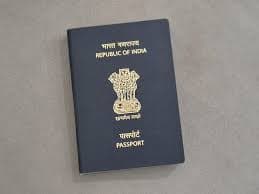
Dubai Consulate Tightens Passport Photo Rules for Indians: Fresh ICAO-Compliant Pictures Mandatory from Sept.1
MEA directive aligns Indian expat passport applications in the UAE with global aviation standards; most applicants will need new photos
The Indian Consulate in Dubai has announced a new rule for passport applications, requiring Indian expats in the UAE to submit photographs that comply with the International Civil Aviation Organisation (ICAO) standards. The regulation will take effect on September 1, 2025, and is expected to require most applicants to provide fresh photographs when submitting their documents.
The move follows a directive from India’s Ministry of External Affairs (MEA), issued through its Passport Seva portal to embassies and consulates worldwide. The Consulate’s Press Wing confirmed that applications will only be accepted with ICAO-compliant photographs, in line with global biometric and identity requirements for travel documents.
Similar changes have already been announced by the Indian Embassy in Kuwait, while the Indian Embassy in Abu Dhabi is also expected to issue a notification soon.
ICAO-Compliant Photo Guidelines
-
Colour photo, 630x810 pixels, with white background
-
Head and shoulders close-up, face covering 80–85% of frame
-
Full face, front view, eyes open, natural expression
-
No hair across eyes; mouth closed; no shadows, red-eye, or flash reflections
-
Uniform lighting with natural skin tones
-
Head centred in the frame, from hair top to chin
-
Taken from approx. 1.5m away, not blurred or digitally altered
-
Glasses not permitted; religious head coverings allowed if facial features remain visible
BLS International’s Role
The consulate has conveyed the new rule to its outsourced passport service provider, BLS International, and posted details on its website. However, at the time of publication, BLS’s website was still displaying the old ICAO standards followed by Indian missions.
According to its site, BLS offers a photography service for an additional Dh30 but does not provide facilities to photograph newborns. Parents applying for infant passports will therefore need to seek external service providers capable of producing ICAO-compliant photos.
For any enquiries please fill out this form, or contact info@thelawreporters.com Follow The Law Reporters on WhatsApp Channels
US to Require Up to $15,000 Visa Bonds from Certain Travellers Under New Programme Targeting Overstays
The scheme launching this month will initially cover Malawi and Zambia, imposing refundable bonds on B-1 and B-2 visa applicants to curb visa overstays.
The United States will launch a 12-month pilot programme on August 20, 2025, requiring certain business and tourist visa applicants from select countries to post a refundable bond of up to $15,000 as a condition for visa issuance.
The US Visa Bond Programme will initially target nationals of Malawi and Zambia, countries identified by the State Department as having high visa overstay rates, deficient vetting processes, or citizenship-by-investment schemes without residency requirements. About 2,000 applicants are expected to be affected during the trial phase, which ends on August 5, 2026.
Programme Details
Applicants for B-1 (business) or B-2 (tourist) visas from the designated countries may be required to post bonds of $5,000, $10,000 (default) or $15,000, depending on factors such as purpose of travel, employment, income and education. Payments must be made online via the US Department of Treasury’s pay.gov portal using Form I-352, typically after an initial visa refusal at the consular interview stage.
Visas issued under the programme will be single-entry, valid for up to three months, with a maximum 30-day stay in the US. Holders must enter and exit through specific ports such as Boston Logan, New York’s JFK, and Washington Dulles airports.
Refunds and Penalties
The bond is fully refundable if visa holders leave the US on time or legally extend or change their status. Overstaying or violating visa terms will result in forfeiture. Consular officers will have limited authority to waive the requirement, mainly for urgent humanitarian or US government-related travel.
Policy Context
The pilot is part of broader US efforts to deter illegal immigration and reduce overstays, which officials say undermine border security and strain resources. The programme revives a previously proposed but unimplemented visa bond policy and is expected to provide data to assess its effectiveness for potential wider adoption.
According to the Migration Policy Institute, an estimated 13.7 million undocumented immigrants currently reside in the US, with other sources placing the number between 11 million and 15 million.
The State Department has said the list of countries covered could expand if other nations meet the criteria of high overstay rates or weak screening measures.
For any enquiries please fill out this form, or contact info@thelawreporters.com Follow The Law Reporters on WhatsApp Channels
Hotels Launch Class Action Against Booking.com over ‘Abusive’ Practices
Suit alleges the online travel platform used its dominant market position to distort competition over a 20-year period.
More than 10,000 hotels across Europe have joined a class-action lawsuit against Booking.com, accusing the online travel giant of using its dominant market position to distort competition and squeeze margins over a 20-year period.
The legal action, led by the Association of Hotels, Restaurants and Cafes in Europe (Hotrec), represents one of the largest collective cases in the European hospitality sector. Hotrec, which recently extended the registration deadline to August 29 due to strong interest, is backed by 30 national hotel associations, including the UK’s.
According to Hotrec, Booking.com’s “best price” -- or parity -- clauses forced hotels to offer the same or lower rates on its platform than on any other sales channel, including their own websites. The association claims these clauses were imposed under intense pressure, preventing hotels from offering direct-booking discounts and blocking customers from avoiding Booking.com’s commissions.
Hotrec says the case, to be heard in Amsterdam, follows a 2024 European Court of Justice ruling that found the parity clauses fell under EU competition law and could breach it. The lawsuit seeks damages for the period from 2004 to 2024, when Booking.com dropped the clauses to comply with the EU Digital Markets Act.
“European hoteliers have long suffered from unfair conditions and excessive costs. Now is the time to stand together and demand redress,” said Hotrec president Alexandros Vassilikos, denouncing what he called “abusive practices in the digital market”.
Booking.com rejected the allegations in an emailed statement, calling Hotrec’s claims “incorrect and misleading” and noting it had not been formally notified of a lawsuit. It argued the ECJ ruling did not declare the parity clauses anti-competitive, but only that they should be assessed case by case.
The company maintained that its past parity clauses fostered competitive pricing, citing a poll showing 74 per cent of hoteliers believed Booking.com boosted profitability through higher occupancy and lower customer acquisition costs.
However, industry figures say the platform’s growing dominance has come at a cost. “As they gained control of the market, Booking was able to increase its commission rates and put much greater pressure on hotel margins,” said Véronique Siegel, head of the hotels division at French hospitality association Umih. “For a room priced at €100, the hotelier receives at best €75 after Booking’s commission -- from which they must pay staff and reinvest.”
Despite widespread frustration, many hotels remain reliant on the site’s unmatched reach. Hotrec research found that Booking Holdings controlled 71 per cent of Europe’s online hotel booking market in 2024, up from 68.4 per cent in 2019.
Valued at $170 billion -- triple the worth of Volkswagen -- the company is seen by some experts as a textbook case of a digital platform dominating an entire sector. Rupprecht Podszun, head of the Institute for Competition Law at Heinrich Heine University in Düsseldorf, described the lawsuit as “a revolt of the hotels” but warned the case could be lengthy and hinge on the complex question of quantifying damages.
For any enquiries please fill out this form, or contact info@thelawreporters.com Follow The Law Reporters on WhatsApp Channels

Thailand Makes Digital Arrival Card Mandatory from May 1 for All Foreign Travellers
Move aims to enhance border control and streamline entry process amid rising tourist demand from UAE and beyond
In a significant latest update for international travel, the Tourism Authority of Thailand (TAT) has announced that beginning May 1, 2025, all foreign visitors must fill out a digital arrival card (TDAC) before entering Thailand. The new requirement replaces the paper-based TM.6 form and is part of Thailand’s push for streamlined digitalisation and enhanced security amid efforts to curb illegal trafficking across borders.
The announcement was made by Thapanee Kiatphaibool, Governor of TAT, during the Arabian Travel Market (ATM) in Dubai. She reiterated that the initiative is especially important as Thailand sees a strong surge in visitors from the UAE and Middle East markets.
Key Travel Requirement: TDAC
The Thailand Digital Arrival Card (TDAC) must be completed online up to three days before arrival by air, land, or sea. Required details include:
-
Passport information
-
Personal and travel plans
-
Accommodation in Thailand
-
A basic health declaration
Only passengers transiting through Thailand or entering via Border Pass are exempt.
Robust Tourism from UAE & Beyond
Thailand remains a favourite holiday destination for UAE families, drawing over 900,000 Middle Eastern tourists in 2024. TAT aims to welcome over 1 million tourists from the region in 2025.
With over 11.35 million tourists already welcomed in 2025, Thailand is targeting 40 million total visitors and 3.5 trillion Baht in revenue by year-end. The country continues to brand itself as a value-for-money and 365-day tourism destination.
Strategic Focus on Niche Tourism
Efforts are being made to attract high-value travellers through:
-
Wellness tourism: yoga, Thai spas, massage
-
Sports & adventure tourism: marathons, golf, Muay Thai, cycling
-
Yachting and superyacht experiences
-
Entertainment & festivals
Thapanee emphasised, “We're not just chasing numbers — we’re curating experiences that align with the future of Thai tourism while catering to global and UAE travellers.”
For any enquiries or information, contact info@thelawreporters.com or call us on +971 52 644 3004. Follow The Law Reporters on WhatsApp Channels
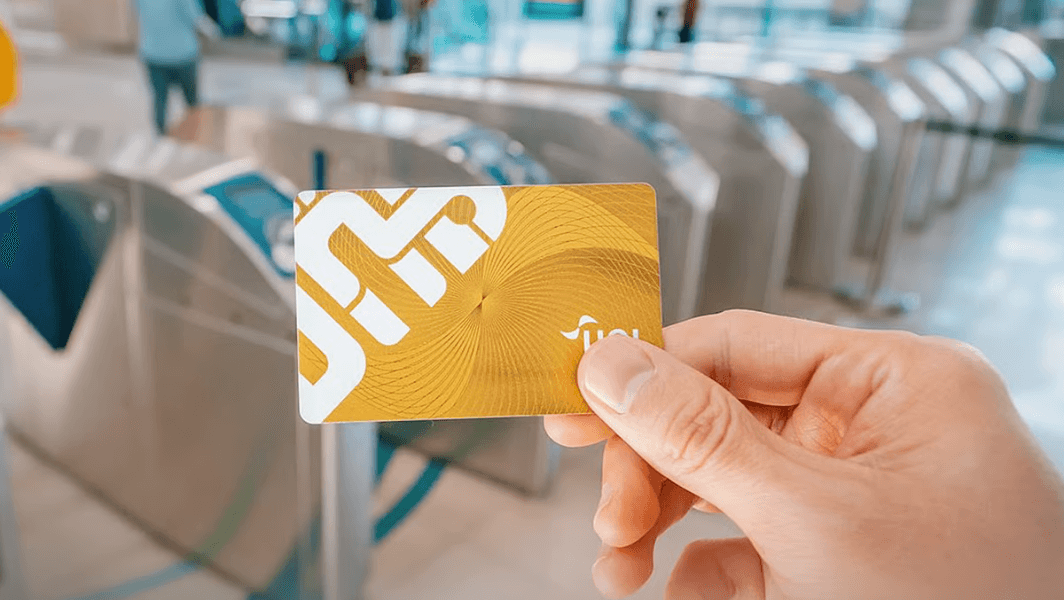
Ultimate Guide to Using the Dubai nol Card: A Smart Way to Explore the UAE
Everything you need to know about nol card types, fares, top-up methods, and how to save money while traveling around Dubai
Planning a visit to the dazzling city of Dubai? Whether you’re heading to the Burj Khalifa, Dubai Mall, or catching a ride to Jumeirah Beach, one tool you’ll absolutely need is the nol card. This smart travel card issued by Dubai’s Roads and Transport Authority (RTA) is your key to navigating the city's world-class public transport system with ease and affordability.
In this guide, we’ll walk you through everything tourists need to know—nol card types, fares, top-up methods, and tips to save money while enjoying the best of UAE travel.
What is a nol card?
A nol card is a contactless smart card that allows you to pay for public transport in Dubai, including:
-
Dubai Metro
-
Public buses
-
Dubai Tram
-
Abras and water buses
-
Taxis (select vehicles)
-
Parking meters
Instead of buying single-use tickets, tourists can simply tap their nol card at the gate or terminal and get moving.
Best nol card for tourists
As a tourist, your best options depend on your stay duration and travel frequency. Here's a breakdown:
-
Red Ticket (Ideal for short-term tourists)
-
Cost: AED 2 (card fee) + fare
-
Valid for: Up to 10 single trips or 5 daily passes
-
Customizable: Load daily, weekly, or trip-based passes
-
Best for: Tourists staying a few days and traveling occasionally
-
Silver nol Card (For longer visits)
-
Cost: AED 25 (includes AED 19 balance)
-
Valid for: 5 years
-
Best for: Frequent travelers or tourists staying a week or more
-
Perks: Cheaper per-trip fares than Red Ticket
-
Gold nol Card
-
Same as Silver, but allows access to Gold Class cabins on Dubai Metro and Tram
-
Ideal for those who want a more premium travel experience
nol card fares – How much does it cost to travel?
Dubai is divided into zones, and fares depend on how many zones you cross:
|
Zones Crossed |
Silver Card Fare |
Red Ticket Fare |
|---|---|---|
|
1 zone |
AED 3 |
AED 4 |
|
2 zones |
AED 5 |
AED 6 |
|
3+ zones |
AED 7.5 |
AED 8.5 |
Tip: Stick to the Silver Card if you plan multiple trips—it helps you save money in the long run.
How to top up your nol card
You can top up your nol card with up to AED 1,000 (for anonymous cards) or AED 5,000 (for registered cards). Top-up options include:
-
Ticket machines at metro stations
-
RTA apps (S’hail or nol Pay)
-
Online at the RTA website
-
Convenience stores across Dubai
-
Metro and bus station counters
Getting around Dubai using your nol card
Tourists can explore all of Dubai’s major attractions by using a nol card across these transport systems:
-
Dubai Metro: Clean, air-conditioned, and super convenient
-
Dubai Tram: Connects JBR, Marina, and Al Sufouh areas
-
Buses: Great for destinations not served by the metro
-
Abras & Water Buses: Enjoy the scenic views along Dubai Creek
-
Parking: Tap to pay at RTA parking meters
Tips to travel smart with your nol card
-
Avoid rush hours (7–9 AM & 5–7 PM) to enjoy a more relaxed ride.
-
If you’re visiting with family or friends, each person must have their own nol card.
-
Check balance frequently via RTA app or machines.
-
Register your card online to recover balance if lost.
-
Buy a daily pass (AED 20) if you're using public transport 3+ times a day.
Where to buy your nol card as a tourist?
You can purchase your nol card directly at:
-
Dubai Metro stations
-
Bus stations
-
Dubai International Airport (DXB)
-
RTA customer service centers
-
Retail outlets like Zoom, Carrefour, and more
Why the nol card is a must for every Dubai tourist
-
Saves money vs. buying individual tickets
-
Hassle-free travel across multiple modes
-
Supports eco-friendly, smart city goals
-
Simple, one-tap solution for transport
-
Widely accepted across Dubai
Final Thoughts
Whether you're here for business or pleasure, the nol card is your ultimate travel companion in Dubai. It simplifies your journey, saves your time, and gives you access to one of the most efficient public transport systems in the world. So before you hop on that metro or water taxi, make sure your nol card is loaded, tapped, and ready to go!
For any enquiries or information, contact info@thelawreporters.com or call us on +971 52 644 3004. Follow The Law Reporters on WhatsApp Channels

WhatsApp Launches ‘Lists’ Feature for UAE Users to Organize Chats
New tool helps users categorize conversations for easy access
WhatsApp, the Meta-owned messaging platform, has rolled out a new feature called ‘Lists’ for users in the UAE. This latest addition allows users to categorize and organize their chats into custom groups, making it easier to navigate conversations.
How the ‘Lists’ Feature Works
Early Friday morning, WhatsApp users in the UAE received notifications introducing the new feature. With ‘Lists’, users can group chats into custom categories such as family, work, or friends, reducing the hassle of searching through their inbox.
To create a list:
-
Tap the “+” button on the filter bar at the top of the chat screen.
-
Name the list and select one-on-one or group conversations to add.
-
The categorized lists will appear alongside existing “All,” “Unread,” and “Groups” filters.
-
Users with multiple lists can scroll horizontally to switch between them.
A Feature Already Popular in the US
Meta initially introduced ‘Lists’ in the United States in November 2024, and its expansion to the UAE aligns with the company’s goal to enhance user experience globally.
Meta’s AI Expansion on WhatsApp
This launch follows Meta’s recent rollout of ‘Meta AI’ to WhatsApp users in the UAE last month. The AI-powered chatbot, introduced in September 2023, allows users to generate responses and create images within WhatsApp, Facebook, Instagram, and Messenger.
According to CNBC, Meta is planning to launch a standalone Meta AI app in the second quarter of 2025. CEO Mark Zuckerberg aims to position Meta as a leader in AI, competing with industry giants like OpenAI and Alphabet.
More Features on the Horizon
Meta continues to enhance WhatsApp’s functionality, with features like event planning tools expected to roll out globally soon. With AI integration and new organizational tools like ‘Lists’, WhatsApp is transforming from a simple messaging app into a smarter and more efficient communication platform.
For any enquiries or information, contact info@thelawreporters.com or call us on +971 52 644 3004. Follow The Law Reporters on WhatsApp Channels

Was Your Staycation Deposit in Dubai Scammed? Here's How to Get It Back Fast
A Comprehensive Guide to Reclaiming Your Staycation Deposit
In the bustling city of Dubai, staycations have become increasingly popular, offering residents a chance to unwind without leaving the emirate.
However, disputes can arise, particularly when it comes to recovering deposits paid for these local getaways. Understanding the process to reclaim these funds is crucial for ensuring a hassle-free experience.
Here’s a comprehensive guide on how residents can claim their money deposited for a staycation with local hotels.
Understanding Your Rights
Residents must first be aware of their rights when booking a staycation. Typically, hotels require a deposit to secure the booking, which is often refundable under certain conditions.
The key is to be familiar with the terms and conditions outlined at the time of booking. These terms detail the circumstances under which a refund is applicable, such as cancellations made within a specified period.
Steps to Claim Your Deposit
Review the Booking Terms and Conditions: Before initiating any claim, carefully review the terms and conditions provided by the hotel at the time of booking.
This document will outline the hotel’s policy on cancellations and refunds. Knowing these details will help in understanding your eligibility for a refund.
Contact the Hotel Directly: The first step in claiming your deposit is to contact the hotel directly. This can be done via email or phone.
Ensure that you have your booking reference number and any related documentation on hand. Clearly state your request for a refund and provide reasons for the cancellation if applicable.
Provide Necessary Documentation: Hotels may require specific documents to process your refund.
This can include your booking confirmation, proof of payment, and any correspondence related to the booking. Ensure that you provide all requested documents promptly to avoid delays.
Follow Up: If the hotel does not respond within a reasonable timeframe, follow up with them. Persistence is key.
Keep records of all communications, including dates and times of calls or emails. This documentation can be useful if you need to escalate the matter.
Escalate the Issue if Necessary: If direct communication with the hotel does not resolve the issue, consider escalating the matter.
You can file a complaint with the Department of Tourism and Commerce Marketing (DTCM) in Dubai. The DTCM oversees hotel operations and can mediate disputes between hotels and guests.
Seek Legal Advice: As a last resort, if the hotel still refuses to refund your deposit despite following the above steps, you may seek legal advice.
Consulting a lawyer who specialises in consumer rights or contract law can provide guidance on further action, including potential legal proceedings. The lawyer can send a legal notice and further proceed by filing the case in Dubai court and your complete legal expenses can be reimbursed back from the hotel.
Legal Framework
According to the UAE Civil Transactions Law, Article 141 outlines that a contract is formed through mutual agreement on essential elements and legitimate conditions. If these elements are met and disputes arise, a judge can decide on the details.
Article 246(1) emphasises that contracts must be implemented in good faith according to their provisions. If one party fails to fulfil its obligations, the other party can demand compliance or approach the courts for enforcement, as stated in Article 272.
This allows for either the performance or rescission of the contract, potentially with damages.
Conclusion
Claiming a deposit for a staycation in Dubai can be straightforward if you follow the proper steps and understand your rights.
By reviewing booking terms, communicating effectively with the hotel, and knowing when to escalate the issue, residents can ensure they recover their funds efficiently.
For any enquiries or information, contact ask@tlr.ae or call us on +971 52 644 3004. Follow The Law Reporters on WhatsApp Channels.

Law Update: Airlines Should Compensate Passengers for Damaged or Lost Luggage
UAE outlines guidelines for claiming stolen or lost belongings during flights
A recent update to the UAE's Commercial Transactions Law outlines the conditions under which travellers can claim compensation for stolen or lost belongings during flights. The law specifies the responsibilities of airlines for passengers' checked-in luggage, clarifying when and how passengers can seek compensation.
Responsibilities of Airlines
Under Article 353(2) of Federal Decree-Law No. 50 of 2022, which issues the Commercial Transactions Law, airlines departing from or arriving in the UAE are responsible for the checked-in luggage of their passengers.
The law states: “The luggage referred to in Clause (1) hereof shall mean the objects that may be carried by the passenger in the aircraft or delivered to the carrier to be in its custody, during the travel.”
Additionally, Article 356(1) stipulates that airlines are liable for damage or loss of checked-in luggage. It states, “The air carrier shall be responsible for the damage resulting from the destruction, loss, or damage of the checked luggage and cargo if an accident occurs and results in damage during the air transport.”
Compensation for Lost or Damaged Luggage
In cases of damage or loss of luggage, airlines should compensate passengers up to Dh500 per kilogramme of luggage. Article 359(2) explains: “In case of transport of luggage and cargo, the remedy shall not exceed Dh500 for each kilogramme unless it is agreed on a higher amount.
However, if the consignor sends a special statement upon delivering the luggage or cargo indicating the special importance imparted to the delivery thereof in good condition at the destination due to its value, and pays the additional fare requested by the carrier, the carrier shall pay the remedy in the amount specified by the consignor, unless the carrier proves that such value exceeds the real value of luggage and cargo.”
Filing a Civil Claim
Passengers who experience loss or damage to their luggage may file a civil claim against the airline. According to Article 368, claims can be filed in any of the following courts:
- The court with territorial jurisdiction over the arrival or departure destinations.
- The court under whose jurisdiction the airline’s head office is located.
- The court specified in the travel contract (air ticket) between the passenger and the airline.
The law states that the claimant shall have the option to file action before any of the following courts:
- The court in which circuit the domicile of the carrier is located.
- The court in which circuit the head office of the carrier’s activity is located.
- The court in which circuit the establishment or the facility that concludes a contract for him, is located.
- The court of the destination.
Steps to Take
- Check Your Air Ticket: Review the terms and conditions related to the loss of checked-in luggage.
- File a Complaint: Submit a written complaint to the relevant airline regarding the loss of your personal belongings.
- Seek Higher Authorities: If the airline is uncooperative, file a complaint with the Dubai Civil Aviation Authority.
- Consider Legal Action: If necessary, consider filing a case against the airline in the Dubai Court or the court with jurisdiction over the South Asian airport where the belongings were lost.
These updates are part of the UAE’s efforts to protect passengers' rights and ensure that airlines are held accountable for their responsibilities. Travellers are advised to be aware of these regulations to take appropriate action if they encounter any issues with their luggage.
For any enquiries or information, contact ask@tlr.ae or call us on +971 52 644 3004. Follow The Law Reporters on WhatsApp Channels.

Several French Hotels Launch $10 Million Lawsuit Against Airbnb for Unfair Trade Practices
The plaintiffs seek a total amount of 9.2 million euros in damages
A total of 26 hotels in France have launched a lawsuit against the San Francisco-based short-term rental company Airbnb for unfair trade practices.
The plaintiffs seek a total amount of 9.2 million euros ($9.9 million) in damages, with each hotel claiming an average of Eur355,019, said the hotels' lawyer Jonathan Bellaiche.
They are accusing the company of allowing and failing to control illegal ads on its platform, and of not paying its tourist tax in 2021 and 2022, Bellaiche added.
The case alleges loss of opportunity to attract clientele, adding that the platform attracts consumers illegally. It also claims commercial disruption, with undue advantage given by the illegal ads by avoiding the cost of commerciality.
"This claim is not the first attempt by a hotel lobby to restrict Airbnb's lawful business in France and, as such, hosts' right to let their homes," Airbnb said in a statement. By the end of 2023, the company had remitted more than Eur187 million in tourist tax to French communes on behalf of hosts, it added.
The company claims that French law gives families the right to share their space and welcome guests across the country, and Airbnb follows the rules applicable to its platform, including sharing data and paying taxes.
The hotels, of which some are independent and others are members of chains, are located in about a dozen cities in the country, including Nice, Strasbourg and Cannes.
The case was filed in commercial court in Lisieux, in France's Normandy region, and the hearing will take place within a year, Bellaiche said.
If the lawsuit is detrimental to the company's activities or the ability of families to share their homes, Airbnb will consider all legal options to protect these rights, it said.
For any enquiries or information, contact ask@tlr.ae or call us on +971 52 644 3004. Follow The Law Reporters on WhatsApp Channels.