Transport & Logistics

Uber Urged to Change Approach as US Federal Judge Presses For Settlement of Thousands of Assault Lawsuits
Uber’s move to settle small groups of cases while delaying others is not working as multidistrict litigation continues: Judge.
A US federal judge overseeing thousands of sexual-assault lawsuits against Uber Technologies has urged the company to reconsider its approach to the litigation and enter serious discussions aimed at reaching a broader settlement.
Judge Charles Breyer made the comments during a hearing in San Francisco as frustration mounted over the length of proceedings involving approximately 5,000 cases brought by passengers who allege they were sexually assaulted by Uber drivers.
Breyer told lawyers representing Uber that the company’s current strategy of resolving cases in small groups while continuing to contest or delay others was not an effective way to bring the litigation to an end.
The judge said Uber needed to take a different approach and indicated that a comprehensive resolution should be given greater consideration.
The lawsuits have been consolidated into multidistrict litigation, a procedure used by US courts to coordinate large numbers of related cases involving common factual or legal issues. The arrangement is intended to make proceedings more efficient while allowing individual claims to retain their separate identities.
At Tuesday’s hearing, however, Breyer expressed concern about the amount of time the litigation has already consumed. “Uber has to change its attitude,” Breyer said, according to the proceedings. “It’s not working.”
The judge’s comments put renewed pressure on Uber as the company continues to face a large and complex group of claims arising from alleged assaults involving drivers using its platform.
The litigation covers allegations involving passengers who say they were sexually assaulted during or after Uber rides. The claims form part of a wider legal challenge concerning the company’s responsibility for passenger safety and the measures it has taken to prevent and respond to sexual assaults reported on its platform.
Uber has previously faced sustained scrutiny over allegations of sexual violence involving drivers. The company has maintained that it takes rider safety seriously and has introduced a range of measures intended to improve security and reporting.
The scale of the consolidated litigation presents significant legal and commercial challenges for Uber. Thousands of individual claims can require extensive discovery, case management and negotiations, while differences between the circumstances of individual plaintiffs can make a single settlement structure difficult to formulate.
For plaintiffs, however, resolving cases individually or in small groups can also result in lengthy proceedings, with each claim potentially requiring separate negotiations and legal work.
Breyer’s comments suggest that the court is increasingly interested in whether the parties can move towards a settlement process capable of addressing the litigation on a much larger scale.
A universal or global settlement would not necessarily mean that every claimant received the same amount. Settlement structures in large-scale litigation can establish common frameworks while allowing compensation to vary according to factors such as the circumstances of an alleged assault, the evidence available and the extent of any claimed injuries or losses.
Such an agreement would nevertheless require substantial negotiations between Uber and lawyers representing the plaintiffs, as well as agreement on the mechanism for evaluating individual claims.
The judge’s intervention comes as the multidistrict litigation continues to test the limits of traditional case-by-case litigation. With thousands of claims pending, the court must balance the rights of individual plaintiffs with the need to prevent the proceedings from becoming unnecessarily prolonged or unmanageable.
For Uber, a comprehensive settlement could provide greater certainty over the financial and legal exposure arising from the litigation. It could also bring an end to a significant portion of the continuing proceedings, although any settlement would require agreement on its terms and approval under the applicable court procedures.
For the plaintiffs, a negotiated resolution could provide a faster route to compensation than waiting for individual cases to proceed through discovery and trial.
The alternative is continued litigation, potentially involving years of additional legal work and further hearings as individual cases move through the court system.
Breyer’s remarks therefore represent more than a criticism of the pace of the proceedings. They signal a clear judicial preference for the parties to explore whether a broader resolution is realistically achievable.
The immediate question is whether Uber and the plaintiffs’ lawyers will respond by moving beyond negotiations involving limited groups of cases and begin serious discussions about a settlement capable of addressing the wider litigation.
For now, no comprehensive settlement has been announced. The cases remain pending, and the parties continue to face the difficult task of determining whether thousands of individual allegations can be resolved through a workable common framework.
For enquiries or further information, contact ask@tlr.ae or call +971 52 644 3004. Follow The Law Reporters on WhatsApp Channels.

Truck Driver Ordered to Pay Dh89,080 to Employer Over Red-Light Accident
Court rejects Dh230,000 compensation claim, awarding damages based on proven losses and vehicle downtime.
An Abu Dhabi court has ordered a truck driver to pay Dh89,080 to his employer for losses caused by a traffic accident after he jumped a red light, while rejecting the company’s original compensation claim of Dh230,000.
The ruling was issued by the Abu Dhabi Family, Civil and Administrative Claims Court, which found that the driver’s traffic violation directly resulted in financial losses for the shipping and customs clearance company that employed him.
The accident occurred on October 13, 2025, when the driver ran a red light in Abu Dhabi, causing a collision that endangered lives. The truck was subsequently seized by authorities. The driver had joined the company on July 31, 2025, less than three months before the incident.
A criminal court had earlier convicted the driver and imposed a Dh10,000 fine. Based on that judgment, the company filed a civil claim seeking compensation for expenses incurred in recovering the vehicle and losses arising from the truck being unavailable for business operations for 230 days.
The company initially sought Dh230,000 in damages, arguing that the vehicle’s prolonged impoundment had affected its operations. However, the court found that only part of the claim was supported by sufficient evidence.
During the proceedings, the driver appeared before the court without legal representation and rejected the company’s claim, stating that he was unable to pay the amount sought.
The company submitted documents detailing its financial losses, including Dh50,000 paid as a reckless driving fine, Dh3,000 in vehicle impoundment charges, Dh2,180 in traffic violations, Dh1,800 for towing the truck from Al Ain to Abu Dhabi, and Dh2,100 in additional transport charges imposed by Saaed.
It also claimed Dh230,000 in losses resulting from the truck being out of service from October 13, 2025, until June 4, 2026.
Court Recognises Documented Losses
In its judgment, the court said the receipts and invoices submitted by the company for the fines, towing and related expenses were issued by competent authorities and established as genuine.
The court noted that the company would not have incurred these costs but for the driver’s actions, which were considered the direct cause of the financial losses.
The driver failed to provide evidence challenging the documents or proving that the expenses were unrelated to the accident. As a result, the court accepted Dh59,080 as proven losses arising from the incident.
However, regarding the company’s claim for Dh230,000 due to the truck being unavailable for 230 days, the court exercised its discretion and reduced the amount. It ruled that Dh30,000 was fair and reasonable compensation for the loss of use of the vehicle during its impoundment period.
The court ultimately ordered the driver to pay Dh89,080, comprising Dh59,080 in documented expenses and Dh30,000 for the loss of use of the truck. He was also ordered to pay court fees, expenses and Dh300 in legal costs.
The judgment highlighted that compensation must provide a fair remedy for actual losses suffered while preventing excessive claims beyond what can be justified by evidence.
For any enquiries or information, contact ask@tlr.ae or call us on +971 52 644 3004. Follow The Law Reporters on WhatsApp Channels.

Abu Dhabi Court Jails Two Over Illegal Emergency Lights Fitted to Vehicle
Driver fined Dh100,000 and vehicle confiscated as court cracks down on unauthorised emergency equipment use.
An Abu Dhabi criminal court has sentenced two men for illegally installing and using emergency warning systems on a vehicle, equipment reserved exclusively for authorised emergency service vehicles.
The court sentenced the first defendant to six months in prison, fined him Dh100,000 and ordered the confiscation of the vehicle after finding that he had driven on a public road with emergency warning lights installed without the required legal approval.
The second defendant was convicted for assisting in the installation of the unauthorised emergency system, despite lacking the legal authority to fit or use such equipment.
Court records showed that the case involved the unlawful installation of emergency warning devices designated for vehicles operated by authorised emergency services, in violation of regulations governing their use.
The ruling reflects the UAE’s strict enforcement measures against the misuse of emergency vehicle equipment, with authorities warning that such violations can undermine road safety, disrupt public order and create risks for other road users.
For any enquiries or information, contact ask@tlr.ae or call us on +971 52 644 3004. Follow The Law Reporters on WhatsApp Channels.

Summer Leave in the UAE: Can Employers Refuse Annual Leave Requests Due to Staff Shortages and Business Demands?
While annual leave is a statutory right under UAE law, employees cannot always decide when to take it.
Employees in the UAE are entitled to annual leave under the country's employment legislation, but the timing of that leave is not entirely at the employee's discretion. During the busy summer period, when many workers prefer to take extended holidays, employers often face staffing challenges that may require them to postpone or reschedule leave requests. In such circumstances, UAE law allows employers to prioritise business continuity while still protecting employees' leave rights.
For private sector employees working in mainland UAE companies, annual leave is governed by Federal Decree-Law No. 33 of 2021 on the Regulation of Employment Relations and its implementing regulations. The legislation recognises annual leave as a statutory entitlement but also gives employers a significant role in determining when that leave may be taken.
Under Article 29(4) of the Employment Law, employees are expected to utilise their annual leave during the year in which it becomes due. However, employers are authorised to determine leave dates according to operational needs and may introduce a rotational leave system among employees to ensure the uninterrupted functioning of the business. The law also requires employers to notify employees of their approved leave dates at least one month in advance.
This means that an employer is legally entitled to refuse or postpone an employee's preferred leave dates if granting the request would adversely affect business operations, including situations where there is a shortage of staff during peak periods such as the summer months. The law does not provide employees with an unrestricted right to choose the timing of their annual leave.
At the same time, the legislation places important safeguards on employers to ensure that annual leave is not withheld indefinitely. Article 29(8) of the Employment Law prohibits employers from preventing employees from using their accrued annual leave for more than two years, unless the employee voluntarily agrees to carry forward the leave or accepts payment in lieu of leave in accordance with the company's internal policies and the executive regulations of the law.
The legal framework is intended to strike a balance between the operational requirements of employers and the welfare of employees. While businesses are permitted to organise leave schedules to maintain productivity and adequate staffing levels, employees cannot be deprived of their statutory leave entitlement for prolonged periods.
In practice, employers are encouraged to discuss leave plans with employees well in advance, particularly during high-demand holiday seasons, so that both business needs and personal commitments can be accommodated as far as reasonably possible. Employees, in turn, should submit leave applications early and remain flexible where operational requirements necessitate adjustments to their preferred dates.
Therefore, although annual leave remains a legal right for every eligible employee in the UAE, the timing of that leave is ultimately subject to the employer's scheduling decisions based on legitimate business requirements. In cases of genuine staff shortages or operational necessity, employers may lawfully decline or defer leave requests, provided employees are eventually granted their statutory annual leave within the limits prescribed by law.
For any enquiries or information, contact ask@tlr.ae or call us on +971 52 644 3004. Follow The Law Reporters on WhatsApp Channels.
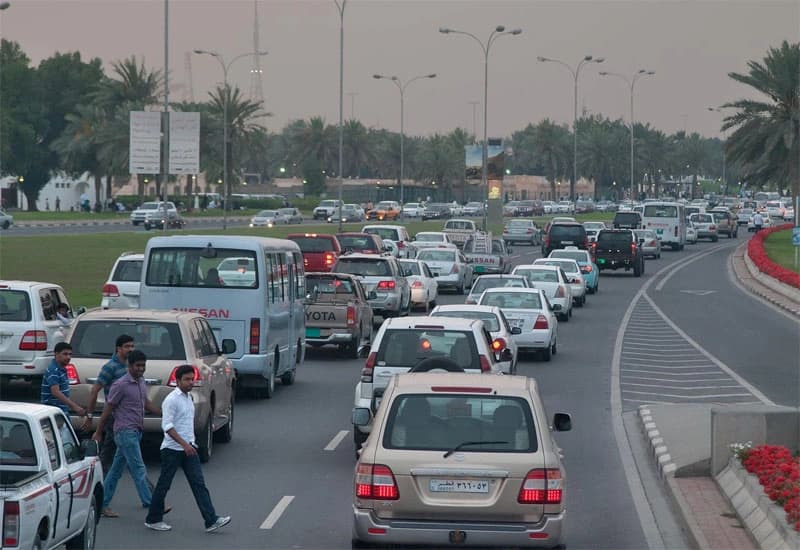
Qatar Warns Motorists to Clear Traffic Fines Promptly or Face Prosecution
Ministry of Interior says timely payment of traffic fines helps avoid legal action and prevents additional penalties.
The Qatar Ministry of Interior (MoI) has urged motorists to pay their traffic fines without delay, warning that outstanding violations left unpaid for more than 12 months will be referred to the competent prosecution authorities.
In a public awareness message issued through its official platforms, the Ministry said prompt payment of traffic fines demonstrates compliance with the law, allows motorists to benefit from available incentives and helps prevent the accumulation of violations that could lead to legal proceedings.
The MoI cautioned that once a traffic fine remains unpaid for over a year, the case will be transferred to the relevant prosecution authorities, and reconciliation procedures will no longer be available.
The Ministry also reminded motorists that a 50 per cent discount is available on selected traffic violations if payment is made within one month of the violation being issued.
According to the MoI, settling fines on time not only enables drivers to take advantage of available discounts but also helps them avoid legal liability and any additional penalties resulting from unpaid violations.
The Ministry encouraged all road users to regularly check their traffic fines and settle them within the prescribed deadlines, stressing that compliance with traffic regulations contributes to safer roads and reinforces respect for the rule of law across Qatar.
For any enquiries or information, contact ask@tlr.ae or call us on +971 52 644 3004. Follow The Law Reporters on WhatsApp Channels.

Driver Jailed, Fined Dh70,000 and Banned After Reckless Swerving on Road
Court hands down prison term, hefty fines and licence suspension for dangerous driving that put lives at risk.
An Abu Dhabi motorist has been sentenced to six months in prison and fined Dh70,000 after being convicted of reckless driving that endangered his life and other road users.
The Abu Dhabi Criminal Court found the defendant guilty of intentionally engaging in conduct that put lives at risk after he was seen driving erratically on a public road, repeatedly swerving and creating a serious hazard to traffic safety.
Along with the custodial sentence and Dh50,000 fine, the court ordered the driver to pay an additional Dh20,000, representing the assessed value of the vehicle used in the offence, which was found to belong to another person. The total financial penalty imposed amounted to Dh70,000.
The court also suspended the driver’s licence for one year, effective after he completes his prison term.
The case was referred to court by the Abu Dhabi Public Prosecution following the defendant’s arrest by police, who detected his reckless and deliberate swerving on a public road.
In its ruling, the court relied on police reports, investigation findings, technical assessments and surveillance footage that documented the offence.
Following the judgment, the Public Prosecution reiterated the importance of adhering to traffic laws, warning that reckless and dangerous driving behaviours expose offenders to strict legal accountability under UAE law.
For any enquiries or information, contact ask@tlr.ae or call us on +971 52 644 3004. Follow The Law Reporters on WhatsApp Channels.
Bought a Faulty Second-hand Car in the UAE? Here’s What the Latest Consumer Protection Law Says About Your Rights
The UAE’s updated consumer law gives buyers of used vehicles stronger legal protection and the right to seek compensation.
Buying a second-hand car can often be seen as a practical and affordable alternative to purchasing a brand-new vehicle. But what happens when the vehicle turns out to have serious defects that were not disclosed at the time of sale? Under the UAE’s updated consumer protection framework, buyers of used vehicles are not left without remedies.
The UAE’s consumer protection law has widened its scope in recent years, making it increasingly clear that second-hand vehicle transactions — particularly those involving licensed used-car dealers — can fall under its protection. This is especially relevant in cases where a seller may have concealed major defects, misrepresented the condition of the vehicle, or engaged in misleading sales practices.
The legal basis stems from Federal Law No. 15 of 2020 on Consumer Protection, as amended by Federal Decree Law No. 5 of 2023. Article 3 of the law makes it clear that its provisions apply to all goods and services supplied within the UAE through suppliers, commercial agents, and dealers. Importantly, the law does not exclude second-hand goods from its scope. This means used vehicles sold by registered dealers may be treated as consumer goods under the law.
This legal coverage becomes significant when a buyer discovers faults after purchase and suspects the defects were known to the seller but intentionally withheld. In such situations, the seller’s obligations under the law become central.
One of the most important duties imposed on sellers is the obligation to provide accurate information about the product being sold. Article 17 of the Consumer Protection Law prohibits suppliers, advertisers and commercial agents from describing goods or services with false data or through misleading advertisements.
This protection is strengthened by Cabinet Decision No. 66 of 2023, which serves as the executive regulation of the law. Under Article 8 of the regulation, any description or advertisement of a product is considered deceptive if it creates a false or misleading impression about the product’s nature, composition, quality, source, condition, warranty, or expected results from its use.
In the case of used cars, this means dealers cannot advertise a vehicle as being in excellent condition if it has significant engine issues, accident damage, or mechanical faults that are known to them. They are also required to disclose the true state of the vehicle clearly.
Article 7 of the same regulation specifically deals with used, refurbished or defective goods. It requires suppliers to clearly display the condition of such goods both on the product and at the place of business. The condition must also be clearly reflected in the sales contract or invoice. The law aims to ensure that buyers are fully aware of what they are purchasing and that there is no room for deception.
This provision is particularly important in the used-car market, where disputes often arise over whether a defect was pre-existing or developed after the sale. If the condition of the vehicle was not properly disclosed or documented, the seller may face legal consequences.
Warranty obligations also play a crucial role. If a dealer provides a warranty for a specified period, the warranty must comply with the detailed requirements laid down in Articles 12 and 13 of Cabinet Decision No. 66 of 2023. These provisions regulate what the warranty should contain and how the supplier must honour it.
If a defect appears during the warranty period and the seller fails to repair it or refuses responsibility, the buyer may have grounds for a formal complaint or legal action.
Beyond repair or replacement, UAE law also gives consumers the right to seek compensation. Article 24(1) of the Consumer Protection Law allows consumers to claim compensation for material or personal damage resulting from defective goods. Any agreement attempting to waive this right is considered legally invalid.
Consumers who believe they have been misled or sold a defective used vehicle can file complaints with the Ministry of Economy or the competent consumer protection authority in the relevant emirate. These authorities are empowered to investigate complaints and take action against suppliers who violate the law.
The consequences for sellers can be substantial. Under Addendum No. 2 of Cabinet Decision No. 66 of 2023, suppliers offering defective used or refurbished products without proper disclosure can face financial penalties of up to Dh100,000.
For buyers, the law sends a clear message: purchasing a second-hand vehicle does not mean giving up consumer rights. Dealers are legally required to disclose defects, honour warranties, and avoid misleading practices. Where they fail to do so, consumers have the right to seek redress, compensation, and regulatory intervention.
For any enquiries or information, contact ask@tlr.ae or call us on +971 52 644 3004. Follow The Law Reporters on WhatsApp Channels.
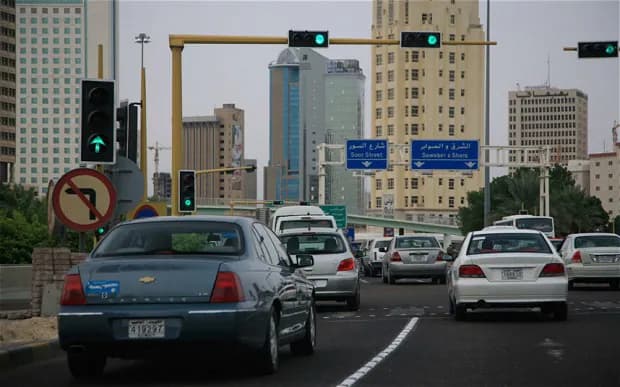
Kuwait Warns Expat Speedsters of Deportation as Traffic Violations Surge
Expatriates caught in speeding offences could face deportation, alongside jail terms and vehicle impoundment.
Deportation is now among the harshest penalties facing expatriates caught in serious speeding violations on Kuwait’s roads, traffic authorities have warned, as the country recorded dozens of dangerous speeding cases in a single day.
The General Traffic Department (GTD) said expatriate motorists involved in major speeding offences could be deported after legal procedures are completed, in addition to facing fines, imprisonment and vehicle impoundment.
Lieutenant Colonel Abdullah Bouhassan, Assistant Director of the Traffic Awareness Unit at the GTD, said speeding violations typically rise during weekends and remain one of the leading causes of serious road accidents.
He revealed that GTD recorded 94 vehicles exceeding speed limits on major roads and highways last Thursday, with legal action initiated against the drivers and their vehicles impounded.
Bouhassan said highway speed limits in Kuwait range between 80km/h and 120km/h. Drivers exceeding the posted limit by 30km/h face a traffic citation and immediate vehicle impoundment.
He explained that motorists clocked at 170km/h are referred to the traffic police station after being fined and having their vehicles seized.
For more severe cases involving speeds of 200km/h or above, stricter penalties apply, including traffic citations, vehicle impoundment and imprisonment.
He stressed that expatriates committing such violations would also be subject to deportation proceedings once all required legal formalities are completed.
Bouhassan urged drivers to comply with speed limits to protect their own safety and that of other road users.
He also reminded tow truck operators to follow traffic regulations, including staying in the right lane, maintaining safe speeds, securing towing equipment properly, and ensuring no passengers are inside vehicles during towing.
According to him, these precautions are essential to ensure towing operations are carried out safely without endangering other motorists.
For any enquiries or information, contact ask@tlr.ae or call us on +971 52 644 3004. Follow The Law Reporters on WhatsApp Channels.

Dubai Motorist Jailed, Driving Licence Suspended Over Road Rage Incident
Court imposes three-month jail term and one-year driving ban after reckless chase, collision attempt and assault on another driver
Dubai court has sentenced a motorist to three months in prison and suspended his driving licence for one year after a road rage incident in which he chased another vehicle, deliberately swerved towards it, forced the driver to stop, and later assaulted him.
According to the Public Prosecution, the accused drove recklessly, intentionally swerved into the victim’s car and pursued him along the road before blocking his path and bringing the vehicle to a halt. The situation escalated when he stepped out and physically attacked the other driver. Authorities said the behaviour endangered multiple road users and caused damage to the victim’s vehicle.
Following an investigation by the Traffic Prosecution, the driver was detained and referred to court. After reviewing the evidence, the court convicted him and handed down the custodial sentence along with the driving licence suspension.
Authorities reiterated the importance of maintaining self-control on the roads, noting that individuals must not take the law into their own hands and should rely on legal channels to resolve disputes.
For any enquiries or information, contact ask@tlr.ae or call us on +971 52 644 3004. Follow The Law Reporters on WhatsApp Channels.

Uber’s California Ballot Battle Over Legal Fees Sparks a High-Stakes Political War with Trial Lawyers
Competing ballot measures have triggered a multimillion-dollar campaign between Uber and California’s plaintiffs’ bar.
Uber is discovering in California that few issues unite plaintiffs’ attorneys more effectively than a perceived threat to their fees. What began as an effort to curb what the company describes as the influence of “billboard lawyers” has instead galvanised consumer attorneys into a well-funded political force.
The confrontation started when Uber backed a proposed ballot measure aimed at limiting legal fees in car-crash lawsuits. In response, consumer attorneys launched their own proposal seeking to lower the legal threshold for holding Uber liable for driver misconduct. Both sides have since raised more than $70 million and collected more than a million signatures in support of their respective ballot initiatives while campaigning against the other.
Through competing advertising campaigns, including Super Bowl commercials, both Uber and the plaintiffs’ bar claim to be acting in the interests of consumers. Yet the dispute appears to be driven largely by the significant financial stakes involved.
“It would probably be an extinction event,” Torrance-based trial attorney Robert Simon said of the potential impact on personal injury law firms if voters approve Uber’s measure in November. Geoffrey Wells, a veteran plaintiffs’ lawyer in Los Angeles, agreed, saying: “Lawyers won’t take those cases.”
Uber’s proposal targets contingency fees, under which lawyers are paid only if their clients succeed. It is common for attorneys to receive one-third of a settlement, with fees often rising to 40 per cent or more if a case proceeds to trial.
The Uber-backed campaign argues that the initiative is designed to curb self-serving practices and ensure that accident victims receive the bulk of any compensation awarded. Nathan Click, a spokesperson for the campaign, said the objective is to ensure that “accident victims — not billboard attorneys — actually take home the majority of their awards”.
‘Code Red’
The dispute escalated in October when leaders of the Consumer Attorneys of California (CAOC) learned that Uber had filed a proposed ballot measure requiring plaintiffs to receive 75 per cent of legal recoveries from car-crash cases, while limiting payouts to attorneys and medical providers.
Within hours, trial lawyers across California had begun organising. Simon described the response as a “code red”, with hundreds of attorneys joining a virtual meeting over the first weekend after the proposal was announced.
CAOC members and legislative advisers quickly developed three alternative ballot proposals. One would have directly countered Uber’s initiative but required significantly more signatures because it involved amending California’s constitution rather than ordinary state law. According to several individuals involved in the effort, the costs of gathering the necessary signatures ultimately made the proposal impractical.
Instead, the plaintiffs’ lawyers united behind a measure that would require rideshare companies to conduct more rigorous background checks on drivers, including fingerprinting, and impose a higher liability standard when drivers assault passengers. Under the proposal, Uber would be classified as a “common carrier”, placing it under a heightened duty of care similar to that imposed on taxi operators, rail companies and airlines.
If enacted, the measure could strengthen the position of plaintiffs pursuing more than 3,800 lawsuits in state and federal courts relating to alleged sexual assaults by Uber drivers. Juries have ruled in favour of plaintiffs in two trials this year, including one case in which a woman who alleged that she had been raped by an Uber driver was awarded $8.5 million. Uber has consistently argued that it should not be held liable for criminal acts committed by drivers using its platform and secured a defence verdict in a state court case last year.
An Uber spokesperson described the proposal as retaliatory and maintained that the company already employs rigorous background checks and safety standards.
To build support for their campaign, plaintiffs’ lawyers have organised fundraising events, hosted town hall meetings and gathered signatures at legal conferences. More than a dozen major consumer law firms have each contributed at least half a million dollars to the campaign.
The funds raised have been used for advertising, campaign consultants and professional signature-gathering operations. Because Uber’s proposal would also affect the recovery of damages for medical expenses, doctors have separately begun raising funds to oppose the measure.
“I’ve never seen us more united, quicker, with the ability to raise more money in a short period of time than this one,” Wells said, reflecting on the campaign’s rapid mobilisation.
Full Steam Ahead
In securities filings, Uber identifies car-crash litigation as an operational risk that exposes the company to significant liability claims, although it does not disclose the number of cases involved. An Uber spokesperson said the company’s insurance coverage makes it an attractive target for litigation.
At the centre of the dispute is a provision requiring consumers to retain at least 75 per cent of the “total amount recovered”. Lawyers opposing the measure argue that medical expenses and liens linked to litigation would have to be paid from the remaining 25 per cent alongside legal fees.
CAOC contends that this could leave little or no compensation for lawyers handling catastrophic injury claims. For example, a case resulting in a $1 million recovery but involving $400,000 in medical expenses and hospital liens could exceed the proposed cap on fees.
Uber rejects that interpretation, arguing that medical liens would instead be deducted from the victim’s 75 per cent share rather than from the amount allocated to attorneys.
Uber is the sole contributor to its fundraising effort, which has reached nearly $78 million. The company previously demonstrated its political influence in California through its successful support of Proposition 22 in 2020, which classified rideshare drivers as independent contractors rather than employees.
At the same time, Uber is pursuing litigation against personal injury law firms in Florida, California, New York and Philadelphia, alleging that they collaborated with medical providers to submit fraudulent or exaggerated claims arising from motor vehicle accidents.
An analysis by Berkeley Law’s Civil Justice Research Initiative concluded that voters are likely to misunderstand Uber’s proposal and warned that it could reduce access to legal representation while increasing healthcare costs. The report argued that the initiative’s language may lead voters to believe victims would receive greater compensation when, in practice, fewer attorneys might be willing to accept car-crash cases on a contingency basis.
No independent analysis has yet been conducted on the CAOC-backed proposal.
Although both campaigns are advancing aggressively, there remains a possibility that neither initiative will appear on the November ballot. Under California’s ballot process, both Uber and its opponents retain the option of withdrawing their proposals before a late-June deadline.
For any enquiries or information, contact ask@tlr.ae or call us on +971 52 644 3004. Follow The Law Reporters on WhatsApp Channels.