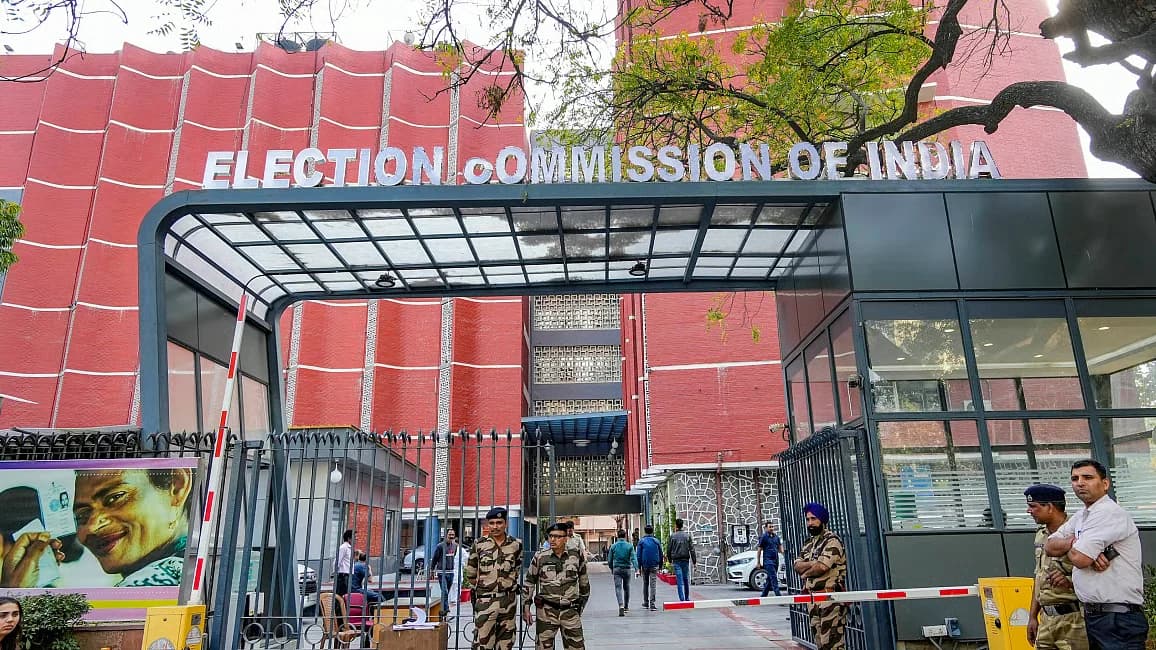

India’s Election Commission (ECI) has fixed a security flaw on its website that allowed access to sensitive personal information and documents belonging to some voters, after Reuters discovered the vulnerability and alerted the poll body.
The security lapse raises questions about the protection of citizens’ personal data, the accountability of public institutions responsible for handling sensitive information and the legal safeguards governing the collection and processing of voter records.
The development comes at a particularly sensitive time for the ECI, which is facing public criticism over its contentious exercise to revise electoral rolls. The exercise has attracted legal scrutiny, with the Supreme Court considering challenges relating to the revision process and its implications for voters’ rights.
The website vulnerability was identified months before elections in several key Indian states, including Uttar Pradesh, the country’s most populous state. Researchers who examined the flaw said it could have been exploited to obtain large volumes of personal information through relatively simple technical methods.
Opposition parties and activists have alleged that the voter-list revision exercise has disenfranchised millions of people, potentially benefiting Prime Minister Narendra Modi’s Bharatiya Janata Party (BJP). The ECI maintains that it has complied with all applicable regulations, while the BJP has accused opposition groups of misleading the public following their electoral defeats.
A Reuters examination of the ECI website over more than a month found that when a voter logged into an account and requested a telephone call with a local electoral officer, the website's network activity exposed the reference number of an application submitted to enrol as a voter or update existing details.
The information could be accessed through the network tab in an ordinary browser's developer tools, which can be opened using a simple right-click.
When the reference numbers were used to book calls, the network activity revealed additional personal information, including the applicant's name, telephone number, email address, date of birth and residential address. It also exposed file paths associated with identity documents, including passports, submitted through the website.
These details were not displayed on the main browser screen, indicating a vulnerability in the website's underlying code. Indian security researchers Karan Saini and Ehraz Ahmed independently examined the findings and reproduced the steps on the ECI website.
The researchers said the more serious concern was that application reference numbers followed a predictable pattern. This could have enabled malicious actors to guess the numbers and automate requests to retrieve large quantities of personal information.
Although an ordinary voter would be unlikely to follow these steps when requesting a telephone call, cybercriminals with basic technical knowledge could have automated the process and potentially harvested data in bulk.
Reuters first shared its findings with the ECI and its three commissioners on October 26, seeking an explanation. The commission did not respond despite repeated requests.
On Thursday, an ECI spokesperson said the commission's information technology division had been asked to examine the findings. Within hours, the vulnerability had been fixed. A subsequent Reuters review, supported by the two researchers, confirmed that sensitive information, including personal details and document file paths, was no longer accessible through the same method.
The researchers said the changes effectively prevented the previously identified form of data access.
Legal Questions
The incident raises wider legal questions about the responsibility of public authorities to protect personal information collected in the discharge of statutory functions.
The Election Commission is not an ordinary website operator. Under Article 324 of the Indian Constitution, it has the responsibility for the superintendence, direction and control of the preparation of electoral rolls and the conduct of elections. Its authority carries a corresponding responsibility to ensure that the systems used to administer the electoral process are secure, reliable and capable of protecting the information entrusted to them.
The right to privacy, recognised by the Supreme Court as a fundamental right under Article 21 of the Constitution in its landmark 2017 judgment in Justice K.S. Puttaswamy (Retd.) v Union of India, is particularly relevant. The judgment established that privacy protection extends to personal information and that restrictions on the right must satisfy constitutional requirements, including legality, legitimate state purpose and proportionality.
Although the ECI's collection of voter information is authorised by electoral law, that authority does not automatically justify inadequate safeguards against unauthorised access. Information supplied for voter registration and electoral administration must be handled in a manner consistent with the purpose for which it was collected.
The Digital Personal Data Protection Act, 2023, and the Digital Personal Data Protection Rules, 2025, provide a further legislative framework for the protection of digital personal information. However, their implementation is phased. The principal data-processing and security obligations under the Act and the corresponding rules are scheduled to take effect 18 months after the November 2025 notification, in May 2027. Consequently, the precise statutory obligations applicable to this incident must be assessed in light of the commencement provisions rather than assuming that the entire framework is already operational.
The distinction is important because the absence of a fully operational data protection framework does not remove the constitutional responsibility of public authorities to respect privacy. Nor does the correction of a technical vulnerability necessarily settle questions about whether personal information was exposed, whether affected individuals should be informed and whether the incident warrants an independent security assessment.
The Supreme Court's ongoing consideration of challenges to the special intensive revision of electoral rolls adds another dimension to the issue. The court has been examining questions concerning the legality and implementation of the exercise, the treatment of voters whose names have been excluded and the procedures available to seek restoration of their names. Recent proceedings have included directions for further information from the ECI and consideration of appeals by affected voters.
The website vulnerability is not itself the subject of those proceedings, and the court has not been asked to determine liability arising from the security lapse. Nevertheless, the incident raises questions relevant to the wider debate over electoral administration: whether the commission's digital infrastructure provides adequate protection for voter information and whether citizens can have confidence in the systems through which their electoral rights are administered.
A further legal consideration is the distinction between the disclosure of personal information and the denial of electoral rights. A security failure may not, by itself, establish that a voter has been unlawfully excluded or that an election has been compromised. However, if exposed information is used for targeted intimidation, identity theft, impersonation or interference with a person's ability to exercise voting rights, the consequences could extend beyond data privacy into other areas of civil and criminal law.
The possibility of automated access also raises questions about the adequacy of authentication and authorisation controls. A system that verifies whether a person is logged in but fails to establish whether that person is entitled to retrieve a particular document may leave sensitive records vulnerable even when the main website appears secure.
The incident therefore highlights the need for security measures that go beyond protecting login credentials. Access to personal documents should be restricted to authorised users and specific purposes, while predictable reference numbers, exposed file paths and insufficient server-side checks should be addressed through regular independent testing.
'No System Completely Secure'
Reuters could not establish whether the vulnerability had been exploited, how long it had existed or how many voters might have been affected. The telephone call-booking facility in which the flaw was identified was introduced in June 2025.
It was also unclear whether hackers had previously accessed the information or whether any of the exposed documents had been downloaded or misused.
India has approximately one billion registered voters, all of whom can access the ECI website using their voter identification numbers or mobile telephone numbers.
The BJP did not respond to a request for comment. Pawan Khera, a spokesperson for the Congress, the main opposition party, described the findings as "deeply alarming".
"In the context of elections, the exposure of voters' personal information can facilitate targeted intimidation, profiling, voter suppression and the manipulation of vulnerable communities," he told Reuters on Thursday.
Former election commissioner Ashok Lavasa, who was informed about the findings, said the vulnerability appeared to be inadvertent. "You don't collect all this information so that you can put it in the public domain," he said.
The ECI's website privacy policy states that the commission makes "reasonable efforts" to protect information but acknowledges that "no system can be guaranteed to be completely secure".
The commission has previously faced scrutiny over the management of its digital infrastructure. The Hindu newspaper reported in October that an audit by a civic technology group found that access to certain voter information could be switched on or off centrally for state election officials.
In 2019, security researcher Karan Saini had also identified a vulnerability in the ECI's online voter search portal that exposed personal information through the browser's network tab. The issue was subsequently fixed following media reporting.
Identity Documents Potentially Exposed
The latest vulnerability went beyond the disclosure of basic voter information. The browser's network tab, which revealed the application reference number, also exposed file paths associated with documents uploaded by voters.
Because the application numbers followed a predictable pattern, the researchers said cybercriminals could potentially have used freely available web-based tools to download identity documents, including passports and national identity cards. The process required only basic coding knowledge.
A Reuters reporter was able to download a copy of his own national identity card by following the steps used to identify the vulnerability.
The researchers said malicious actors could have taken the process further by exploiting the predictable numbering pattern to retrieve documents belonging to other voters.
"The knowledge of how a browser generally requests documents from the server, combined with disclosed file paths, could have allowed a criminal to download these documents," Saini said.
"The server only appeared to check whether a user is logged in, not whether they're authorised to see a particular document," he added.
Ahmed said he was surprised that such a basic vulnerability remained in the system.
"I don't know how they did not adapt to even basic security standards after so many developments in artificial intelligence and technology," he said.
The immediate technical problem has been addressed, but the wider questions remain. Whether any information was accessed or misused, whether affected voters need to be notified and whether the ECI should commission an independent audit are issues that extend beyond the correction of the website.
For an institution entrusted with administering elections in the world's largest democracy, the protection of voter information is not merely a technical requirement. It is also an essential element of public confidence in the electoral process.
For enquiries or further information, contact ask@tlr.ae or call +971 52 644 3004. Follow The Law Reporters on WhatsApp Channels.