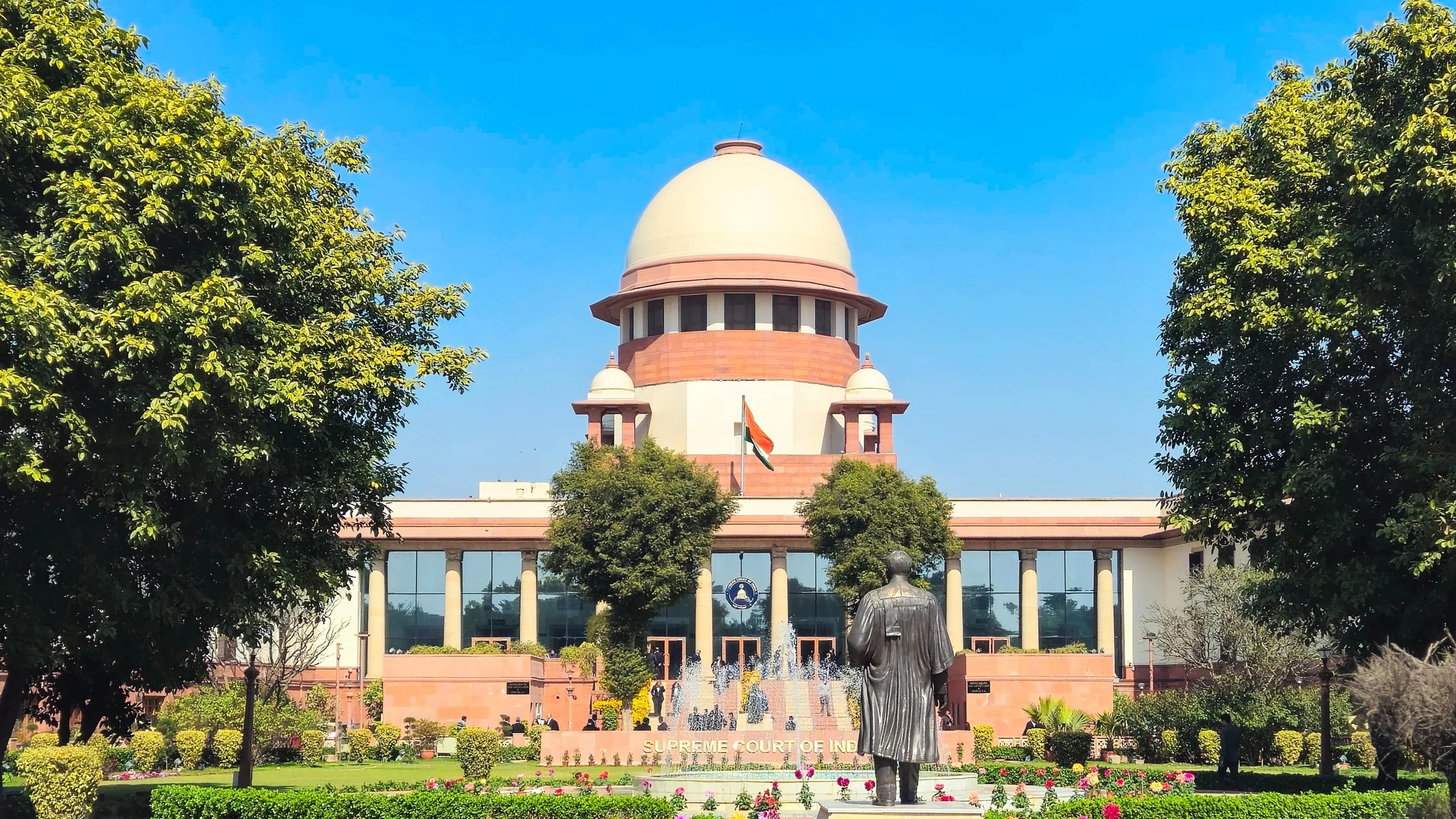
India’s Top Court Says Pre-trial Detention Cannot Become Punishment Without Trial
Court grants bail to two accused in a corruption case involving contracts worth ₹979.45 crore under Rajasthan’s Jal Jeevan Mission
 Staff WriterOct 23, 2026, 10:47 AM
The Supreme Court has reiterated that prolonged pre-trial detention cannot be allowed to become punishment without trial, emphasising that an accused person’s right to personal liberty and a speedy trial is protected under Article 21 of the Constitution.
A Bench of Justices Dipankar Datta and Sheel Nagu made the observation in Mahesh Chandra Joshi v. State of Rajasthan, while granting bail to Mahesh Chandra Joshi and Mukesh Pathak in a corruption case involving allegations of forged documents used to secure contracts worth ₹979.45 crore under Rajasthan’s Jal Jeevan Mission.
“As repeatedly emphasised by this Court, prolonged pre-trial detention cannot be permitted to degenerate into punishment without trial in derogation of an undertrial’s Fundamental Right to personal liberty and speedy trial guaranteed under Article 21 of the Constitution,” the Court held in its order dated October 16.
The Court acknowledged the gravity of the allegations but stressed that their seriousness alone could not justify keeping an accused in custody indefinitely.
“The gravity of the allegations, however serious, cannot by itself eclipse all other considerations governing the grant of bail or justify indefinite pre-trial detention,” the Bench observed.
The case arose from an Anti-Corruption Bureau investigation into alleged irregularities in tenders issued by Rajasthan’s Public Health Engineering Department.
According to the prosecution, two firms, Shri Ganpati Tubewell Company and Shree Shyam Tubewell Company, allegedly used fabricated work-completion certificates and letters of acceptance purportedly issued by IRCON International Limited to participate in tenders between 2021 and 2023.
The prosecution further alleged that the firms acted in collusion with public servants and private individuals to secure 104 work orders. An FIR was registered on October 30, 2024.
Joshi and Pathak were subsequently arrested. The Rajasthan High Court rejected their regular bail applications on August 13, 2026, prompting them to approach the Supreme Court.
While acknowledging that the allegations of financial irregularities and collusion in a public welfare project were serious, the Supreme Court identified several factors that weighed in favour of granting bail.
The Bench noted that the investigation against both appellants had been completed and chargesheets had been filed. As the documentary and electronic evidence had already been seized, the risk of tampering with evidence was substantially reduced. The Court also found no requirement for further custodial interrogation or recovery.
The period of incarceration was another consideration. Joshi, aged about 72, had spent more than five months in custody in the present case, while Pathak had been imprisoned for nearly eight months. The Court also noted that both men had secured bail in connected proceedings arising from the same underlying allegations.
The Bench further considered the likely duration of the trial, taking into account the extensive volume of evidence and the number of people involved. The case includes 22 accused, three chargesheets, 124 prosecution witnesses and 192 documents running to more than 20,000 pages.
Charges had not yet been framed and the trial had not commenced. Given the scale of the evidence and the number of witnesses, the proceedings were likely to take considerable time, the Court observed.
The Bench also took note of the fact that several co-accused had been granted bail or interim protection. Assessing these circumstances collectively, it concluded that further incarceration of the appellants was neither warranted nor necessary.
The Supreme Court accordingly set aside the High Court’s order insofar as it concerned Joshi and Pathak and directed their release on bail.
For enquiries or further information, contact ask@tlr.ae or call +971 52 644 3004. Follow The Law Reporters on WhatsApp Channels.