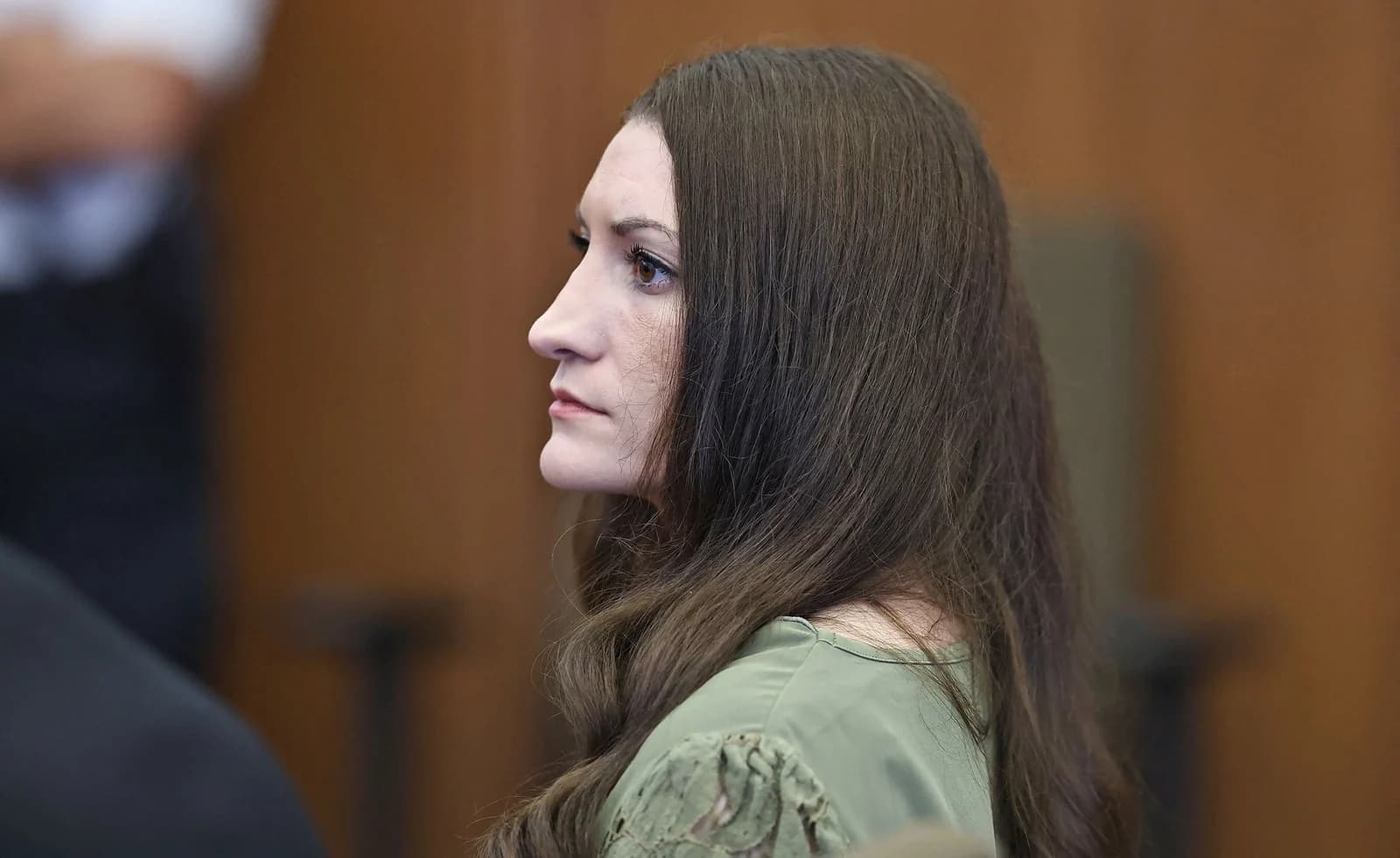

A Massachusetts judge cleared the way for Lindsay Clancy to face a second trial on murder charges over the deaths of her three young children at their home in 2023, ruling that a retrial would not violate her constitutional protection against being prosecuted twice for the same crime.
Judge William Sullivan of the Plymouth court rejected a defence application to dismiss the case. On September 4, he had declared a mistrial after the jury reported that one juror was preventing it from reaching a unanimous verdict.
The ruling means a second trial could take place next year. Sullivan has scheduled a hearing for November 16 to discuss the trial date, indicating that proceedings could begin in March.
Clancy’s lawyers had argued that a retrial would breach the protection against double jeopardy under the Fifth Amendment to the US Constitution. They maintained that the judge had acted prematurely in declaring a mistrial and that there had been no manifest necessity to do so.
Referring to jury notes indicating that the dissenting juror was not applying the legal standard of reasonable doubt despite the judge’s instructions, the defence argued that Sullivan should instead have questioned the juror and considered removing him from the panel.
However, Sullivan said the notes did not establish that the juror had expressly refused to follow the law. Rather, they suggested a disagreement among members of the jury. Questioning the juror during deliberations, he said, could have amounted to impermissible coercion.
"Because the court concludes that there was a manifest necessity for a retrial based on the jury's deadlock, a retrial on the murder indictments does not violate Clancy's right not to be placed in double jeopardy," Sullivan wrote.
In a related ruling, the judge also declined to conduct a limited inquiry into the dissenting juror, saying there was no purpose in examining him under oath at this stage of the proceedings.
Martin Weinberg, a lawyer representing Clancy, said the defence was expected to pursue an appeal. A spokesperson for Plymouth County District Attorney Timothy Cruz did not respond to requests for comment.
There was no dispute during Clancy’s first trial that she had strangled her daughter Cora, five, son Dawson, three, and eight-month-old son Callan with exercise bands on January 24, 2023, in the basement of their home in Duxbury, a suburb of Boston.
She subsequently cut herself with a knife and jumped from a second-floor window in an apparent attempt to end her life, leaving her paralysed.
Her lawyers have argued that Clancy, 36, was suffering from postpartum psychosis at the time of the killings and should be found not guilty by reason of insanity, a defence known under Massachusetts law as lack of criminal responsibility.
Several jurors said in televised interviews following the mistrial that they had been prepared to find Clancy not guilty by reason of insanity, but for the disagreement with the remaining juror.
Such a verdict would have resulted in her being committed to a state psychiatric hospital, subject to regular judicial review. Under Massachusetts law, a conviction for first-degree murder carries a mandatory sentence of life imprisonment without the possibility of parole.
For enquiries or further information, contact ask@tlr.ae or call +971 52 644 3004. Follow The Law Reporters on WhatsApp Channels.