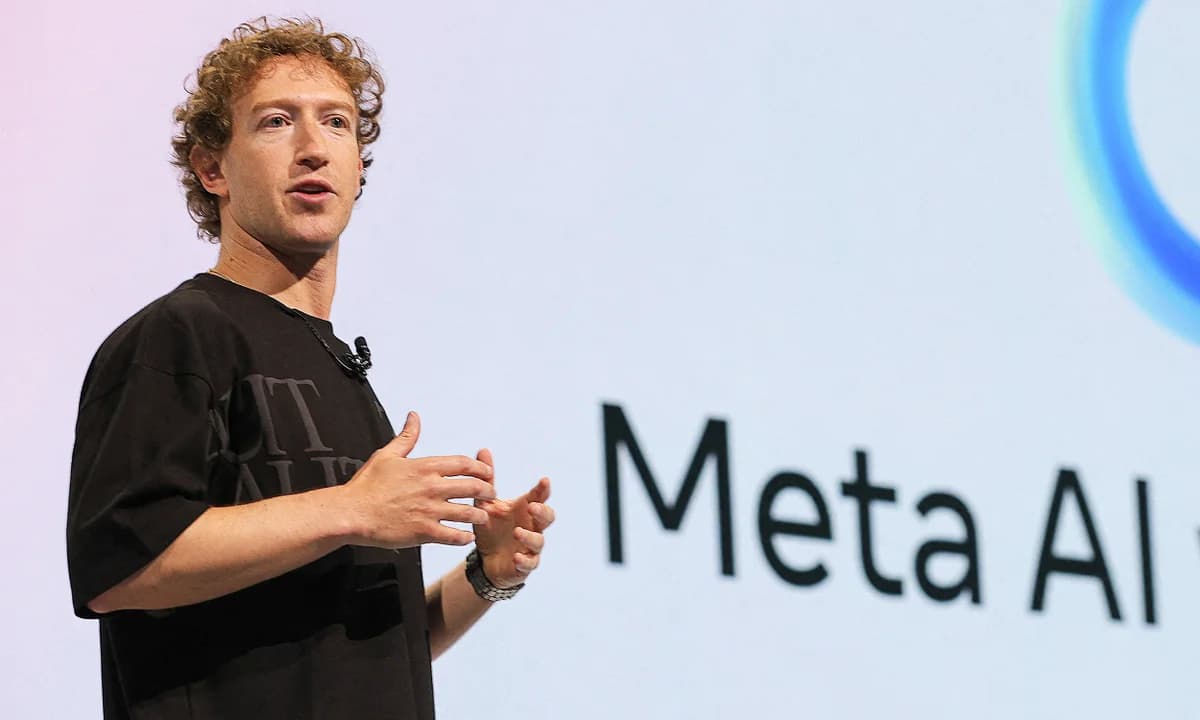
Meta Executive Says Mark Zuckerberg Put Growth Ahead of Child Safety
Former engineering director tells US trial that Meta’s culture prioritised engagement and profits over protecting young users.
 Staff WriterAug 20, 2026, 11:47 AM
A former engineering director at Meta Platforms testified on Wednesday that CEO Mark Zuckerberg fostered a culture in which child safety was treated as secondary to growth and user engagement on Facebook and Instagram.
Arturo Bejar, a vocal critic of Meta’s safety record, made the allegation during his second day of testimony in a landmark trial over claims brought by a coalition of US states that could have significant implications for Facebook and Instagram, two of the world’s most widely used social media platforms.
California, Colorado, Kentucky and New Jersey accuse Meta of designing its platforms to hook young users, fuelling anxiety, depression and even suicide, while misleading consumers about their safety.
Those states and 25 others also accuse Meta of violating federal law by improperly collecting and using the personal data of children under 13 while they used its platforms.
Experts have described the trial as the biggest legal test yet of social media’s effects on young users.
The trial began in federal court in Oakland, California, on Tuesday and is expected to last six weeks. Jurors are expected to issue an advisory verdict, while US District Judge Yvonne Gonzalez Rogers will decide whether Meta is liable and, if so, determine any civil penalties and changes to Facebook and Instagram.
‘Moving Mountains’
Bejar, the states’ first witness, said Zuckerberg was closely involved in many decisions and that the Menlo Park, California-based company’s top-down culture meant product design changes would occur only if he ordered them.
“If Mark makes something a priority, mountains move in months,” Bejar said.
He disputed Zuckerberg’s comments in October 2021 following allegations by whistleblower Frances Haugen that Meta knew its products were unsafe for children and knew how to make them safer, but did nothing because it was pursuing higher profits.
Zuckerberg said at the time that Meta constantly used research to improve its products. In response, Bejar said he emailed Zuckerberg to raise his safety concerns.
“It’s so false, every part of it,” Bejar said. “You just cannot trust Mark Zuckerberg with kids.”
Bejar worked at Meta from 2009 to 2015 and examined the wellbeing of teenage Instagram users while working as an independent contractor from 2019 to 2021.
He testified before a US Senate committee in 2023 that Meta was aware of harassment and other harms facing teenagers on its platforms but failed to address them.
Under cross-examination by Meta’s lawyer, Brian Stekloff, Bejar acknowledged that he was unaware of the harm his teenage daughter would face when he helped her set up an Instagram account, which she still uses.
Bejar said his daughter wanted a space where women could discuss cars but experienced misogynistic comments, including remarks about her breasts. She was 16 in 2021 when her father emailed Zuckerberg about safety concerns.
“I kept an eye on how distressing it was for her,” Bejar said. “She got a good following, at the price of harm.”
During his testimony, Bejar also acknowledged that Meta employs hundreds of people focused on safety, including some whom he considered well qualified. Bejar said he did not work directly with Zuckerberg during his second stint at the company and, as an outside contractor, lacked access to some resources.
Profit Over Safety
Earlier, Bejar told a lawyer representing the states that Meta prioritised user engagement and profit over safety.
He said a tool used by Meta to encourage users to take a break, a key feature of the company’s defence, was “designed to fail” because it was not the default setting and its reminders were easy to ignore.
He described it as “common knowledge” at Meta that most parents did not have time to understand the company’s products or how their children used them. Meta, he said, had technology capable of flagging potentially millions of users suspected of being under 13, but adopted a “don’t ask, don’t tell” policy because doing so would boost profits in the longer term.
After Bejar finished testifying, jurors heard recorded testimony from Elena Davis, a Meta researcher who examined the alleged addictiveness of social media.
She read from her report that Meta could change Facebook to make it “less potential to be habit-forming” and provide support for people seeking to break unwanted Facebook habits.
Meta faces thousands of similar lawsuits over alleged harm to children. Bejar has been a key witness against the company in four trials. One of those cases, brought by New Mexico, resulted in $942 million in damages and penalties, as well as an order requiring Meta to change its platforms in the state.
For enquiries or further information, contact ask@tlr.ae or call +971 52 644 3004. Follow The Law Reporters on WhatsApp Channels.