Trump’s Attacks Fuel US Supreme Court’s Sinking Public Approval
The President’s criticism of justices is adding to growing concerns over the court’s political independence and legitimacy.
 Staff WriterAug 10, 2026, 1:31 PM
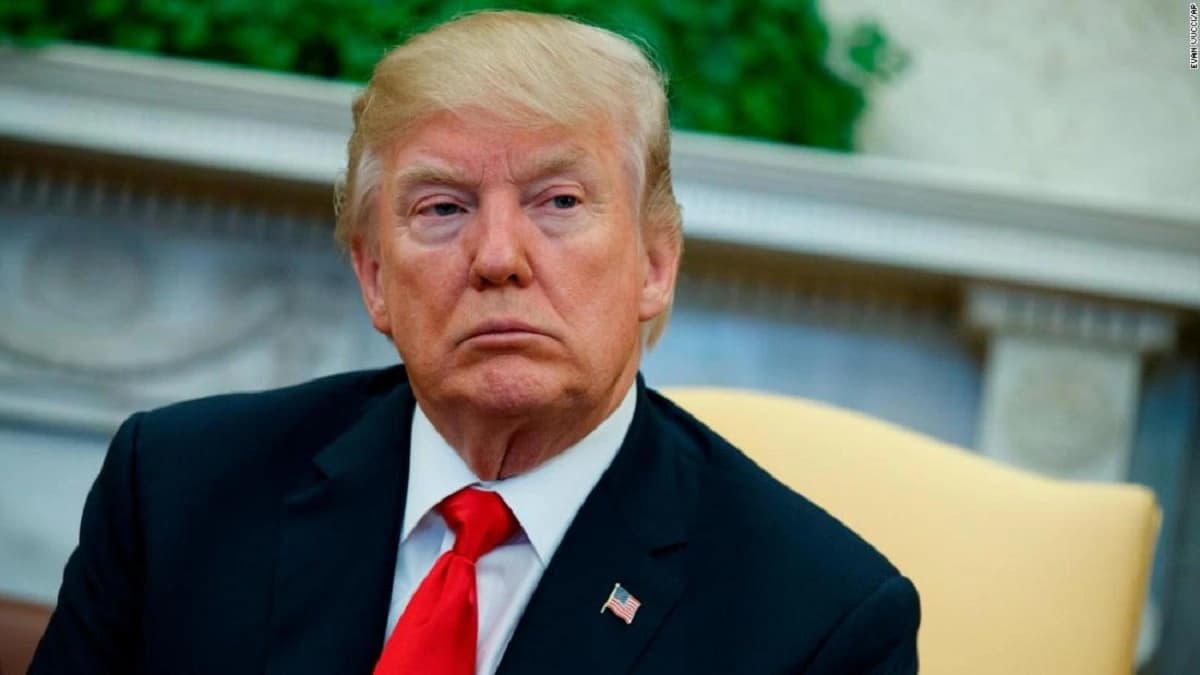
The US Supreme Court is facing a growing public approval problem, with President Donald Trump’s repeated attacks on the justices adding to concerns over the institution’s political standing and legitimacy, according to Bloomberg Law.
Recent polls indicate that confidence in the court has weakened following an ideologically divisive term, with one survey recording its lowest approval rating since measurements began more than two decades ago.
The decline has been particularly notable among Republicans. Bloomberg Law reports that the drop has come despite the court’s conservative majority and a term in which the justices advanced several longstanding Republican priorities.
The findings come as the US heads towards the midterm elections, with the Supreme Court already emerging as an important political issue as Democrats seek to regain control of Congress.
A majority of Americans now believe the justices are more likely to base their decisions on political considerations than legal principles, raising concerns among legal experts about the consequences for public confidence in the judiciary.
Jesse Wegman, a senior fellow at New York University’s Brennan Center for Justice, told Bloomberg Law that the justices are expected to maintain some distance from the country’s day-to-day politics so that people believe they will receive fair treatment regardless of the outcome of a case.
Increasingly, however, millions of Americans do not appear to share that confidence, Wegman said.
The Supreme Court’s reputation has suffered in recent years amid increasingly partisan confirmation battles, controversial rulings and ethics controversies. One prominent example has involved Justice Clarence Thomas’ acceptance of expensive trips funded by a Republican megadonor.
Democratic dissatisfaction has also intensified following major conservative decisions involving abortion, elections and the scope of governmental power.
The controversy has fuelled proposals for structural changes to the court, including congressional efforts to introduce term limits for justices or expand the number of seats to reduce the current 6-3 conservative majority.
Republican Support Falls
A Gallup survey conducted in July found that only 33 per cent of Americans approved of the way the Supreme Court was handling its job. According to Bloomberg Law, that was the lowest level recorded since Gallup began measuring the court’s standing in 2000.
Republican approval fell by 21 percentage points from September, dropping from 79 per cent to 58 per cent. The poll had a margin of error of plus or minus four percentage points.
The decline came despite a term in which the court moved decisively on several issues important to Republicans.
The justices strengthened presidential authority, expanded gun rights, removed campaign spending restrictions and weakened the Voting Rights Act as a means of ensuring Black and Hispanic representation in Congress.
At the same time, the court handed Trump three significant defeats. It struck down his global tariffs, blocked his restrictions on birthright citizenship and, at least temporarily, prevented him from removing Federal Reserve Governor Lisa Cook.
Trump responded by attacking members of the court who ruled against him, including two justices he appointed.
After Neil Gorsuch and Amy Coney Barrett joined decisions invalidating his tariffs, Trump described them as “an embarrassment to their families”.
John Malcolm, vice-president of the Edwin Meese III Institute for the Rule of Law at conservative organisation Advancing American Freedom, attributed the decline in Republican support to Trump’s criticism of the court.
He said attacks by Trump and his supporters could prompt Republicans to conclude that something was wrong with the court.
Polls Show Mixed Picture
Not all surveys point to such a dramatic decline. A Marquette Law School poll found that 74 per cent of Republicans approved of the Supreme Court’s performance, compared with 81 per cent in July 2025.
Overall approval stood at 47 per cent, down slightly from 49 per cent a year earlier. The poll had a margin of error of plus or minus 3.2 percentage points.
The survey also revealed an apparent gap between public attitudes towards the court as an institution and its individual decisions.
Respondents were asked about 13 recent Supreme Court rulings, and majorities said the justices had reached the right decision in 11 cases.
Charles Franklin, director of the Marquette poll, said the difference could partly reflect the limited attention Americans pay to the court outside major rulings.
The public, he said, is not particularly well-informed about the Supreme Court or closely focused on its work throughout the year. Major decisions, however, attract considerable attention.
The Marquette survey found that 58 per cent of respondents believed the court’s decisions were driven mainly by politics rather than the law.
It also found that 63 per cent of Republicans incorrectly believed that the Supreme Court rarely or never rules in Trump’s favour.
Questions Over Legitimacy
Supreme Court justices have traditionally maintained that public opinion should not influence their decisions.
Justice Samuel Alito made that position clear in the 2022 ruling that overturned the constitutional right to abortion, citing a 1992 opinion by then Chief Justice William Rehnquist. The judiciary’s legitimacy, Alito wrote, comes from determining whether government action complies with the Constitution rather than following public opinion.
Former Justice John Paul Stevens expressed the principle more directly in 2002, writing that judges should be indifferent to unpopularity.
Yet the justices have also acknowledged that the court depends on public and governmental acceptance of its authority.
The institution can function effectively only if officials and the public are prepared to accept rulings they disagree with, rather than treating the court as simply another political body.
Following the 2022 abortion ruling, liberal Justices Elena Kagan and Sonia Sotomayor warned that the court risked damaging public confidence in the legal system by moving too quickly to overturn established precedents.
Kagan has more recently rejected suggestions that the court operates as an extension of the Trump administration.
Speaking at a judicial conference in July, she pointed to several occasions when the court had ruled against the administration, saying the justices had told the president that certain actions could not be taken.
But such arguments have done little to satisfy the court’s critics.
Bloomberg Law reports that proposals to restructure the Supreme Court could become a significant issue in the 2028 presidential campaign. Potential Democratic contenders, including Pete Buttigieg and Kamala Harris, have already expressed support for adding seats to the court.
Wegman argues that the court is unlikely to change its approach on its own and that structural reform may therefore be necessary.
The debate reflects a broader question confronting the Supreme Court: whether it can maintain public confidence as its decisions become increasingly entangled with the country’s political divisions.
For any enquiries or information, contact ask@tlr.ae or call us on +971 52 644 3004. Follow The Law Reporters on WhatsApp Channels.