Insurance

MoI And Insurance Regulator Intensify Oversight To Enforce Sector Compliance
Joint inspections will target violations, with authorities warning of legal action against those who breach regulations.
Kuwait’s Ministry of Interior and the Insurance Regulatory Unit have agreed to strengthen oversight of the insurance sector through closer coordination and joint inspection campaigns aimed at identifying violations and enforcing compliance with the country’s insurance regulation law, its executive bylaws and related legislation.
At a coordination meeting, the two sides discussed measures to ensure adherence to the insurance regulation law, its executive bylaws and related legislation. They agreed to step up cooperation to detect breaches by insurance-sector employees and take appropriate legal action against those found responsible.
Insurance Regulatory Unit Chairman Mohammad Al-Otaibi said the unit had recently identified violations of its decisions and other applicable laws and regulations. He stressed that the authorities would impose the legally prescribed measures and penalties on anyone found breaching the rules or attempting to circumvent them, regardless of their position.
Brig Gen Abdulaziz Al-Omar, chief of the Interior Ministry’s Security Directorates Affairs Sector, said the ministry would take the necessary action against substantiated violations. The measures would seek to ensure compliance with the laws and decisions governing the insurance industry while preventing any disruption to public order.
Both sides also emphasised that insurance companies must ensure their employees comply with all applicable legal and regulatory requirements. They said effective oversight and corporate responsibility were essential to protecting customers’ rights and maintaining the integrity and stability of the insurance market.
For enquiries or further information, contact ask@tlr.ae or call +971 52 644 3004. Follow The Law Reporters on WhatsApp Channels.
Dubai Court Awards Dh160,000 to Brit Injured in Run-Over Accident
Driver fined and licence suspended after negligence leaves victim with multiple fractures and lasting wrist pain.
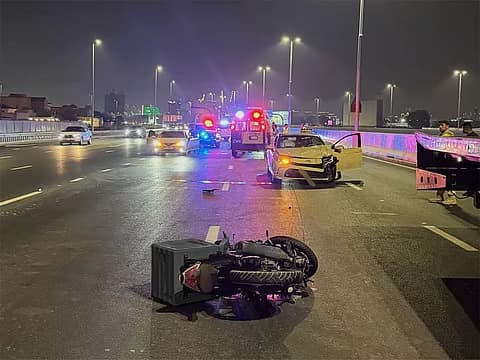
The Dubai Civil Court has ordered a driver to pay Dh160,000 in compensation to a British man who suffered serious injuries after being struck by a vehicle in a car park in Al Quoz.
The victim had sought more than Dh1.29 million in compensation, but the court rejected most of his financial claims, finding insufficient evidence to support his demands for lost wages and business profits.
The accident occurred in August 2025, when the man was standing behind his vehicle in a car park and was hit by another vehicle. He suffered a fractured left forearm, a leg injury and a fracture to the forehead area, as well as swelling, abrasions and bruising to his face and hand.
The Dubai Misdemeanours Court had earlier fined the driver Dh5,000 and suspended his driving licence for three months after finding him negligent and in breach of traffic regulations, resulting in injury to the victim and damage to another vehicle. The ruling was upheld on appeal, after which the compensation claim was referred to the civil court.
Medical reports showed that the victim underwent surgery the day after the accident to stabilise the fracture. He then required several months of treatment and medical follow-up.
Although the fractures healed, he continued to experience pain and swelling, along with restricted movement when fully extending his left wrist.
In his civil lawsuit, the man sought Dh1.295 million, including about Dh32,000 in medical expenses, Dh240,000 for lost wages, Dh524,000 for lost company profits and Dh500,000 for material and moral damages.
The court accepted Dh31,975 in medical expenses, based on the bills submitted by the claimant. However, it found that the evidence presented was insufficient to establish the claims for lost wages and business profits.
In determining the final award, the court considered the severity of the injuries, the treatment and recovery period, and the psychological and moral harm suffered by the victim.
It therefore awarded total compensation of Dh160,000 and ordered the driver to pay the court costs and legal fees.
For enquiries or further information, contact ask@tlr.ae or call +971 52 644 3004. Follow The Law Reporters on WhatsApp Channels.

Delivery Firm Ordered to Pay Dh172,985 for Uninsured Employee’s Treatment Bill
Company held liable after employee received 22 days of emergency care following epileptic seizures without valid insurance cover.
The Dubai Civil Court has ordered a delivery services company to pay Dh172,985 to a Dubai hospital for treating an employee who was admitted in an emergency after suffering epileptic seizures and an altered level of consciousness.
The court found that the employee was not covered by health insurance when he was admitted, making the employer responsible for the cost of his emergency treatment. It dismissed claims against the insurance company, the employee and another individual who had pledged to pay the medical expenses.
The case dates back to March 2025, when the delivery worker was taken to the hospital’s emergency department after suffering epileptic seizures and a reduced level of consciousness. He remained under treatment for 22 days, during which the hospital provided medical services valued at Dh172,985.
The hospital subsequently filed a lawsuit seeking payment of the outstanding medical bill. It named the employee, another individual who had signed a pledge to cover the treatment costs, and the company that employed the worker as defendants.
The owner of the delivery company argued that the employee had health insurance coverage. The court subsequently joined the insurer to the proceedings to determine whether the policy covered the treatment.
An insurance expert was appointed to examine the relevant policies and establish the employee’s insurance status at the time of his admission.
The expert found that the employer’s previous group health insurance policy, which was valid when the employee was admitted in March 2025, did not list him among the insured persons. His name appeared only under a new policy that came into effect in December 2025, several months after the hospitalisation.
The court held that Dubai’s health insurance regulations require employers to bear the cost of emergency healthcare and medical intervention for employees who do not have valid health insurance coverage, at least until the immediate danger to the patient has been removed.
On that basis, the court ordered the delivery services company to pay the hospital Dh172,985, together with annual interest of 5% from the date the legal claim was filed until the amount is paid in full. The company was also ordered to pay court fees, expenses and attorney fees.
The court, however, ruled that the claim against the insurance company was inadmissible because it had been brought against a party that had no legal standing in relation to the disputed medical expenses.
The ruling highlights the importance for employers in Dubai of ensuring that employees are properly enrolled in health insurance schemes and that coverage is active when medical treatment is required. It also underlines the potential financial consequences for employers when employees receive emergency care without valid insurance protection.
For enquiries or further information, contact ask@tlr.ae or call +971 52 644 3004. Follow The Law Reporters on WhatsApp Channels.

Driver Ordered to Pay Dh150,000 for Crash Causing Permanent Disability
Abu Dhabi court orders a reckless driver to pay Dh150,000 in compensation after a traffic crash left the victim with permanent disability and lasting injuries.
The Abu Dhabi Family, Civil and Administrative Cases Court has ordered a driver to pay Dh150,000 in compensation to a victim who suffered severe physical injuries and permanent disability following a traffic collision caused by reckless driving.
The lawsuit followed an earlier criminal court ruling that found the driver guilty of violating road safety regulations and causing an accident that resulted in bodily injuries.
According to court documents, the victim sustained serious injuries when the defendant's vehicle collided with his car. Medical reports submitted to the court confirmed that the crash caused multiple bone fractures, soft tissue injuries and a permanent partial disability affecting his mobility. The injuries significantly affected his daily life and ability to live independently.
Following the final criminal conviction, the victim filed a civil lawsuit seeking Dh300,000 in material and moral damages. He argued that the accident had resulted in substantial medical expenses, lost income because he was unable to work during his recovery, and lasting psychological distress.
In its judgment, the civil court held that the final criminal conviction conclusively established the driver's fault. After considering the extent of the victim's physical disability, medical treatment costs, continuing pain and the impact on his daily life, the court assessed Dh150,000 as fair compensation for the physical and moral damages suffered.
For enquiries or further information, contact ask@tlr.ae or call +971 52 644 3004. Follow The Law Reporters on WhatsApp Channels.

Who Pays for UAE Health Insurance? Understanding Employer Obligations, Coverage Rules and the Latest Legal Requirements
From Dubai and Abu Dhabi to northern emirates, UAE has expanded mandatory health insurance coverage for private-sector workers.
Health insurance is no longer just an employment benefit in the UAE — it is a legal obligation. Across the country, employers are required to provide and finance health insurance for their employees, while sponsors of domestic workers are also responsible for ensuring mandatory medical cover. Recent regulatory changes have further strengthened this framework by extending compulsory health insurance to private-sector employees and domestic workers across all emirates, creating a more uniform system of healthcare protection.
Although the overarching principle remains the same nationwide, the detailed requirements vary between emirates. The extent of family coverage, the minimum level of insurance and the responsibilities of employers and sponsors are determined by the regulations applicable in each emirate. What does not change, however, is that employees should never be required to bear the cost of the mandatory health insurance provided for their employment.
Employer Responsibility for Employee Health Insurance
Under the UAE's health insurance framework, employers are legally responsible for arranging and paying for health insurance for their employees. This obligation applies to private-sector employers as well as companies operating in free zones. Employers are not permitted to recover the cost of compulsory health insurance by deducting it from an employee's salary or employment benefits.
Similarly, sponsors of domestic workers must obtain the required health insurance coverage as part of their legal obligations. Health insurance has become an essential component of the employment and residency process, with compliance linked to the issuance and renewal of residence visas.
Family Health insurance Depends on Sponsorship
While employers must insure their employees, the rules relating to family members differ depending on the emirate and the terms of an employer's insurance policy. Where a spouse or children are not already covered under an employer-sponsored health insurance plan, the responsibility generally falls on the individual sponsoring those dependants to arrange the required medical insurance.
As a result, employees should not automatically assume that their family members are included under their workplace insurance. The applicable legal requirements and the scope of the employer's insurance policy will determine whether separate coverage needs to be arranged.
Dubai's Health Insurance Requirements
In Dubai, employers are required to provide and pay for health insurance for all employees, including those working in free zones. The law expressly prevents employers from passing this expense on to employees through salary deductions or any other form of reimbursement.
For dependants, including spouses and children, the responsibility lies with the sponsor if they are not already covered under an employer's insurance scheme. Dubai's Health Insurance Law also requires sponsors to provide at least an Essential Benefits Plan (EBP), ensuring access to basic healthcare services. Premiums for this plan generally range between Dh550 and Dh650, making health insurance accessible even for lower-income employees.
Abu Dhabi's Approach
Abu Dhabi's regulations also require employers and sponsors to provide health insurance, but the rules extend further in relation to dependants. Coverage must include the employee, their legally sponsored spouse and up to three children, subject to the emirate's applicable requirements.
This framework ensures that eligible family members receive medical coverage alongside the employee, reflecting Abu Dhabi's long-standing approach to mandatory health insurance.
Mandatory Coverage Across the Northern Emirates
A significant development came in 2025 when mandatory health insurance was extended to private-sector employees and domestic workers in Sharjah, Ajman, Umm Al Quwain, Ras Al Khaimah and Fujairah.
Under the latest requirements, employers are responsible for purchasing the prescribed health insurance policy when applying for or renewing an employee's residence visa. The move has brought the northern emirates in line with the broader national objective of ensuring that all eligible private-sector workers have access to healthcare through compulsory insurance.
What Employees Should Know
The legal position across the UAE is clear: employers must pay for an employee's mandatory health insurance, and this cost cannot be transferred to the employee. The position regarding spouses and children depends on the applicable emirate's regulations and whether an employer's policy already extends to dependants. Where it does not, the responsibility generally rests with the sponsor to arrange separate insurance.
Although the UAE now has a nationwide system of mandatory health insurance for private-sector employees and domestic workers, employees and sponsors should remain aware that individual emirates continue to apply their own rules regarding eligibility, minimum coverage and dependent benefits. Understanding these differences is essential for ensuring full compliance with the law while maintaining uninterrupted access to healthcare.
For any enquiries or information, contact ask@tlr.ae or call us on +971 52 644 3004. Follow The Law Reporters on WhatsApp Channels.

Bahrain King Ratifies Key Amendments to Parliament Procedures, Social Insurance Law
New legislation tightens rules on parliamentary interrogation process and updates substitution provisions under Social Insurance Law.
His Majesty King Hamad bin Isa Al Khalifa, Ruler of Bahrain, has ratified and issued Law (20) of 2026 amending provisions of Decree-Law (54) of 2002 on the internal regulations of Parliament.
Under the amendments, the committee report on any interrogation request must be submitted to Parliament at the first session following its preparation and put to a vote without discussion. The law further states that an interrogation shall not be considered serious unless approved by a majority of members.
The legislation also revises the procedures for discussing interrogations in Parliament. Discussions may be held in a closed session upon request by the government, the Speaker, or at least 10 members. Such a request must itself be debated and voted on in a closed session, while proceedings will remain open to the public if two-thirds of members reject confidentiality.
The law will come into force on the day following its publication in the Official Gazette.
His Majesty King Hamad bin Isa Al Khalifa also ratified and issued Law (19) of 2026 amending Article (144) of the Social Insurance Law issued under Decree-Law (24) of 1976.
The amendment provides that substitution under Article (144) shall be carried out within the limits, conditions, regulations and cases specified by a ministerial decision based on a proposal from the board of directors. It further stipulates that such substitution may not be carried out more than once every two years from the date of the previous substitution.
The Prime Minister and ministers, each within their respective capacities, will implement the provisions of the law, which will take effect on the day following its publication in the Official Gazette.
For any enquiries or information, contact ask@tlr.ae or call us on +971 52 644 3004. Follow The Law Reporters on WhatsApp Channels.
Dubai Court Sets Aside Property Transfers in Dh19 Million Embezzlement Case
Ruling restores assets to debtor’s name, enabling creditors to pursue recovery after finding gifts were made to defeat enforcement.
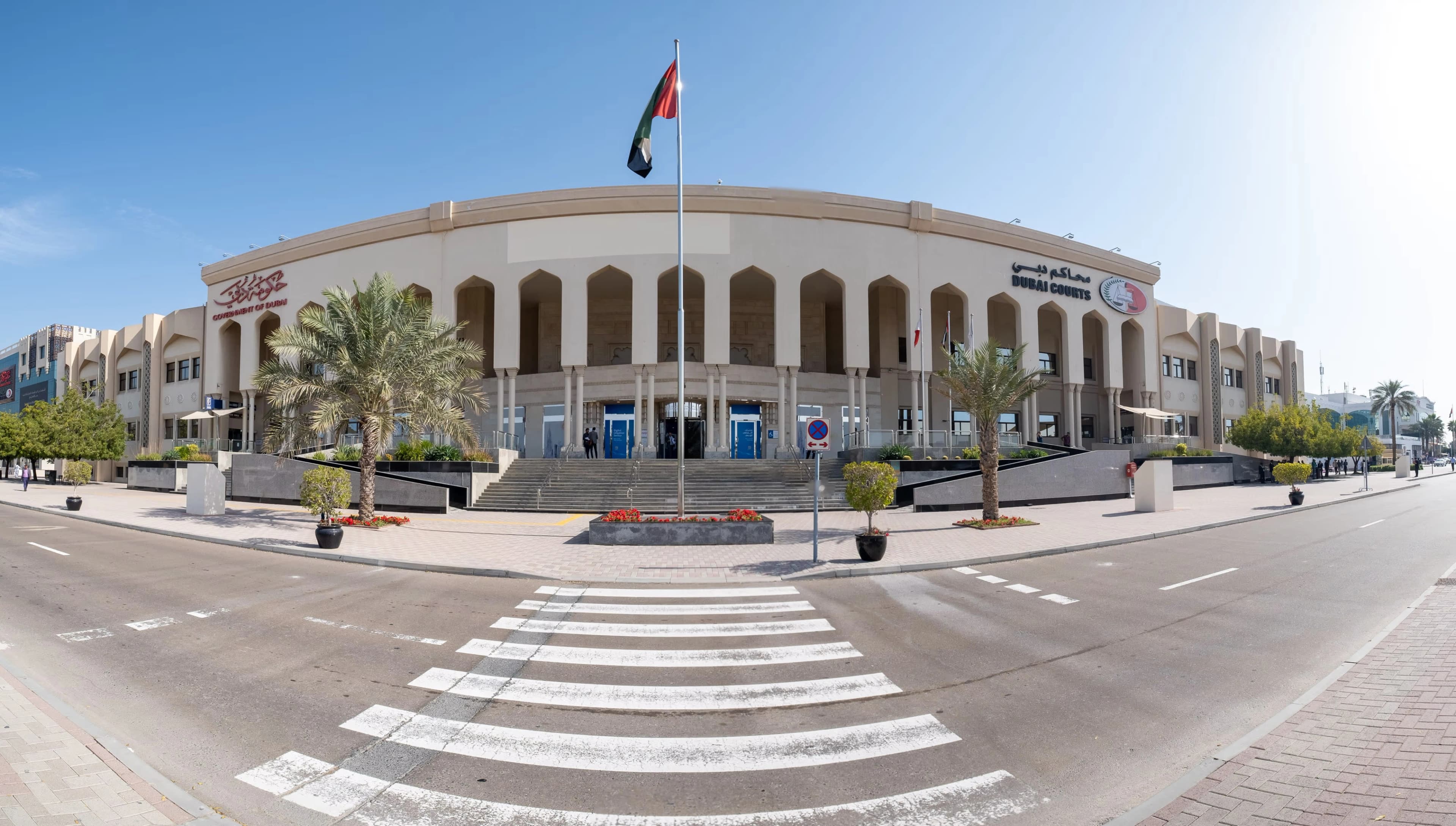
The Dubai Civil Court of First Instance has ruled that property transfers made by a convicted embezzler to his daughter cannot be enforced against creditors, ordering that the assets be restored to his name to facilitate recovery of outstanding dues.
The judgment relates to a case involving a former chief executive who was previously convicted of embezzling approximately Dh19.2 million from a company he once headed. The court found that he had transferred ownership of two real estate assets to his daughter through gift arrangements, in what it described as an attempt to place the properties beyond the reach of creditors.
The underlying dispute originated from a criminal case in which the executive and others were found guilty of diverting company funds through a fictitious development agreement. He was subsequently sentenced to 10 years in prison, ordered to pay back the embezzled amount, and directed for deportation.
Following the criminal conviction, the affected company obtained a civil judgment exceeding Dh19 million and initiated enforcement proceedings. However, execution efforts were stalled after it emerged that no assets were registered in the defendant’s name.
Subsequent inquiries revealed that in 2019, the defendant had transferred a luxury apartment and a residential plot to his daughter under gift contracts executed without consideration.
The court observed that the timing and circumstances of the transfers, coupled with the absence of other attachable assets, indicated bad faith and an intention to prejudice creditors. While it held that the gifts remained valid between the parties, it ruled that they were not enforceable against the claimant.
Accordingly, the court ordered that the properties be re-registered in the defendant’s name, allowing them to be attached and used for execution of the civil judgment.
For any enquiries or information, contact ask@tlr.ae or call us on +971 52 644 3004. Follow The Law Reporters on WhatsApp Channels.

When Insurers Can Legally Reject Rain Damage Claims on Your Car and What UAE Policyholders Must Know About Their Rights
How comprehensive cover, policy exclusions, and contract terms determine whether rain-related damage is compensated under UAE law.
In the UAE, questions around whether insurers can deny claims for rain-damaged vehicles are governed by a combination of statutory provisions and standardised insurance frameworks. Motor vehicle insurance is regulated through the Unified Motor Vehicle Insurance Policy Against Loss and Damage, originally issued under Insurance Authority Board of Directors’ Decision No. (25) of 2016 (as consolidated on January 18, 2021), and currently administered by the Central Bank of the UAE.
This unified policy forms the legal foundation defining an insurer’s liability to compensate, or indemnify, an insured individual for damage to a vehicle. A key distinction under UAE insurance law lies in the type of policy held. Comprehensive motor insurance generally covers damage arising from external causes, whereas third-party liability insurance is strictly limited to damages caused to third parties and does not extend to the insured’s own vehicle. Therefore, if a car sustains rain-related damage and the owner holds only third-party cover, the insurer is legally entitled to reject the claim.
For policyholders with comprehensive insurance, the insurer’s obligations are more extensive but still subject to defined conditions. Under Chapter Two of the Unified Policy, insurers are required to indemnify the insured for loss or damage resulting from accidents, unless the incident falls within recognised exclusions. Although rain or water damage is not explicitly listed, it is typically interpreted as an external accidental event and is therefore covered in principle. However, coverage may still be denied if the policy contains specific exclusions relating to weather events, flooding, or natural disasters.
Insurance contracts in the UAE are also governed by Article 1026 of Federal Law No. (5) of 1985 on Civil Transactions, which defines insurance as a contractual arrangement between the insurer and the insured. Under this provision, the insured pays a premium in exchange for protection against specified risks, and the insurer is obligated to compensate only in accordance with the terms, conditions, and scope of coverage agreed in the contract.
The Unified Motor Vehicle Insurance Policy further clarifies circumstances under which insurers may lawfully refuse claims. Chapter Four of the policy outlines exclusions that limit liability. These include losses resulting from deliberate acts or intentional damage by the insured, use of the vehicle for purposes not covered by the policy such as racing or testing, operation by a driver without a valid licence, or use outside permitted geographical limits. Claims may also be denied where the insured has failed to take reasonable precautions to prevent damage. If rain damage occurs in a situation that falls within any of these exclusions, or where negligence can be established, the insurer may justifiably decline compensation.
However, where a comprehensive policy is in place and none of the exclusions apply, insurers are expected to honour valid claims. In cases where a claim is rejected, policyholders are not without recourse. They may escalate disputes to the Insurance Dispute Resolution Committee under the Central Bank of the UAE, accessible through the Sanad (formerly Sandak) platform.
Ultimately, whether a rain damage claim is accepted or denied depends on the nature of the policy, the presence of applicable exclusions, and the specific contractual terms agreed between the insurer and the insured. While insurers are entitled to reject claims under clearly defined legal grounds, policyholders also retain the right to challenge such decisions and seek redress where coverage has been unjustifiably denied under UAE insurance regulations.
For any enquiries or information, contact ask@tlr.ae or call us on +971 52 644 3004. Follow The Law Reporters on WhatsApp Channels.
War Risks and Insurance: Can UAE Businesses Recover Losses Caused by Conflict and Geopolitical Disruptions?
Legal provisions, policy exclusions and the role of the UAE insurance ombudsman shape how companies pursue claims linked to war-related disruptions.
Businesses in the UAE are increasingly looking at insurance as a financial safeguard against unexpected losses amid rising geopolitical tensions. Yet legal experts warn that many companies may be overestimating the protection offered by standard insurance policies, particularly when losses arise from war or conflict-related disruptions.
A common misconception among policyholders is that insurance contracts automatically provide broad protection against all forms of risk. In practice, however, most policies include war-exclusion clauses that can significantly restrict an insured party’s ability to recover losses linked to armed conflict, hostilities or similar geopolitical events.
The issue has gained renewed attention as global conflicts and regional tensions continue to affect supply chains, trade routes and commercial operations across several sectors.
Legal Framework Governing Insurance Contracts
Insurance contracts in the UAE are primarily regulated by the UAE Civil Transactions Law (Federal Law No. 5 of 1985). A key provision affecting policyholders is Article 1028, which requires that any exclusion clause — particularly those relating to war risks — must be clearly stated, explicit and properly disclosed within the policy.
Legal specialists say the provision is intended to ensure transparency in insurance agreements. If an exclusion clause is ambiguous or not clearly presented to the insured, UAE courts and regulators may interpret the terms in favour of the policyholder.
Oversight of the sector is carried out by the Central Bank of the UAE (CBUAE), which requires insurers to comply with strict governance and disclosure standards aimed at protecting consumers.
Business Interruption and Marine Risks
War-related exclusions often become most relevant in areas such as business interruption and marine insurance, where companies depend heavily on coverage to protect commercial operations.
Business interruption insurance is commonly used by companies to offset losses resulting from operational disruptions or supply-chain breakdowns. However, such policies frequently exclude interruptions linked to armed conflict unless an additional endorsement specifically covering war risks has been obtained.
For companies involved in international trade, marine insurance presents similar challenges. Losses arising from maritime blockades, attacks on vessels or other conflict-related incidents are typically excluded under standard policies. Businesses engaged in shipping or cross-border trade therefore often require separate and specialised war-risk coverage.
Policyholder Rights During Claims
The UAE insurance system places strong emphasis on consumer protection. Policyholders are entitled to receive clear information before entering into a contract and fair treatment throughout the life of the policy.
When a claim is submitted, insurers are legally required to act in good faith, process claims within a reasonable timeframe and provide transparent reasons if a claim is rejected or only partially settled.
At the same time, policyholders must meet their own obligations, including promptly notifying insurers of losses and submitting the required documentation to support their claims.
Sanadak Offers Alternative Dispute Resolution
In cases where disputes arise between insurers and policyholders, litigation is no longer the only avenue available.
The establishment of Sanadak – UAE Insurance Ombudsman has introduced an independent mechanism for resolving complaints against insurance companies and brokers regulated by the CBUAE.
The platform allows policyholders to challenge insurer decisions without immediately resorting to court proceedings. Disputes are assessed based on the applicable legal framework and the specific contractual terms involved.
The process is also designed to be faster and more accessible than traditional litigation, providing a cost-effective route for resolving insurance disputes.
Growing Relevance Amid Global Tensions
With geopolitical instability increasingly affecting global commerce, war-related risks are becoming a more prominent concern for businesses operating in sectors such as logistics, shipping, energy and international trade.
Experts say companies should carefully review the scope of exclusions in their insurance policies and consider specialised war-risk coverage where necessary. They also advise businesses to familiarise themselves with the legal protections available under UAE law and the dispute resolution mechanisms provided by bodies such as Sanadak.
As conflicts and geopolitical tensions continue to influence global trade and supply chains, a clearer understanding of insurance coverage — and its limitations — may prove crucial for businesses seeking to protect themselves from the financial fallout of war-related disruptions.
For any enquiries or information, contact ask@tlr.ae or call us on +971 52 644 3004. Follow The Law Reporters on WhatsApp Channels.

OpenAI faces US lawsuit alleging ChatGPT practised law without licence and fuelled wave of meritless court filings
Nippon Life Insurance Company of America claims the AI chatbot encouraged a claimant to reopen a settled disability case, causing costly and unnecessary litigation.
ChatGPT maker OpenAI has been accused in a new lawsuit of practising law without a US licence and assisting a former disability claimant in breaching a settlement while flooding a federal court with meritless filings.
Nippon Life Insurance Company of America alleged in a lawsuit filed on Wednesday in federal court in Chicago that OpenAI improperly provided legal assistance to a woman who attempted to reopen a lawsuit that had already been settled and dismissed.
“ChatGPT is not an attorney,” the lawsuit states. Although OpenAI has demonstrated that ChatGPT can pass a bar examination, Nippon said it “has not been admitted to practise law in the State of Illinois or in any other jurisdiction within the United States”.
The lawsuit seeks a court order declaring that OpenAI violated Illinois’ unauthorised practice of law statute, as well as $300,000 in compensatory damages and $10 million in punitive damages.
OpenAI said in a statement on Thursday that “this complaint lacks any merit whatsoever”.
A lawyer for Nippon, a subsidiary of the Japanese insurer Nissay, said the company declined to comment.
Nippon claims OpenAI encouraged the woman — an employee of a logistics company whose insurance coverage was provided through Nippon — to pursue further action in her already settled disability case. The insurer said it spent significant time and resources responding to filings that were allegedly generated with the assistance of ChatGPT.
The lawsuit appears to be among the first cases accusing a major artificial intelligence developer of engaging in the unauthorised practice of law through a consumer-facing chatbot.
The case comes as the rapid adoption of generative AI tools for legal drafting has led to a rise in so-called AI “hallucinations” in court filings. Judges have increasingly sanctioned litigants and lawyers for submitting documents containing fabricated case citations or other unverified material generated by AI systems.
According to Nippon, the dispute arose after the employee settled her long-term disability benefits lawsuit with prejudice in January 2024. The woman herself is not named as a defendant in the current lawsuit.
Nippon alleged that the woman later uploaded an email from her then lawyer into ChatGPT, which purportedly validated her concerns about the legal advice she had received. She subsequently dismissed her lawyer and attempted to reopen the closed case using filings prepared with the help of the chatbot, the lawsuit said.
A judge rejected that request in February 2025. However, Nippon said the woman subsequently filed a new lawsuit along with dozens of motions and notices which, the insurer contends, served “no legitimate legal or procedural purpose”. The company alleges that ChatGPT drafted those documents.
Nippon also said OpenAI amended its policies in October to prohibit users from seeking legal advice through the platform, but claimed no such restriction existed previously.
The case is Nippon Life Insurance Company of America v. OpenAI Foundation and OpenAI Group PBC, filed in the US District Court for the Northern District of Illinois (No. 1:26-cv-02448).
For any enquiries or information, contact ask@tlr.ae or call us on +971 52 644 3004. Follow The Law Reporters on WhatsApp Channels.