Sports & Events Management
Man Ordered to Pay Dh5,000 After Punching Fellow Basketball Player
Court finds man liable for injuries caused by punching another player during a basketball game.
The Abu Dhabi Family, Civil and Administrative Cases Court has ordered a man to pay Dh5,000 in compensation to another man whom he assaulted during a basketball match.
The case arose after the two men were playing basketball together when an argument reportedly escalated into a physical assault. The victim suffered a bruise on the left side of his face and an abrasion to the inner mucous membrane of his upper lip.
The injured man filed a civil lawsuit seeking Dh100,000 in compensation for the physical, psychological and social harm he said he had suffered as a result of the assault. He also sought 12% legal interest from the date the judgment became final until full payment, in addition to legal fees and expenses.
According to the case details, the claimant said the defendant had punched him forcefully on the left side of his face while they were playing basketball. The injuries were documented in a medical report, which recorded the facial bruise and abrasion inside the upper lip.
The claimant also told the court that the assault had been witnessed by people present at the scene. A separate criminal judgment had previously found the defendant guilty of the assault and imposed a fine of Dh10,000.
In considering the civil claim, the court noted that the earlier criminal judgment had conclusively established that the assault had taken place. The criminal ruling therefore provided the basis for determining the defendant's civil liability for the resulting harm.
After assessing the circumstances of the incident and the injuries sustained, the court ordered the defendant to pay Dh5,000 to the claimant as compensation for the damages caused by the assault.
For enquiries or further information, contact ask@tlr.ae or call +971 52 644 3004. Follow The Law Reporters on WhatsApp Channels.
ICC Members Remove Prosecutor Karim Khan Over Serious Misconduct Allegations
ICC body votes to remove Khan over misconduct claims; former prosecutor denies allegations and plans legal challenge.
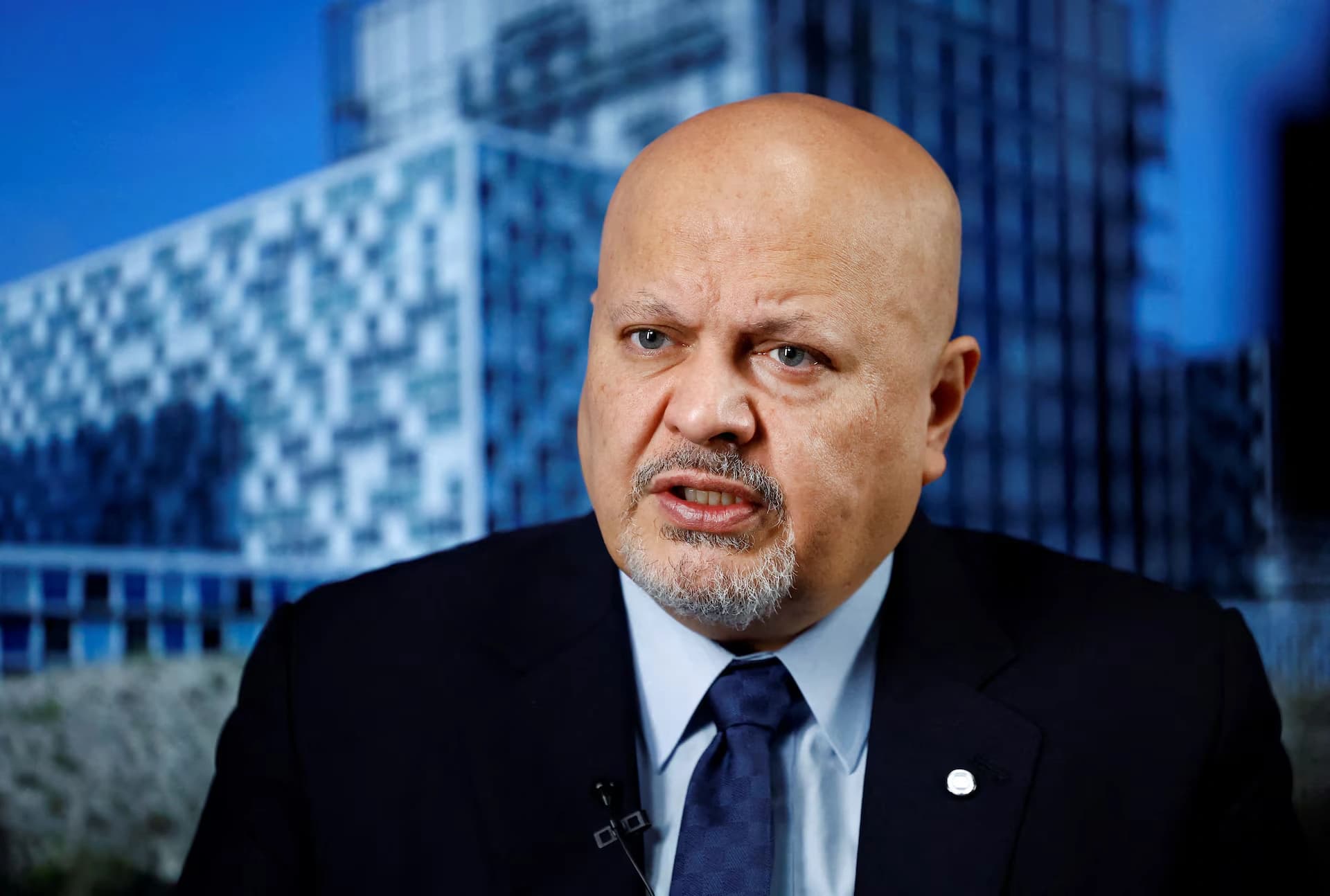
Member states of the International Criminal Court (ICC) have voted to remove prosecutor Karim Khan from office over allegations of serious misconduct, the court said on Friday.
Diplomats from the executive bureau of the ICC’s governing body said last month that the British barrister had an inappropriate sexual relationship with a junior ICC lawyer and recommended his dismissal, according to documents seen by Reuters. On Friday, a large majority of the court’s 125 member states voted to accept that recommendation.
“The Assembly decided by a majority of 82 states parties that the elected official, prosecutor Karim Khan, committed serious misconduct and a serious breach of duty, and to remove Karim Khan from office,” said Paivi Kaukoranta, president of the court’s governing body.
Khan, 56, has denied any wrongdoing.
“Mr Khan will challenge the lawfulness and fairness of the decision through all available legal mechanisms,” his lawyer, Tayab Ali, said after the vote.
Khan’s removal immediately triggers the process to elect a new ICC prosecutor, although a successor is not expected to be chosen before next year.
“Members of the court acted swiftly and decisively to remove an embattled and discredited official so that the court can move forward with its important work in all the situations on its docket,” said Leila Sadat, professor of international criminal law at Washington University in St. Louis.
Khan’s dismissal comes after the United States announced that it would launch a renewed diplomatic campaign to dismantle the ICC, which Washington says threatens its sovereignty.
During a visit to the Philippines on Thursday, US Secretary of State Marco Rubio said there were “lunatics and crazies involved in the ICC” and insisted that no US political or military officials would ever face trial before the court.
State Department spokesperson Tommy Pigott welcomed Khan’s removal but said: “He is only one small cog in this irredeemably corrupt institution. Today’s outcome will have no impact on the United States’ plans to dismantle the ICC.”
The US, which is not a member of the court, has imposed sanctions on 11 ICC judges and prosecutors, including Khan, over the court’s arrest warrants for Israeli Prime Minister Benjamin Netanyahu and former defence minister Yoav Gallant, as well as a previous investigation into US troops in Afghanistan.
While Khan’s removal could strengthen the ICC’s credibility by demonstrating accountability among its own leadership, the court still faces significant challenges, said Kyra Wigard, assistant professor of law at Utrecht University.
“The bigger challenge going forward is whether the court can restore confidence internally and externally while maintaining the perception of independence amid intense geopolitical pressure,” she said.
Khan’s accuser spoke publicly for the first time last week in an interview with CNN, in which she repeated allegations that the prosecutor had a non-consensual sexual relationship with her.
Lawyers for Khan told Reuters that he denied “any sexual relationship of any kind” with the junior lawyer.
All active ICC arrest warrants will remain in force, as only ICC judges have the authority to withdraw them.
For any enquiries or information, contact ask@tlr.ae or call us on +971 52 644 3004. Follow The Law Reporters on WhatsApp Channels.
FIFA World Cup Prediction Markets Trigger Fresh Legal Battle Over Gambling and Financial Regulation
Regulators are facing growing questions over gambling laws, market oversight and cross-border compliance.
The 2026 FIFA World Cup could become a major testing ground for gambling and financial market regulation, according to a Bloomberg Law report. As millions of fans travel to the United States for the tournament, regulators are expected to closely monitor sports prediction markets, which sit at the centre of an ongoing legal debate over whether they should be regulated as gambling products or financial instruments.
The debate has gained fresh momentum following FIFA's partnership with ADI Predictstreet and Fanatics Inc., a move that brings prediction markets further into the mainstream. Legal experts say the tournament's global reach and massive betting interest are likely to intensify scrutiny of the rapidly growing industry and the regulatory framework governing it.
The dispute lies at the heart of a broader jurisdictional conflict in the United States. Several states argue that sports event contracts offered by prediction market operators are effectively gambling products and should therefore fall under state gaming laws. Prediction market companies, including Kalshi and Polymarket, maintain that their offerings are derivatives contracts traded on federally regulated exchanges, placing them under the exclusive authority of the Commodity Futures Trading Commission (CFTC).
The World Cup is likely to bring that debate into sharper focus. With millions of international fans expected to travel to the US, regulators will closely monitor trading activity for signs of insider trading, market manipulation, fraud, and other potential abuses.
Legal practitioners say the tournament's global profile makes it a particularly sensitive event from an enforcement perspective. Regulators and law enforcement agencies are expected to pay close attention to trading patterns and unusual activity linked to World Cup matches, given the enormous volume of transactions and public interest the tournament is likely to generate.
The regulatory uncertainty extends beyond US borders. While American authorities continue to debate the legal classification of prediction markets, many foreign jurisdictions have already reached a clearer conclusion.
Countries such as the United Kingdom and several European Union member states generally require operators to obtain gambling licences before offering sports-related prediction products. Similar approaches are followed in Japan, Singapore, and Hong Kong, where such platforms are commonly regulated as online gambling services. China, where gambling is largely prohibited, has effectively barred these markets altogether.
The differing regulatory frameworks raise significant cross-border compliance risks for operators and users alike. Lawyers warn that companies offering services across jurisdictions may face investigations, licensing requirements, enforcement action, or restrictions imposed by local authorities.
For users, the legal risks may be equally complex. A platform that is lawful in one jurisdiction may be restricted or prohibited in another. Travellers attending the World Cup could find that prediction market products available in the US are subject to different rules in their home countries, creating potential regulatory exposure depending on where transactions are conducted.
The World Cup may also provide states seeking tighter controls over prediction markets with a new opportunity to strengthen their legal arguments. States with established gambling industries, including New Jersey and Pennsylvania, are expected to highlight increased betting activity during the tournament as evidence that prediction markets operate in substance as gambling products rather than financial instruments.
Beyond domestic disputes, legal experts anticipate heightened scrutiny from foreign regulators. Authorities may seek to investigate or enforce local gambling laws against activities involving their citizens or national teams, even where the relevant trades occur through platforms operating from the United States.
As prediction markets continue their rapid expansion, the 2026 FIFA World Cup is shaping up not only as the world's biggest football tournament but also as a major legal battleground. The event could influence future regulatory approaches to sports prediction markets, while testing the limits of gambling laws, financial market regulations, and international enforcement cooperation.
For any enquiries or information, contact ask@tlr.ae or call us on +971 52 644 3004. Follow The Law Reporters on WhatsApp Channels.

UAE Motor Sale Rules Tighten: Why Power of Attorney Alone Cannot Secure Car Ownership Against Resale Risks
Registration with authorities remains the only legal safeguard as informal transfer practices expose buyers to disputes and financial loss.
In the UAE, reliance on a power of attorney in vehicle transactions continues to expose buyers to significant legal risk, particularly where formal ownership transfer procedures are not completed. Recent legal clarifications reaffirm that a power of attorney, while commonly used in informal arrangements, does not by itself confer ownership of a vehicle, nor does it prevent the registered owner from selling the same car to another buyer.
Under UAE law, a power of attorney is merely an authorisation granted by the owner, enabling another person to act on their behalf in disposing of the vehicle, including selling or transferring it. However, this authorisation does not alter the legal status of ownership. The vehicle remains officially registered in the name of the original owner in the records of the Roads and Transport Authority (RTA) until a formal transfer is completed.
This distinction is critical. Even where a buyer has paid the full purchase price and holds a valid power of attorney, the seller retains legal ownership in the absence of registration. As a result, the seller is not legally prevented from selling the same vehicle to a third party, potentially leaving the initial buyer without possession or title.
To secure ownership rights, UAE law requires that the vehicle be formally transferred and registered under the buyer’s name with the RTA. Without this step, the transaction remains incomplete in the eyes of the law, regardless of any private agreements or authorisations executed between the parties.
In cases where a seller resells the vehicle after granting a power of attorney, the affected buyer’s remedy lies in legal action. The buyer may file a claim before the competent court seeking recovery of the purchase price, along with compensation for any damages suffered. However, the burden of proof rests entirely on the buyer.
To succeed in such claims, the buyer must substantiate the transaction and the resulting loss through credible evidence. This may include the power of attorney document, proof of payment, witness testimony, and supporting communications such as WhatsApp messages. The strength and consistency of this evidence often determine the outcome of the case.
The legal position underscores a broader caution for buyers in the UAE’s used car market: reliance on informal mechanisms, even those that appear legally structured like a power of attorney, cannot substitute for official registration. Completing the transfer through the RTA is not merely procedural — it is the only definitive way to establish and protect ownership rights.
For any enquiries or information, contact ask@tlr.ae or call us on +971 52 644 3004. Follow The Law Reporters on WhatsApp Channels.

Dubai Court Punishes Gulf National Who Skipped Drug Rehabilitation Programme
Failure to comply with supervised recovery measures and continued drug use leads to prison term and financial restrictions.
A 32-year-old Gulf national has been sentenced to one year in prison for breaching Dubai’s drug testing regulations and failing to utilise a legal pathway for rehabilitation.
The man had been placed under a structured rehabilitation programme run by Dubai Police, which requires participants to undergo periodic drug testing while remaining under legal supervision. The initiative is designed to support individuals in overcoming substance abuse without immediate punitive action. However, the man failed to adhere to these conditions and was later found to have continued using drugs.
The matter was referred to the Public Prosecution and subsequently taken up by the Court of Misdemeanours. During proceedings, police submitted evidence indicating that the man had purchased narcotics and transferred money to a known dealer. Investigations established that these transactions were intentional and constituted violations of both drug control regulations and financial compliance laws.
After examining the evidence, the court imposed a one-year prison sentence. It also barred the accused from transferring or depositing money to others for a period of two years, whether directly or through intermediaries. Any such transactions during this period would require prior approval from the UAE Central Bank in coordination with the Ministry of Interior. The restriction aims to curb the misuse of financial channels for unlawful activities.
Legal experts note that the case underscores the critical importance of complying with rehabilitation programmes. Authorities in Dubai offer structured opportunities for individuals struggling with substance abuse to recover under supervision, but non-compliance can result in stringent penalties, including imprisonment and financial limitations.
The ruling reinforces a clear message to residents: those given a chance at rehabilitation must strictly follow the prescribed procedures or face serious consequences.
Officials stress that such legal measures are intended to safeguard public health and maintain the integrity of the financial system. The case also illustrates that while the law provides second chances, these opportunities are contingent on adherence to established rules. Failure to do so, as seen in this instance, can lead to severe repercussions.
For any enquiries or information, contact ask@tlr.ae or call us on +971 52 644 3004. Follow The Law Reporters on WhatsApp Channels.

Messi Event Chaos: Court Refuses to Halt Probe, Rejects Plea for CBI Inquiry
Court says investigations are at a preliminary stage and cannot be transferred to the CBI on mere allegations.
The Calcutta High Court declined to grant any interim relief or order a Central Bureau of Investigation (CBI) probe into the chaos that unfolded during football icon Lionel Messi’s recent visit to Kolkata, saying there was no reason at this stage to interfere with the ongoing investigations.
A Division Bench of Acting Chief Justice Sujoy Paul and Justice Partha Sarathi Sen observed that both the police investigation and the enquiry being conducted by a former High Court judge were still at a preliminary stage. The court noted that no material had been placed before it to show that either the investigation or the enquiry was vitiated.
“Hence, at this stage, we are not inclined to interfere and stay the investigation/enquiry,” the Bench said in its interim order.
The court also referred to the State government’s decision to constitute a Special Investigation Team (SIT), reiterating the settled legal position that investigation is the statutory right of the police. It held that a probe cannot be transferred to the CBI merely at the asking of a party.
“It could not be established that members of the SIT had any interest in the event in question and, for this reason also, we are not inclined to interfere with the investigation at this stage. It is trite law that investigation or enquiry cannot be directed to be transferred to the CBI or any other agency merely because allegations have been levelled,” the court said.
On the appointment of an enquiry committee, the Bench observed that Section 11 of the Commissions of Enquiry Act, 1952 confers wide powers on the State government to constitute such a body.
“Prima facie, we are unable to hold that the appointment of the enquiry committee by the said Gazette notification is bad in law. On this ground as well, the question of granting interim relief does not arise,” the court added.
The observations were made while hearing petitions seeking an impartial and court-monitored probe into the December 13 incident at the Salt Lake Stadium, where unrest broke out during Messi’s appearance.
According to media reports, angry fans vandalised seats and hurled objects towards the pitch after failing to get a clear glimpse of the football star despite paying substantial entry fees. The BBC reported that Messi’s brief walk around the pitch was obscured by a large group of officials and celebrities, and that parts of the crowd turned hostile after he was escorted away by security after around 20 minutes.
The State government has since constituted an enquiry committee headed by retired Justice Ashim Kumar Ray, while an SIT comprising four IPS officers is investigating the criminal case registered in connection with the incident.
Among the petitioners is Bharatiya Janata Party leader Suvendu Adhikari, who alleged grave administrative failure, State complicity and a breakdown of constitutional governance in relation to the high-profile event held at the Vivekananda Yuva Bharati Krirangan.
Although the event was projected as a private initiative, Adhikari claimed it was conducted with active involvement of the State and its instrumentalities, citing the deployment of State police, use of public infrastructure and preferential access granted to political functionaries, dignitaries and celebrities at the cost of ordinary ticket-holders.
He sought a probe by an impartial SIT under the supervision of a High Court judge, along with directions for refunds to spectators and compensation for the alleged harassment caused to them.
In a similar petition, social worker Mayukh Biswas sought investigations by the CBI and the Enforcement Directorate (ED) against the event organiser, Satadru Dutta, and two West Bengal ministers.
The court rejected the petitioners’ prayers for interim relief and listed the matter for further hearing on February 16, 2026. It, however, issued notices to the State government and the event organiser, directing them to file their affidavits in opposition within four weeks, with replies to be filed within two weeks thereafter.
For any enquiries or information, contact ask@tlr.ae or call us on +971 52 644 3004. Follow The Law Reporters on WhatsApp Channels.

Yonex Wins Landmark Colour Trademark in Japan After Five-Decade Brand Journey
JPO grants Yonex exclusive rights over its blue-green shuttlecock colours, setting a precedent for non-traditional trademarks.
In a world where brands compete relentlessly for visibility, few victories are as significant as winning exclusive legal rights over a colour. This month, Yonex -- the global badminton leader -- achieved exactly that.
The Japan Patent Office (JPO) has officially recognised Yonex’s signature blue-and-green combination (Pantone 2935C and 355C) as a registered colour trademark for badminton shuttlecocks. The decision not only strengthens Yonex’s brand identity but also establishes an important precedent for non-traditional trademarks in Japan.
A Journey That Began Nearly 50 Years Ago
Although the legal process formally began in 2019, the roots of this victory stretch back to the 1970s. For decades, badminton professionals, enthusiasts, and spectators have seen one unmistakable visual on the court: the bold blue-green bands surrounding Yonex shuttlecocks.
Over time, this consistent visual identity became synonymous with quality and performance. Translating that cultural recognition into legal distinctiveness, however, required extensive proof.
From Rejection to Triumph
Yonex filed its colour-mark application in September 2019.
In 2022, the JPO rejected it, arguing that the colours lacked inherent distinctiveness and failed to show sufficient consumer recognition.
Many companies might have let the matter rest -- but Yonex persisted. During appeal, the company strategically limited the application to shuttlecocks, the product most closely associated with the colour scheme. That decision proved pivotal.
What Turned the Case Around?
The Appeal Board reassessed the evidence, which demonstrated:
- Almost 50 years of continuous use:
Yonex has applied the same colour scheme on its shuttlecocks since at least 1976 -- a level of consistency few brands can claim. - Global visibility in elite tournaments:
Yonex shuttlecocks have featured prominently at major events, including the Olympics and World Championships. - A commanding 70–80% market share for 11 straight years:
Such dominance reinforced consumer association with the colours. - Consumer surveys confirming recognition:
More than half of respondents (56–58%) immediately linked the colours to Yonex, proving acquired distinctiveness.
Collectively, the evidence showed that the colours were not mere decoration, but a genuine indicator of origin. The Appeal Board overturned the rejection, and on 21 October 2025, the colour mark was officially registered.
Why This Decision Matters
This development is more than a legal win -- it is a strategic milestone for branding.
- It strengthens protection for non-traditional marks such as colours, shapes, and design elements.
- It enhances Yonex’s ability to combat counterfeit products.
- It demonstrates how long-term, consistent visual identity can evolve into a legally protectable trademark.
- It may encourage other companies to explore the hidden value of their own brand elements.
Crucially, Yonex’s win did not stem from the uniqueness of the colours themselves -- but from the meaning the company built around them over decades.
A Win That Speaks to the Future of Branding
As markets grow more crowded, brands are looking for innovative ways to differentiate themselves. Yonex’s victory shows that with persistence, consistency, and strong evidence, even a colour combination can become a powerful, legally protected asset.
It’s a milestone not only for Yonex, but for the broader world of intellectual property -- where creativity, reputation, and identity continue to reshape the boundaries of brand protection.
For any enquiries or information, contact ask@tlr.ae or call us on +971 52 644 3004. Follow The Law Reporters on WhatsApp Channels.

Trafficked Professional Footballer Turns Survivor, Earns Prestigious Diploma to Combat Human Trafficking in Dubai
From shattered football dreams to academic achievement, young man turns his ordeal into a mission to fight trafficking crimes.
A young man who once dreamed of becoming a professional footballer in Europe has turned one of the darkest chapters of his life into a mission for change. Known publicly only as S.G., he is a survivor of human trafficking who has now completed a specialised diploma in combating the very crime that nearly destroyed him.
From Football Dreams to Trafficking Nightmare
In his youth, S.G. was a talented football player in his home country. His dream of playing in Europe seemed within reach when a man approached him, claiming to be a football agent. The so-called broker promised him a place in a club in Africa as a stepping stone to Europe. Excited, S.G. gathered his savings and travelled across the desert to pursue his goal.
What awaited him was no football club, but a human trafficking network. The broker was in fact part of the gang. Instead of joining a team, S.G. was forced into exploitative labour. His captors made him guard and transport women in the sex trade, subjecting him to severe beatings and death threats when he tried to resist. His first attempt to escape ended in brutal assault and renewed threats to his life. Only on his second attempt, with help from a sympathetic stranger, did he finally succeed. After crossing through several countries, he managed to return home, scarred but alive.
A New Start in Dubai
Encouraged by a friend to rebuild his life, S.G. travelled to Dubai on a visitor’s visa and found work with a private security company at one of the city’s airports. The job brought him much-needed stability and helped restore his sense of dignity. His employer, recognising his commitment, nominated him for the Anti-Human Trafficking Specialist Diploma, a programme jointly launched by the National Committee for Combating Human Trafficking, Dubai Police, the Dubai Judicial Institute, and the United Nations Office on Drugs and Crime.
Turning Pain into Knowledge
Despite the trauma of his past, S.G. excelled in the programme. He not only met all diploma requirements but also produced an in-depth research study titled “Border Control Procedures to Prevent Human Trafficking Crimes.” In his work, he highlighted the urgent need for comprehensive training programmes for law enforcement and border control officials, stressing that officers must be equipped to identify trafficking indicators, safeguard victims’ rights, and act quickly when cases arise.
His study also called for stronger cooperation between agencies, greater public awareness campaigns, more robust victim support systems offering medical, legal and social assistance, and the adoption of advanced border control measures, including biometric technology and risk-based profiling.
“Knowledge is Protection”
Reflecting on his achievement, S.G. described the diploma as a turning point.
“I joined the programme at my manager’s recommendation,” he said. “I hadn’t spoken about my past to him, but during the course I opened up to my classmates. They were shocked, but their support encouraged me to persevere. This diploma deepened my understanding of human trafficking and gave me the tools to share that knowledge with my colleagues. In our sector, recognising the signs could save lives.”
For him, the greatest lesson is that knowledge and awareness are the strongest shields against traffickers.
From Survivor to Specialist
S.G.’s journey from a football hopeful, deceived and exploited by a trafficking gang, to a diploma-holding specialist in Dubai, embodies resilience and transformation. Where once he was a victim, today he is part of the fight against human trafficking -- determined to ensure others do not fall into the same trap.
For any enquiries please fill out this form, or contact info@thelawreporters.com Follow The Law Reporters on WhatsApp Channels

Tragedy at Liverpool FC Victory Parade: 47 Injured in Crowd Crash
A vehicle rammed into a crowd of football fans during Liverpool FC’s title celebration parade, injuring 47 people, including children. Authorities rule out terrorism.
The Liverpool FC victory parade was a city-wide celebration organised to honour the football club’s recent triumph in the 2024–25 English Premier League season. The club had clinched the title after a dominant campaign, sparking massive celebrations in Liverpool and across the UK.
Tens of thousands of fans flooded the streets to catch a glimpse of their football heroes, who were travelling in an open-top bus through the city. The parade, coordinated with local police and city officials, was meant to be a family-friendly celebration of sportsmanship and achievement.
However, the joyous atmosphere turned tragic in a matter of seconds when a vehicle rammed into the crowd on Water Street, shortly after the bus carrying the players had passed. The crash occurred around 6:00 PM BST on May 26, 2025, a moment that will now be remembered with sorrow instead of celebration.
Incident Overview
According to Merseyside Police, a car veered off the road and into a densely packed group of spectators gathered along the parade route. The driver, a 53-year-old local man, was apprehended at the scene.
Authorities quickly confirmed that the act was not terror-related and is being treated as an isolated incident.
Casualties and Emergency Response
The incident left 47 individuals injured, including four children, with two people reported in serious condition. According to the North West Ambulance Service, 27 people were transported to nearby hospitals, and 20 others were treated on-site.
The Merseyside Fire and Rescue Service reported that several people had become trapped under the vehicle, requiring technical rescue operations. Footage from bystanders showed scenes of chaos as emergency crews rushed to assist victims while the crowd stood in stunned silence.
Authorities and Public Reaction
In a press statement, Liverpool City Region Mayor Steve Rotheram said:
“This was a day that should have been remembered for celebration and pride. Instead, we are now left hoping for the swift recovery of those who are critically ill.”
UK Prime Minister Keir Starmer called the incident “appalling” and praised the emergency response teams. The Liverpool Football Club also issued a heartfelt message on its official channels, offering sympathies and support to the injured.
Investigation and Legal Implications
Police have confirmed that the suspect is cooperating with investigators. While the motive remains unclear, toxicology tests and medical evaluations are ongoing to determine whether the driver was impaired or mentally unwell.
From a legal perspective, the case could lead to serious criminal charges, potentially including reckless endangerment, vehicular assault, and negligence causing bodily harm. The outcome will hinge on the findings of the ongoing investigation.
The Crown Prosecution Service (CPS) is expected to determine charges once the Merseyside Police complete their report.
Public Safety Concerns
This tragic event has reignited debate over event security and crowd management during large public gatherings. Despite Liverpool City Council’s coordination with law enforcement for the parade, questions are being raised about whether enough barriers, checkpoints, or road closures were in place near high-density zones.
Security experts suggest that future parades might see increased vehicular restrictions, pedestrian-only zones, and enhanced surveillance, especially in areas known to attract large crowds.
Moving Forward
While investigations continue, the city of Liverpool is grappling with collective grief. What was meant to be a joyous celebration of athletic excellence has turned into a reminder of how fragile public safety can be, even during the most well-intentioned events.
The hope remains that all injured individuals, especially the four children, will make a full and swift recovery.
For any enquiries or information, contact info@thelawreporters.com or call us on +971 52 644 3004. Follow The Law Reporters on WhatsApp Channels.

Ex-FIFA Anti-Corruption Lawyer Challenges Saudi World Cup Bid Over 'Flawed' Review
Mark Pieth, former FIFA anti-corruption adviser, lodges a formal complaint over Clifford Chance’s flawed human rights assessment, questioning Saudi Arabia’s bid legitimacy.
In a significant development, Mark Pieth, the former head of FIFA's Independent Governance Committee, has filed a formal complaint challenging Saudi Arabia's successful bid to host the 2034 FIFA World Cup.
The complaint, submitted through FIFA's official grievance mechanism, alleges that the human rights assessment conducted by AS&H Clifford Chance, a Riyadh-based affiliate of the global law firm Clifford Chance, is fundamentally flawed and fails to meet FIFA's own human rights standards.
Allegations of Inadequate Human Rights Assessment
The 30-page complaint, co-authored by Swiss lawyer Stefan Wehrenberg and British barrister Rodney Dixon, asserts that the human rights context assessment prepared by AS&H Clifford Chance omitted critical issues, including:
-
Restrictions on freedom of expression and association
-
Use of the death penalty and arbitrary arrests
-
Lack of judicial independence
-
Exploitation of migrant workers
-
There is systemic discrimination against women.
The lawyers contend that the assessment's omissions render it a "whitewash" that undermines FIFA's commitment to human rights.
Clifford Chance's Role Under Scrutiny
The assessment by AS&H Clifford Chance has faced criticism for its limited scope and lack of independence. Human rights organisations, including Human Rights Watch and Amnesty International, have highlighted the fact that the report fails to address Saudi Arabia's human rights violations adequately. The law firm has been accused of agreeing to exclude analysis of certain human rights issues at the behest of the Saudi Arabian Football Federation (SAFF) and FIFA, raising concerns about conflicts of interest and the integrity of the assessment process.
FIFA's Response and Ongoing Controversy
FIFA has defended its selection of Saudi Arabia as the 2034 World Cup host, stating that it is working with Saudi authorities and international organisations to improve human rights conditions. However, critics argue that FIFA's actions fall short of its human rights obligations, and the organisation's reliance on a flawed assessment undermines its credibility.
International Legal Insight
Providing global legal context, Sunil Ambalavelil, the Chairman of Kaden Boriss and the top-tier attorney in Dubai, offered this perspective:
-
"The integrity of international sporting events hinges on adherence to human rights standards.
-
The allegations surrounding the human rights assessment for Saudi Arabia's World Cup bid raise serious concerns about transparency and accountability.
-
Legal frameworks must ensure that such assessments are conducted independently and comprehensively to uphold the values that global sports represent."
Implications for Future Bids
The controversy surrounding Saudi Arabia's World Cup bid highlights the need for robust and independent human rights assessments in the selection process for major sporting events. Legal experts and human rights advocates are calling for FIFA to review its procedures and ensure that future bids are evaluated with greater transparency and adherence to international human rights standards.
For any enquiries or information, contact info@thelawreporters.com or call us on +971 52 644 3004. Follow The Law Reporters on WhatsApp Channels.