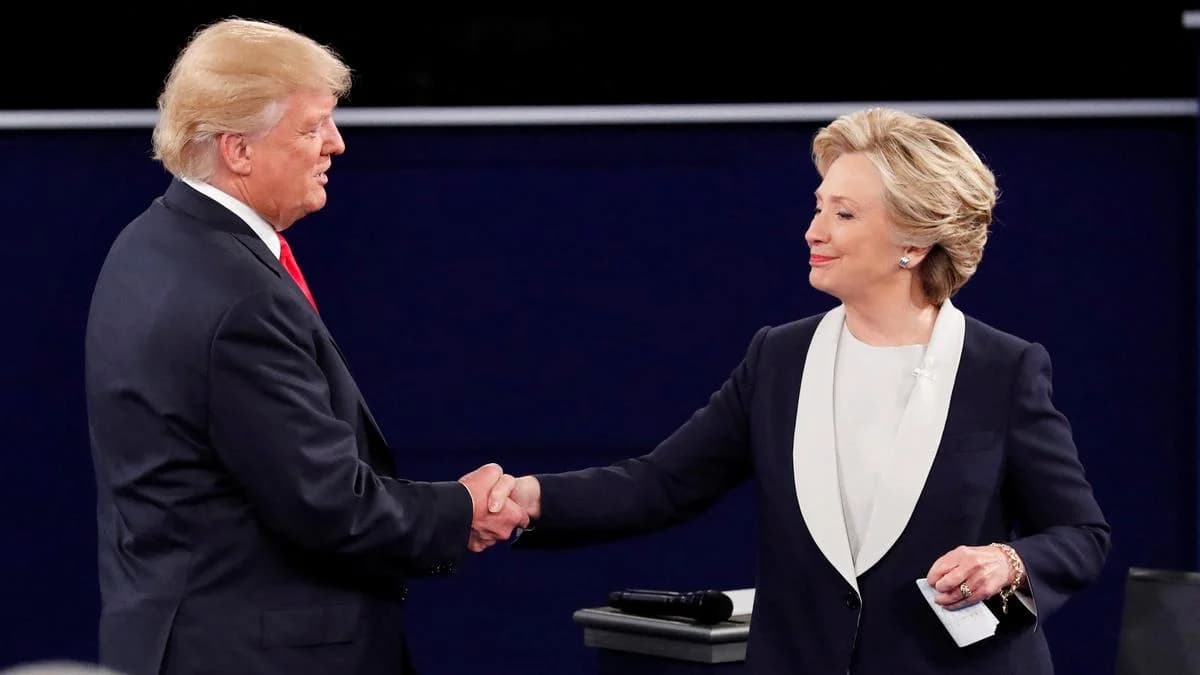
Trump Asks US SC to Revive Lawsuit Against Hillary Clinton Over 2016 Poll
The president is challenging the dismissal of his case alleging a conspiracy to link his campaign to Russia.
 Staff WriterOct 12, 2026, 9:59 AM
US President Donald Trump has asked the Supreme Court to revive his dismissed lawsuit against his Democratic rival in the 2016 presidential election, Hillary Clinton, accusing her, former FBI Director James Comey and others of conspiring to damage his campaign by linking it to Russia.
Trump filed the appeal after a federal judge dismissed the case and ordered him and one of his lawyers to pay nearly $1 million in sanctions for bringing what the judge described as a “frivolous” lawsuit. A US appeals court subsequently upheld both the dismissal and the sanctions.
Trump’s lawyers argued in their appeal that Supreme Court intervention was necessary to protect the presidency. They said the lower courts’ decisions reflected “a deeply troubling trend of federal courts using sanctions and disciplinary threats to punish the president and his lawyers for legitimate legal positions that those courts (erroneously) reject”.
In 2022, after leaving office following his defeat in the 2020 election, Trump sued Clinton, Comey, former British intelligence officer Christopher Steele, the Democratic National Committee and numerous others in a lengthy complaint filed in federal court in Florida.
Trump, who has a history of bringing lawsuits against political adversaries, alleged that Clinton and her allies had conspired before the 2016 election to discredit him through what he called a false narrative that he and his campaign had colluded with Russia. The complaint included allegations of racketeering and conspiracy to commit injurious falsehood, among other claims.
Trump defeated Clinton in the 2016 election despite losing the national popular vote. He served his first term as president from 2017 to 2021.
US officials have accused Russia of interfering in the 2016 election. An investigation led by former FBI director Robert Mueller documented extensive contacts between members of Trump’s campaign and Russian operatives who sought to influence the election in his favour. Trump has repeatedly dismissed allegations of Russian interference as a “hoax”.
Since losing to Democrat Joe Biden in 2020, Trump has continued to make false claims of widespread electoral fraud in that election. He returned to the presidency in 2025 after defeating Democrat Kamala Harris in the 2024 election and has continued to repeat those claims.
‘Political Manifesto’
US District Judge Donald Middlebrooks dismissed Trump’s lawsuit against Clinton, citing numerous deficiencies, including the excessive delay in bringing some of the claims. The judge compared the complaint to a “two-hundred-page political manifesto outlining his grievances against those that have opposed him”.
Middlebrooks subsequently ordered Trump and his lead lawyer in the case, Alina Habba, to pay nearly $1 million in legal fees and costs. He imposed the sanctions on the grounds that the lawsuit was intended “to dishonestly advance a political narrative” and criticised Trump and his lawyers for what he called a “continuing pattern of misuse of the courts”.
The judge found that the lawsuit employed abusive litigation tactics, contained “knowingly false” factual allegations and advanced “frivolous” legal theories.
The Atlanta-based 11th US Circuit Court of Appeals upheld the rulings, including the sanctions, in 2025. “Many of Trump’s and Habba’s legal arguments were indeed frivolous,” the appeals court said.
In Friday’s filing, lawyers representing Trump and Habba argued that the deadline for bringing the lawsuit should have been extended because Trump had deferred legal action during his first presidential term to fulfil his constitutional responsibilities.
“This court’s intervention is necessary to protect the presidency, and to prevent judicial disagreement from becoming a licence to punish its advocates,” the filing stated.
Mueller, who was appointed special counsel by the Justice Department, published a report in 2019 setting out the findings of his investigation. The report concluded that Russia had “interfered in the 2016 presidential election in sweeping and systematic fashion”. However, it also stated that the investigation had not established that members of Trump’s campaign conspired or co-ordinated with the Russian government in its election interference activities.
Mueller reported finding “numerous links” between Russia and the Trump campaign and said the campaign “expected it would benefit” from Moscow’s efforts to influence the election in Trump’s favour.
Trump’s then attorney general, William Barr, appointed another special counsel, John Durham, in 2019 to investigate possible misconduct by the FBI.
In a report published in 2023, Durham concluded that the FBI lacked “actual evidence” to investigate Trump’s 2016 presidential campaign and had relied too heavily on information provided by his political opponents.
Trump’s Justice Department indicted Comey last year, accusing him of making false statements and obstructing Congress following allegations that he had lied about authorising leaks to the news media. Comey was among several of Trump’s adversaries to face criminal charges during his presidency. A federal judge later dismissed the indictment, ruling that the prosecutor personally selected by Trump to bring the case had been unlawfully appointed.
Steele, who worked for an opposition research firm hired by a law firm on behalf of Clinton’s campaign and the Democratic National Committee, compiled a dossier alleging links between Trump’s campaign and Russia, alongside other controversial claims. Trump denied the allegations.
For enquiries or further information, contact ask@tlr.ae or call +971 52 644 3004. Follow The Law Reporters on WhatsApp Channels.