Education

Abu Dhabi Court Orders Father To Pay Dh197,680 In Unpaid School Fees
Woman jointly liable for Dh142,800 after cheque issued from her account could not be honoured.
The Abu Dhabi Commercial Court of First Instance has ordered a parent to pay Dh197,680 to a private school for unpaid tuition fees incurred after enrolling his children.
The court also held a woman jointly liable for Dh142,800, the value of a cheque issued from her bank account that could not be cashed. The two were further ordered to jointly pay Dh3,000 in compensation, in addition to court costs and Dh200 in legal fees.
According to court records, the parent enrolled his children at the private school but failed to settle the tuition fees. He later provided the school with a cheque covering part of the outstanding amount.
Although the cheque was drawn on the woman’s bank account, it could not be honoured because it had been prepared in a manner that prevented payment.
The published ruling referred to an earlier criminal case related to the cheque but did not disclose the penalty imposed or explain the woman’s relationship with the parent.
The school filed a civil case seeking Dh197,680 from the parent for the unpaid fees. It also asked the court to hold the woman jointly responsible for Dh142,800 and sought Dh15,000 in compensation.
To support its claim, the school submitted invoices and account statements showing the outstanding fees, a copy of the cheque, evidence that it had been returned unpaid and a copy of the related criminal judgment.
The woman argued that the case against her should be dismissed because she had no involvement in the underlying dispute. The court rejected her argument, finding that the cheque had been issued from her bank account in favour of the school.
The court also noted that she had not produced evidence showing that the amount had been paid or that she was no longer liable for it.
The parent appeared before the court but failed to successfully challenge the school’s evidence. He also did not provide proof that the outstanding tuition fees had been settled.
The court therefore ordered him to pay Dh197,680 to the school. It held the woman jointly liable with him for Dh142,800, corresponding to the value of the returned cheque.
The pair were also ordered to jointly pay Dh3,000 in compensation, together with court expenses and Dh200 in legal fees. The court rejected the school’s remaining claims.
For enquiries or further information, contact ask@tlr.ae or call +971 52 644 3004. Follow The Law Reporters on WhatsApp Channels.
ABA Repeals Law School DEI Rule as US Accreditation Decision Looms
Move comes as the US Education Department weighs the American Bar Association’s accreditation status.
The American Bar Association (ABA) on Tuesday officially eliminated its diversity, equity and inclusion (DEI) requirement for law schools, but it remains unclear whether the move will be enough to preserve the organisation’s long-held status as the federal government’s recognised accreditor of US law schools.
The ABA’s Council of the Section of Legal Education and Admissions to the Bar – the arm of the national lawyers’ organisation that oversees law schools – voted at a special meeting to remove a requirement that law schools demonstrate their commitment to diversity in recruitment, admissions and student programming.
Council Chair Melissa Hart said during the virtual meeting that the vote did not reflect a change in the organisation’s values, but was a “pragmatic” choice intended to preserve a national system of law school accreditation.
In a statement following the vote, Hart said repealing the rule was “necessary to preserve recognition by a growing number of state courts” and the US Department of Education.
The Education Department in August recommended that the ABA be stripped of its role as the recognised accreditor of law schools, a position it has held since 1952. The department concluded in a report that the law school council was not “separate and independent” from the wider ABA, as required. The report also criticised the ABA for being too slow to revise the now-defunct diversity rule.
An Education Department committee is scheduled to consider the recommendation at a meeting on September 23, with a final decision on the ABA’s accreditation status expected in the coming months. The department did not immediately respond to a request for comment on Tuesday’s vote.
The repeal ends a nearly two-year effort to revise the ABA rule following the US Supreme Court’s 2023 ruling barring colleges from considering race in admissions. The ABA subsequently began efforts to eliminate the rule altogether as Republican President Donald Trump sought to end DEI initiatives in the public and private sectors during his second term.
The ABA’s law school diversity rule was suspended in February 2025, just weeks after Trump returned to the White House.
The ABA has faced unprecedented pressure from the Trump administration over its diversity initiatives, criticism of administration officials’ attacks on judges and various lawsuits against the administration. Republican-controlled state supreme courts have also taken steps to limit the ABA’s role in accreditation.
Texas, Florida and Alabama have each moved in recent months to sideline the ABA in their lawyer licensing processes, while several other Republican-controlled states are considering similar measures.
The law school council has sought to emphasise that it operates primarily separately from the wider ABA, which a White House spokesperson in March 2025 described as a “snooty” organisation of “leftist lawyers”. Those efforts have so far done little to ease the pressure on the ABA.
For enquiries or further information, contact ask@tlr.ae or call +971 52 644 3004. Follow The Law Reporters on WhatsApp Channels.
Trump Administration Moves to Strip ABA of Law School Accreditation Role
Education Dept says ABA failed to meet accreditation standards as tensions escalate over its oversight of law schools.
The Trump administration is taking steps to strip the American Bar Association (ABA) of its authority to accredit US law schools, escalating tensions between the professional organisation and the federal government.
The US Department of Education said it had found the ABA’s accreditation standards did not comply with federal accreditation regulations and recognition standards.
“After reviewing ABA’s accreditation standards, Department staff found the accreditor out of compliance with the agency’s accreditation regulations and recognition standards,” a department spokesperson said in a statement, referring to a report made public on Friday.
The spokesperson said the department would not comment further while the process was ongoing, adding that it involved multiple stages of review, including consideration by an independent, bipartisan advisory committee in September.
ABA officials are due to meet with the Education Department next month to seek reauthorisation of the organisation’s longstanding authority to accredit law schools.
The ABA’s role in accrediting law schools makes it a key gatekeeper in determining which graduates are eligible to qualify for admission to practise law in the US.
The development comes as the ABA’s independent accreditation council moves to scale back diversity, equity and inclusion (DEI) requirements for law schools.
The council voted on Friday to formally reduce one DEI-related requirement, Standard 205, which has been on hold since shortly after President Donald Trump returned to the White House last year. The council is also scheduled to vote on September 8 on another DEI provision, Standard 206, which is expected to be repealed.
The DEI accreditation requirements made the ABA an early target of the Trump administration during the president’s second term. Attorney General Pam Bondi and other administration officials had threatened the organisation’s law school oversight role, while Elon Musk’s Department of Government Efficiency (DOGE) cut federal grant funding.
“Although it is difficult to comment on a recommendation we haven’t yet received, we look forward to the opportunity to address any misconceptions and clarify the record,” Melissa Hart, who leads the ABA’s accreditation council, said in a statement.
“As a national accrediting body for American law schools, we remain focused on ensuring quality legal education that produces competent, ethical attorneys who are eligible for licensure,” she said.
Several states have also taken steps to reduce the ABA’s influence over law school accreditation. Texas shifted accreditation authority to the state Supreme Court in January, while Florida and Ohio are among the states that have moved to weaken the ABA’s role.
The ABA is also engaged in a legal battle with the Trump administration over the president’s attacks on major US law firms. An ABA lawsuit has led to a separate dispute over an attempt to subpoena Boris Epshteyn, a personal lawyer to Trump.
The organisation has faced financial pressures in recent years, including federal funding cuts and declining membership. It is seeking to reduce spending after laying off about 300 employees last year.
For enquiries or further information, contact ask@tlr.ae or call +971 52 644 3004. Follow The Law Reporters on WhatsApp Channels.
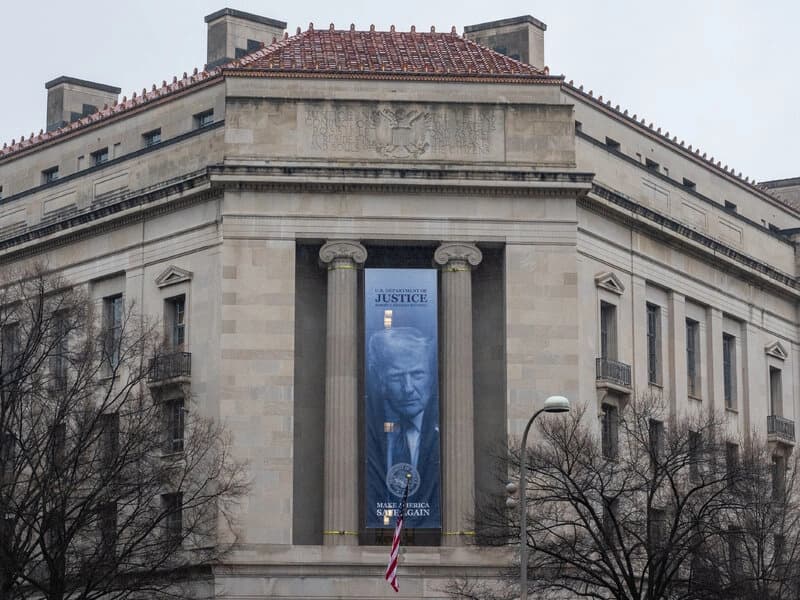
DOJ Honors Programme Loses Appeal Among Students Amid Growing Uncertainty
Concerns over job stability, political perceptions and career prospects are prompting aspiring lawyers to explore alternative career paths.
Angelica Afanador entered American University’s law school in 2024 with hopes of securing a position through the US Justice Department’s prestigious honours programme. She has since changed course.
After seeing fellow students have their honours programme offers withdrawn in early 2025 and Justice Department internships suspended, Afanador is now focusing on nonprofit roles and judicial clerkships as she approaches her final year of law school.
Afanador is among a growing number of students reconsidering the decades-old route into the Justice Department, according to four law school administrators interviewed by Bloomberg Law.
“Watching their peers lose those offers” and “seeing delays and difficulties around government shutdowns” have made the honours programme “a less attractive option,” said Daniela Kraiem, assistant dean for Career and Professional Development at American University’s Washington College of Law.
However, interest in the programme has not disappeared. Hundreds of law students are still expected to apply for the estimated 223 positions advertised this year when the 12-day application window opens on August 28.
Interest remains visible on law student discussion forums, while graduating students continue to publicly announce their acceptance of honours programme offers.
But uncertainty over job security, reputational concerns and training opportunities under the Trump administration’s Justice Department is causing some potential applicants to reconsider a career path that was once viewed as a prestigious gateway into federal public service.
Reputation and Ideology Concerns
Leah Gould, assistant dean of Public Interest at Northwestern University’s Pritzker School of Law, said she previously helped about a dozen students each year apply for the honours programme and SLIP, the Justice Department’s summer internship programme. However, the number of interested students has “dropped significantly”, she said.
Students who have spoken with Gould about their concerns have questioned how accepting a Justice Department position now could affect their future careers and professional reputation.
Some fear that joining the department could be interpreted as an endorsement of the current administration, she
said.
“I think that’s their biggest concern,” Gould said.
One Yale Law School graduate, who previously worked at the Justice Department before attending law school, said he had planned to return after graduation but decided against applying following Donald Trump’s election.
He said he was concerned about how such a move might be perceived by future employers.
Political and ideological differences have also discouraged some potential applicants, said the graduate, who requested anonymity due to concerns about possible career consequences.
“A lot of people want to go sue the federal government,” rather than work for it, he said.
The Justice Department did not respond to requests for comment.
Questions Over the Future Path
Career advisers are now weighing how to guide students considering the programme.
“That depends,” said Julie Zebrak, a former special counsel for attorney development and inclusion at the Justice Department and former head of its Criminal Division honours committee.
Zebrak said she would advise young lawyers to be cautious about beginning their careers today as Criminal Division prosecutors, citing concerns that junior attorneys could become involved in cases they may not wish to handle, particularly where individuals’ lives and liberty are at stake.
However, she said the department still has experienced career lawyers who can provide valuable training and mentorship in litigation, trial work and discovery.
“The prestige of the honours programme has shifted, but not every case at DOJ that a newly minted attorney will work on will be newsworthy or controversial,” Zebrak said.
The impact of recent changes has varied across different Justice Department offices and divisions.
“Some offices within the department have tried to shield more junior attorneys from potentially controversial cases, while others may not have that flexibility,” Gould said.
She added that students are increasingly looking towards state attorneys general offices as an alternative route into public interest law.
“That’s where a lot of the action is anyway,” she said. “They’re going to get great experience, excellent training, and remain committed to public service and the mission of the office.”
State and local attorneys general offices may also offer students opportunities that better align with their individual interests and values.
These offices are attracting attention because they may “align more closely with their particular interests and values”, said Matt Nosanchuk, dean for public interest and public service law at George Washington University Law School, who previously worked at the Justice Department.
“You need excellent public servants working in government,” Nosanchuk said, encouraging aspiring lawyers to “find a government role” where they feel comfortable, whether through the honours programme or another pathway.
For Afanador, who is entering her final year at American University, working on voting rights cases at the Justice Department was once “kind of a dream”.
Instead, she is now exploring fellowships and roles with nonprofit advocacy organisations such as the American Civil Liberties Union (ACLU), where she completed an internship this summer.
The prospect of starting her career at the Justice Department, she said, “just kind of withered away — or at least became the antithesis of what I had hoped for.”
For any enquiries or information, contact ask@tlr.ae or call us on +971 52 644 3004. Follow The Law Reporters on WhatsApp Channels.
Dubai Court Cancels Infringing Trademark in Major Ruling Protecting Global Education Brand in UAE
Judgment reinforces that bad-faith registrations by former licensees cannot override the rights of original brand owners.
A Dubai court has ordered the cancellation of a trademark registered by a former UAE licensee of a globally recognised educational institution, ruling that the registration was made in bad faith and amounted to unfair competition and trademark infringement.
The judgment, issued by the Dubai Court of Appeal, also imposed a permanent injunction barring the former licensee from using the institution’s name, logo or any similar intellectual property, in a decision legal experts say strengthens protections for internationally recognised brands operating in the UAE.
The dispute centred on a global educational society founded in 1949, which operates more than 230 schools worldwide. Court documents showed that the institution had entered into a licensing arrangement in 1997 with a local UAE entity, allowing it to use the organisation’s name and logo to operate schools in the country. That licence expired in March 2017.
However, during the course of the licensing relationship, the local entity registered a nearly identical trademark in its own name in 2004, reproducing key elements of the institution’s brand identity, including its distinctive shield and torch motifs.
After the licence ended, the former licensee continued using the branding and defended its actions on the basis of the locally registered trademark.
The case turned on whether a licensee could claim ownership over a brand it had only been authorised to use under contract.
Lawyers for the claimant argued that the registration had been secured in bad faith and was intended to appropriate the goodwill and reputation of the original brand owner. They also presented evidence showing that the mark had acquired substantial recognition internationally and within the UAE’s education sector long before the disputed registration.
A court-appointed expert committee reviewed the competing trademarks and found that the defendant’s logo was a direct imitation of the claimant’s brand, noting substantial similarities in colour, typography and graphic elements that could mislead the public.
The Dubai Court of Appeal rejected the defendants’ ownership claims, ruling that the educational institution’s rights in the trademark were original, longstanding and continuous since 1949. It further held that the former licensee’s conduct amounted to unfair competition and infringement of a well-known mark under UAE law.
The court ordered the cancellation of the disputed trademark and all related registrations and permanently prohibited further use of the branding.
UAE-based legal consultancy Kaden Boriss, which led the litigation, said the case had involved proceedings across multiple jurisdictions over three years, beginning in 2023 with expert-related proceedings before the Sharjah Federal Court.
Legal specialists said the ruling offers important guidance for multinational companies and brand owners in the UAE, reaffirming that access to a trademark through a licensing arrangement does not create ownership rights and that bad-faith registrations will not be allowed to undermine legitimate intellectual property claims.
For any enquiries or information, contact ask@tlr.ae or call us on +971 52 644 3004. Follow The Law Reporters on WhatsApp Channels.
President Trump’s Power Tested as US Supreme Court Nears Term-End Climax
Final rulings on immigration, executive power and civil rights will test Trump’s expansive use of presidential authority.
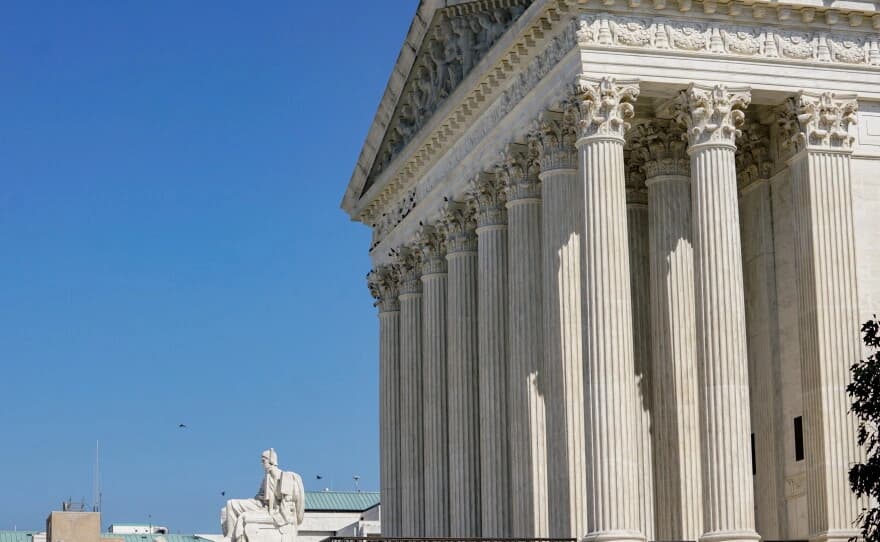
The US Supreme Court is approaching the final stretch of its current term, with a series of major rulings expected to determine the fate of several high-profile challenges to Donald Trump’s efforts to expand presidential authority.
The court issued five rulings on Tuesday, with additional decisions expected later this week. Its annual term typically runs from early October through late June or early July, although the exact end date has not yet been announced. The most consequential rulings are often reserved for the closing days of the term.
This year, however, stands out for the number of major unresolved cases centred on presidential power and Trump’s assertive use of executive authority across domestic and foreign policy.
The pending cases include challenges linked to his attempt to restrict birthright citizenship, remove Federal Reserve Governor Lisa Cook, dismiss members of independent federal agencies, and end humanitarian protections that currently shield hundreds of thousands of Syrian and Haitian immigrants from deportation.
Legal experts note that while it is normal for landmark decisions to arrive at the end of the term, the volume of high-stakes cases this year is unusual.
“It’s totally normal for the most important cases of the term to come out in the last few days. What is unusual is that there are so many blockbuster cases,” said University of Michigan constitutional law professor Sam Erman.
He added that Trump’s use of executive power has triggered broad legal scrutiny. “We’ve seen a lot of novel uses of presidential power since Trump took office… and that’s produced a very active Supreme Court term, and a big bang at the end.”
Trump, in his second term, has aggressively pursued an expansion of presidential authority in both domestic governance and foreign affairs, prompting hundreds of legal challenges.
The Supreme Court’s 6–3 conservative majority, which includes three justices appointed during Trump’s first term, has often shown support for his administration in emergency requests that allow policies to take effect while litigation continues.
Over time, the court’s conservative wing has increasingly embraced the “unitary executive” theory, which places broad control of the executive branch in the hands of the president.
However, observers say limits remain. Of the major cases heard this term, analysts suggest Trump may have stronger prospects in disputes involving the removal of federal officials than in cases such as birthright citizenship or challenges involving Lisa Cook.
“They have a view of a strong executive, but it’s not an unlimited executive,” Erman said. “So when he is essentially advancing their project, he’s pretty likely to win.”
The court is widely seen as unlikely to uphold Trump’s attempt to restrict birthright citizenship through executive order, a move that would challenge long-standing interpretations of the 14th Amendment guaranteeing citizenship to those born in the United States.
Earlier this year, the court also issued a significant setback to Trump by striking down broad global tariffs imposed under emergency powers legislation. The ruling drew strong criticism from Trump, who publicly attacked the justices involved.
Beyond Trump-related matters, several major cases remain pending on issues including voting rights, elections, firearms regulation, and transgender rights.
In one case, the court is reviewing a Mississippi law that allows a five-day grace period for mail-in ballots received after Election Day, a decision that could influence voting rules nationwide.
In another, it is considering a Republican-backed challenge involving limits on coordinated political spending between parties and candidates, a case with implications for campaign finance rules.
The court also recently narrowed a key provision of the Voting Rights Act, prompting new redistricting efforts in Southern states that could reshape congressional representation ahead of the next elections.
Separately, justices are weighing challenges to state laws in West Virginia and Idaho that ban transgender athletes from competing in girls’ sports teams, amid broader national debates over transgender rights.
On gun rights, the court is set to rule on a Hawaii law restricting the carrying of handguns on private property open to the public without explicit permission. It also recently rejected a federal position that raised questions about firearm ownership rights for marijuana users.
As the term nears its conclusion, the court’s final decisions are expected to have far-reaching consequences for presidential power, civil rights, and the balance of authority within the US government.
For any enquiries or information, contact ask@tlr.ae or call us on +971 52 644 3004. Follow The Law Reporters on WhatsApp Channels.
Arab Teacher Faces Trial in Sharjah Over Alleged Verbal Insult to Student
Teacher denies using offensive language, tells court he was the victim of abuse and has filed a separate case.
A teacher has gone on trial before the Sharjah Misdemeanour Court after being accused of verbally insulting a student, in a case that has drawn attention to disputes between educators and pupils within school premises.
The case was brought before the court following a complaint filed against the Arab teacher, alleging that he insulted the student by telling him, “You’re not well-mannered.”
During the hearing, the court examined the details of the complaint and heard the testimony of the defendant, who was formally confronted with the charge of insulting the student.
The teacher denied the allegation in full, maintaining that he did not direct any offensive or insulting words towards the pupil as stated in the complaint.
In his defence, the teacher told the court that the events had unfolded differently from what was presented in the case file. He claimed that he was, in fact, the one who was later subjected to verbal abuse by the student following the incident.
According to his testimony, the alleged altercation escalated after the classroom exchange, prompting him to take legal action against the student by filing a separate complaint over the incident.
The teacher further argued that the complaint lodged against him was baseless and malicious, insisting that it was filed in retaliation after he initiated legal proceedings.
He requested additional time from the court to prepare and submit a detailed defence memorandum outlining his legal position, along with any supporting evidence and documents.
After reviewing the case file and hearing submissions from both parties, the Sharjah Misdemeanour Court decided to reserve its judgment for a later session.
The outcome of the case is expected to clarify the circumstances surrounding the dispute and determine whether the teacher’s remarks, if proven, amounted to criminal insult under UAE law.
For any enquiries or information, contact ask@tlr.ae or call us on +971 52 644 3004. Follow The Law Reporters on WhatsApp Channels.
Law Graduates ‘Stacking’ Clerkships, Limiting Opportunities for Peers: Study
Research suggests the growing practice of taking multiple clerkships favours well-connected graduates.
Judicial clerkship “stacking” — where law graduates complete two, three or even four coveted clerkships with sitting judges before entering legal practice — is increasingly reducing the number of clerkships available to other aspiring lawyers, according to a new study by three law professors.
The trend is particularly disadvantaging graduates of non-elite law schools who lack access to insider hiring information, first-generation lawyers, and those who cannot afford to postpone higher-paid employment for several years, the researchers found.
“The federal judicial clerkship has evolved from a brief detour into a mini-career,” the study, titled Stacking the Deck, said.
Judicial clerkships are highly sought-after one-year positions in which graduates work under the mentorship of a judge. They significantly enhance a young lawyer’s credentials, opening doors to prestigious roles in law firms, academia and government.
The pay is relatively modest, with most federal clerks earning about $65,000. However, many law firms offer former clerks bonuses of $100,000 or more, rising to as much as $500,000 for clerks of the US Supreme Court.
Despite the prospect of such bonuses, lower-income graduates may be unable to afford delaying better-paid legal jobs while undertaking multiple clerkships, the researchers concluded.
Clerkship stacking originated at the Supreme Court and spread to federal district and appellate courts during the 1990s before expanding rapidly over the past 15 years, according to Vanderbilt law professor Tracey George, who interviewed more than 130 judges with co-authors Mitu Gulati of the University of Virginia School of Law and Albert Yoon of the University of Toronto.
Their earlier research found that while some Supreme Court clerks in the 1980s were hired directly from law school, today’s Supreme Court clerks arrive with more than two prior clerkships on average.
Comparable data are not available for federal district and appellate court clerks, George said. However, judges reported that stacking has “increased substantially” over the past decade, according to the study.
Information gaps among both judges and students, along with the ease of submitting online applications to multiple judges, are fuelling the trend, the researchers found. Judges are inundated with applications, and a prior clerkship serves as a strong signal of a candidate’s suitability.
Students often know little about the judges to whom they apply. However, they have more information than ever before about “feeder judges” — those with the strongest record of sending clerks to the Supreme Court — and may target those positions accordingly.
Faced with large numbers of highly qualified candidates, judges frequently make offers several years in advance. Applicants often accept because they fear not receiving another offer, the study found. Many then seek to “backfill” with more immediate clerkships, further extending their clerkship careers.
“The credential that was once available to a first-generation lawyer who caught a judge’s attention is increasingly reserved for those who arrive at law school already knowing how the game is played,” the study said.
For any enquiries or information, contact ask@tlr.ae or call us on +971 52 644 3004. Follow The Law Reporters on WhatsApp Channels.
Early Big Law Hiring Sparks Student Backlash Over Pressure and Disruption
Survey finds accelerated recruitment is undermining first-year studies, heightening stress, and widening access gaps in legal careers.
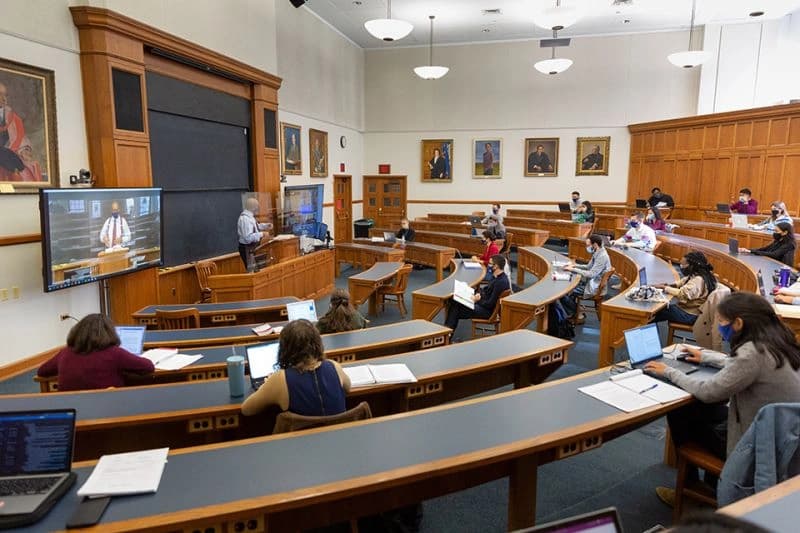
Large US law firms are rushing to hire future lawyers for highly paid positions almost as soon as students set foot on law school campus, sparking a backlash among many students.
A little over half of first-year law students — 56 per cent — said that accelerated large firm recruitment timelines for summer associate positions had a negative impact on their first year of study, according to a new survey of more than 2,000 students conducted last autumn by the Law School Admission Council and the National Association for Law Placement.
The verdict was even stronger among students aspiring to work at large firms, with 67 per cent of first-years reporting a negative impact on their law school experience due to early recruitment. Just 4 per cent reported a positive impact.
Students said keeping up with the first-year recruitment race affected their ability to prioritise academic work and focus on career planning, and made it harder to balance competing priorities, according to the survey released on Thursday.
“Balancing networking and applying to positions with 1L coursework is very difficult,” one student wrote. “Someone stop them from doing this again because it sucks, and nobody can actually focus on learning.”
Summer associate positions, which typically occur after the second year of law school, are the primary pipeline to lucrative full-time associate jobs at big firms after graduation. Summer associates earn the same monthly pay as first-year associates — $225,000 annually at most large US firms, with some paying even more.
Hiring for these positions, which historically took place prior to or early in law students’ second year, has crept earlier over the past decade as firms compete to secure students they perceive as top prospects. The process accelerated further after the pandemic, when online interviews allowed firms to bypass traditional campus programmes.
The survey is the first to examine how accelerated hiring is affecting law students and how they are receiving information about the rapidly changing recruitment process, according to the researchers. Even students with no aspiration to work at large law firms said the sped-up timeline had added stress and pressure on campus.
“This tells us that the accelerated recruitment timeline is dramatically reshaping the entire law school experience in ways that are detrimental to all students in their academic development, their professional identity formation, and their well-being,” said NALP executive director Nikia Gray.
The survey also suggested that uneven awareness of the early timeline could further concentrate hiring among already privileged and well-connected students who understand the process and prepare in advance.
Awareness of the accelerated hiring timeline was higher among male students, those attending the most selective quarter of law schools, and students with college-educated parents. It was lowest among first-generation graduates, students at the least selective quarter of institutions, and Pell Grant recipients, the report found.
For any enquiries or information, contact ask@tlr.ae or call us on +971 52 644 3004. Follow The Law Reporters on WhatsApp Channels.

DJI Launches 15th Cohort of Legal Training Programme for Public Prosecution Members
22 Emirati trainees to undergo six-month accredited course to strengthen judicial skills and support Dubai’s justice system.
The Dubai Judicial Institute (DJI) has launched the 15th cohort of its accredited flagship programme, ‘Judicial and Legal Studies for Public Prosecution Members’, as part of its ongoing efforts to develop national legal talent and enhance the readiness of judicial authority members in line with international professional standards.
The launch ceremony was attended by senior judicial officials, including His Excellency Counsellor Essam Issa Al Humaidan, Attorney General of Dubai and Chairman of the Board of the Dubai Judicial Institute, and Her Excellency Judge Dr. Ebtessam Ali Al Badwawi, Director General of DJI, along with leaders from the Public Prosecution.
The latest cohort includes 22 Emirati trainees nominated to join the Public Prosecution. The programme is designed to provide a comprehensive blend of legal education, judicial knowledge and practical training, equipping participants with the competencies required for effective judicial and prosecutorial work.
Officials said the initiative reflects Dubai’s commitment to strengthening institutional capacity and ensuring that judicial personnel are prepared to meet evolving challenges in criminal investigations and court procedures.
Speaking at the launch, H.E. Counsellor Essam Issa Al Humaidan stressed the importance of accredited training programmes in broadening legal knowledge, enhancing specialist expertise, and building confidence among Public Prosecution members. He said such initiatives align with the vision of Dubai’s leadership to empower national talent and reinforce the emirate’s position as a global model for judicial excellence and rule of law.
H.E. Judge Dr. Ebtessam Ali Al Badwawi said the launch of the 15th cohort underscores DJI’s continued focus on advanced qualification programmes that support the development of a future-ready judicial system. She added that the programme is central to preparing national talent with strong legal understanding and practical capability.
She further described the training of Public Prosecution members as a strategic investment in the future of justice, noting that DJI continues to collaborate with judicial experts to ensure a high-quality learning experience that strengthens national competencies.
Running over six months, the programme comprises 450 training hours, equivalent to 30 accredited credit hours under the National Qualifications Framework. It integrates theoretical instruction with practical application across specialised criminal disciplines.
Coinciding with the launch, DJI also honoured trainers from the 14th cohort under the theme ‘Pioneers of Training Excellence: A Lasting Impact’, recognising their contribution to developing Public Prosecution members and transferring judicial expertise to future cohorts.
Through its accredited training initiatives, DJI said it continues to reinforce its role as a leading judicial training institution, supporting the development of highly qualified legal professionals and strengthening Dubai’s position as a global benchmark for judicial excellence.
For any enquiries or information, contact ask@tlr.ae or call us on +971 52 644 3004. Follow The Law Reporters on WhatsApp Channels.