Trade

Trademark Assignment versus Trademark Licensing in the UAE: What Businesses Need to Understand
The key legal and practical differences between transferring trademark ownership and granting rights to use a brand.
An assignment transfers ownership of a trademark to another party, while a licence allows another party to use the trademark without any change in ownership. Under UAE law, a trademark owner may pursue either route, but the two are governed by different rules, documentation requirements and consequences if a dispute arises later. Getting the distinction wrong, whether in a corporate transaction, franchising arrangement or straightforward brand licensing deal, can leave a party without the rights it believed it had secured.
The Legal Framework
Trademarks in the UAE are governed by Federal Decree-Law No. 36 of 2021 on Trademarks. The Executive Regulations issued under Cabinet Decision No. 57 of 2022 provide the procedural framework for registration, assignment, licensing and other dealings with trademark rights. Both assignments and licences are recognised under this framework, and both may be reflected in the Trademark Register maintained by the Ministry of Economy.
What an Assignment Does
An assignment is, in substance, a transfer of ownership. The owner conveys the trademark, together with the rights attached to it, to another party, either for consideration or without it, if the parties so agree. The law also permits a mark to be pledged, transferred together with a business and its assets, or passed on through inheritance or gift.
Once an assignment is completed and recorded, the new owner assumes the rights previously held by the original owner, including the right to use the mark, license it to others and take action against infringers.
What a Licence Does
A licence is a different type of arrangement. The owner retains the trademark and may continue using it while permitting one or more other persons or companies to use it under agreed conditions. Ownership does not change. What passes to the licensee is a contractual right of use, limited by the scope agreed between the parties, whether in relation to territory, product category or duration.
A licence may be exclusive, meaning that only the licensee may use the mark within the agreed scope, or non-exclusive, allowing the owner to license the same mark to others.
Recording with the Ministry of Economy
This is one of the most significant distinctions between the two arrangements. An assignment must be recorded in the Trademark Register for it to have effect against third parties. If an assignment is signed but not recorded, it may still bind the parties to the transaction, but the Register remains the formal record of ownership for third-party purposes.
An unrecorded assignment therefore leaves the assignee in a weaker position, particularly where enforcement or a subsequent transfer of the mark is involved.
Licences are treated differently. The law requires a licence agreement to be in writing and duly notarised, but recording it in the Register is not a condition of its validity. Even so, parties may choose to record licences because this provides a clearer evidentiary record and can be relevant where a licensee needs to demonstrate its rights to third parties or customs authorities.
Requirements for a Valid Assignment
An assignment instrument must identify the registered trademark precisely, including its registration number and class, and confirm that the parties have the requisite authority to enter into the transaction. The Ministry's recording process typically requires a notarised and legalised power of attorney, evidence of the underlying registration, the executed assignment and payment of the prescribed fee. The application may be filed in person or through the Ministry's e-services portal.
Once the process is completed, an updated certificate is issued reflecting the new proprietor. Until the Register is updated, the transfer will not have effect against third parties.
Requirements for a Valid Licence
A licence agreement requires the same drafting care as any commercial contract, particularly because the law imposes a default restriction: unless the owner agrees otherwise, the licensee may not assign the licence or grant sub-licences to third parties.
A properly drafted licence should address the scope of permitted use, territory, duration, goods or services covered, quality-control obligations and the owner's right to inspect and supervise use of the mark. The duration may not exceed the remaining protection period of the underlying registration.
Termination provisions should also be clearly defined. Ambiguity over termination, rights following termination and continuing obligations often becomes apparent only after the commercial relationship has broken down.
Comparing the Two Arrangements
The practical differences follow from the nature of each arrangement. An assignment transfers ownership, while a licence grants a limited right to use the trademark without transferring ownership.
An assignee, as the new owner, may generally assign or license the mark, subject to applicable legal and contractual restrictions. A licensee's ability to do either is restricted unless the licence expressly provides otherwise.
Ownership also gives the proprietor a direct basis to pursue infringement proceedings, while a licensee's position depends largely on the terms of the licence and the authority granted by the trademark owner.
Standing to Bring Infringement Proceedings
Once an assignment is recorded, the new owner's standing to bring infringement proceedings is generally clear because the Trademark Register reflects it as the registered proprietor.
A licensee's position is more dependent on the circumstances and the specific terms of the licence, including whether the owner has authorised the licensee to act, whether the licence is exclusive and how any damages recovered are to be allocated between the parties.
Parties negotiating a licence are therefore well advised to address enforcement rights expressly in the agreement, rather than leaving the issue unresolved until an infringement occurs.
Common Issues in Practice
Several problems recur in practice. Assignments may be executed between the parties but never recorded, leaving the Register out of step with the actual commercial position. Assignment instruments may also fail to identify the registered mark with sufficient precision or omit powers of attorney required by the Ministry.
Licensing arrangements, meanwhile, are sometimes concluded without adequate quality-control provisions. This can weaken the owner's position if the reputation or distinctiveness of the mark is later affected by the licensee's use.
Ambiguous territorial or product scope is another frequent source of dispute, as is an unclear chain of ownership where earlier transfers were not properly recorded.
Due Diligence Considerations
Where a trademark forms part of a larger transaction, such as a share sale, merger or corporate restructuring, verifying its current position on the Trademark Register is an essential step.
This should include confirming the recorded owner, reviewing any recorded assignments or licences affecting the mark, checking for pledges or other encumbrances, tracing the chain of title back to the original registration and confirming whether any cancellation, opposition or infringement proceedings are pending.
A mark that appears unencumbered on the surface may have an unrecorded history that becomes apparent only through closer examination of the Register and the underlying file.
Conclusion
An assignment and a licence both provide recognised means of dealing with a trademark under UAE law, but they are not variations of the same transaction. One transfers ownership; the other grants a defined right of use while ownership remains with the trademark proprietor.
The formalities attached to each, from the recording of assignments to the notarisation of licences, are important to preserving the accuracy of the Trademark Register and protecting the rights of the parties.
Businesses structuring either type of transaction should therefore treat these formalities as an integral part of the deal. The commercial intention behind an arrangement is important, but the legal rights ultimately available to the parties will depend on how the transaction is documented, completed and, where required, recorded.
For enquiries or further information, contact ask@tlr.ae or call +971 52 644 3004. Follow The Law Reporters on WhatsApp Channels.

Trump Tariffs: US Refunds $100 Billion After Supreme Court Strikes Down Duties
Customs filing reveals more than half of the invalidated tariff collections have been returned, mainly to corporate importers.
The US administration has refunded around $100 billion in tariffs collected under President Donald Trump’s trade measures after the Supreme Court struck down the duties, according to a court filing.
The filing submitted by US Customs officials before the United States Court of International Trade stated that refunds, including duties and interest, had been completed through the Consolidated Administration and Processing of Entries Refund component. The refunds were certified by the agency and forwarded to the United States Department of the Treasury for disbursement.
The amount, recorded at the end of July, represents more than half of the approximately $166 billion collected through tariffs that were later invalidated by the Supreme Court of the United States.
Tariffs have been a key component of Trump’s foreign and trade policy agenda, despite criticism from economists, businesses and legal experts, as well as challenges in the courts.
However, the refund process has drawn criticism from some lawmakers who argue that the money is being returned to companies that imported the goods rather than directly benefiting American consumers.
“Trump is sending the ‘refunds’ to the companies, not working people. Every single cent of these refunds should go back to American consumers,” Democratic Congressman Greg Casar said.
The Supreme Court ruled on February 20 that most of Trump’s broad tariff measures were unlawful, holding that the International Emergency Economic Powers Act (IEEPA) did not give the President authority to impose sweeping tariffs on imports from trading partners without congressional approval.
Following the ruling, Trump intensified his trade measures, criticising the decision and introducing new temporary 10 per cent tariffs under a different legal authority. The administration also later announced additional global tariffs under Section 301 of the Trade Act of 1974, a provision designed to address unfair or discriminatory trade practices by foreign governments.
The latest court filing provides the first detailed update on the scale of refunds issued after the Supreme Court decision, while questions remain over the final distribution of the returned funds and the future direction of US tariff policy.
For any enquiries or information, contact ask@tlr.ae or call us on +971 52 644 3004. Follow The Law Reporters on WhatsApp Channels.

Amazon.com Faces Consumer Lawsuit Over Seafood Sustainability Claims
Customers accuse the retail giant of misleading shoppers with labels such as ‘dolphin safe’ on seafood products.
Amazon.com has been sued by consumers who accuse the retail giant of misrepresenting the environmental benefits of seafood products sold on its platform, alleging that the company engaged in greenwashing.
In a proposed class action filed in a Seattle federal court, consumers claimed that labels and marketing phrases including “dolphin safe”, “responsibly sourced”, “sustainable”, “wild caught” and “MSC Certified Sustainable Seafood” misled buyers into believing Amazon’s seafood sourcing practices caused minimal harm to oceans and the environment.
The plaintiffs argued that these claims were unsubstantiated or materially false, alleging that many fishing vessels are not publicly tracked and that some operators conceal their locations by disabling electronic tracking devices known as transponders. They also claimed that at least one-fifth of imported wild-caught seafood is not responsibly or sustainably sourced.
“Amazon nevertheless markets the greenwashed seafood products using broad sustainability messaging without providing disclosures necessary to prevent consumer deception,” the complaint said.
Amazon, headquartered in Seattle, is the second-largest grocery retailer in the US, with gross sales exceeding $150 billion in 2025, according to Chief Executive Andy Jassy, who made the comments during an April 29 conference call with analysts.
Amazon and lawyers representing the company in other consumer class-action lawsuits did not immediately respond to requests for comment.
The company has faced several lawsuits over products sold through its platform, including items offered by third-party sellers.
Seafood Brands Targeted
The lawsuit covers dozens of tuna, salmon and other seafood products sold under brands including Bumble Bee, Chicken of the Sea, StarKist and Amazon’s own 365 by Whole Foods Market range.
The plaintiffs, led by Madeleine Rogow of Los Angeles and Adam Sorkin of Chicago, said they would not have purchased the seafood products, or would have paid less for them, if Amazon had disclosed what they described as the products’ “true sustainable nature”.
The lawsuit seeks compensatory damages, punitive damages and restitution for consumers across the US, alleging violations of Washington state consumer protection laws.
The parent companies of Bumble Bee, Chicken of the Sea and StarKist — Taiwan-based FCF, Thailand’s Thai Union Group and South Korea’s Dongwon Industries — are not named as defendants in the lawsuit.
For any enquiries or information, contact ask@tlr.ae or call us on +971 52 644 3004. Follow The Law Reporters on WhatsApp Channels.

Johnson & Johnson to Pay $5.5B to Settle Talc-Related Cancer Claims
Proposed settlement aims to bring an end to years of lawsuits alleging J&J’s talc-based products caused ovarian cancer.
Johnson & Johnson has agreed to commit $5.5 billion to resolve years of litigation over claims that its talc-based products caused ovarian cancer.
The healthcare giant said the proposed settlement would provide “an efficient conclusion” to the lawsuits. The agreement requires participation from lead plaintiff law firms handling ovarian talc litigation in state and federal courts, representing at least 95% of claims, according to J&J.
If approved, the settlement could bring closure to a legal battle that has challenged the company for more than 15 years. Plaintiffs allege that J&J’s iconic baby powder and other talc-based products were contaminated with asbestos, a substance linked to cancer. The company has consistently denied the allegations, maintaining that its products are safe and that its baby powder never contained asbestos.
J&J discontinued sales of talc-based baby powder in the US in 2020 and globally in 2023, replacing it with a cornstarch-based version.
The company had previously attempted to resolve the litigation through bankruptcy proceedings, a move criticised by opponents who argued that J&J, one of the world’s most profitable companies, was attempting to use bankruptcy protections to limit liability.
J&J has faced around 76,000 lawsuits related to talc products, with analysts warning last year that the number could exceed 90,000. The company said the settlement would allow it to move beyond the litigation and focus on developing medicines and medical devices.
“It provides finality to a saga,” Mizuho healthcare analyst Jared Holz said, commenting on the proposed resolution.
In June, J&J disclosed that it had set aside $11 billion to address legal matters linked to the talc claims. Analysts estimated that resolving the litigation could cost the company between $10 billion and $12 billion if the number of claims reached about 93,000.
The company also faced a major setback last October when a California jury ordered J&J to pay $966 million to the family of a woman who alleged that decades of using the company’s baby powder contributed to her cancer. It was the largest single-user verdict in the long-running litigation.
“While we are confident the company would have ultimately prevailed with further litigation, as it has in the vast majority of cases tried to date, this resolution allows the company to put this matter behind it and remain focused on its mission to develop medicines and devices that save lives,” J&J Vice President of Litigation Erik Haas said in a statement published on the company’s website.
For any enquiries or information, contact ask@tlr.ae or call us on +971 52 644 3004. Follow The Law Reporters on WhatsApp Channels.

Appellate Heavyweights Rally Behind Tesla in $243 Million Autopilot Crash Appeal
Former US solicitor generals, business groups and Republican-led states challenge Florida verdict, warning of wider impact on tech innovation
A high-profile group of appellate lawyers, major business organisations and Republican state attorneys general has lined up behind Tesla as the electric vehicle maker seeks to overturn a $243 million verdict linked to a fatal 2019 crash involving a Model S equipped with Autopilot technology.
Tesla’s appeal before the Atlanta-based 11th US Circuit Court of Appeals is being led by former US Solicitor General Paul Clement of Clement & Murphy and Theodore Boutrous of Gibson Dunn. The plaintiffs are represented by Elizabeth Prelogar of Cooley, a former Biden administration US solicitor general, along with other lawyers.
The lawsuit alleged that Tesla had defectively designed its Autopilot system and misled customers about its capabilities. Tesla has denied the allegations, arguing that the driver’s actions were responsible for the crash.
A Florida federal jury in August found Tesla 33% responsible for the accident, while assigning 67% responsibility to the driver. The driver, who was not named as a defendant, will not be required to pay his share of the damages. The verdict included around $42.6 million in compensatory damages against Tesla and $200 million in punitive damages.
The decision has drawn concern from business groups in Florida and beyond. In amicus briefs filed with the 11th Circuit, Florida, the US Chamber of Commerce and other organisations urged the court to overturn the ruling. The Chamber is represented by Gregory Garre of Latham & Watkins, a former Republican-appointed US solicitor general.
The Republican-led states and business advocates argue that Florida law allows punitive damages only where there is evidence of intentional misconduct — a standard they claim was not met in Tesla’s case. They warned that allowing the verdict to stand could expose companies developing emerging technologies to excessive liability, increase legal uncertainty and discourage innovation.
The Chamber said that upholding the ruling “would dramatically expand Florida product-liability law” by creating new obligations for manufacturers introducing products with innovative features.
Tesla and Prelogar did not immediately respond to requests for comment.
For any enquiries or information, contact ask@tlr.ae or call us on +971 52 644 3004. Follow The Law Reporters on WhatsApp Channels.
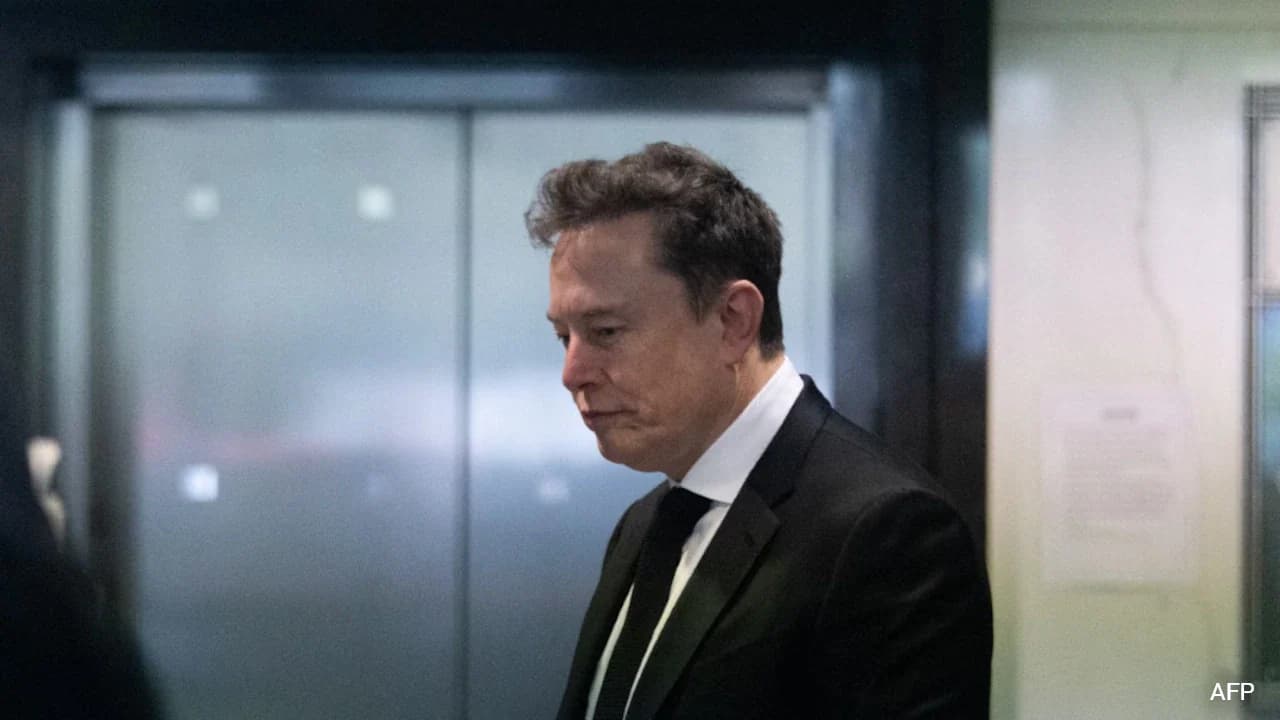
Judge Rejects Musk’s Bid to Overturn Twitter Investor Fraud Verdict
Court upholds jury’s finding that Musk misled investors during the $44 billion Twitter takeover battle.
A US federal judge has rejected Elon Musk’s bid to overturn a jury verdict that found the billionaire defrauded Twitter investors by attempting to drive down the social media company’s share price after agreeing to its $44 billion takeover.
US District Judge Charles Breyer in San Francisco on Monday also denied Musk’s request to decertify the class of investors and granted the investors’ motion for prejudgment interest. However, the judge ruled that Musk was not liable for one of the tweets challenged in the lawsuit.
“Even if the speaker has a change of heart or a momentary regret about a transaction, such qualms do not justify lying to the investing public,” Judge Breyer wrote.
Investors alleged that Musk falsely claimed Twitter was overrun by fake and spam accounts, commonly known as bots, in an effort to renegotiate the acquisition price or abandon the deal altogether. They argued that his statements depressed Twitter’s share price, causing losses to shareholders who sold their holdings.
Following the jury’s March 20 verdict, the investors’ legal team estimated that Musk could face damages of up to $2.6 billion.
Musk eventually completed the acquisition of Twitter in October 2022, later rebranding the platform as X. It now operates under his aerospace company, SpaceX.
Lawyers representing Musk did not immediately respond to requests for comment.
Mark Molumphy, counsel for the investors, described the ruling as “a very good day” for public market investors, saying the jury had rejected Musk’s attempt to “game that system”.
Musk has frequently opted to contest shareholder lawsuits rather than settle them. He is also facing a separate lawsuit in Manhattan alleging that he defrauded Twitter investors by delaying disclosure of his initial stake in the company, allowing him to purchase shares at artificially low prices.
Substantial Evidence of Falsity
The jury found Musk liable over tweets posted on May 13 and May 17, 2022, less than a month after he agreed to buy Twitter.
In the first tweet, Musk said the acquisition was “temporarily on hold” pending details on whether bots accounted for fewer than 5 per cent of Twitter’s users. Investors argued that the post triggered an 18 per cent fall in the company’s share price over the following two trading days.
The second tweet claimed that the proportion of bots could exceed 20 per cent and that the acquisition “cannot move forward” until Twitter’s chief executive proved the figure was below 5 per cent.
Judge Breyer found “substantial evidence of falsity” in the May 13 tweet, concluding that “a jury could determine that Musk had a motive to get out of the existing deal and used bots as a pretext to do so”.
However, he ruled that Musk was not liable for the May 17 tweet, citing the lack of any significant market reaction to that post.
Judge Rejects '420' Juror Bias Claim
Judge Breyer also dismissed Musk’s argument that jurors had mocked him and sought to “send a message” by highlighting the figure “$4.20” in bright blue on the verdict form.
The number 420 is widely associated with cannabis culture, and Musk has repeatedly referenced it in interviews, social media posts and business ventures.
Musk’s takeover offer valued Twitter at $54.20 per share. In 2018, his tweet claiming he had “funding secured” to take Tesla private at $420 per share prompted a civil fraud lawsuit by the US Securities and Exchange Commission, which he later settled.
The judge said it “defies common sense” to conclude that the jury was biased against Musk, noting that jurors deliberated for nearly four days and ruled in his favour on several claims. He also found no evidence that the reference to 420 reflected prejudice against Musk.
“To the contrary, 420 is a reference to cannabis/marijuana,” Judge Breyer wrote. “One need only walk around San Francisco on April 20 to observe how prevalent the celebration can be.”
For any enquiries or information, contact ask@tlr.ae or call us on +971 52 644 3004. Follow The Law Reporters on WhatsApp Channels.

TikTok Settles Teen Mental Health Lawsuit Ahead of Social Media Trial
Part of a wave of lawsuits alleging social media platforms are designed to be addictive and harmful to children.
TikTok has agreed to settle a lawsuit brought by a teenager who alleged that prolonged use of the platform harmed his mental health, according to a statement from the plaintiff’s side.
The settlement has been reached in principle, but final details have not yet been disclosed. Representatives for TikTok did not immediately respond to requests for comment.
The case involving the teenager, identified by the initials R.K.C., had been scheduled to become the second major trial in California state court examining claims that social media platforms are engineered to be addictive to children and contribute to a youth mental health crisis.
Court filings state that R.K.C. began using social media at around the age of eight. Over time, he allegedly developed compulsive usage patterns, resulting in sleep disruption, depression and anxiety.
His lawsuit initially named four defendants — Google’s YouTube, Meta’s Instagram, Snap Inc.’s Snapchat, and ByteDance’s TikTok.
YouTube previously reached a settlement in June. The remaining defendants, Meta and Snapchat, are still scheduled to face trial beginning July 27.
The litigation forms part of a broader and fast-expanding wave of legal action targeting social media companies over allegations that their platforms are designed to maximise engagement at the expense of children’s mental health.
More than 3,300 lawsuits involving similar addiction-related claims are currently pending in California state courts. A further 2,600 cases — brought by individuals, school districts, municipalities and state authorities — are pending in federal court in California.
The companies have consistently denied the allegations, arguing that they have implemented extensive safeguards to protect teenagers and younger users, and that their platforms provide educational and social benefits.
The first California state court trial concluded in March and involved a plaintiff who alleged she became addicted to social media at a young age due to the platforms’ design features intended to capture user attention.
In that case, TikTok and Snap settled before trial. Meta and Google proceeded to trial, where a jury found both companies negligent and awarded damages of $4.2 million against Meta and $1.8 million against Google. In June, a judge rejected the companies’ attempt to overturn the verdict.
Separately, a federal trial scheduled for June in a case brought by a Kentucky school district Kentucky against Meta, Snap, TikTok and YouTube was settled before proceedings began, with the companies collectively paying $27 million.
Across the United States, nearly every state has also filed separate lawsuits against social media companies, alleging that they misrepresented the safety of their platforms and deliberately designed features to foster compulsive use among children and teenagers.
For any enquiries or information, contact ask@tlr.ae or call us on +971 52 644 3004. Follow The Law Reporters on WhatsApp Channels.
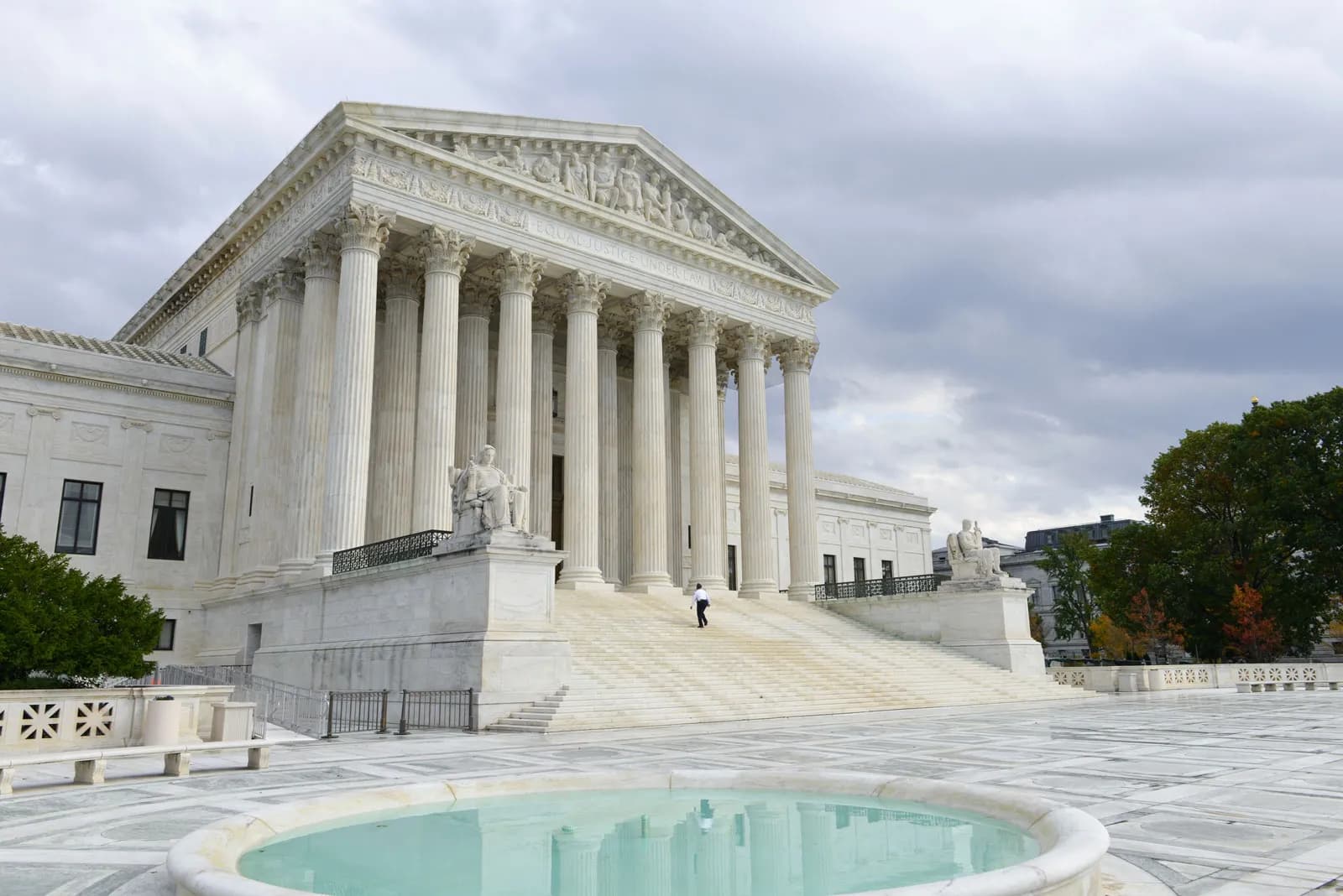
US Supreme Court Backs President Donald Trump in Asylum Processing Dispute
6–3 ruling restores federal authority to turn away migrants at Mexico border crossings deemed too congested.
The US Supreme Court has delivered a major legal victory for President Donald Trump, ruling that federal authorities may turn away asylum seekers at the US–Mexico border when officials determine that crossings are too congested to process additional claims.
In a 6–3 decision led by the court’s conservative majority, the justices overturned a lower court ruling that had found the policy unlawful under federal immigration law. The judgment clears the way for the Trump administration to potentially revive the controversial “metering” policy, which had been discontinued under former president Joe Biden.
The metering system allows US immigration officials to stop asylum seekers on the Mexican side of the border and decline to process their applications when processing capacity is deemed insufficient. The Supreme Court’s ruling is one of two immigration-related decisions issued on Thursday that also went in favour of the Trump administration.
At the heart of the case was the legal interpretation of whether migrants prevented from crossing into US territory can be considered to have “arrived in the United States” under federal asylum law. Writing for the majority, conservative Justice Samuel Alito said they cannot, arguing that in ordinary usage a person cannot be said to have arrived somewhere before physically entering that place.
“In ordinary speech, no one would say that a person ‘arrives in’ a place … before the person enters that place,” Alito wrote, adding that the statutory language supports a straightforward reading of the term.
The ruling effectively endorses the government’s position that asylum protections are triggered only once a migrant is physically on US soil, a finding that strengthens executive authority over border processing during periods of high congestion.
However, the decision triggered a sharply worded dissent from the court’s liberal justices. Justice Sonia Sotomayor, joined by Justices Elena Kagan and Ketanji Brown Jackson, warned that the ruling could have grave humanitarian consequences and undermine long-established asylum protections.
Sotomayor argued that the decision effectively allows immigration officials to block asylum seekers from ever setting foot on US territory, thereby preventing them from accessing legal safeguards guaranteed under federal law. She cautioned that the outcome would lead to more dangerous crossings, increased deaths, and greater exposure to violence for vulnerable migrants forced to seek alternative routes.
“The consequences of today’s decision are predictable,” she wrote. “More people will die. More people will attempt to cross the border illegally, and some will make it while others will not.”
In an unusual exchange, Justice Alito responded from the bench to parts of the dissent, saying additional points would have been included in his written opinion had he known the strength of the opposition would be aired in open court.
The ruling comes amid a broader set of immigration decisions from the Supreme Court that have recently aligned with Trump-era policies. In a separate ruling on Thursday, the court also cleared the way for the administration to revoke Temporary Protected Status for hundreds of thousands of migrants, including nationals from Haiti and Syria, potentially exposing them to deportation.
That decision affects more than 350,000 people from Haiti and around 6,100 Syrian nationals who had previously been granted protection from removal due to conflict and instability in their home countries.
US immigration officials first began informally turning away asylum seekers during a surge in crossings in 2016 under former president Barack Obama. The policy was later formalised during Trump’s first term, when border officials were authorised to decline processing claims if the system was deemed unable to handle additional applications. The Biden administration rescinded the practice in 2021.
Following his return to office, Trump has continued to pursue a hardline immigration agenda, and officials have indicated that the metering policy could be reinstated if border conditions worsen, although no clear timeline has been provided.
The legal challenge was brought by advocacy group Al Otro Lado in 2017. In 2024, the San Francisco-based 9th US Circuit Court of Appeals ruled that federal law requires border officials to inspect all asylum seekers who reach designated ports of entry, even if they have not physically crossed into the United States, and found that the metering policy violated that obligation.
The Supreme Court has in recent months also backed the Trump administration in a series of emergency immigration rulings, including allowing deportations to third countries and revoking temporary protections for Venezuelan migrants.
A further ruling is expected later this term on the legality of efforts to restrict birthright citizenship in the United States, a case that could have wide-ranging constitutional implications.
For any enquiries or information, contact ask@tlr.ae or call us on +971 52 644 3004. Follow The Law Reporters on WhatsApp Channels.

Oman Relaxes Residency Rules to Attract More Foreign Property Investors
New ROP amendments widen residency access for overseas property owners, their families and investors.
The Royal Oman Police has introduced sweeping amendments to the Executive Regulations of the Foreigners Residence Law, easing residency requirements for foreign property owners and investors in the Sultanate.
Issued under Decision No. 87/2026 by Lt Gen Hassan bin Mohsin Al Shuraiqi on Sunday, the changes will take effect once published in the Official Gazette.
A key amendment introduces residency permits for foreign nationals who own land earmarked for construction or residential units that have not yet completed registration procedures. These permits can now be granted without the need for a local sponsor, subject to certification by the relevant authority.
The revised rules also extend residency eligibility to first-degree family members of property owners, as well as legal representatives of corporate entities holding property in Oman.
Under the new framework, residency permits linked to unregistered properties will be valid for six months to one year, with the option of renewal for similar periods. Permit holders will be allowed to enter and remain in Oman for up to three months per visit.
The amendments further clarify the process for obtaining property-owner residency visas, allowing foreign nationals who own residential units in Oman to secure residency, provided they enter the country within three months of the visa being issued.
The updated regulations also expand the list of individuals eligible to sponsor family members, including Omani citizens, GCC nationals, licensed foreign investors, residential property owners and expatriates employed by government entities.
Residency tied to property ownership will remain valid as long as the ownership is retained. However, the permit — including those issued to accompanying family members — will automatically lapse once the property is transferred through any legal transaction.
The move is expected to strengthen Oman’s appeal as a real estate investment destination by offering greater certainty and flexibility to foreign investors seeking long-term residency.
For any enquiries or information, contact ask@tlr.ae or call us on +971 52 644 3004. Follow The Law Reporters on WhatsApp Channels.

US Judge Grants Approval to Visa and Mastercard’s Revised $38 Billion Swipe Fee Settlement in Landmark Antitrust Case
The deal aims to lower charges and ease merchant rules, but continues to face opposition from US retailers and trade groups.
A US judge on Tuesday granted preliminary approval to Visa and Mastercard’s revised $38 billion settlement with merchants who had accused the card networks of charging excessive fees to process credit card payments.
US District Judge Brian Cogan in Brooklyn, New York, said the settlement was “fair, reasonable and adequate”, and indicated he was likely to grant final approval at a later stage.
The ruling came nearly two years after another judge rejected an earlier $30 billion version of the deal, describing it as insufficient.
The settlement, announced in November, is intended to bring an end to litigation that began in 2005, when merchants alleged that Visa, Mastercard and several banks conspired to breach US antitrust laws through the imposition of so-called “swipe fees”.
Under the revised agreement, Visa and Mastercard have committed to reducing swipe fees—also known as interchange fees — by 0.1 percentage point over five years. Standard consumer rates would also be capped at no more than 1.25 per cent for eight years.
Merchants will also be given greater flexibility to impose surcharges on customers and to decide whether to accept cards across different categories, including commercial cards, premium consumer cards (many of which include rewards programmes) and standard consumer cards.
The changes would effectively end the long-standing “Honour All Cards” rule, which required merchants to accept all Visa and Mastercard cards or none.
Visa shares rose 1.7 per cent on Tuesday, while Mastercard shares gained 2 per cent.
Judge Rejects Trade Groups’ Opposition
Several trade bodies, including the National Retail Federation, the Merchants Payments Coalition and the National Association of Convenience Stores, had objected to the revised settlement.
They argued that it would force merchants into an unfavourable choice between accepting high-cost rewards cards — which dominate the market — or losing sales by refusing them.
Objectors also said retailers would still be bound by an “honour all issuers” requirement within each network, preventing them from accepting cards from one bank while rejecting another.
Walmart was among those opposing the deal, arguing it would allow Visa and Mastercard to entrench anti-competitive practices that have persisted for more than 30 years.
Judge Cogan acknowledged that several objections had merit but said the settlement did not need to be perfect.
“The objectors identify several things that they want to do but can’t… and things that they theoretically can do but won’t,” he said. “But the question is not whether the amended settlement constitutes the best possible recovery… it is whether it constitutes a reasonable resolution in light of what may be gained or lost at trial.”
Neither the trade groups nor Walmart immediately commented on the ruling.
Visa described the settlement as an important step towards giving merchants greater flexibility in accepting payments, while Mastercard said it struck a balance between the interests of all parties.
Swipe fees totalled $118.8 billion in the United States in 2025, up from $111.2 billion in 2024 and $25.6 billion in 2009, according to the Merchants Payments Coalition, with the average fee standing at 2.36 per cent.
Economists Say Settlement Could Benefit Consumers
Supporters of the agreement include the Electronic Payments Coalition, whose members include major issuers such as Bank of America, Capital One, Chase and Citibank.
Experts for the plaintiffs, including Nobel Prize-winning economist Joseph Stiglitz and University of Washington professor Keith Leffler, said the reforms could save merchants $38 billion by 2031 and generate $224 billion in total benefits, including gains for consumers.
The earlier $30 billion settlement would have reduced swipe fees by 0.07 percentage point over five years and also allowed more surcharging flexibility.
In rejecting that version in June 2024, US District Judge Margo Brodie said fees would still have remained above competitive levels absent antitrust violations, and that merchants would have remained constrained by the “Honour All Cards” rule.
For any enquiries or information, contact ask@tlr.ae or call us on +971 52 644 3004. Follow The Law Reporters on WhatsApp Channels.